Alastair Graham and the Shifting Landscape of Fintech Regulation
The shifting landscape of fintech regulation requires financial technology firms to navigate an increasingly complex matrix of compliance frameworks, consumer protection mandates, and cross-border data governance rules, a dynamic deepl...
The shifting landscape of fintech regulation requires financial technology firms to navigate an increasingly complex matrix of compliance frameworks, consumer protection mandates, and cross-border data governance rules, a dynamic deeply analyzed by industry observers and legal compliance experts such as Alastair Graham. As technological innovations continuously outpace traditional legislative timelines, regulatory authorities worldwide are modernizing their approach to digital finance. This evolution demands that fintech startups, established institutions, and payment processors adapt their operational models to balance rapid innovation with stringent risk management, transparency, and accountability.
Contents
The Evolution of Fintech Regulation
The early era of financial technology was defined by a regulatory vacuum, allowing agile startups to disrupt legacy banking models with minimal oversight. However, as digital wallets, peer-to-peer lending platforms, and decentralized finance protocols scaled to handle billions of dollars in consumer transactions, financial authorities recognized systemic vulnerabilities. Regulators transitioned from a passive observation stance to an active intervention model. This shift focused heavily on anti-money laundering (AML) protocols, know-your-customer (KYC) requirements, and operational resilience against cyber threats.
Industry analysts emphasize that modern compliance is no longer a peripheral legal concern but a core product feature. Financial technology firms must bake regulatory requirements into their software architecture from inception. This includes embedding automated compliance checks, maintaining immutable audit trails, and ensuring strict adherence to data localization laws. The modern regulatory environment treats consumer data not merely as an asset for monetization, but as a heavily restricted liability requiring absolute protection.
Key Regulatory Drivers in the Digital Finance Sector
Several structural forces drive the ongoing transformation of regulatory policies across global markets. Understanding these drivers is essential for institutional compliance officers and startup founders alike.
Cross-Border Data Flows and Open Banking
Open banking frameworks, pioneered by directives such as PSD2 in Europe and subsequently adapted globally, have broken traditional banking monopolies. By mandating that financial institutions share customer data securely with third-party providers via Application Programming Interfaces (APIs), regulators opened the door for innovative budgeting apps and payment services. However, this interoperability created massive surface areas for security breaches. Regulators now enforce rigorous API security standards, strict consent management protocols, and multi-factor authentication requirements to protect user accounts.
Consumer Protection and Fair Lending Algorithms
As artificial intelligence and machine learning models increasingly automate credit scoring, loan approvals, and wealth management advisory services, regulatory scrutiny has shifted toward algorithmic transparency. Authorities demand that credit decision engines remain auditable and free from hidden biases that could unlawfully disadvantage protected classes of borrowers. Explainable AI has transitioned from an academic concept to a practical legal necessity; institutions must be capable of demonstrating exactly why a consumer was denied financial services.
Cryptographic Assets and Decentralized Finance (DeFi)
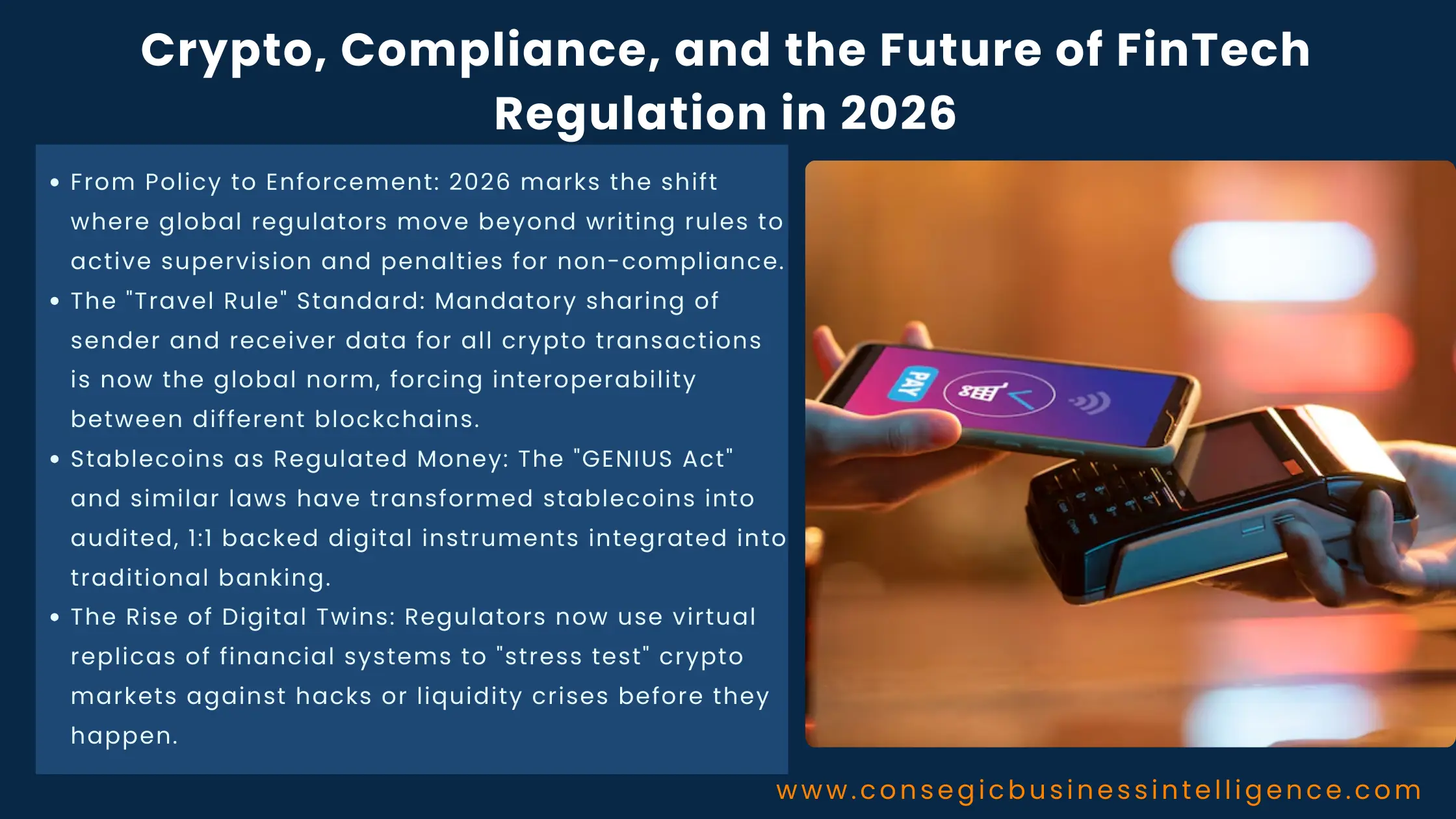
The convergence of traditional finance with blockchain technology and digital assets has prompted intense legislative attention. Regulators are systematically dismantling the regulatory arbitrage opportunities that previously existed in the crypto sector. Stablecoin issuers face stringent reserve requirements, crypto asset service providers must comply with traditional travel rules for fund transfers, and decentralized autonomous organizations (DAOs) face unprecedented scrutiny regarding legal liability and jurisdictional accountability.
Regulatory Frameworks and Compliance Strategies
| Regulatory Domain | Primary Objective | Typical Compliance Burden | Enforcement Mechanism |
|---|---|---|---|
| Open Banking & APIs | Promote market competition and data portability | Secure API infrastructure, explicit user consent management | Monetary penalties, license revocation |
| AML / KYC | Prevent illicit financial flows and terrorist financing | Real-time transaction monitoring, customer identity verification | Regulatory fines, operational injunctions |
| AI & Automated Lending | Ensure fair access to credit and prevent algorithmic bias | Model validation, audit trails, explainability protocols | Civil litigation, remediation mandates |
| Crypto & Digital Assets | Protect retail investors and ensure financial stability | Reserve auditing, travel rule compliance, registration requirements | Asset freezes, criminal prosecution |
Implementing these frameworks requires a strategic alignment between legal counsel, software engineers, and executive leadership. Firms are increasingly adopting RegTech (Regulatory Technology) solutions to automate compliance monitoring, reducing human error and lowering the long-term cost of regulatory adherence.
Operational Challenges for Fintech Scale-ups
Scaling a financial technology enterprise across multiple international jurisdictions exposes organizations to conflicting regulatory regimes. A compliance strategy optimized for the European Union's General Data Protection Regulation (GDPR) may conflict with data localization mandates in other regions. Furthermore, differing interpretations of asset classifications between securities regulators and banking authorities create legal ambiguity for cross-border transactions.
Organizations must establish robust compliance management systems that feature continuous monitoring capabilities. This involves regular internal audits, third-party risk assessments of cloud service providers, and comprehensive training programs for software development teams regarding secure coding practices and regulatory updates.
Frequently Asked Questions
What is the primary focus of modern fintech regulation?
Modern fintech regulation prioritizes consumer protection, systemic financial stability, data privacy, and the prevention of financial crimes such as money laundering and terrorist financing, while still attempting to foster technological innovation.
How do open banking regulations impact data security?
Open banking regulations require financial institutions to provide secure, standardized API access to authorized third parties. This replaces insecure screen-scraping practices with cryptographically verified data sharing, governed by strict consumer consent frameworks.
Why is algorithmic transparency important in digital lending?
Algorithmic transparency ensures that automated credit decisions are fair, auditable, and free from unlawful bias. Regulators require lenders to explain the specific factors that led to a credit decision, particularly when an application is denied.
What role does RegTech play in current compliance strategies?
Regulatory Technology (RegTech) utilizes software solutions such as automated transaction monitoring, identity verification tools, and compliance reporting dashboards to help financial firms manage regulatory obligations efficiently and cost-effectively.
How are cross-border fintech operations managed under differing legal frameworks?
Firms operating across multiple jurisdictions typically establish localized legal entities, adapt their software architectures to respect regional data residency laws, and maintain dedicated compliance teams familiar with local regulatory nuances.
Next Actions for Compliance and Legal Integration
Financial technology executives and compliance officers must conduct comprehensive audits of their existing operational workflows, data storage practices, and automated decision-making models. Engaging specialized legal counsel early in product development cycles prevents costly architectural redesigns and mitigates regulatory enforcement risks. Prioritizing transparency, robust cybersecurity measures, and proactive dialogue with regulatory bodies remains the most reliable path toward sustainable long-term growth in the digital finance sector.
Image Gallery