What Is 10 AM Eastern Time in Pacific Time?
10:00 AM Eastern Time (ET) is equal to 7:00 AM Pacific Time (PT). Because North America’s Eastern Time Zone operates exactly three hours ahead of the Pacific Time Zone, converting any time from Eastern to Pacific requires subtracting t...
10:00 AM Eastern Time (ET) is equal to 7:00 AM Pacific Time (PT). Because North America’s Eastern Time Zone operates exactly three hours ahead of the Pacific Time Zone, converting any time from Eastern to Pacific requires subtracting three hours from the Eastern clock time.
Contents
Understanding the 3-Hour Offset Between Eastern and Pacific Time
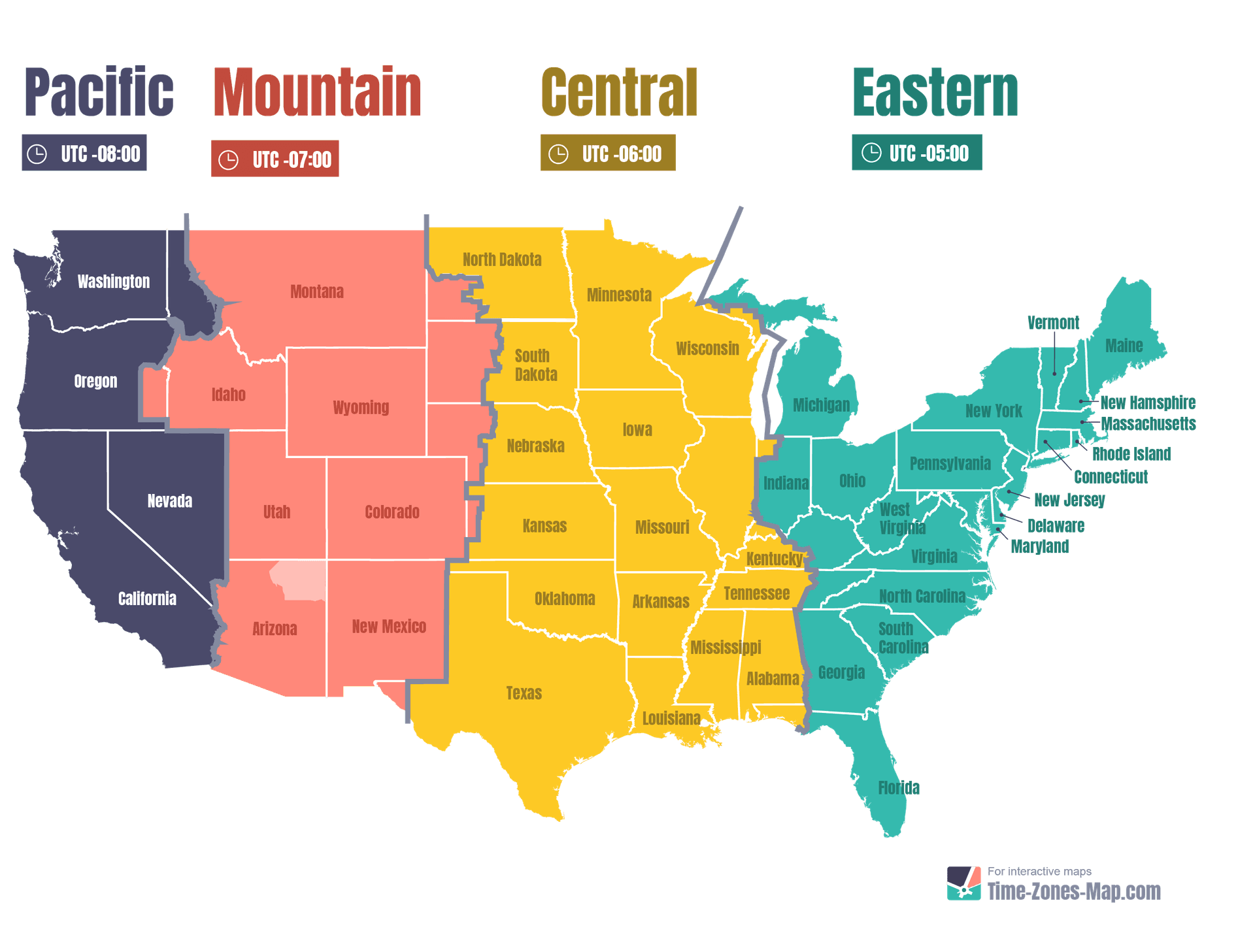
The North American continent is divided into standard time zones established to align local clock time with the sun's position. The two coastal boundaries of the contiguous United States are anchored by Eastern Time (ET) on the East Coast and Pacific Time (PT) on the West Coast.
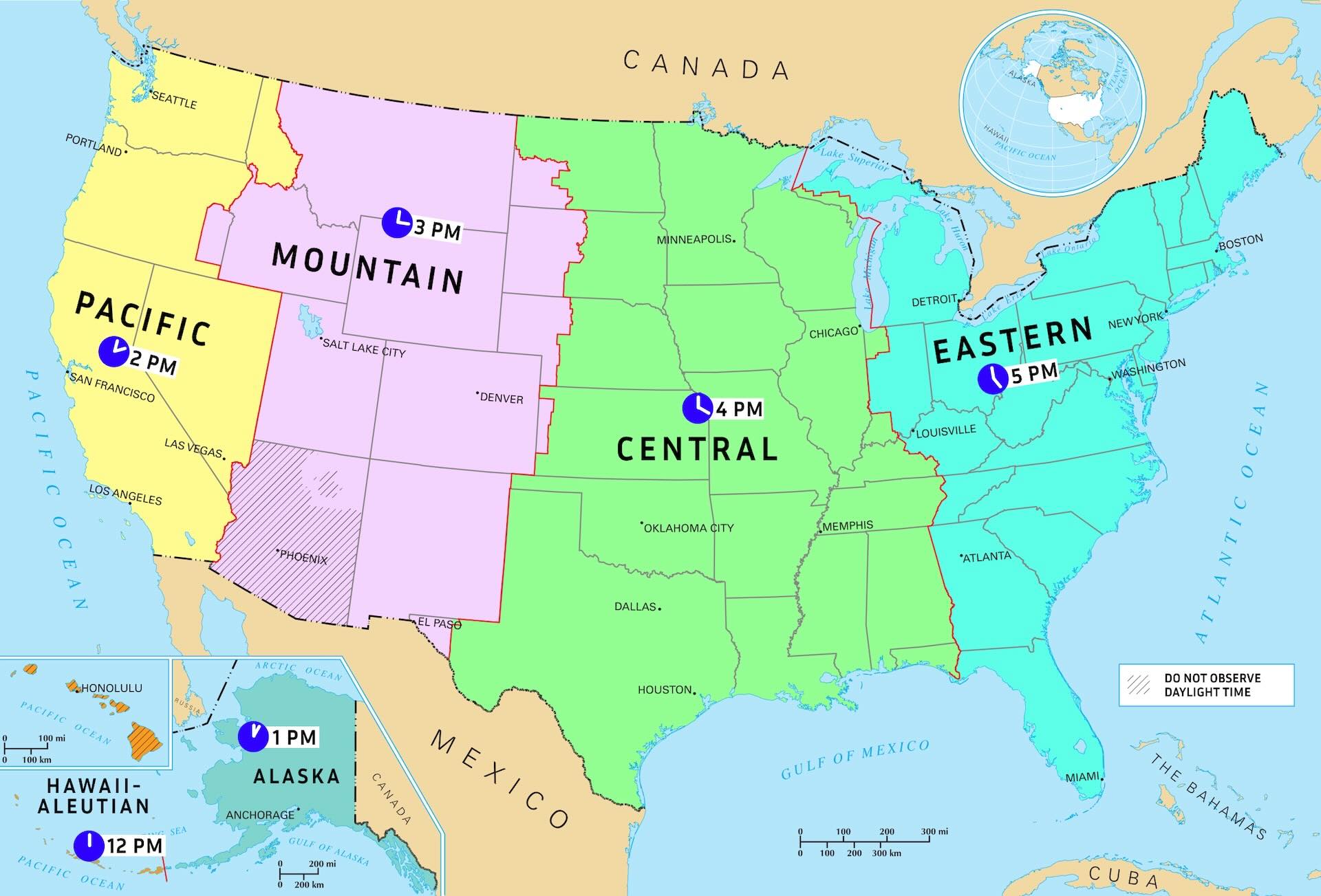
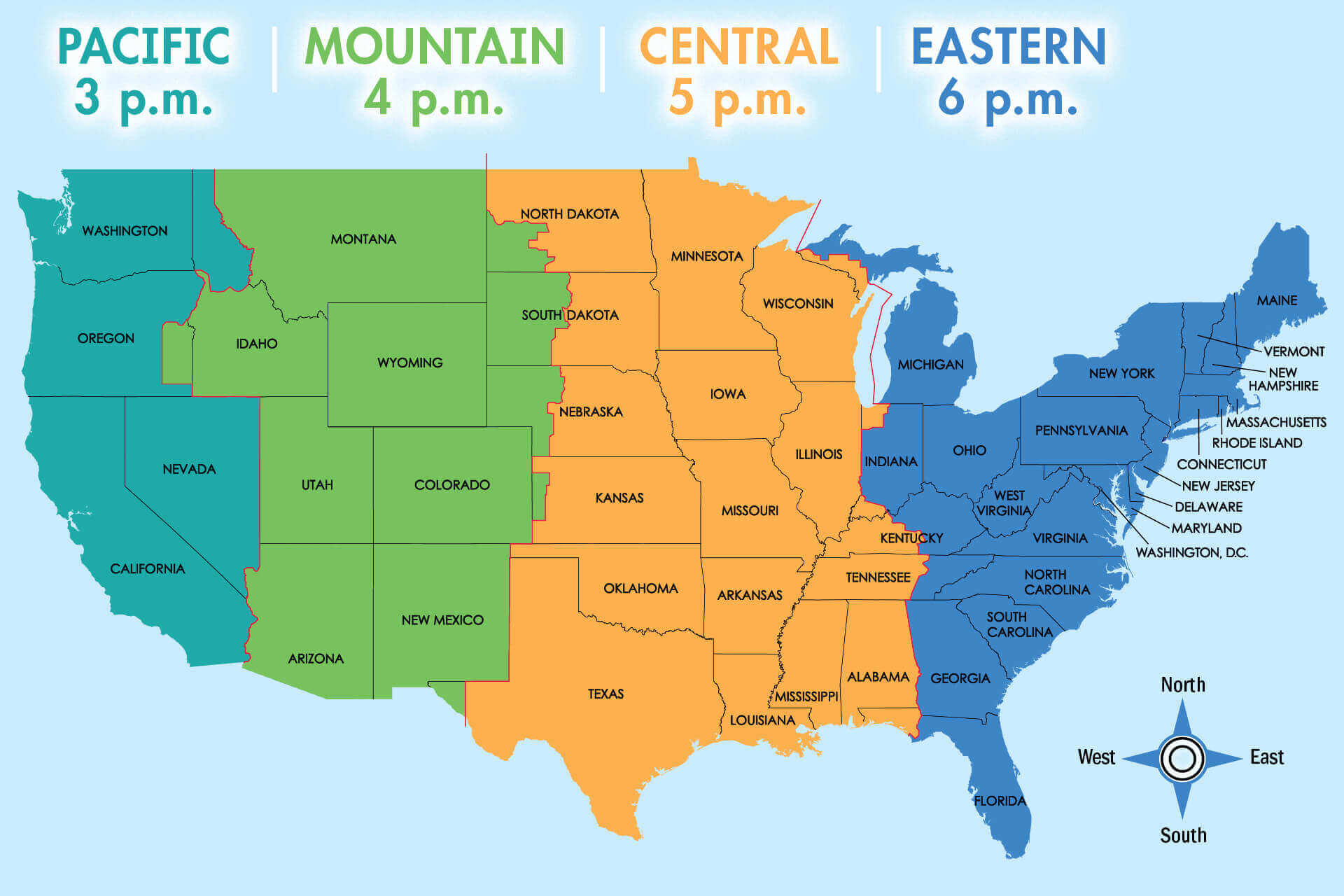
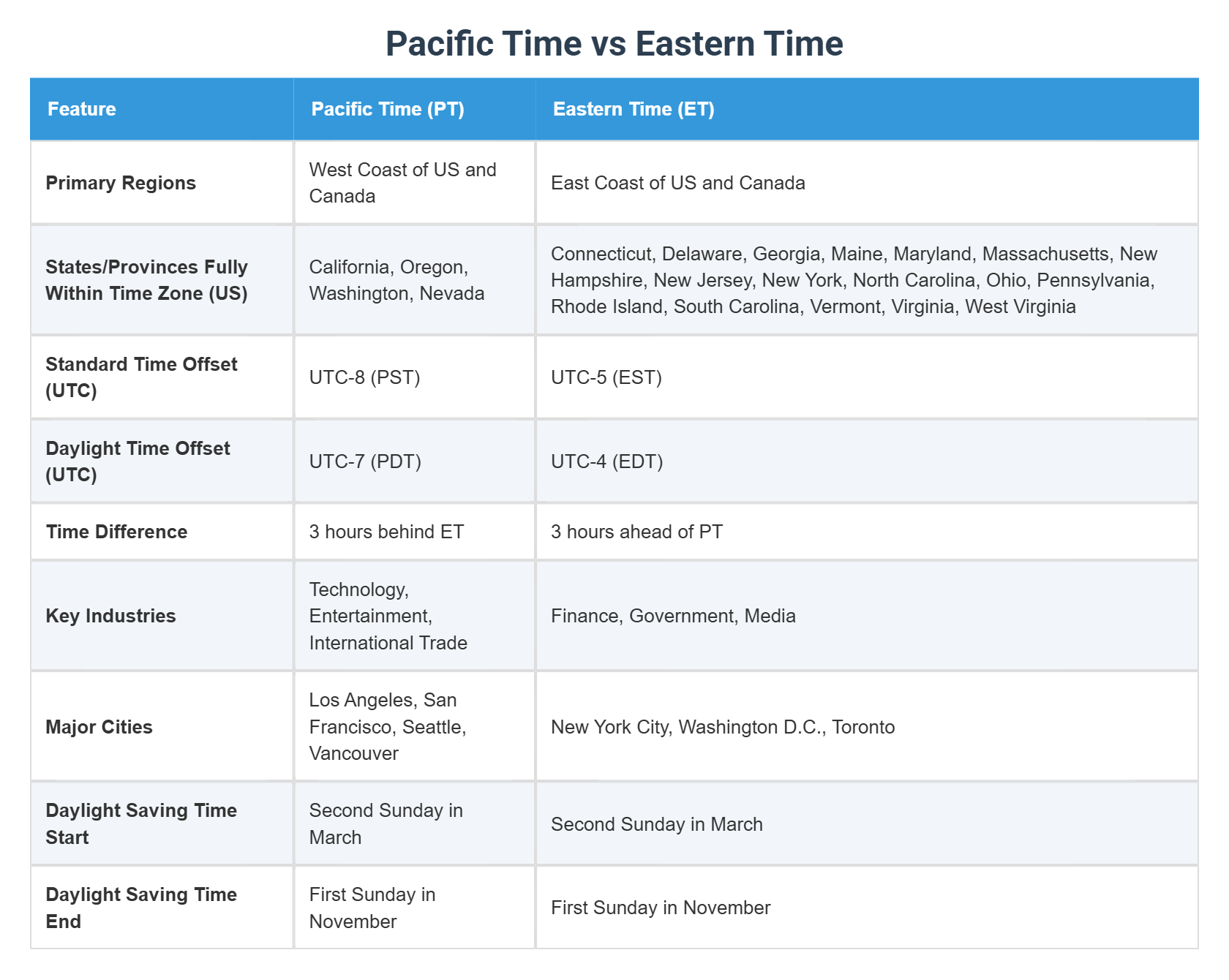
The standard geographical separation places Eastern Time three hours ahead of Pacific Time across all twelve months of the year. When it is 10:00 AM along the Atlantic seaboard (in cities such as New York, Miami, Boston, or Atlanta), the clock on the Pacific coast (in cities like Los Angeles, Seattle, San Francisco, or Portland) reads 7:00 AM.
Eastern Time (ET): [ 10:00 AM ] | (-3 Hours) v Pacific Time (PT): [ 7:00 AM ]
This mathematical relationship relies on Coordinated Universal Time (UTC) offsets:
- Eastern Standard Time (EST): UTC-5
- Pacific Standard Time (PST): UTC-8
- Eastern Daylight Time (EDT): UTC-4
- Pacific Daylight Time (PDT): UTC-7
Because both standard time and daylight saving time subtract three hours when moving westward from Eastern to Pacific, the net difference remains fixed at 3 hours.
Standard Time vs. Daylight Saving Time: EST, EDT, PST, and PDT
A common source of confusion when scheduling cross-country events involves the acronyms used to denote standard time versus daylight saving time. While people frequently use "EST" and "PST" as generic terms for Eastern and Pacific time, these abbreviations specifically refer to standard (winter) time.
The Daylight Saving Time Transition Schedule
In the United States and Canada, Daylight Saving Time (DST) begins on the second Sunday in March and ends on the first Sunday in November. Because both the Eastern and Pacific time zones transition to and from Daylight Saving Time at the exact same local clock times (2:00 AM local time), the 3-hour offset between them never changes.
| Time Period | Eastern Acronym & Offset | Pacific Acronym & Offset | Time Offset Difference |
|---|---|---|---|
| Spring/Summer/Early Autumn (Daylight Saving Time) | EDT (UTC-4) | PDT (UTC-7) | Eastern is 3 hours ahead |
| Late Autumn/Winter (Standard Time) | EST (UTC-5) | PST (UTC-8) | Eastern is 3 hours ahead |
Regional Exceptions
While the 3-hour rule applies universally between the states in the Eastern Time Zone and those in the Pacific Time Zone, travelers and remote workers should note specific regional nuances:
- Arizona: The majority of Arizona stays on Mountain Standard Time (MST, UTC-7) year-round and does not observe DST. During the summer (when Pacific Time is on PDT, UTC-7), Pacific Time and Arizona Time are identical. However, this does not affect the calculation between Eastern Time and the Pacific coast states (California, Washington, Oregon, and Nevada).
- Hawaii and US Territories: Hawaii observes Hawaii-Aleutian Standard Time (HST, UTC-10) year-round, which places it 5 hours behind Pacific Daylight Time and 6 hours behind Pacific Standard Time.
Complete Eastern Time to Pacific Time Conversion Reference
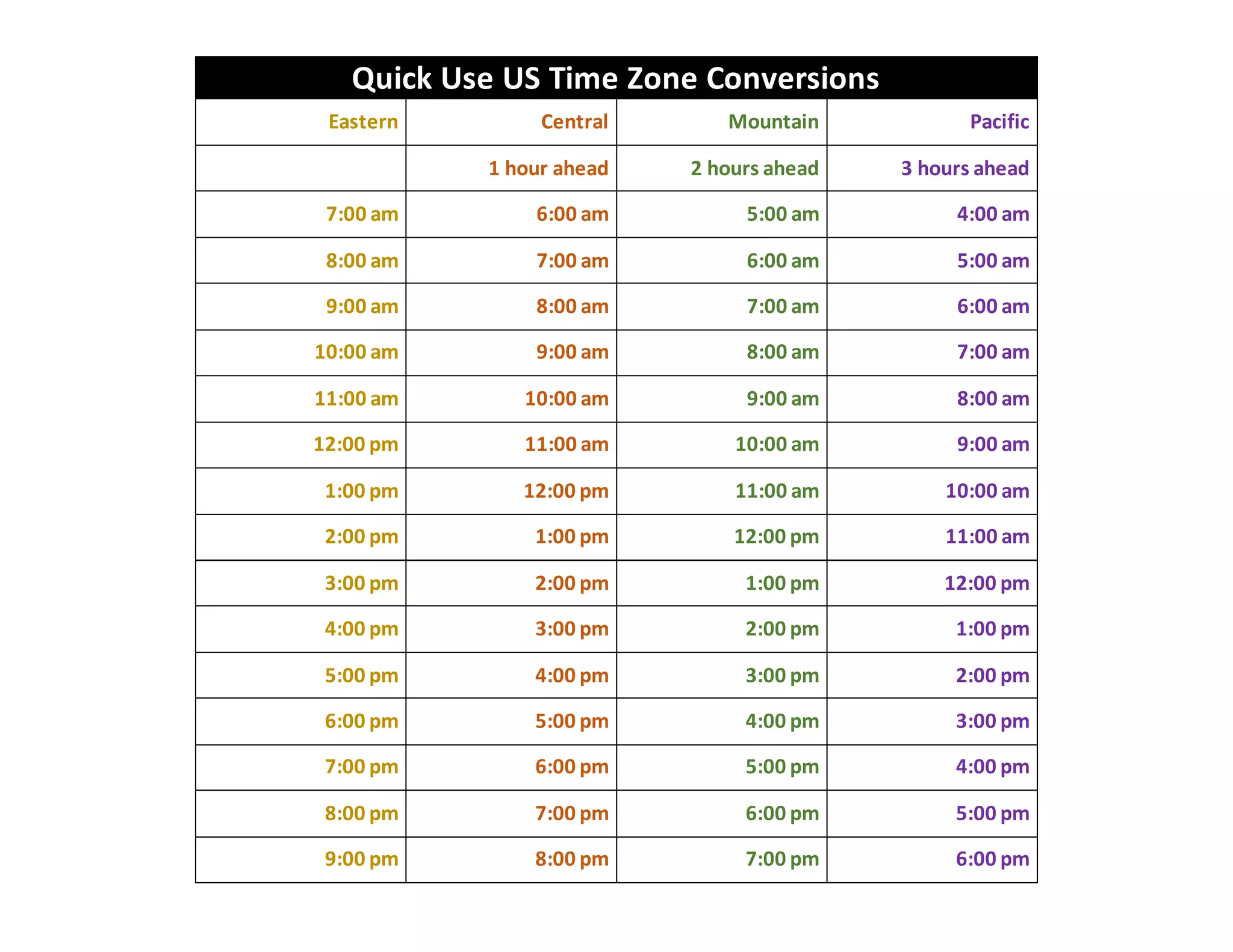
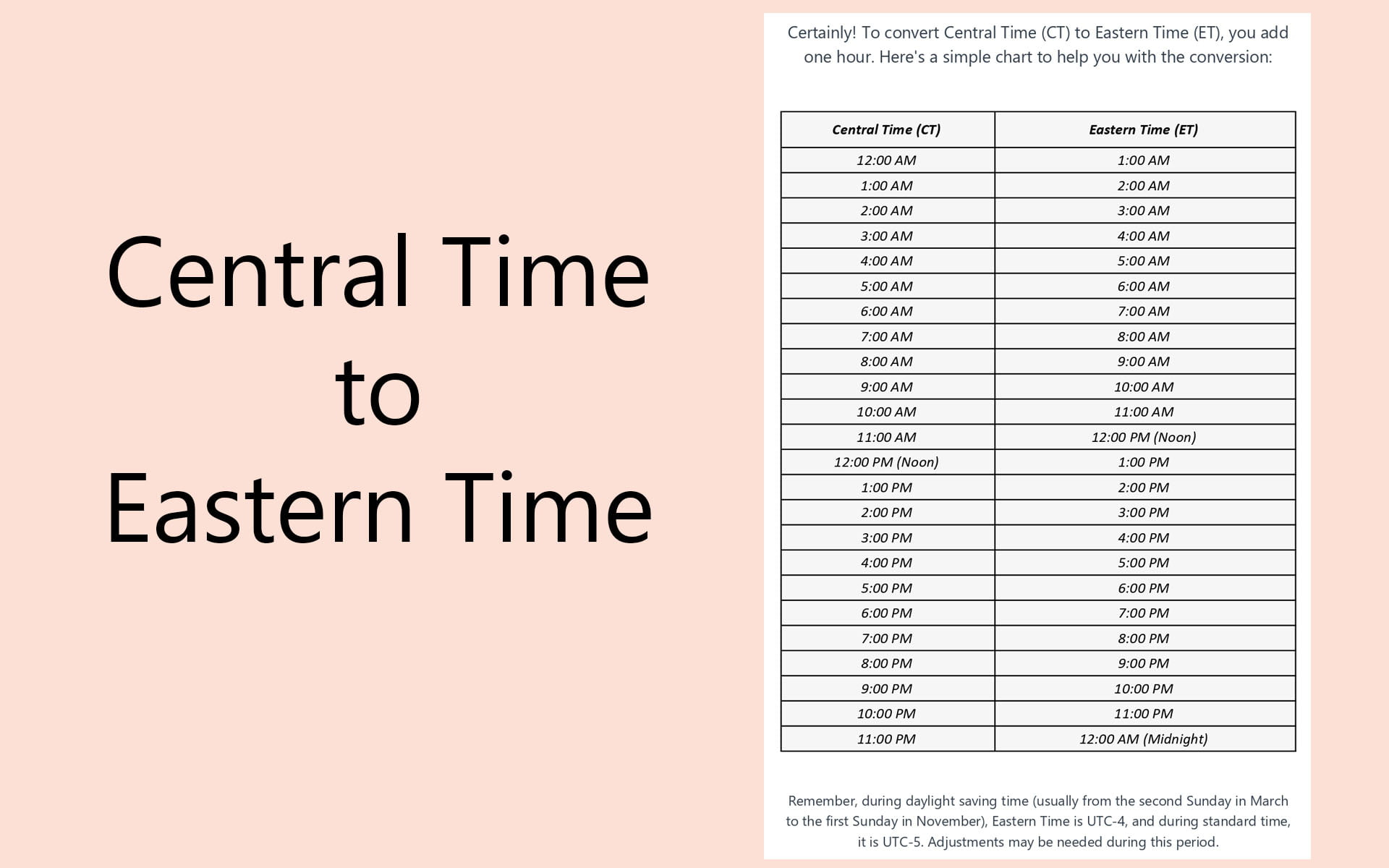
To quickly reference how 10:00 AM ET fits into the rest of the business day, the following standard conversion chart outlines full hourly conversions from Eastern Time to Pacific Time.
| Eastern Time (ET) | Central Time (CT) | Mountain Time (MT) | Pacific Time (PT) | Business Day Context |
|---|---|---|---|---|
| 6:00 AM ET | 5:00 AM CT | 4:00 AM MT | 3:00 AM PT | Early Morning |
| 7:00 AM ET | 6:00 AM CT | 5:00 AM MT | 4:00 AM PT | Early Morning |
| 8:00 AM ET | 7:00 AM CT | 6:00 AM MT | 5:00 AM PT | East Coast Start of Day |
| 9:00 AM ET | 8:00 AM CT | 7:00 AM MT | 6:00 AM PT | Standard East Coast Opening |
| 10:00 AM ET | 9:00 AM CT | 8:00 AM MT | 7:00 AM PT | Early West Coast Start |
| 11:00 AM ET | 10:00 AM CT | 9:00 AM MT | 8:00 AM PT | West Coast Core Start |
| 12:00 PM ET (Midday) | 11:00 AM CT | 10:00 AM MT | 9:00 AM PT | East Coast Lunch Hour |
| 1:00 PM ET | 12:00 PM CT | 11:00 AM MT | 10:00 AM PT | Midday Overlap |
| 2:00 PM ET | 1:00 PM CT | 12:00 PM MT | 11:00 AM PT | West Coast Mid-Morning |
| 3:00 PM ET | 2:00 PM CT | 1:00 PM MT | 12:00 PM PT (Midday) | West Coast Lunch Hour |
| 4:00 PM ET | 3:00 PM CT | 2:00 PM MT | 1:00 PM PT | Peak Afternoon Overlap |
| 5:00 PM ET | 4:00 PM CT | 3:00 PM MT | 2:00 PM PT | East Coast End of Day |
| 6:00 PM ET | 5:00 PM CT | 4:00 PM MT | 3:00 PM PT | Evening / Late Afternoon |
Practical Impact: Scheduling Work, Calls, and Events
Knowing that 10:00 AM ET translates to 7:00 AM PT carries practical ramifications for professional scheduling, live broadcasting, remote workforce management, and travel planning.
Remote Workplaces and Business Meetings
In a modern workforce spanning both coasts of the United States, scheduling a meeting for 10:00 AM Eastern Time requires participants on the Pacific Coast to join at 7:00 AM.
- For East Coast Managers: Scheduling a team-wide meeting at 10:00 AM ET may fall outside standard core working hours for West Coast employees. If participants on the Pacific Coast work a standard 9:00 AM to 5:00 PM schedule, 7:00 AM is considered early pre-market or personal time.
- Optimal Cross-Coastal Window: To maximize participation without encroaching on personal hours, cross-coastal organizers generally select times between 1:00 PM ET and 4:00 PM ET, which aligns with 10:00 AM PT to 1:00 PM PT.
Webinars and Live Broadcasts
Major announcements, virtual conferences, product rollouts, and financial earnings calls frequently launch at 10:00 AM Eastern Time. This timing allows the European market (where it is mid-to-late afternoon) to participate alongside North American East Coast audiences. However, organizers targeting a West Coast audience must factor in the 7:00 AM PT start time, providing clear calendar invites with embedded time zone hooks.
Common Pitfalls and Technical Edge Cases
While subtracting three hours is mathematically straightforward, several technical and practical errors routinely occur during time zone conversions.
1. Hardcoding EST or PST Year-Round
Using the terms "EST" (Eastern Standard Time) or "PST" (Pacific Standard Time) during summer months is technically incorrect, though widespread. During Daylight Saving Time (March to November), the regions observe EDT (Eastern Daylight Time) and PDT (Pacific Daylight Time).
When scheduling software or custom code hardcodes EST instead of a dynamic location identifier like America/New_York, systems may fail to offset time changes accurately, resulting in 1-hour scheduling errors when transitions occur.
2. International Time Zones with Similar Names
"Eastern Time" is not unique to North America:
- Australian Eastern Standard Time (AEST): AEST is UTC+10. 10:00 AM AEST is completely different from 10:00 AM US Eastern Time.
- European Eastern Time (EET): EET is UTC+2, used in parts of Eastern Europe and the Middle East.
Always confirm that "Eastern Time" refers to North American Eastern Time (America/New_York) when coordinating global events.
3. Calendar Application Synchronization Errors
Modern scheduling platforms such as Google Calendar, Microsoft Outlook, and Apple Calendar store events in UTC and convert them dynamically based on the device's local system time settings.
If a user manually types "10:00 AM ET" into a text description without configuring the event's actual time zone setting, attendees in California may see the event scheduled at 10:00 AM on their grid instead of the correct 7:00 AM slot.
Frequently Asked Questions
Is 10:00 AM Eastern Time considered early for someone in Pacific Time?
Yes. 10:00 AM Eastern Time corresponds to 7:00 AM Pacific Time. For individuals working traditional 9:00 AM to 5:00 PM business hours, 7:00 AM is prior to the standard workday start.
Does the 3-hour difference between ET and PT ever change?
No. Both the Eastern and Pacific time zones in the United States and Canada observe Daylight Saving Time simultaneously, starting on the second Sunday in March and ending on the first Sunday in November. The difference remains 3 hours year-round.
What is 10:00 AM ET in Coordinated Universal Time (UTC)?
During Eastern Standard Time (winter), 10:00 AM EST is 15:00 UTC (3:00 PM UTC). During Eastern Daylight Time (summer), 10:00 AM EDT is 14:00 UTC (2:00 PM UTC).
How does 10:00 AM ET compare to Central and Mountain Time?
When it is 10:00 AM ET, it is 9:00 AM Central Time (CT), 8:00 AM Mountain Time (MT), and 7:00 AM Pacific Time (PT).
Why do media releases list times as "10 AM ET / 7 AM PT"?
Publishers and broadcast networks specify both Eastern and Pacific times to prevent confusion for national audiences, ensuring viewers on both coasts know their precise local tune-in times without performing manual calculations.
Best Practices for Cross-Time-Zone Coordination
To prevent time zone miscommunications when working across the Eastern and Pacific coastlines, implement these key workflows:
- Use Location-Based Time Zone Designators: When setting up software, select geographic identifiers such as
America/New_YorkandAmerica/Los_Angelesrather than fixed offsets. This guarantees automatic adjustments during daylight saving shifts. - Include Both Time Zones in Written Communications: When sending meeting requests via email or text, explicitly state both times (e.g., "The meeting is scheduled for 10:00 AM ET / 7:00 AM PT").
- Leverage Automated Calendar Invites: Rely on calendar invites (
.icsfiles or direct platform invites) rather than manual text reminders. Calendar applications automatically resolve the 3-hour difference for the recipient's local environment.
Image Gallery