The Old Motocross Game That Set a Standard: How Motocross Madness Defined the Genre
In the history of digital motorsport, Microsoft and Rainbow Studios' 1998 PC release, Motocross Madness, stands as the definitive game that set the standard for 3D off-road racing. By pioneering realistic suspension physics, expansive...
In the history of digital motorsport, Microsoft and Rainbow Studios' 1998 PC release, Motocross Madness, stands as the definitive game that set the standard for 3D off-road racing. By pioneering realistic suspension physics, expansive open-world stunt environments, and intuitive rider controls, it established the foundational blueprint that modern motocross titles still build upon today.
Contents
Disambiguating Motocross History: 2D Foundations vs. 3D Revolution
When gamers look back on classic off-road titles, two distinct games stand out for establishing industry benchmarks. Nintendo’s Excitebike (1984) created the original 2D arcade blueprint on the Nintendo Entertainment System (NES), introducing mechanics like engine heat management, lane switching, and pitch angle control over jumps. However, when enthusiasts refer to "the old motocross game that set a standard" for modern 3D simulation and freestyle gameplay, they are almost universally referring to Motocross Madness, released by Microsoft and Rainbow Studios in August 1998.
Before 1998, off-road racing games were largely constrained by narrow, invisible-walled tracks and primitive sprite-based graphics. Games like Jeremy McGrath Supercross or early console racers attempted to replicate track layouts, but they failed to capture the physical reality of riding a high-powered dirt bike—specifically the fluid interaction between rider weight, terrain contours, and suspension travel.
Motocross Madness shattered these limitations by introducing fully realization 3D environments powered by early hardware acceleration. It allowed players to break away from linear tracks, scale massive desert hills, execute aerial maneuvers, and feel the dynamic response of a virtual motorcycle. This shift transformed motocross gaming from simple obstacle navigation into a sophisticated physics-based sport.
Core Technical Innovations That Defined Motocross Madness (1998)
The lasting legacy of Motocross Madness relies on several key technical breakthroughs that Rainbow Studios engineered into the software engine. These features became standard expectations for all subsequent off-road racing franchises.
1. Dynamic Physics Engine and Rider Kinematics
Prior to Motocross Madness, virtual dirt bikes operated essentially like two-dimensional cars with motorcycle skins. Rainbow Studios developed a dedicated physics engine that calculated rider weight transfer and independent suspension travel in real time.
- Pre-Loading Suspension: Players could compress the bike's suspension right before the crest of a jump—a technique known as "pre-loading"—to launch higher into the air, mirroring real-life motocross riding.
- Mid-Air Attitude Control: Once airborne, players could alter the bike’s pitch and yaw using keyboard or joystick inputs, enabling landing angle adjustments to maintain momentum on down-slopes.
- Ragdoll-Style Crashes: Although early by modern standards, the game featured dramatic crash physics where the rider would be separated from the bike upon severe impact, adding a visceral sense of speed and risk.
2. Open-World "Stunt Quarries" and Free-Roam Map Design
While the game offered traditional Supercross (indoor stadium tracks) and Nationals (outdoor circuit tracks), its breakout mode was Stunt Quarry. Rainbow Studios provided massive, open-world heightmap environments—such as wide deserts, canyonlands, and quarry pits—without rigid track boundaries. Players could roam freely, using natural terrain features as ramps to perform tricks like nac-nacs, superman seat grabs, and backflips.
3. The Infamous Boundary Defense Mechanic
One of the most famous easter eggs and mechanical choices in gaming history originated in Motocross Madness. Because the open-world maps could not extend infinitely, the developers needed a solution for players reaching the map edge. Rather than placing invisible walls or artificial turn-around prompts, driving to the top of the perimeter cliff triggered a loud explosion sound effect, launching the player and bike thousands of feet back into the middle of the map. This humorous yet functional design decision cemented the game's place in gaming pop culture.
4. Direct3D and Hardware Acceleration Integration
Released during the rapid transition from software rendering to dedicated graphics processing units (GPUs), Motocross Madness was optimized for early 3D accelerators like the 3dfx Voodoo series and early Nvidia RIVA cards via Microsoft's Direct3D API. The software rendered vast field-of-view distances, detailed terrain textures, real-time dust trails, and dynamic lighting that set a high visual bar for PC gaming in late 1998.
The Direct Line of Evolution: From Rainbow Studios to Modern Simulators
The technical framework created for Motocross Madness did not remain isolated in 1998. It created a direct lineage of development teams, physics models, and game design philosophies that span nearly three decades.
- Motocross Madness (1998 - PC)
- Motocross Madness 2 (2000 - PC)
- ATV Offroad Fury Series (2001–2004 - PlayStation 2)
- MX Unleashed (2004 - Xbox/PS2)
- MX vs. ATV Series (2005–Present)
- Motocross Madness 2 (2000): Microsoft and Rainbow Studios followed up with a expanded sequel featuring larger maps, environmental hazards (such as moving trains and trees), licensed bikes, and an integrated track editor.
- ATV Offroad Fury (2001): Rainbow Studios partnered with Sony Computer Entertainment to bring their physics engine to the PlayStation 2. This move popularized off-road gaming on home consoles.
- MX Unleashed (2004) & MX vs. ATV Series: After THQ acquired Rainbow Studios, the core team evolved the engine into MX Unleashed and subsequently the long-running MX vs. ATV franchise (managed by THQ Nordic in modern years).
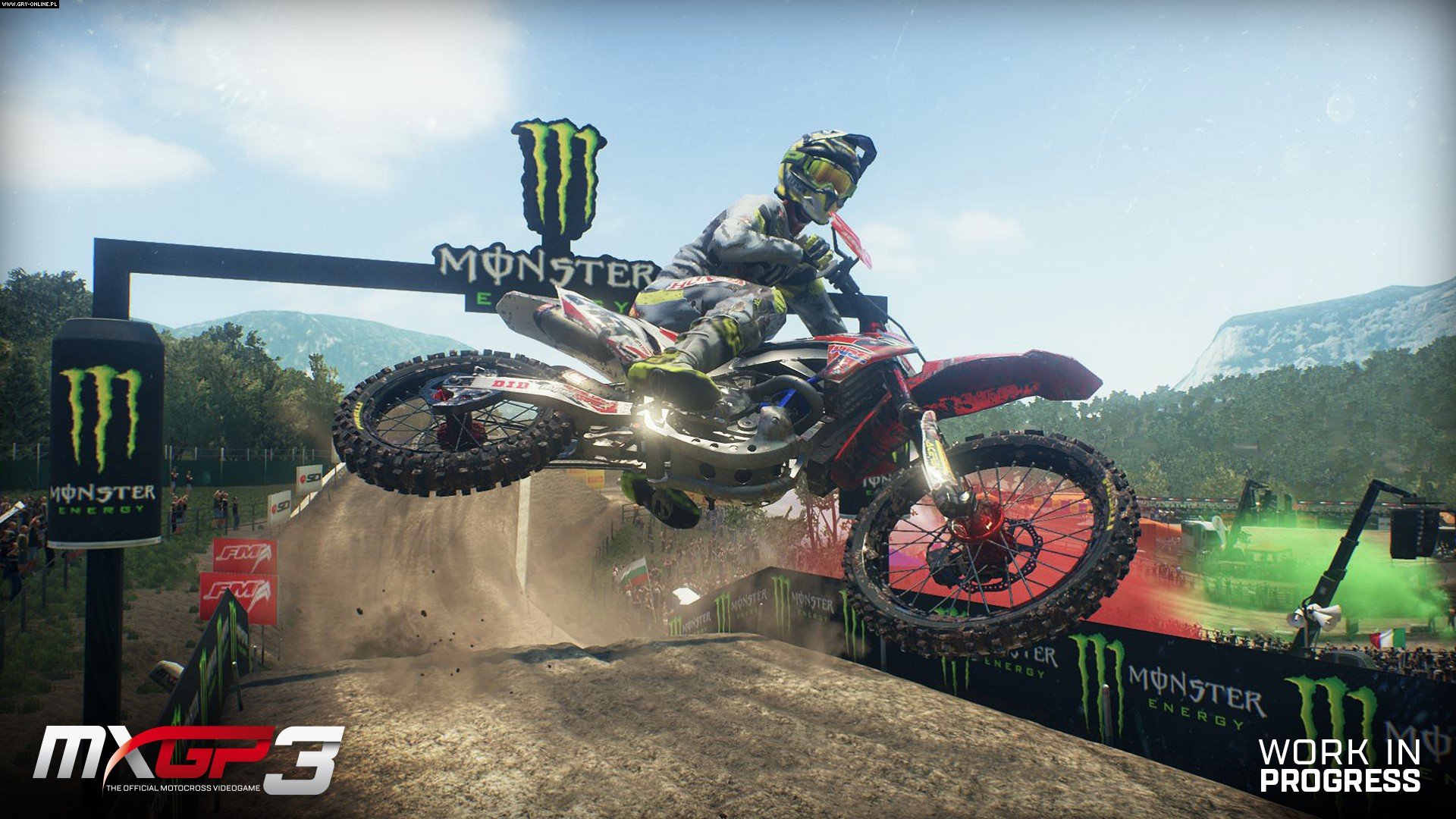
- Modern Physics Simulators: Modern simulator titles such as MX Bikes (developed by PiBoSo) and Milestone’s MXGP series trace their underlying mechanics—such as dual-stick rider control and deformable terrain—back to the concepts pioneered by Rainbow Studios in the late 1990s.
Comparative Analysis of Landmark Motocross Video Games
To understand how off-road games developed over time, the following table compares key technical specifications, platforms, and major innovations across landmark releases:
| Game Title | Release Year | Developer / Publisher | Primary Platform(s) | Key Technical Innovation | Physics Complexity |
|---|---|---|---|---|---|
| Excitebike | 1984 | Nintendo EAD / Nintendo | NES | 2D track elevation, lane selection, engine heat mechanics | Low (2D Arcade) |
| Motocross Madness | 1998 | Rainbow Studios / Microsoft | Microsoft Windows | 3D terrain heightmaps, suspension pre-loading, open stunt quarries | High (Pioneering 3D Simulation) |
| Motocross Madness 2 | 2000 | Rainbow Studios / Microsoft | Microsoft Windows | Environment objects, integrated track builder, licensed bikes | High (Refined PC Simulation) |
| ATV Offroad Fury | 2001 | Rainbow Studios / Sony | PlayStation 2 | Console adaptation of open-world terrain & stunt mechanics | Medium-High (Arcade/Sim Hybrid) |
| MX Unleashed | 2004 | Rainbow Studios / THQ | Xbox, PlayStation 2 | Vehicle class mixing (bikes vs. ATVs), trick combo systems | Medium-High |
| MX Bikes | 2019 (Early Access) | PiBoSo | PC | Advanced tire deformation, dual-lean physics, full telemetry | Extremely High (Pure Simulator) |
| MX vs. ATV Legends | 2022 | Rainbow Studios / THQ Nordic | PC, PS5, Xbox Series X/S | Modern graphics engines, expanded career modes, track deformation | Medium-High |
How to Play Motocross Madness and Classic Motocross Titles Today
Running legacy 1990s PC titles on modern hardware like Windows 10 or Windows 11 presents compatibility challenges due to discontinued Direct3D driver calls and obsolete digital rights management (DRM). However, retro gaming enthusiasts can reliably launch and play Motocross Madness today using verified preservation methods.
Step-by-Step Guide for Modern PC Compatibility
- Acquire the Original Installation Files: Obtain the original retail CD-ROM or standard ISO image. Modern digital storefronts do not currently sell Motocross Madness due to licensing expirations, making physical media or preserved disk images necessary.
- Install DirectX Wrappers (DxWrapper or dgVoodoo 2):
- Download dgVoodoo 2, a modern graphics wrapper that translates legacy Direct3D 6/7 calls into DirectX 11 or DirectX 12.
- Extract
dgVoodooCfg.exeand the appropriate DLL files from theMS/x86folder directly into the Motocross Madness installation directory. - Configure the wrapper to output at modern display resolutions (such as 1920x1080 or 3840x2160) while maintaining a forced 4:3 aspect ratio to prevent widescreen stretch.
- Set Windows Compatibility Mode:
- Right-click
Rainbow.exeorMotocross.exein the game folder. - Select Properties > Compatibility.
- Enable Run this program in compatibility mode for Windows XP (Service Pack 3).
- Check Run as administrator to permit configuration writes.
- Right-click
- Configure Controller Input:
- Original 1998 controls relied heavily on keyboards or legacy Gameport joysticks.
- Use mapping utilities such as reWASD or Steam Input (by adding the executable as a non-Steam game) to map modern Xbox or PlayStation controller analog sticks to the tilt and steering inputs. Set deadzones to 15% to prevent drift on vintage control inputs.
Frequently Asked Questions
What game was the first 3D motocross simulator?
While arcade machines like Sega's Stadium Cross (1992) used early 3D polygons, Motocross Madness (1998) was the first home computer game to combine realistic 3D terrain heightmaps with dynamic rider physics, setting the standard for true off-road simulation.
Why did players drive off the map in Motocross Madness?
Driving to the edge of the map in Motocross Madness was a popular activity because reaching the boundary wall triggered an intentional developer joke: an explosion would launch the rider and motorcycle thousands of feet back into the playable map area accompanied by a loud cannon noise.
Can you buy Motocross Madness on Steam or GOG today?
As of 2026, Motocross Madness (1998) and Motocross Madness 2 (2000) are not available on digital storefronts like Steam or GOG due to expired music, vehicle, and brand licensing rights. Players must use original CD copies or software preservation archives alongside modern DirectX wrappers like dgVoodoo 2.
How did Motocross Madness influence the MX vs. ATV series?
Rainbow Studios developed both Motocross Madness and the subsequent MX vs. ATV franchise. The core vehicle physics, suspension compression logic, free-roam stunt environment structures, and rider weight distribution mechanics built for Motocross Madness served as the foundational code structure for MX Unleashed and all later MX vs. ATV entries.
Next Steps for Retro Racing Enthusiasts
If you want to experience the titles that established the off-road gaming standard, start by setting up Motocross Madness (1998) or Motocross Madness 2 (2000) on a PC utilizing dgVoodoo 2 for stable graphics rendering.
For players seeking the modern spiritual successor to these classic mechanics without setup friction, explore MX Bikes for hyper-realistic physics simulation, or THQ Nordic's MX vs. ATV Legends, which continues the legacy established by Rainbow Studios over two decades ago.
Image Gallery