What the American Century S&P 500 Index Fund Offers
The American Century S&P 500 Index Fund (officially structured as the American Century Equity Index Fund) offers investors low-cost, passive exposure to 500 of the largest publicly traded U.S. companies. It provides broad market divers...
The American Century S&P 500 Index Fund (officially structured as the American Century Equity Index Fund) offers investors low-cost, passive exposure to 500 of the largest publicly traded U.S. companies. It provides broad market diversification across major economic sectors, seeking to match the total return performance of the S&P 500 Index before operating expenses.
Contents
Overview of the American Century S&P 500 Index Fund
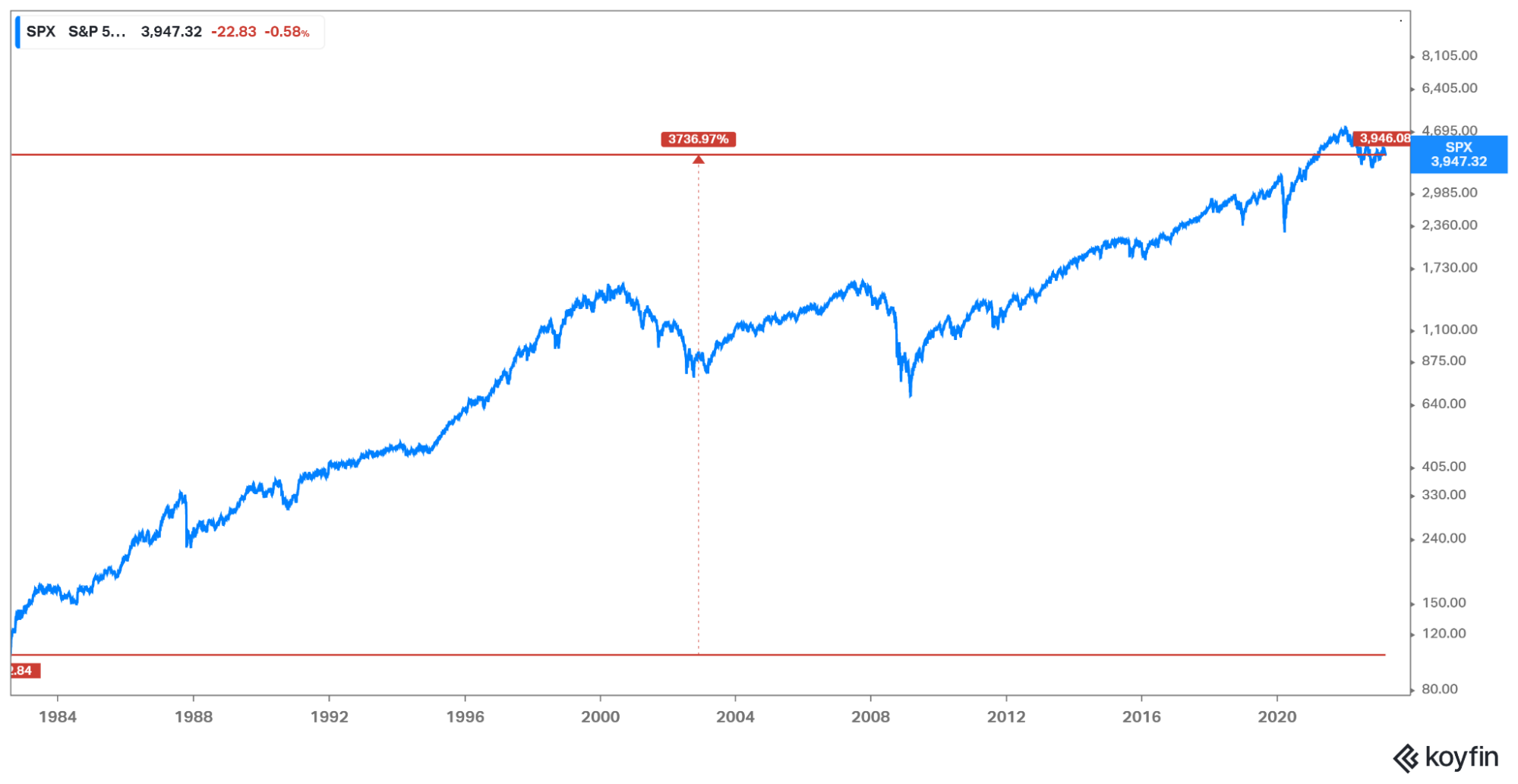
The American Century Equity Index Fund serves as a cornerstone core equity holding for individual and institutional investors seeking broad U.S. large-capitalization market exposure. Managed by American Century Investments, the fund employs a passive indexing investment strategy designed to replicate the total performance of the S&P 500 Index. The S&P 500 is widely considered the premier single benchmark for large-cap U.S. equities, representing approximately 80% of the total available U.S. stock market capitalization.
Rather than attempting to outperform the market through active stock selection or tactical market timing, the fund maintains a portfolio holding all—or substantially all—of the securities included in the benchmark index. Each stock is held in approximately the same weight as it occupies within the index itself. This market-capitalization-weighted design means larger companies (such as major technology and healthcare conglomerates) exert a proportionately higher influence on daily fund performance than smaller constituent firms.
For retail investors building long-term retirement portfolios, as well as institutional plan sponsors constructing employer-sponsored 401(k) lineups, the fund provides an efficient, liquid vehicle for capturing general U.S. economic growth over extended investment horizons.
Core Features and Investment Mechanics
Understanding how the fund operates requires examining its core investment mechanics, weighting scheme, and management structure.
Index Replication and Portfolio Weighting
The fund utilizes a full-replication management approach whenever practical. Under full replication, fund managers purchase every constituent stock in the S&P 500 Index according to its exact free-float market-capitalization weight. Free-float weighting counts only those shares available to public investors, excluding closely held insider shares or government holdings.
When S&P Dow Jones Indices rebalances or adjusts the underlying benchmark—due to corporate mergers, index inclusions/exclusions, or secondary offerings—the fund's management team executes corresponding trades to realign the portfolio. This ensures the fund minimizes tracking error, which is the performance gap between the fund's net asset value (NAV) return and the underlying index return.
Sector Exposure and Diversification
By tracking the S&P 500, the fund provides immediate exposure across eleven primary Global Industry Classification Standard (GICS) sectors:
- Information Technology: Mega-cap software, hardware, and semiconductor companies.
- Financials: Commercial banks, investment firms, payment processors, and insurance providers.
- Healthcare: Pharmaceuticals, medical device manufacturers, and biotechnology firms.
- Consumer Discretionary: E-commerce retailers, automotive manufacturers, and leisure businesses.
- Communication Services: Telecom networks, streaming media platforms, and digital advertising giants.
- Industrials, Consumer Staples, Energy, Utilities, Real Estate, and Materials: Providing defensive stability, infrastructure, and commodity exposure.
This multi-sector balance shields investors from company-specific default risks, though sector-level shifts in overall equity markets will directly impact fund performance.
Dividend Distributions and Compounding
Companies within the S&P 500 regularly distribute cash dividends to shareholders. The fund collects these payments and distributes them net of operational fees to fund shareholders, typically on a quarterly schedule. Investors can elect to receive these distributions as cash payouts or automatically reinvest them to purchase additional fund shares, enhancing the power of long-term compounding.
Share Classes, Fees, and Minimum Requirements
American Century Investments structures the fund into distinct share classes tailored to different distribution channels, investor categories, and account balance levels. Expense ratios and minimum initial investments vary significantly depending on the share class selected.
Share Class Structure Breakdown
- Investor Class (Ticker: TWBIX): Designed primarily for individual retail investors purchasing shares directly through American Century accounts or participating third-party brokerage platforms. It features a accessible minimum initial investment requirement but carries a slightly higher expense ratio to cover retail administration.
- Institutional Class (Ticker: BSPIX): Tailored for institutional accounts, high-net-worth individuals, non-profit endowments, and fee-based wealth management advisors. This class offers a lower annual expense ratio in exchange for a significantly higher minimum initial deposit threshold.
- R6 Class (Ticker: AIVIX): Created specifically for fee-only institutional plans, such as qualified 401(k) and 403(b) retirement plans. It carries no 12b-1 marketing fees or sub-transfer agency service fees, making it the lowest-cost share class option available for qualifying retirement plans.
| Share Class | Ticker Symbol | Typical Min. Initial Investment | Target Audience | Primary Fee Structure |
|---|---|---|---|---|
| Investor Class | TWBIX | $2,500 (Lower for IRAs) | Individual Retail Investors | Standard Retail Expense Ratio |
| Institutional Class | BSPIX | $5,000,000 | Institutional & High-Net-Worth | Reduced Institutional Fee |
| R6 Class | AIVIX | No Minimum (Plan Dependent) | Qualified Employer Retirement Plans | Lowest Net Operating Fee (No Revenue Sharing) |
Note: Specific expense ratios fluctuate annually based on net asset sizes and fee waivers. Investors should consult the official fund prospectus on the U.S. Securities and Exchange Commission (SEC) database for current official prospectus filings.
Performance Profile and Risk Considerations
While index funds offer broad diversification, investing in an equity index fund carries market risks that must be weighed against potential long-term returns.
Tracking Error and Efficiency
The primary success metric for an index fund is how closely its net asset value (NAV) tracks its underlying index. The American Century S&P 500 Index Fund maintains a low tracking error profile. Discrepancies between the fund's returns and the S&P 500 Index are driven almost entirely by:
- The annual net expense ratio of the given share class.
- Minor cash balances held daily to handle shareholder redemptions and dividend inflows.
- Transaction costs incurred during index rebalancing events.
Primary Risk Factors
- Systemic Market Risk: Equity markets experience natural volatility. If the broader U.S. stock market falls, the fund will decline in lockstep. The fund does not hold cash reserves or defensive bond positions to buffer against bear markets.
- Large-Cap Concentration Risk: Top holdings within the S&P 500 (often technology and mega-cap growth stocks) can account for a significant percentage of total index capitalization. Poor earnings or valuation compression among the top ten holdings can disproportionately impact the entire fund.
- No Active Management Protection: Fund managers do not sell underperforming stocks or alter portfolio weights based on economic forecasts, interest rate changes, or geopolitical events.
Tax Considerations and Account Placement
Holding mutual fund shares in taxable versus tax-advantaged accounts creates different tax liabilities for investors.
Capital Gains and Dividend Taxation
In a standard taxable brokerage account, investors owe taxes on:
- Quarterly Dividend Distributions: Taxed as qualified or non-qualified dividends depending on holding period criteria established by federal tax code.
- Annual Capital Gains Distributions: Mutual funds must pass along realized net capital gains from internal portfolio rebalancing or cash redemption management. Index mutual funds generally feature low portfolio turnover, minimizing capital gains distributions compared to actively managed funds, but capital gains distributions remain possible.
- Realized Gains Upon Sale: Capital gains taxes apply when an investor sells fund shares for a price higher than their original cost basis.
Tax-Advantaged Retirement Vehicles
To mitigate immediate tax liabilities, investors frequently hold the fund within tax-sheltered accounts regulated by the Internal Revenue Service (IRS):
- Traditional IRA & 401(k): Contributions may be tax-deductible, and growth accrues on a tax-deferred basis until distributions begin in retirement.
- Roth IRA & Roth 401(k): Contributions are made with after-tax dollars, but investment earnings and qualified retirement distributions are completely tax-free.
Comparing the Fund to Alternative S&P 500 Vehicles
Investors evaluating the American Century S&P 500 Index Fund often compare it to alternative mutual funds and exchange-traded funds (ETFs) tracking the same benchmark.
Mutual Funds vs. ETFs
- Pricing Schedule: Mutual fund shares are bought and sold at the end-of-day Net Asset Value (NAV) calculated after major stock exchanges close. ETFs trade throughout the trading day at live market prices on stock exchanges.
- Automatic Investment Options: Mutual funds often allow dollar-based fractional investing and automated monthly bank transfers, whereas traditional ETFs may require share-based transactions depending on the brokerage platform.
- Tax Efficiency: ETFs generally utilize an in-kind creation/redemption process with authorized participants, which typically makes them slightly more tax-efficient regarding capital gain distributions in taxable accounts than traditional mutual fund structures.
Direct Competitors
The fund competes directly with large-cap index funds offered by Vanguard (such as VFIAX or VOO), Fidelity (FXAIX), and iShares (IVV). For accounts held directly within American Century platform services or specified retirement plan lineups, the American Century S&P 500 Index Fund offers seamless internal integration without requiring third-party brokerage routing.
Step-by-Step Guide: How to Invest
Investors looking to add the American Century S&P 500 Index Fund to their portfolio can follow these practical steps:
- Determine Account Type: Decide whether the investment belongs in a taxable brokerage account, a Traditional/Roth IRA, or an employer-sponsored plan.
- Select the Platform:
- Direct Account: Open an account directly on the official American Century Investments website.
- Third-Party Brokerage: Check whether your preferred brokerage platform (e.g., Charles Schwab, Fidelity, or Interactive Brokers) offers the fund's ticker without transaction fees.
- Choose the Proper Share Class: Verify whether you meet the eligibility criteria and initial investment minimums for the Investor Class (TWBIX) or Institutional Class (BSPIX).
- Set Up Distribution Preferences: Select whether quarterly dividend and capital gain distributions should automatically reinvest into additional fund shares or deposit into a cash sweep account.
- Establish Automated Dollar-Cost Averaging: Configure automatic recurring contributions from a linked bank account to steadily accumulate shares regardless of short-term market fluctuations.
Frequently Asked Questions
What index does the American Century Equity Index Fund track?
The fund tracks the S&P 500 Index, a market-capitalization-weighted index composed of 500 of the largest publicly traded U.S. companies across major sectors.
Is the American Century S&P 500 Index Fund actively managed?
No. The fund is passively managed. The portfolio management team aims to replicate the holdings and total return performance of the underlying S&P 500 Index rather than selecting stocks based on active research.
Can I buy this fund inside an Individual Retirement Account (IRA)?
Yes. The fund is available for purchase within Traditional IRAs, Roth IRAs, and SEP IRAs, providing tax-deferred or tax-free growth potential depending on the chosen account type.
What is the difference between TWBIX and BSPIX?
TWBIX represents the Investor Share Class designed for retail investors with lower minimum initial deposit requirements. BSPIX represents the Institutional Share Class, which offers a lower expense ratio but requires a higher minimum investment balance.
Does the fund pay dividends?
Yes. The fund collects cash dividends paid by constituent companies in the S&P 500 Index and distributes them to fund shareholders, typically on a quarterly schedule.
Practical Recommendations for Investors
The American Century S&P 500 Index Fund provides a low-cost, broadly diversified foundation for equity portfolios. For individual investors utilizing American Century direct accounts or employer-sponsored plan options where this fund is included, it represents an effective instrument for gaining passive exposure to U.S. economic expansion.
Before committing capital, review your overall asset allocation strategy. Ensure that equity market volatility aligns with your risk tolerance, verify fee schedules for your specific share class, and consider utilizing automated periodic investments to build wealth systematically over time.
Disclaimer: This article is for informational purposes only and does not constitute financial, legal, or investment advice. Investors should read the fund's official prospectus carefully and consult a qualified financial advisor before making investment decisions.
Image Gallery