The CEO of Bridgestone Leads a Global Tire Empire: Leadership, Strategy, and the 2026 Vision
As of 2026, Shuichi Ishibashi continues to serve as the Global CEO and Representative Executive Officer of Bridgestone Corporation, steering the world’s largest tire and rubber company through a massive structural transformation. Under...
As of 2026, Shuichi Ishibashi continues to serve as the Global CEO and Representative Executive Officer of Bridgestone Corporation, steering the world’s largest tire and rubber company through a massive structural transformation. Under his leadership, Bridgestone has pivoted from a traditional hardware manufacturer to a sustainable solutions company, integrating advanced material science with digital fleet management.
Contents
The Architect of Bridgestone 3.0
The "empire" that the CEO of Bridgestone leads is currently in the final stages of its "Bridgestone 3.0" era. This phase, which began in 2020, represents the third major evolution of the company since its founding in 1931 by Shojiro Ishibashi. While Bridgestone 1.0 focused on the company’s foundation and domestic growth in Japan, and 2.0 focused on global expansion following the acquisition of Firestone in 1988, 3.0 is defined by a commitment to sustainability and digital integration.
Shuichi Ishibashi’s leadership style is characterized by a "Dan-Totsu" philosophy—a Japanese term meaning to be the absolute and clear leader in every segment the company enters. Since taking the helm, Ishibashi has restructured the organization to be more agile, focusing on "premium" products rather than high-volume, low-margin tires. This strategy has allowed Bridgestone to maintain profitability despite volatile raw material costs and shifting global trade dynamics in 2026.
His mandate involves overseeing more than 130,000 employees worldwide and managing a manufacturing footprint that spans over 130 plants. The CEO’s primary challenge has been balancing the legacy of the Firestone brand in the West with the high-tech, precision-engineered reputation of the Bridgestone brand globally, all while navigating the transition to electric vehicles (EVs).
Global Operations and Regional Leadership
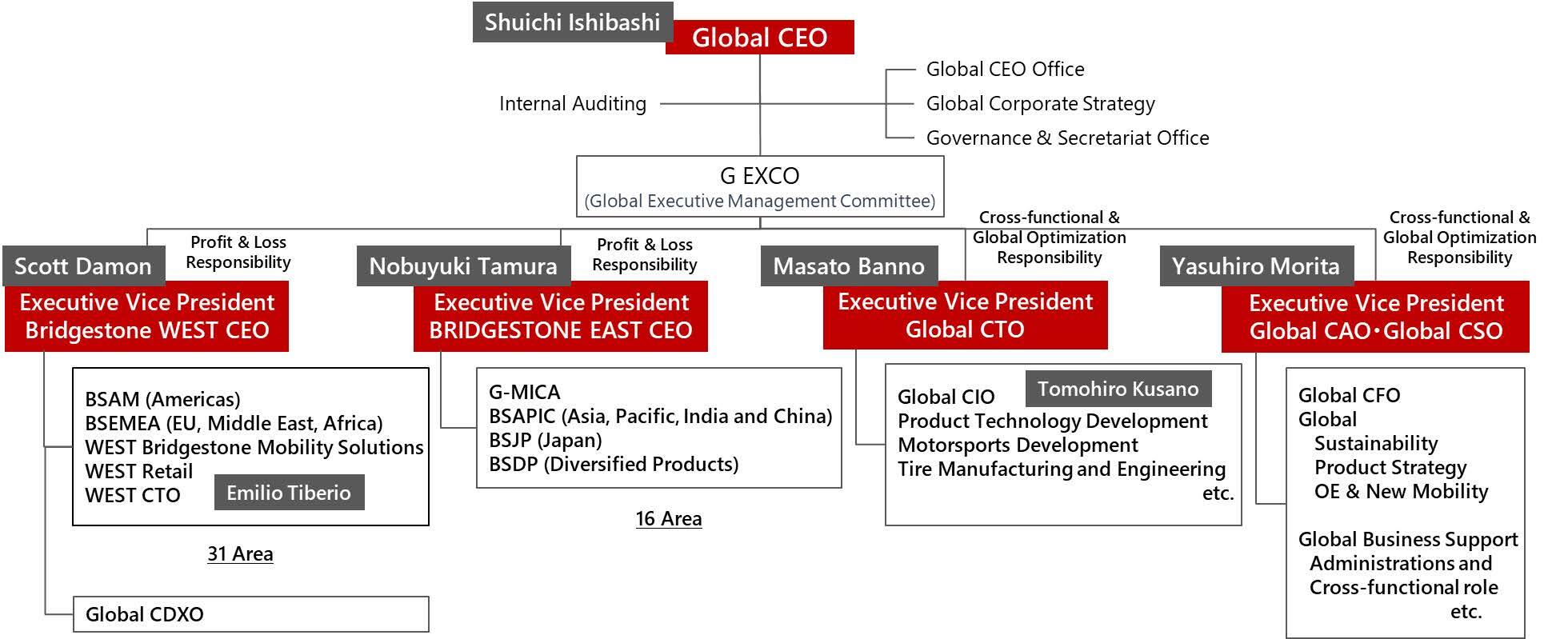
While the global headquarters remains in Tokyo, the Bridgestone empire is decentralized to allow for regional market sensitivity. The CEO manages a complex hierarchy of regional executives who oversee specific market demands:
Bridgestone Americas (BSAM)
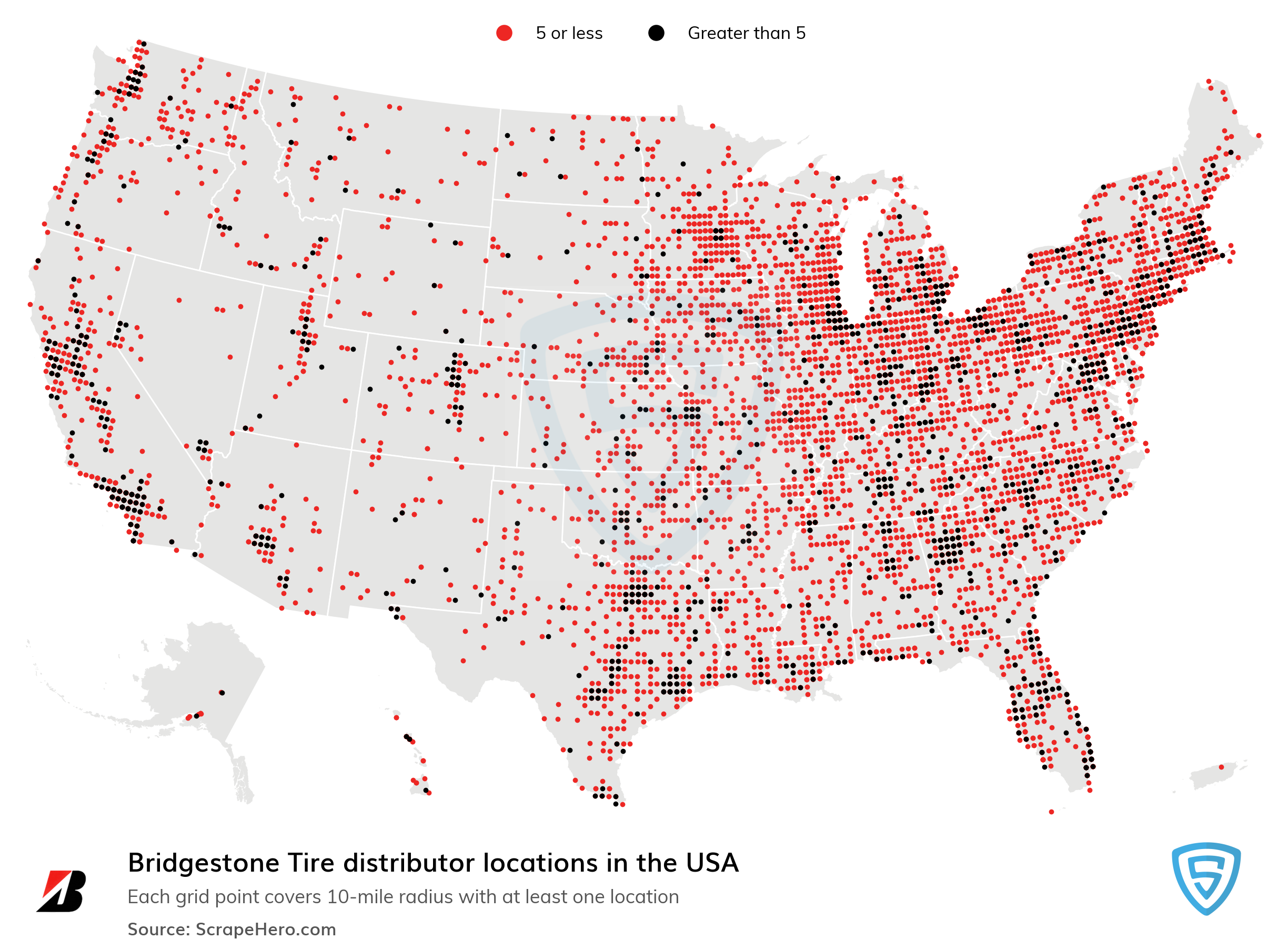
Headquartered in Nashville, Tennessee, the Americas division is the largest contributor to Bridgestone’s global revenue. The CEO relies on this region to dominate the replacement tire market and maintain a massive presence in the agricultural and mining sectors. In 2026, the Americas division has focused heavily on the expansion of its retail network, which includes thousands of points of sale under the Firestone Complete Auto Care brand.
Bridgestone Europe, Middle East, and Africa (BSEMEA)
Based in Zaventem, Belgium, this division is the testing ground for the company’s most advanced sustainability initiatives. Under the guidance of the global CEO, the EMEA region has led the charge in adopting circular economy practices, including tire-to-tire recycling and the implementation of bio-based materials in high-performance tires for the European luxury car market.
China and Asia Pacific
This region represents the highest growth potential for the empire. The leadership here focuses on the rapid expansion of the EV market. By 2026, Bridgestone has established numerous partnerships with Asian EV manufacturers to provide specialized tires that handle the increased weight and torque specific to electric drivetrains.
The Bridgestone E8 Commitment: A Strategic Framework
The global tire empire is currently governed by the "Bridgestone E8 Commitment," a corporate roadmap introduced by Ishibashi to align business goals with societal value. This framework is not merely a CSR (Corporate Social Responsibility) initiative; it is the core operational manual for every department within the company.
The eight values—Energy, Ecology, Efficiency, Extension, Economy, Emotion, Ease, and Empowerment—serve as the KPIs for regional managers.
- Energy and Ecology: Focus on carbon-neutral manufacturing and the use of sustainable materials like Guayule (a desert shrub that serves as an alternative to Hevea rubber).
- Efficiency and Economy: These pillars drive the "solutions" side of the business, using data to help commercial fleets reduce fuel consumption and extend the life of their tires.
- Emotion and Empowerment: These focus on the brand’s involvement in motorsports (like the IndyCar series) and ensuring a diverse, equitable workplace across its global locations.
Technological Innovation: ENLITEN and Material Science
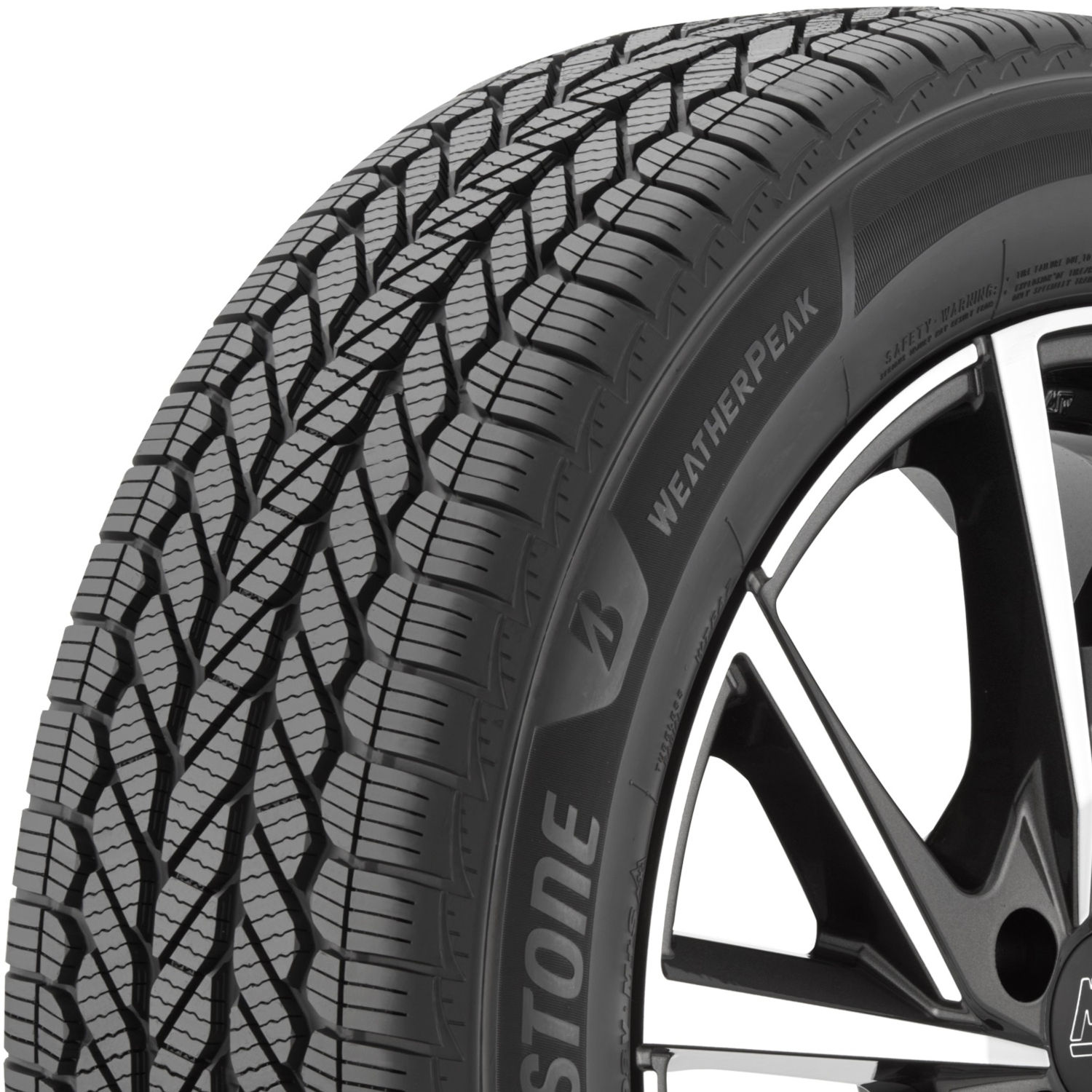
To lead a tire empire in 2026, the CEO must prioritize R&D that moves beyond simple rubber compounds. The centerpiece of Bridgestone’s current product lineup is ENLITEN technology. This is a base technology for tire development that reduces environmental impact while enhancing tire performance.
Key features of the ENLITEN platform include:
- Mass Reduction: Tires are significantly lighter than previous generations, which is critical for extending the battery range of EVs.
- Low Rolling Resistance: By optimizing the chemical bond between the filler and the synthetic rubber, Bridgestone has achieved "Grade A" rolling resistance without sacrificing wet grip.
- Sustainability Integration: In 2026, the ENLITEN platform allows for the inclusion of up to 60% recycled and renewable materials in premium consumer tires.
Furthermore, the CEO has pushed for the integration of RFID (Radio Frequency Identification) technology in all commercial tires. This allows the "empire" to track the lifecycle of a tire from the factory to the retreading plant, providing fleet managers with real-time data on tire pressure, temperature, and wear patterns.
Beyond Rubber: The Solutions Business
Under Ishibashi’s tenure, Bridgestone has transformed from a seller of products to a seller of services. This is most evident in the "Solutions" business, which now accounts for a significant portion of the company’s annual earnings.
The acquisition of Webfleet Solutions (formerly TomTom Telematics) was a pivotal move that the CEO has since integrated into the "Bridgestone Mobility Solutions" business unit. By 2026, this unit provides comprehensive fleet management tools that integrate tire data with vehicle telematics. This allows logistics companies to optimize routes, monitor driver behavior, and schedule predictive maintenance, significantly lowering the "Total Cost of Ownership" (TCO) for commercial operators.
In the mining and aviation sectors, the Bridgestone empire operates on a "pay-per-use" or "pay-per-kilometer" model. Instead of buying tires, mining companies pay for the "uptime" provided by Bridgestone’s specialized OTR (Off-the-Road) tires and on-site monitoring services. This shift aligns the CEO's goals with the customers' goals: maximizing the longevity of the product.
Comparison of Bridgestone’s Market Segments (2026 Data)
| Segment | Primary Focus | Key Technology | 2026 Strategic Goal |
|---|---|---|---|
| Passenger (PSR) | Premium EV & Luxury | ENLITEN Technology | 90% Market share in High-Rim Diameter tires |
| Truck & Bus (TBR) | Fleet Efficiency | RFID & Webfleet Integration | Move 40% of revenue to "Tire-as-a-Service" |
| Off-the-Road (OTR) | Mining & Construction | Mastercore Durability | Circular economy (retreading and recycling) |
| Aviation | Safety & Performance | High-Pressure Synthetic Fiber | Strategic partnerships with major airlines |
| Diversified Products | Industrial & Sports | Precision Vibration Isolation | Expansion into seismic isolation for buildings |
Challenges and the 2026 Market Outlook
Despite its dominance, the CEO of Bridgestone faces significant headwinds. The most pressing is the geopolitics of natural rubber. With over 90% of the world's natural rubber coming from Southeast Asia, supply chain disruptions are a constant threat. To mitigate this, Bridgestone has invested heavily in its Guayule research farm in Arizona, aiming to commercialize desert-shrub-derived rubber on a massive scale by the end of this decade.
Another challenge is the transition to circularity. While "sustainable tires" are a marketing success, the industrial infrastructure to recycle tires back into high-quality raw materials at scale is still developing. The CEO has entered into several joint ventures with chemical recycling firms to perfect the pyrolysis process, which breaks down old tires into carbon black and oil for reuse.
Finally, competition from "tier two" manufacturers in emerging markets continues to pressure the low-end segment. The CEO’s response has been a disciplined "value over volume" approach, intentionally exiting low-margin markets to focus on the specialized needs of premium OEMs (Original Equipment Manufacturers) like BMW, Audi, and Tesla.
Frequently Asked Questions
Who is the current CEO of Bridgestone in 2026?
Shuichi Ishibashi remains the Global CEO and Representative Executive Officer. He was appointed in March 2020 and has been the driving force behind the Bridgestone 3.0 transformation and the E8 Commitment.
Where is the global headquarters of the Bridgestone empire?
The global headquarters is located in Chuo-ku, Tokyo, Japan. However, the company operates massive regional headquarters in Nashville (Americas) and Zaventem (EMEA) to manage local operations.
What is the "Bridgestone E8 Commitment"?
It is a corporate framework consisting of eight values (Energy, Ecology, Efficiency, Extension, Economy, Emotion, Ease, and Empowerment) that guide the company's strategic decisions and sustainability goals through 2030.
Does Bridgestone own Firestone?
Yes, Bridgestone acquired Firestone in 1988. In 2026, Firestone remains a key brand within the Bridgestone empire, particularly in the North American market and in agricultural tire segments.
How is Bridgestone addressing the rise of electric vehicles?
The company utilizes ENLITEN technology to create tires that are lighter and have lower rolling resistance, specifically designed to handle the heavier weight and instant torque of EVs while maximizing battery range.
Final Recommendation for Stakeholders
For investors, partners, and consumers, the leadership of the Bridgestone CEO represents a bet on technology-driven sustainability. The company is no longer just a "tire maker"; it is a mobility data firm. Stakeholders should focus on the company’s progress in its "Solutions" business and its ability to secure alternative raw material sources like Guayule. As the automotive world shifts toward autonomous and electric fleets, Bridgestone’s integration of digital sensing into the physical tire is likely to be its most valuable asset. Those following the company should monitor the 2024–2026 Mid-Term Business Plan results to verify if the "value over volume" strategy continues to deliver the industry-leading margins the CEO has promised.
Image Gallery