Becoming a Finance Officer in the Air Force: Roles, Requirements, and Career Path
The Financial Management and Comptroller Officer (AFSC 65FX) is a commissioned professional responsible for managing the Air Force’s multibillion-dollar budget, overseeing financial services, and providing strategic cost analysis. Thes...
The Financial Management and Comptroller Officer (AFSC 65FX) is a commissioned professional responsible for managing the Air Force’s multibillion-dollar budget, overseeing financial services, and providing strategic cost analysis. These officers ensure that fiscal resources are legally and efficiently allocated to support global air, space, and cyber operations.
Contents
In 2026, the landscape of military finance is more complex than ever. As the United States Air Force continues to modernize its fleet and enhance its technological capabilities, the role of the finance officer has transitioned from traditional accounting to high-level resource management and strategic advisory. These officers serve as the backbone of every wing, ensuring that commanders have the financial intelligence necessary to make critical mission decisions.
The Core Responsibilities of a 65FX Officer
A finance officer in the Air Force does not merely "balance books." They are the primary financial advisors to senior leadership. Their responsibilities are generally divided into three distinct functional areas: Financial Services, Financial Analysis, and Audit/Budget Execution.
Financial Services and Operations
At the base level, finance officers oversee the Financial Services Office (FSO). This department manages military and civilian pay, travel reimbursements, and various entitlements. While much of the day-to-day processing is handled by enlisted Financial Management technicians (6F0X1), the officer is legally responsible for the integrity of the funds. They ensure that disbursements comply with the Department of Defense Financial Management Regulation (DoD FMR) and that internal controls are in place to prevent fraud, waste, and abuse.
Financial Analysis and Budgeting
The "Financial Analysis" (FPA) side is where the officer acts as a strategic planner. They manage the Operations and Maintenance (O&M) budget for their assigned wing or major command. This involves projecting future funding needs, analyzing spending trends, and reallocating funds during the "end-of-year" closeout to ensure no mission-critical requirements go unfunded. In 2026, this increasingly involves utilizing advanced data analytics and predictive modeling to forecast energy costs, maintenance expenditures, and personnel requirements.
Cost Analysis and Strategic Decision Support
Finance officers are often called upon to perform lifecycle cost estimates for new weapon systems or infrastructure projects. By applying economic analysis and statistical modeling, they determine the most cost-effective way to achieve an objective—whether that is leasing versus buying equipment or evaluating the fiscal impact of a new base opening.
Requirements and Eligibility for Commissioning
Becoming a finance officer is a competitive process that requires a specific educational background and a successful commissioning path. Unlike some officer roles that accept any degree, the 65F career field has strict academic requirements.
Educational Prerequisites
To qualify for the 65FX career field, applicants must typically hold a Bachelor’s or Master’s degree from an accredited institution. According to Air Force Officer Classification Directory (AFOCD) standards, a significant portion of the degree must be in business-related disciplines.
- Preferred Majors: Accounting, Finance, Economics, Business Administration, or Management.
- Credit Hour Requirements: Most candidates must have at least 24 semester hours in business-related subjects, with at least 9 of those hours specifically in accounting.
- GPA Standards: While the minimum GPA for commissioning is often 3.0, successful applicants in 2026 generally possess a 3.5 or higher due to the technical nature of the role.
Commissioning Sources
There are three primary ways to earn a commission as an Air Force finance officer:
- Air Force ROTC (Reserve Officers' Training Corps): Available at many colleges and universities, this program allows students to train for leadership while completing their degree.
- United States Air Force Academy (USAFA): A prestigious four-year program that provides a rigorous academic and military education.
- Officer Training School (OTS): A 9.5-week program at Maxwell Air Force Base, Alabama, for individuals who already hold a degree. This is the primary route for civilian professionals and enlisted members seeking to "cross over" into the officer ranks.
Physical and Security Standards
All officers must meet the Air Force’s physical fitness standards, which include a 1.5-mile run, push-ups, and sit-ups. Additionally, because finance officers handle sensitive budgetary information and large sums of government funds, they must be able to obtain a Secret Security Clearance. This process involves a thorough background check into their financial history, criminal record, and foreign associations.
Specialized Training: The Financial Management Officer Course (FMOC)
Once commissioned, every new finance officer attends the Financial Management Officer Course at Keesler Air Force Base in Mississippi. As of 2026, this course lasts approximately 13 to 14 weeks and is designed to bridge the gap between civilian business practices and military-specific financial systems.
The curriculum covers:
- Government Accounting: Learning the specialized rules of federal appropriations law.
- Decision Support: Training on how to present financial data to commanders.
- Systems Training: Mastery of the Defense Enterprise Accounting and Management System (DEAMS) and the Air Force Integrated Personnel and Pay System (AFIPPS).
- Deployment Operations: Preparing to manage funds in "contingency environments," such as forward-operating bases where cash operations and local vendor payments are necessary.
2026 Salary and Compensation Overview
The compensation for an Air Force finance officer is based on rank and years of service. In addition to basic pay, officers receive a Basic Allowance for Housing (BAH) and a Basic Allowance for Subsistence (BAS), which are non-taxable.
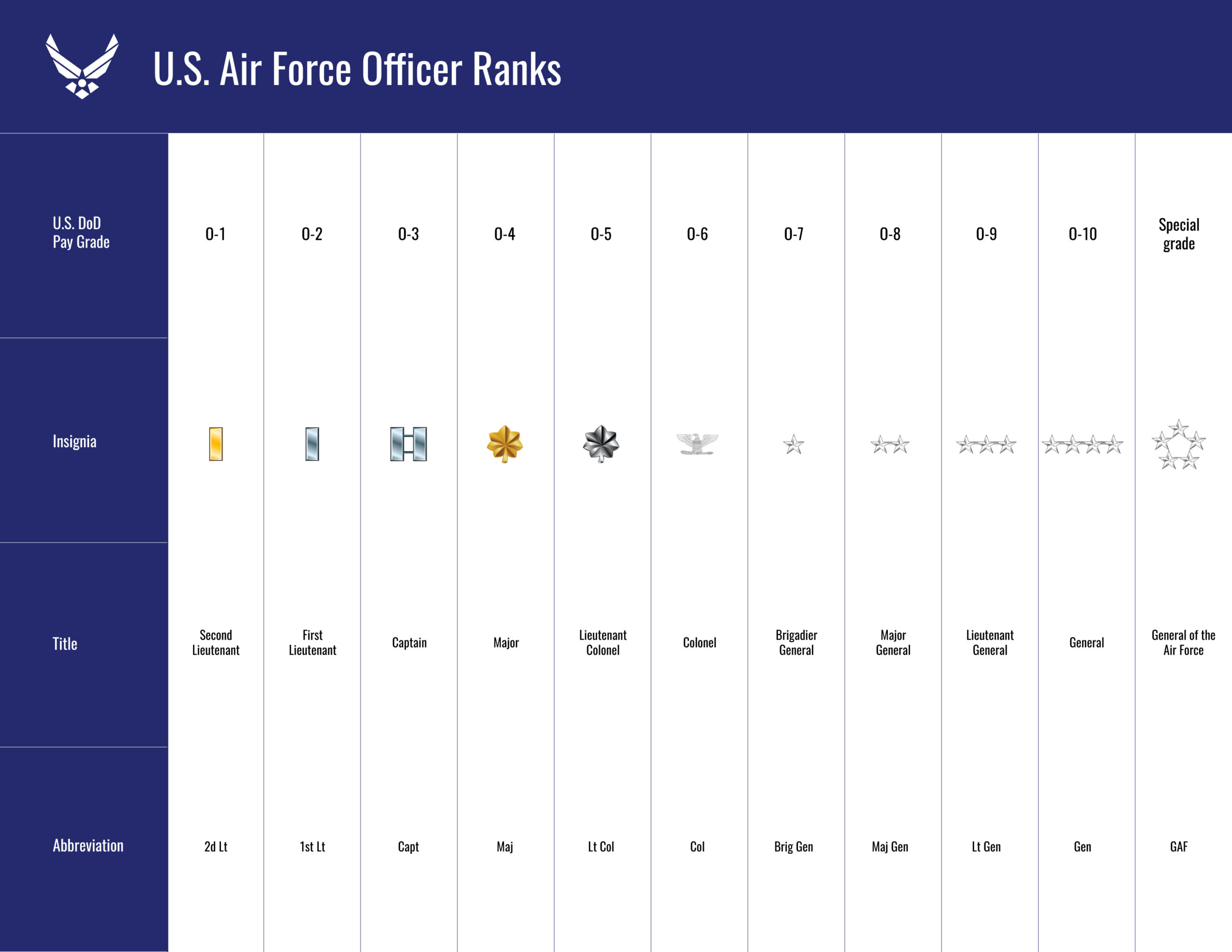
| Rank | Estimated Basic Monthly Pay (2026) | Typical Years of Service | Common Roles |
|---|---|---|---|
| O-1 (Second Lieutenant) | $4,150 – $4,400 | 0–2 years | Deputy Flight Commander |
| O-2 (First Lieutenant) | $4,850 – $5,600 | 2–4 years | Flight Commander / Budget Officer |
| O-3 (Captain) | $5,800 – $7,900 | 4–10 years | Comptroller / Squadron Commander |
| O-4 (Major) | $6,900 – $9,800 | 10–16 years | MAJCOM Staff Officer / Deputy Wing Comptroller |
| O-5 (Lieutenant Colonel) | $8,200 – $11,500 | 16–22 years | Wing Comptroller / Group Commander |
Note: Pay estimates are based on projected annual cost-of-living adjustments (COLA). BAH rates vary significantly by duty location (e.g., San Francisco vs. Montgomery).
Comparing Military and Corporate Finance Roles
While the fundamental principles of accounting are universal, the operational environment of an Air Force finance officer differs significantly from a corporate CFO or accountant.
| Feature | Air Force Finance Officer (65FX) | Corporate Finance Manager |
|---|---|---|
| Primary Goal | Mission readiness and statutory compliance | Profitability and shareholder value |
| Funding Source | Congressional Appropriations | Revenue, investments, and debt |
| Scope of Authority | Direct command over military personnel | Management of civilian staff |
| Legal Framework | U.S. Code Title 10 and 31 | GAAP, IFRS, and SEC regulations |
| Career Path | Regular rotations every 2–4 years | Often specialized in one industry for years |
| Travel/Deployment | High potential for global deployment | Business travel to corporate offices |
Career Progression and Certifications
A career as a finance officer offers significant opportunities for professional growth. The Air Force encourages officers to obtain civilian-recognized certifications to enhance their expertise and prepare for post-military careers.
Professional Certifications
The Air Force often pays for the training and exam fees for:
- Certified Defense Financial Manager (CDFM): The gold standard for DoD finance professionals.
- Certified Government Financial Manager (CGFM): Focused on federal, state, and local government accounting.
- Certified Public Accountant (CPA): Though civilian, it is highly valued within the 65F community.
- DoD FM Certification: A mandatory three-tier certification program established by the Department of Defense.
Advanced Education
As officers progress to the rank of Captain and Major, they are often selected for Advanced Academic Degree (AAD) programs. The Air Force Institute of Technology (AFIT) offers specialized Master’s degrees in Cost Analysis and Financial Management. These programs allow officers to attend school full-time while receiving full pay and benefits.
Challenges and Future Trends in 2026
As we look at the current state of the Air Force in 2026, the finance officer faces unique challenges:
- Audit Readiness: The DoD continues to work toward a "clean" audit opinion. Finance officers are the front-line leaders in ensuring every dollar is traceable and every asset is accounted for.
- Digital Transformation: The retirement of legacy mainframe systems in favor of cloud-based, integrated ERP (Enterprise Resource Planning) systems requires officers to be as tech-savvy as they are financially literate.
- Agile Combat Employment (ACE): As the Air Force moves toward smaller, more dispersed teams in contested environments, finance officers must develop ways to sustain operations without the traditional "brick-and-mortar" finance office.
FAQ: Frequently Asked Questions
Do Air Force finance officers go into combat?
While they are not "combat arms" officers like pilots or special tactics officers, finance officers are deployable. They may serve in high-threat environments to manage contracts and pay for local supplies, though they typically operate from within secured bases.
Can I join the Air Force as a finance officer if I am already a CPA?
Yes. Having a CPA makes you a very competitive candidate for OTS. While it does not automatically grant you a commission, it may allow for a smoother transition and make you eligible for certain high-level assignments earlier in your career.
Is the 65FX career field open to Reserve and Guard members?
Absolutely. Both the Air Force Reserve and the Air National Guard employ finance officers. These roles are ideal for individuals who wish to maintain a civilian finance career while serving their country part-time.
What is the difference between a Finance Officer and a Contracting Officer?
Finance officers (65F) manage the budget, pay people, and analyze costs. Contracting officers (64P) are the only ones legally authorized to enter into contracts with civilian vendors to purchase goods and services. They work closely together, but their legal authorities are distinct.
How often do finance officers move?
Like most Air Force officers, you can expect to move (Permanent Change of Station or PCS) every three to four years. This ensures a breadth of experience across different types of bases and commands.
Strategic Next Actions
For those considering this career path in 2026, the first step is to verify educational eligibility. Ensure your degree meets the 24-hour business and 9-hour accounting threshold. Prospective candidates should then contact an Officer Accessions Recruiter or the ROTC detachment at their university to discuss the current board schedules for OTS or ROTC enrollment.
For current service members, reviewing the Air Force Personnel Center (AFPC) classification directory for the most up-to-date AFSC 65FX requirements is essential before submitting a commissioning package.
Image Gallery