Does a House in Probate Count Toward Gross Net Worth?
A house in probate counts toward the gross net worth of the decedent’s estate, but it generally does not count toward a beneficiary’s individual gross net worth until the probate process is complete and the title is legally transferred...
A house in probate counts toward the gross net worth of the decedent’s estate, but it generally does not count toward a beneficiary’s individual gross net worth until the probate process is complete and the title is legally transferred. While the estate is active, the property is a "contingent asset" for heirs.
Contents
Calculating net worth during the transition of an estate is a complex task that requires distinguishing between the legal entity of the "Estate" and the individuals named in a will or state intestacy laws. In 2026, as estate tax exemptions and property valuations remain central to financial planning, understanding how a house in probate affects these balance sheets is essential for executors, heirs, and creditors alike.
Defining Gross Net Worth in the Probate Context
To answer whether a house in probate "counts," one must first define gross net worth. Unlike "net worth," which subtracts liabilities from assets, gross net worth is the total fair market value of all assets owned by an entity before any debts, such as mortgages or liens, are deducted.
In the realm of probate, the "entity" in question is usually the estate of the deceased. When a person passes away, their belongings, bank accounts, investments, and real estate transition into a legal structure known as the probate estate.
The Estate’s Perspective
For the estate, the house is a primary component of its gross value. The probate court and the Internal Revenue Service (IRS) look at the fair market value (FMV) of the home at the time of the owner's death. This figure is used to determine if the estate exceeds federal or state tax thresholds and to calculate the bond amount the executor might need to post.
The Beneficiary’s Perspective
For a beneficiary, a house in probate is an "expectancy." Even if a will explicitly leaves the house to a specific child, that child does not "own" the asset in a way that allows them to list it as a primary asset on a personal financial statement for a conventional loan. Because the house could potentially be sold by the executor to pay off the decedent’s creditors, it remains a "contingent" or "pending" asset until the court issues a decree of distribution.
Why Gross Net Worth Matters During Probate
The distinction between gross and net values is particularly important during the probate process for several legal and financial reasons.
1. Probate Filing Fees
In many jurisdictions, the cost of filing for probate is tiered based on the gross value of the estate's assets. For example, if a house is worth $500,000 but has a $450,000 mortgage, the probate court often calculates fees based on the $500,000 gross figure. The debt does not "hide" the value of the asset from the court's administrative reach.
2. Estate Tax Thresholds
As of 2026, federal estate tax exemptions are a critical consideration for high-net-worth individuals. The IRS evaluates the Gross Estate, which includes the FMV of the home. If the gross estate exceeds the exemption limit (which has seen adjustments following the sunsetting of various provisions from the previous decade), an estate tax return (Form 706) must be filed, even if the "net" estate is significantly smaller due to debts.
3. Creditor Claims and Solvent Estates
The gross value tells creditors what is "on the table." If an estate has $1 million in gross assets (including a house) but $1.2 million in debt, the estate is insolvent. However, the house still "counts" toward the gross total that the executor must manage and potentially liquidate to satisfy those debts in the order of priority established by state law.
The "Step-Up in Basis" and Valuation in 2026
One of the most significant financial implications of a house being in probate is the step-up in basis. This rule is foundational to how the house affects the net worth of the eventual recipient.
When a beneficiary inherits a home, their "cost basis" for future capital gains taxes is not what the decedent paid for the house in 1990. Instead, the basis is "stepped up" to the fair market value on the date of the decedent’s death.
- Example: If a decedent bought a house for $100,000 and it is worth $800,000 at their death in 2026, the house counts as $800,000 toward the estate’s gross net worth.
- The Benefit: When the heir eventually receives the title and sells it for $810,000, they only owe taxes on the $10,000 gain, not the $710,000 gain.
Because of this, an accurate appraisal during the probate period is vital. The gross value recorded in the probate inventory becomes the benchmark for the heir’s future financial health and their own personal gross net worth once the property is distributed.
How Mortgages Affect the "Gross" vs. "Net" Calculation
A common point of confusion is how a mortgage interacts with the probate house. If the goal is to determine gross net worth, the mortgage is irrelevant.
| Asset Status | Calculation for Gross Net Worth | Calculation for Net Worth (Equity) |
|---|---|---|
| In Probate (Estate) | Full Fair Market Value (FMV) | FMV minus Mortgage & Liens |
| In Probate (Beneficiary) | Usually $0 (Contingent) | $0 until Title Transfers |
| Post-Probate (Owner) | Full Fair Market Value | FMV minus Mortgage |
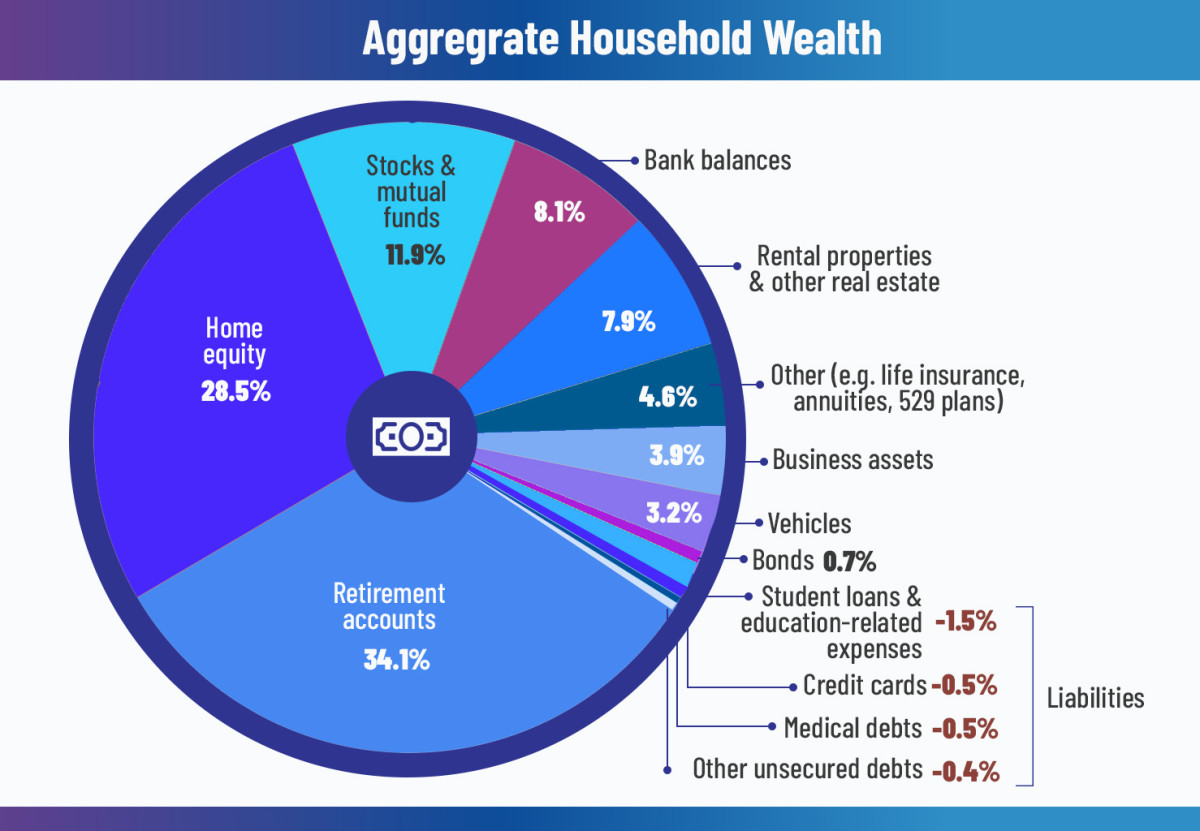
In 2026, real estate markets remain a primary driver of household wealth. For an executor, reporting the house in the inventory requires the full value. If the house is worth $1.2 million, that is the figure reported, regardless of whether there is a $1 million mortgage. This can often lead to a "paper" gross net worth for the estate that seems much larger than the actual liquidity available to the heirs.
When Does the House Move to the Beneficiary’s Net Worth?
The transition of a house from the estate's balance sheet to the beneficiary's balance sheet occurs at a specific legal inflection point.
- Petition for Distribution: The executor asks the court for permission to move assets to heirs.
- Court Order: The judge signs an order approving the transfer.
- Deed Recording: A "Personal Representative’s Deed" or "Executor’s Deed" is recorded with the county land records.
Once the deed is recorded, the house officially counts toward the beneficiary's gross net worth. Prior to this, if the beneficiary is applying for a high-value mortgage or a business loan, they may disclose the "pending inheritance," but most lenders will not count the house as a "qualified asset" because it is still subject to the claims of the decedent’s creditors.
Potential Complications: Joint Tenancy and Trusts
Not every house owned by a deceased person goes through probate. If a house avoids probate, its impact on gross net worth changes.
- Joint Tenancy with Right of Survivorship: If a husband and wife own a home together and one passes away, the house usually bypasses probate. It counts toward the surviving spouse’s gross net worth immediately upon the death of the partner.
- Living Trusts: If the house was held in a Revocable Living Trust, it does not enter the probate estate. The successor trustee manages it according to the trust documents. In this case, the house counts toward the trust's assets, which are often considered part of the beneficiaries' net worth for certain tax and planning purposes, though the legal title is held by the trust.
Common Mistakes in Calculating Probate Value
Executors often make errors when assessing the gross net worth of an estate, which can lead to legal delays or tax penalties.
- Using Tax Assessment Instead of Appraisal: Local property tax assessments are often lower than actual market value. The IRS and probate courts typically require a professional appraisal to determine the true FMV for the gross net worth calculation.
- Forgetting Personal Property: A house in probate isn't just the structure; it often contains "tangible personal property." While the house itself is "real property," the contents also count toward the estate's gross net worth.
- Ignoring Life Estates: If the decedent held a "Life Estate" that terminated upon their death, the house may not be part of their probate estate at all, as it may have automatically shifted to a "remainderman."
FAQs
1. Can I sell a house while it is still in probate?
Yes, an executor or administrator can usually sell a house while it is in probate, provided they have the authority from the court (often through the Independent Administration of Estates Act in various jurisdictions). The proceeds from the sale (the cash) would then count toward the estate’s gross net worth in place of the physical real estate.
2. Does a house in probate affect my debt-to-income ratio?
Generally, no. Since you do not yet legally own the home and are not responsible for the mortgage payments (the estate is), it should not affect your personal debt-to-income (DTI) ratio. However, if you are the executor and are also a beneficiary, you must ensure the estate's debts are paid to avoid complications that could indirectly affect your financial standing.
3. Is the gross net worth of an estate public record?
Yes, in most cases. Once the executor files the "Inventory and Appraisal" with the probate court, the document becomes a public record. This means anyone can see the gross valuation of the house and other assets held within the probate estate.
4. How do I report a probate house on my taxes in 2026?
Until the house is transferred to you, you typically do not report it on your personal income tax return (Form 1040). The estate is a separate taxpayer and files Form 1041 if it generates income (like rent) during the probate period. Once you own the home, you only report it if you sell it or if it becomes a rental property.
5. What if the house is worth less than the mortgage?
If the house has "negative equity," it still counts toward the estate’s gross net worth at its fair market value. However, the estate's net worth would be negative in regard to that asset. In such cases, the executor may consider a short sale or allowing the bank to foreclose, as there is no "net" value to pass to heirs.
Practical Recommendation
If you are managing an estate or are a beneficiary of a house in probate in 2026, your first step should be to obtain a professional Date-of-Death appraisal. This document is the cornerstone for establishing the gross net worth of the estate and locking in the "step-up in basis" for the heirs.
Consult with a qualified estate attorney to ensure that the house is correctly inventoried. Incorrectly reporting the gross value can lead to overpaying court fees or, conversely, triggering an IRS audit if the value is significantly understated. If you are a beneficiary looking to use your future inheritance as collateral for a loan, speak with a specialized "inheritance funding" lender, as traditional banks will rarely recognize a house in probate as part of your current gross net worth.
Image Gallery