What the Disney DAS Pass Really Means: A 2026 Guide to Eligibility and Use
Disney’s Disability Access Service (DAS) is a program designed to provide equitable access to attractions for guests who, due to a developmental disability like autism or similar conditions, are unable to wait in a conventional standby...
Disney’s Disability Access Service (DAS) is a program designed to provide equitable access to attractions for guests who, due to a developmental disability like autism or similar conditions, are unable to wait in a conventional standby queue for extended periods. It is not a "skip-the-line" pass; rather, it allows guests to wait virtually by providing a return time comparable to the current standby wait.
Contents
For years, the Disney Disability Access Service (DAS) has been one of the most discussed and, at times, misunderstood systems within the Walt Disney World and Disneyland Resorts. As we move through 2026, the program has settled into its most strictly defined iteration yet. Following significant policy overhauls in mid-2024, the "meaning" of a DAS pass has shifted from a broad accommodation tool to a highly specialized service focused almost exclusively on developmental disabilities.
Understanding what the Disney DAS pass really means requires looking past the "priority access" myths. It is a tool of equity, not an upgrade. In the current 2026 operational landscape, navigating this system requires advanced planning, a clear understanding of eligibility criteria, and a realistic expectation of how virtual queuing interacts with a busy park day.
The Core Philosophy: Equity vs. Advantage
The fundamental meaning of DAS is rooted in the Americans with Disabilities Act (ADA), but its application is specific to the environment of a theme park. Disney's goal is to provide a "level playing field." For most guests, waiting in a 60-minute line is a standard part of the experience. For a guest with a developmental disability, that same 60-minute wait might lead to a sensory meltdown, self-harm, or severe emotional distress that effectively bars them from the attraction.
DAS "really means" that the wait happens elsewhere. If the standby line for Space Mountain is 90 minutes, a guest with DAS receives a return time for 90 minutes in the future. They still "wait" for 90 minutes; they simply do so in a sensory-neutral area, a quiet spot, or while getting a snack, rather than standing in a cramped, loud, and overstimulating corridor.
It is vital to distinguish this from the Lightning Lane Multi Pass or Single Pass systems. While DAS users eventually enter through the Lightning Lane entrance, they do not pay for the privilege, nor do they get the immediate gratification that a paid "skip-the-line" service might provide.
Eligibility in 2026: The Focus on Developmental Disabilities
One of the most significant changes to the DAS program, which remains the standard in 2026, is the narrowing of eligibility. Disney officially states that DAS is intended for "guests who, due to a developmental disability like autism or similar, are unable to wait in a conventional queue for an extended period of time."
Why Mobility is Not Included
A common point of confusion is whether those with mobility issues—such as guests using wheelchairs or scooters (ECVs)—qualify for DAS. In 2026, the answer remains a firm "no," unless that guest also has a qualifying developmental disability.
Disney’s stance is that the majority of their queues are "Mainstream Accessible." This means a guest in a wheelchair can remain in their mobility device throughout the entire standby line. For the few older attractions where the queue is not accessible, Disney provides a separate "Location Return Time" at the attraction entrance that functions similarly to DAS but is managed locally. Because the "problem" (walking/standing) is solved by the mobility device, the "solution" (DAS) is deemed unnecessary.
The Interview Focus
When applying for DAS, Disney’s "Cast Members" (and the third-party medical professionals they partner with, such as Inspire Health Alliance) do not ask for a doctor's note. In fact, under the current policy, they may decline to even look at one. Instead, the interview focuses on the effect of the disability. The applicant must be able to articulate why the environment of a conventional line—not just the length of the wait—poses a barrier that cannot be mitigated by other means (like using a sensory toy, a fan, or a wheelchair).
The 2026 Registration Process: Virtual Pre-Arrival
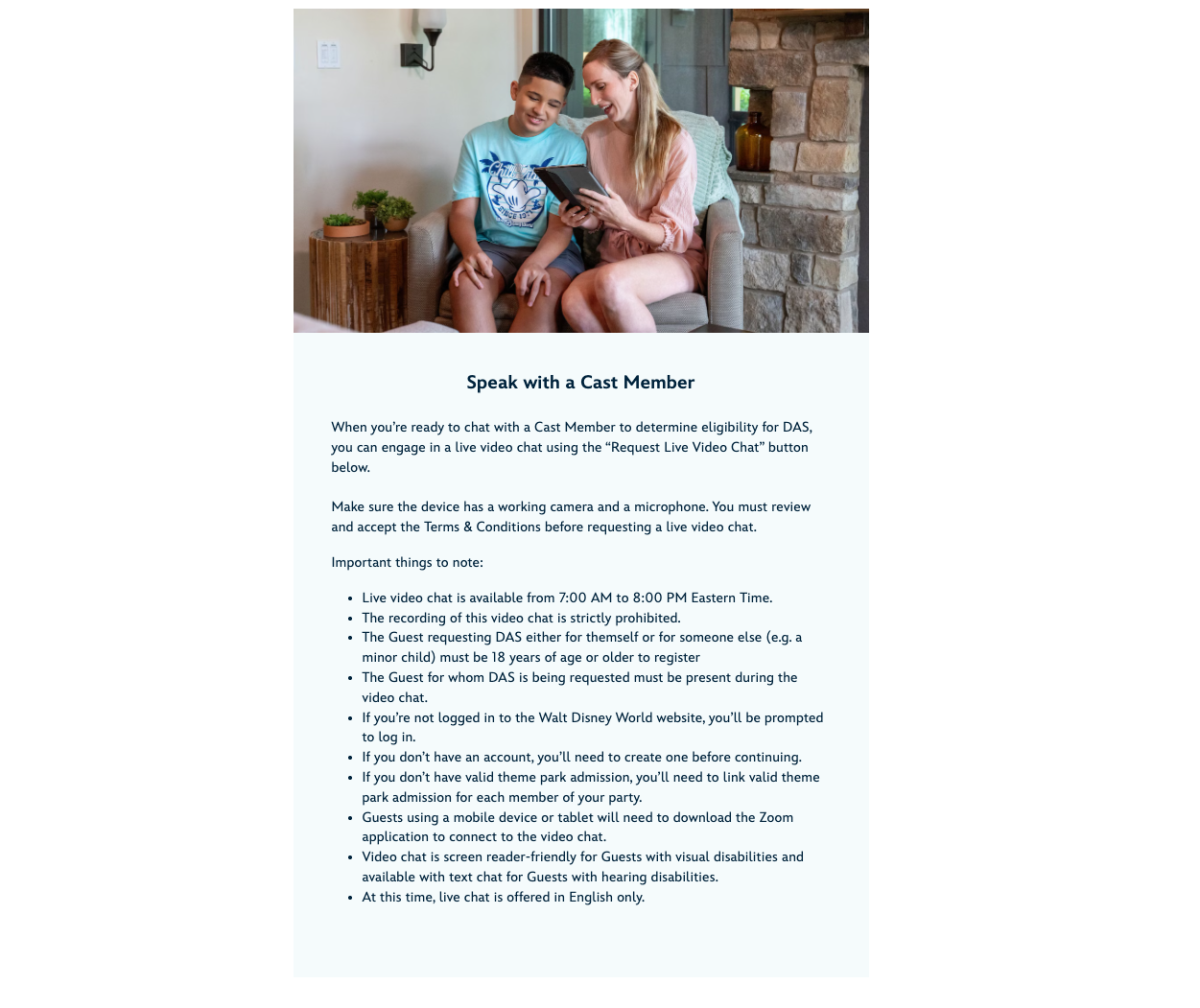
In 2026, registration for DAS is almost exclusively handled via a live video chat. This system was implemented to streamline the process and reduce the long lines at Guest Relations inside the parks.
Timeline and Requirements
- Window: You can register as early as 30 days before your park visit, but no later than 2 days before arrival.
- Participants: The guest requesting DAS must be present on the video call. If the guest is a minor, a parent or guardian participates, but the child must be visible.
- Platform: The chat is accessed through the official Disney World or Disneyland website.
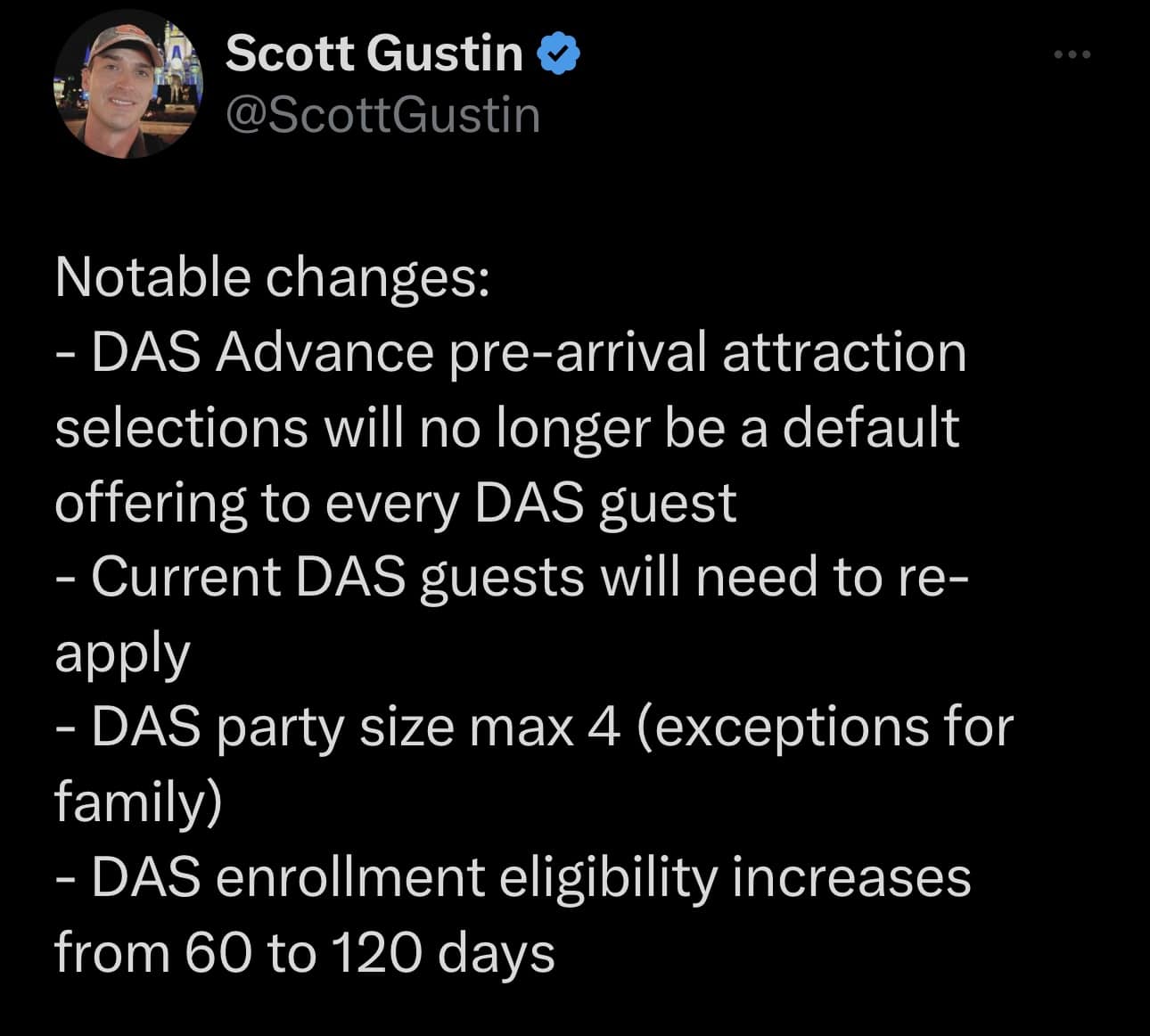
During this chat, the specialist will discuss the specific needs of the guest. If approved, the DAS is linked to the guest’s "My Disney Experience" or "Disneyland" app and is valid for the duration of the "ticket length" or up to 120 days. Once the 120-day period expires, the guest must re-register via another video chat.
The Role of Inspire Health Alliance
Disney continues to partner with Inspire Health Alliance to assist Cast Members in determining eligibility. This partnership provides a layer of clinical expertise to the conversation, ensuring that the service is reserved for those who truly meet the developmental disability criteria. This shift was largely a response to the "over-utilization" of the system in previous years, which had begun to impact the wait times for all guests.
How to Use DAS Inside the Parks
Once registered, the mechanics of using DAS are integrated directly into the park’s mobile app. It is designed to be as seamless as possible to reduce the stress on the guest and their party.
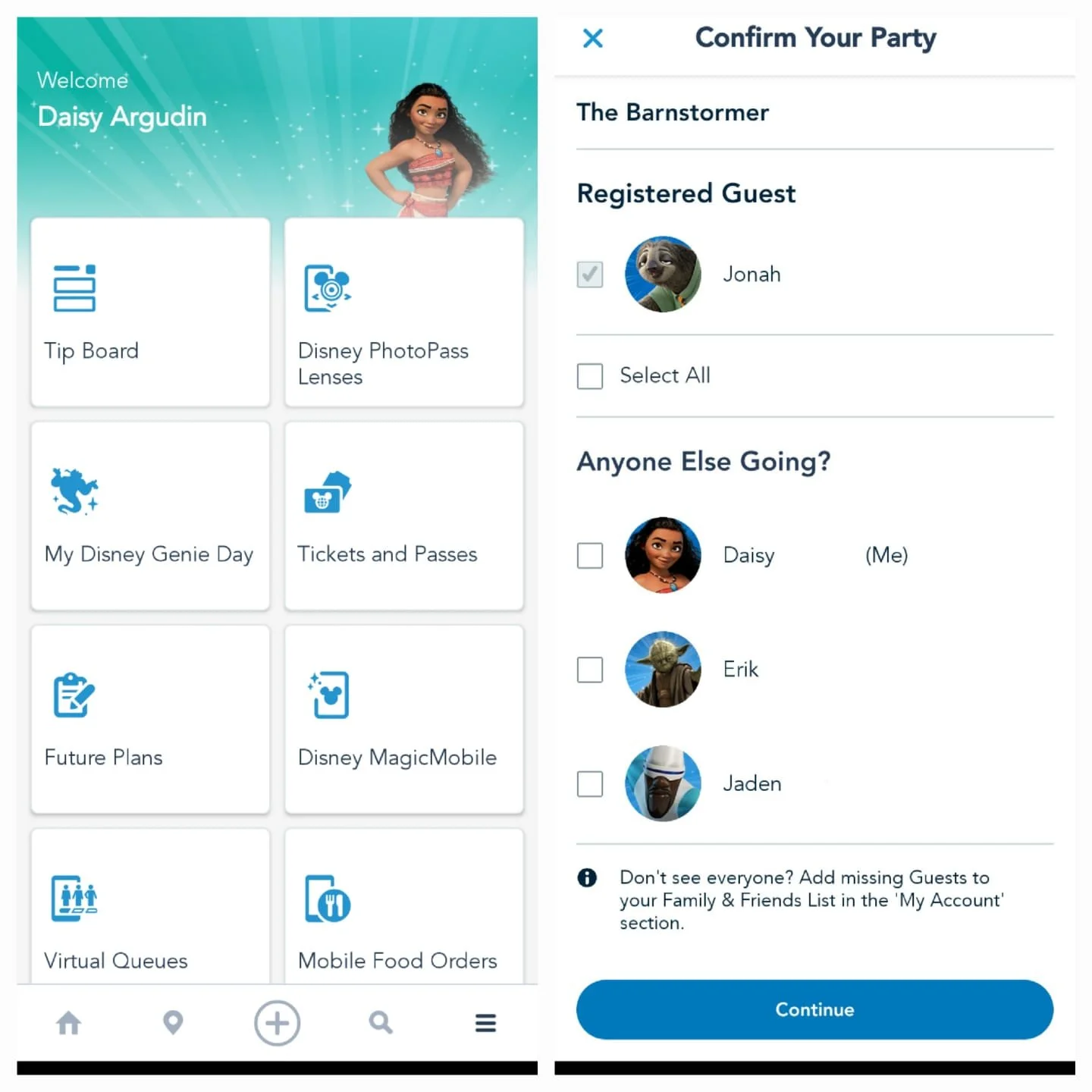
- Requesting a Return Time: The guest or a member of their party can request a return time via the app once they have entered the park. You do not need to walk to the attraction to get a time.
- The "One at a Time" Rule: You can only hold one active DAS return time at a time. As soon as you "tap in" for your current attraction, you are eligible to book another one.
- Party Size Limits: In 2026, the DAS party size is strictly limited to the DAS holder and up to three additional guests (for a total of four people). Exceptions are only made for immediate family groups with more than two minors.
- No Expiration: Unlike a Lightning Lane window which might be valid for only one hour, a DAS return time does not expire once issued. You can return any time from the stated start time until the park closes.
| Feature | DAS (Disability Access Service) | Lightning Lane Multi Pass |
|---|---|---|
| Primary Goal | Accessibility for developmental disabilities | Convenience and time-saving |
| Cost | Free with valid admission | Paid daily fee (varies by date) |
| Eligibility | Requires virtual interview/approval | Available to all guests |
| Selection Method | Return time equal to current standby | Booked in windows via the app |
| Wait Experience | Wait virtually outside the queue | Significantly reduced wait |
| Party Limit | DAS holder + 3 guests (typically) | Based on number of passes purchased |
Addressing the "What It Really Means" Stigma
There has historically been a stigma surrounding the use of DAS, with some viewing it as an "unfair advantage" and others feeling it is a "badge of disability." In 2026, the narrative has shifted toward integrity.
By tightening the rules and strictly defining "what it really means," Disney has actually protected the service for those who need it most. When the system is used correctly, it allows families who might otherwise never be able to visit a theme park to enjoy the same magic as everyone else.
However, Disney has also increased the penalties for misuse. If a guest is found to have lied during the DAS interview, they are subject to a permanent ban from Walt Disney World and Disneyland Resort, and any purchased tickets or annual passes are forfeited without refund. This underscores that DAS "really means" a serious accommodation for a serious need.
Common Misconceptions and Troubleshooting
"I need DAS because I can't stand for long."
As established, this is the most common misconception. In 2026, if the issue is physical stamina or pain, Disney will direct the guest to rent a wheelchair or ECV. The park's policy is that the "barrier" of standing is removed by the seat provided by the mobility device.
"I can use DAS to get on every ride quickly."
If the park is at peak capacity and Star Wars: Rise of the Resistance has a 180-minute wait, your DAS return time will be 180 minutes away. You will only be able to experience a few major attractions per day using DAS, much like a guest using the standby line. To see more, many DAS users choose to supplement their day by also purchasing Lightning Lane Single Passes for the most popular rides.
"The system is down; what do I do?"
Technology isn't perfect. If the app fails to show your DAS tile or won't allow a selection, you must visit a "Blue Umbrella" (Guest Experience Team) station located throughout the parks. They can manually issue return times if the digital system is lagging.
Strategies for a Successful Visit with DAS
To truly make the most of what the DAS pass means, families should pair it with other sensory-management strategies:
- Use the "Quiet Rooms": Both Walt Disney World and Disneyland have designated break areas and First Aid centers that offer a quiet, air-conditioned environment to wait out your virtual queue.
- Mobile Ordering: Use the app to order food while you are in your virtual wait window. This avoids the stress of loud, crowded quick-service restaurant lines.
- Rider Switch: If you have a child who doesn't meet a height requirement and another who needs DAS, you can combine these services. Ask a Cast Member at the attraction entrance how to link them.
Final Recommendation: Prepare Before You Talk
The most important thing to remember in 2026 is that the DAS interview is a conversation about needs, not diagnoses. Before you log on for your video chat, sit down and list the specific challenges the guest faces in a queue. Do they have a flight risk? Do they experience sensory overload that leads to physical outbursts? Are they unable to understand the concept of a "line" in a way that causes distress?
Being prepared to explain the functional limitations caused by the disability is the key to ensuring the system works as intended. DAS is a vital bridge to inclusion, and understanding its true meaning ensures that the magic of Disney remains accessible to those who experience the world differently.
Image Gallery