How Long Does It Take to Get a Tire Patched?
Getting a tire patched typically takes between 15 and 45 minutes of actual active labor, though total wait times at a tire shop or auto repair center often range from 30 minutes to two hours depending on customer volume and shop schedu...
Getting a tire patched typically takes between 15 and 45 minutes of actual active labor, though total wait times at a tire shop or auto repair center often range from 30 minutes to two hours depending on customer volume and shop scheduling. The physical process requires inspecting the damage, dismounting the tire from the rim, thoroughly cleaning and buffing the inner liner, applying a vulcanizing patch-plug combination, and then rebalancing and remounting the wheel. While a straightforward puncture in the tread area can be resolved quickly, variables such as technician availability, wheel assembly complexity, and underlying tire health heavily influence your overall turnaround time.
Contents
Understanding the mechanics, steps, and real-world factors behind tire repair helps drivers manage expectations and determine whether to visit a professional or attempt an emergency roadside fix.
The Core Tire Patching Process: Step-by-Step
A professional tire patch is not a superficial quick fix. Safety and industry standards established by the Tire Industry Association (TIA) and the U.S. Rubber Manufacturers Association (USRMA) dictate a rigorous multi-step procedure. When you bring your vehicle in, a technician moves through a systematic workflow that accounts for both speed and structural integrity.
1. Initial Inspection and Assessment
Before touching a wrench, a technician inspects the tire while it is still mounted on the vehicle (if possible) or immediately after removal. They look for the offending object—such as a nail, screw, or bolt—and evaluate the size and angle of the puncture. They also check the tread depth, scan for secondary sidewall bulges, and look for signs of "run-flat" damage. If a tire has been driven on completely flat for an extended distance, the inner sidewalls may be structurally compromised, rendering the tire unpatchable.
2. Dismounting the Tire from the Wheel
To properly patch a tire from the inside, the wheel assembly must be removed from the vehicle, and the tire must be separated from the metal rim using a specialized tire-mounting machine. This step requires precise care to avoid scratching alloy rims or damaging the tire's bead. Dismounting takes roughly 3 to 7 minutes.
3. Locating and Preparing the Puncture
Once the tire is off the rim, the technician marks the puncture location on the interior liner. They use a low-speed pneumatic buffer to clean, roughen, and buff the rubber around the hole. This mechanical abrasion removes mold release agents and contaminants, creating a textured surface essential for chemical adhesion.
4. Installing a Patch-Plug Combination
Industry best practices prohibit using a simple external string plug or an internal patch alone. Technicians rely on a combination patch-plug unit (often referred to as a mushroom plug).
- The stem of the unit fills the puncture channel from the inside out, sealing out moisture and preventing steel belts from rusting.
- The wide rubber patch at the base covers the inner wound, sealed permanently with vulcanizing cement. The stem is pulled through from the outside using pliers, and the inner patch is rolled firmly with a stitching tool to eliminate air bubbles.
5. Remounting, Inflating, and Balancing
After the patch cures momentarily with the cement, the tire is remounted onto the wheel rim and inflated to the vehicle manufacturer's specified pressure. Because removing and repositioning the tire alters the weight distribution of the wheel assembly, the technician places the wheel onto a dynamic spin-balancer. They add small lead or steel weights to the rim flange or barrel to ensure smooth highway speeds without steering wheel vibrations. This final sequence takes about 10 to 15 minutes.
Factors That Influence Total Wait Times
While the physical labor takes less than an hour, the actual time spent waiting at a commercial tire service center varies based on several operational and technical factors.
| Factor | Typical Impact on Time | Explanation |
|---|---|---|
| Shop Queue / Volume | +15 to +90 minutes | First-come, first-served shops during peak weekend hours or inclement weather can create significant backlogs. |
| Appointment Scheduling | Minimal delay | Booking an appointment online or via phone usually guarantees immediate entry into the service bay. |
| Wheel Complexity | +5 to +15 minutes | Low-profile tires, large 20-inch+ rims, and run-flat tires require delicate handling and specialized mounting equipment. |
| Tire Pressure Monitoring System (TPMS) | Negligible to +10 minutes | Advanced sensors require careful handling, and some vehicles demand a manual manual reset procedure after inflation. |
| Hidden Damage Discovery | Service denial or replacement | If an internal inspection reveals hidden sidewall separation, the repair must stop, requiring a tire replacement discussion. |
When a Tire Can Versus Cannot Be Patched
Not all punctures can be repaired safely. Driving on a tire with unrepairable damage compromises vehicle control. Technicians adhere to strict safety guidelines regarding where and how a tire can be serviced.
Repairable Parameters
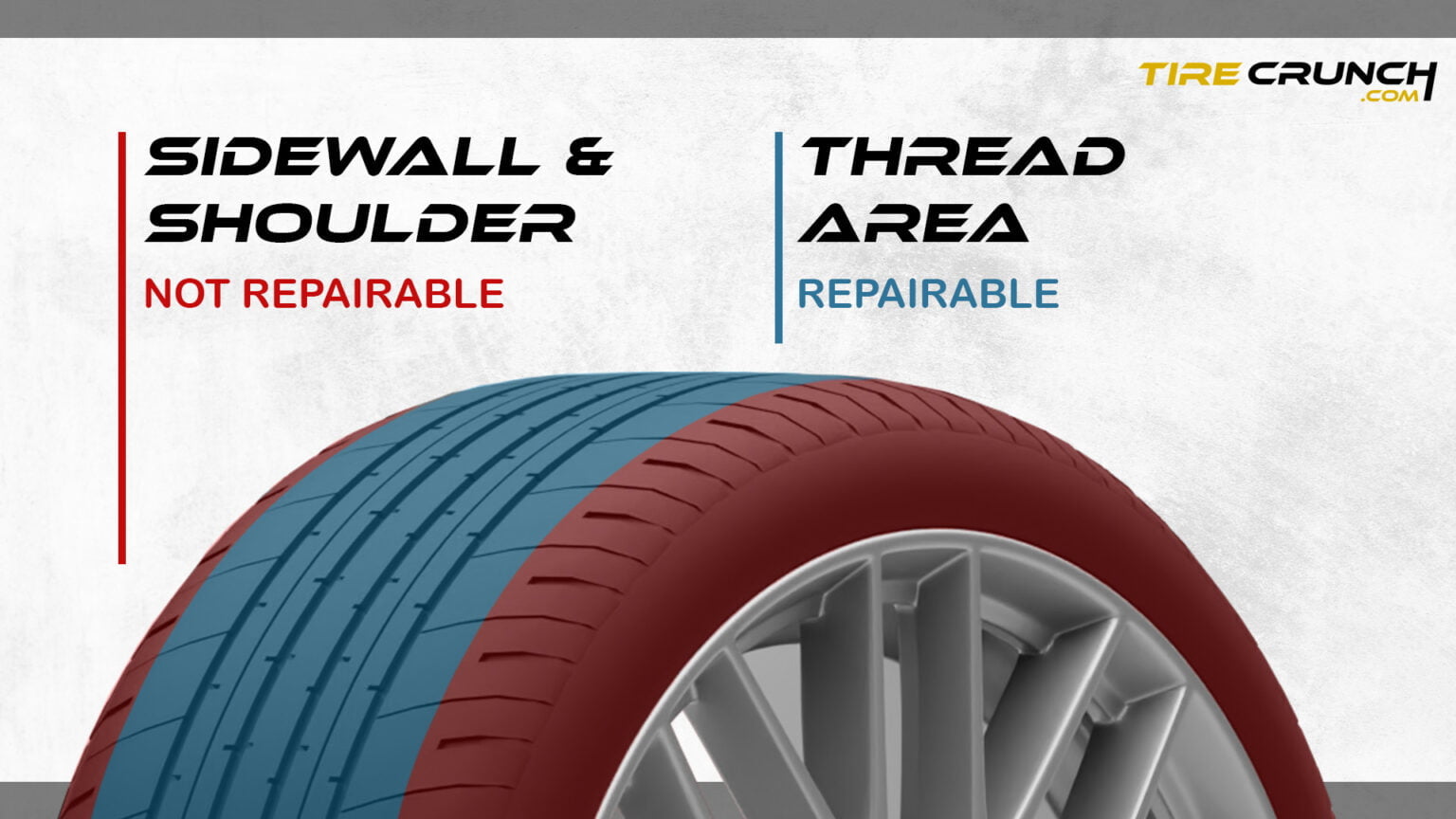
- Location: The puncture must reside strictly within the tread area.
- Size: The puncture hole generally must not exceed 1/4 inch (6 mm) in diameter.
- Angle: The puncture channel must be relatively straight through the casing.
Non-Repairable Parameters (When Replacement is Required)
- Sidewall or Shoulder Damage: Punctures, cuts, or bulges on the sidewall or the shoulder transition zone cannot be patched because these areas flex continuously under heavy loads.
- Previous Repairs: If a tire has two or more patches close together, or a previous repair that failed, industry standards dictate total replacement.
- Run-Flat Operation Damage: Driving a standard or run-flat tire at zero pressure beyond its rated distance destroys the internal structural liner, leaving it unserviceable.
Professional Service vs. DIY Emergency Plug Kits
Many drivers keep temporary roadside plug kits in their trunk. Understanding how these compare to professional repairs highlights why a roadside plug is strictly an emergency measure to get you to a proper service center.
Roadside Emergency Plugs (String Plugs)
- Time Required: 10 to 20 minutes.
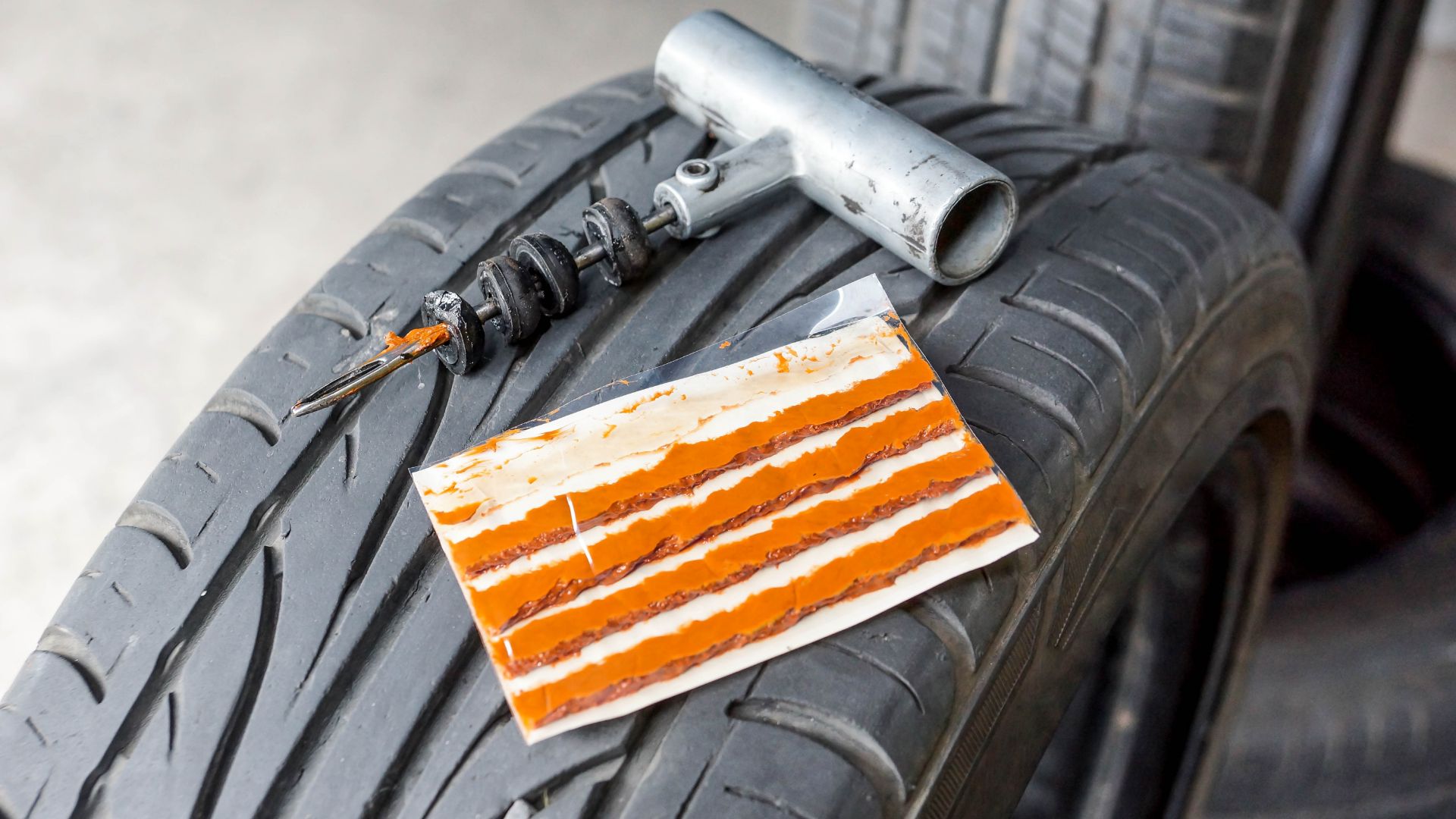
- Process: Reaming the hole from the outside and pushing a sticky rubberized string into the puncture with a T-handle tool.
- Limitations: It does not seal the inner liner, allowing moisture to seep into the steel belts, which can lead to progressive rust and sudden tread separation. It should be inspected and replaced with a proper interior patch-plug at the earliest opportunity.
Professional Shop Repair
- Time Required: 30 to 120 minutes total.
- Process: Full inspection, dismounting, vulcanizing patch-plug, and dynamic wheel balancing.
- Advantages: Restores the tire to manufacturer safety tolerances, maintains speed ratings, and includes a professional warranty.
Frequently Asked Questions
Can I drive my car with a tire leak while waiting to get it patched?
Driving on a significantly underinflated or flat tire generates excessive heat through sidewall flexing, which can destroy the tire's internal structure within blocks. If the tire holds a slow leak, you can drive short distances to a repair shop while maintaining safe speeds, provided you monitor the pressure closely and stop to inflate it if it drops below safe operating thresholds.
Do I need to make an appointment to get a tire patched, or can I walk in?
Most tire shops, such as Discount Tire, Firestone, or local independent garages, accept walk-ins for flat repairs. However, walk-in wait times can stretch up to several hours on busy days like Saturdays. Scheduling an appointment online or calling ahead typically moves your vehicle into a service bay much faster.
Is tire patching usually free?
Many national tire chains and independent dealers offer flat repair services for free—even if you did not buy the tires from them—as a courtesy to build customer loyalty. If a shop does charge, labor costs generally range from $20 to $40 per tire, depending on regional labor rates and wheel complexity.
How long does a professionally patched tire last?
A professionally installed patch-plug combination is designed to last for the remainder of the tire's usable service life. As long as the tire maintains adequate tread depth (above 2/32 of an inch) and experiences no secondary damage, you do not need to replace the tire simply because it was patched.
Will patching a tire affect my wheel balance?
Yes, dismounting and remounting a tire alters the weight distribution of the wheel assembly. A reputable tire shop will automatically rebalance the wheel on a specialized spin-balancer before putting it back on your vehicle, ensuring you do not experience high-speed steering wheel vibrations.
Next Actions and Recommendations
If you currently have a leaking tire, prioritize safety by checking your tire pressure immediately using a reliable digital gauge. Avoid driving on a completely flat tire to prevent permanent sidewall destruction. If the leak is slow, pump air into the tire to reach a safe PSI level and drive directly to a nearby tire service center, or call mobile roadside assistance if the tire is unsafe to drive on. Request a complete internal patch-plug combination service rather than a temporary exterior string plug to ensure long-term driving safety.
Image Gallery