Are PODS Cheaper Than U-Haul for Moving? A Comprehensive Cost and Service Comparison
Determining whether PODS is cheaper than U-Haul depends entirely on the distance of your move, the length of time you need storage, and whether you prefer driving a large rental truck yourself or having a portable storage container del...
Determining whether PODS is cheaper than U-Haul depends entirely on the distance of your move, the length of time you need storage, and whether you prefer driving a large rental truck yourself or having a portable storage container delivered to your doorstep. For long-distance moves or relocations requiring flexible storage, PODS often proves competitive or even more cost-effective, whereas local, one-day truck rentals from U-Haul are typically the budget-friendly choice.
Contents
Evaluating a moving budget requires looking past the baseline rental quotes to understand the full financial and operational picture. The moving industry features two primary titans with fundamentally different service models: PODS (Portable On Demand Storage), which specializes in containerized moving and storage, and U-Haul, the industry pioneer in DIY truck rentals, trailers, and traditional self-storage. Choosing between them requires analyzing distance, labor costs, fuel expenses, and time constraints.
Understanding the Two Moving Models
To accurately compare costs, you must first understand how PODS and U-Haul structure their services. They represent two distinct methodologies for managing a DIY or hybrid move.
The PODS Containerized Model
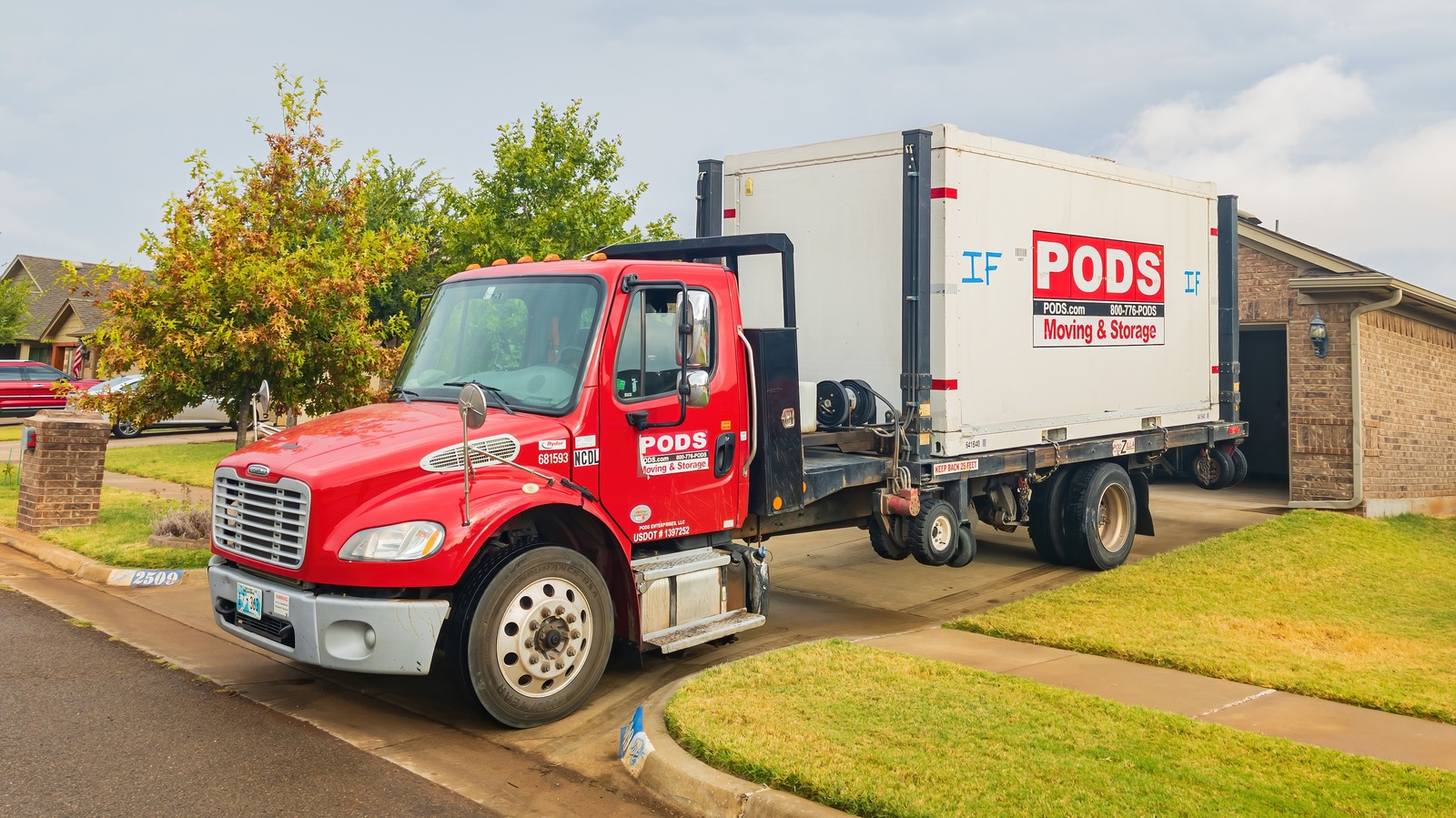
PODS provides steel-framed, weather-resistant containers delivered directly to your home. You load the container at your own pace over several days, and once packed, a specialized truck picks it up and transports it.
Your container can go directly to your new home or be stored securely at a regional PODS storage facility until you are ready for delivery. This model eliminates the need to drive a heavy commercial vehicle on the highway. However, you pay for delivery, container rental fees per month, transit mileage, and final pickup.
The U-Haul Truck Rental Model
U-Haul provides a traditional do-it-yourself framework. You visit a local dealer, pick up a box truck ranging from 10 feet to 26 feet in length, and handle all the loading, driving, and unloading yourself.
Pricing is typically structured around a base rental fee plus an explicit per-mile charge for one-way moves, or an unlimited mileage allowance for local moves (though you pay for the fuel you consume). U-Haul also offers cargo trailers, pickup truck rentals, and traditional self-storage units, alongside U-Box containers which serve as their direct competitor to PODS.
Cost Breakdown: Local vs. Long-Distance Moves
Distance is the single most influential variable affecting the pricing dichotomy between container companies and truck rental operators.
Local Moves (Under 50 Miles)
For local moves completed within a single day or a couple of days, U-Haul is almost always cheaper than PODS. A local U-Haul truck rental can cost as little as $20 to $50 per day plus a low per-mile fee (often around $0.99 to $1.29 per mile). Even with fuel costs added, a local truck rental keeps expenses minimal.
PODS pricing for local moves involves a delivery fee, a monthly container rental fee, and a pickup fee. Because PODS charges baseline service fees for dropping off and picking up the container regardless of distance, short moves do not allow these fixed costs to amortize efficiently. Consequently, a local move using a PODS container often starts in the hundreds of dollars before factoring in storage time.
Long-Distance Moves (Over 100 Miles)
As distance increases, the cost equation shifts. Long-distance U-Haul truck rentals require calculating base rates, mileage fees over hundreds or thousands of miles, hotel stays during multi-day drives, food, and the heavy fuel consumption of a large commercial truck (often yielding fewer than 10 miles per gallon). Furthermore, driving a 26-foot truck across state lines introduces driving stress and potential vehicle wear-and-tear risks.
Long-distance PODS moves wrap transit costs, container rentals, and long-haul transportation into a single quoted price. While PODS long-distance rates are substantial, they often become cost-competitive with U-Haul when you factor in the elimination of hotel rooms, fuel costs, and personal travel expenses. If you require temporary storage during a long-distance transition—such as closing delays on a new home—PODS allows you to keep your items in the container at a secure facility, whereas a U-Haul move would require unloading your truck into a traditional self-storage facility and reloading it later, effectively doubling your labor overhead.
Cost Comparison Matrix
| Moving Feature / Cost Factor | PODS (Portable Containers) | U-Haul (Truck Rental) |
|---|---|---|
| Primary Pricing Structure | Delivery fee + monthly rental + transit fee + pickup fee | Daily base rate + mileage fee (one-way) or fuel costs (local) |
| Local Move Affordability | Generally more expensive due to fixed delivery/pickup charges | Highly cost-effective for single-day rentals |
| Long-Distance Affordability | Competitive when factoring in fuel, lodging, and travel time | Can become expensive due to per-mile charges and fuel consumption |
| Storage Integration | High flexibility; store on-site or at a secure facility | Requires unloading into a separate storage unit |
| Driving Responsibility | None; professional drivers transport the container | You or a hired driver must operate a large commercial vehicle |
| Loading & Unloading | Ground-level access (requires a ramp or lifting, depending on setup) | Accessible via a built-in wooden loading ramp |
Hidden Costs and Extra Expenses
A realistic financial assessment requires identifying expenses that fall outside the initial online quote. Overlooking these hidden variables is the primary reason moving budgets fail.
Fuel and Mileage Surcharges
With U-Haul, you must return the truck with the exact same fuel level it had when rented. Large moving trucks consume fuel at a rapid rate, and filling a 26-foot truck tank multiple times across a cross-country trip adds hundreds of dollars to the move. PODS eliminates fuel calculations from your end, as their professional logistics network handles the vehicle transportation.
Storage and Detention Fees
If your closing date is delayed or your new home is not ready, PODS charges a monthly rental fee for the container. If you store it at a PODS facility, you pay for storage plus a small access fee if you need to retrieve items. U-Haul trucks cannot be used for multi-day stationary storage unless you rent them continuously (which is cost-prohibitive) or unload your belongings into a local storage unit, which incurs separate rental fees and requires double-handling your cargo.
Labor and Packing Assistance
Neither PODS nor U-Haul includes physical loading labor in their base quotes. Both companies partner with third-party labor networks (such as MovingHelp through U-Haul) to connect customers with local loaders. Hiring professional loaders costs roughly $150 to $300+ for a multi-hour block depending on crew size and location. Because PODS containers sit flat on the ground (or very low), loading a PODS container often requires lifting items slightly higher than walking up a steep U-Haul truck ramp, though it eliminates the danger of tripping on a wet metal ramp.
Equipment and Container Sizes
The physical capacity of your belongings dictates which service you can utilize and how many units you must rent.
- PODS Containers: Available in three primary sizes: 7-foot (ideal for a studio or 1-bedroom apartment), 12-foot (fits 2 to 3 rooms), and 16-foot (suitable for 3 to 4 rooms or a standard 1,200-square-foot home). If you have a larger home, you will need to rent multiple containers.
- U-Haul Trucks: Available from 10 feet up to 26 feet. A 26-foot U-Haul truck can comfortably pack a 3- to 4-bedroom house in a single trip. U-Haul also offers U-Box containers (measuring roughly 4 feet by 8 feet by 5 feet) for those who prefer containerized moving but want a U-branded service.
Pros and Cons Summary
PODS Advantages
- Zero Driving Stress: You never have to pilot a massive truck through highway traffic or tight residential neighborhoods.
- Built-in Storage Flexibility: Keep the container on your property or store it securely at a local facility.
- At-Your-Own-Pace Loading: Avoid the rushed, single-weekend pressure of a standard truck rental.
PODS Disadvantages
- Higher Local Costs: Poorly optimized for quick, short-distance moves.
- HOA and City Restrictions: Some homeowners associations or city ordinances prohibit placing portable containers on streets or driveways for extended periods.
U-Haul Advantages
- Unbeatable Local Rates: Inexpensive base pricing for short-distance, single-day relocations.
- Instant Availability: Massive dealer network makes finding a truck or trailer relatively easy on short notice.
- Single-Trip Capacity: Large trucks can hold an entire household in one load.
U-Haul Disadvantages
- Rigid Timeline: You must complete loading, driving, and unloading within a strict rental window to avoid late fees.
- High Fuel and Travel Overhead: Driving a heavy truck requires buying gas, paying tolls, and potentially booking hotels.
Frequently Asked Questions
Are PODS or U-Box containers cheaper than U-Haul trucks?
For long-distance moves, containerized options like PODS or U-Haul's own U-Box service often rival or beat truck rentals once you factor in fuel, hotels, and driving time. However, for local moves, traditional U-Haul trucks remain significantly more economical than any container service.
Can I store my belongings inside a PODS container on my property?
Yes. You can keep a PODS container in your driveway for as long as your monthly rental agreement is active. This allows you to load and unload gradually. Be sure to check local municipal codes and homeowners association bylaws before scheduling delivery, as some communities restrict container placement.
Who is responsible for driving the PODS container?
You do not drive the PODS container. After you pack it, a professional PODS driver picks up the container using a specialized hydraulic lift truck and transports it to your destination or a secure storage facility.
How do I estimate what size PODS container I need?
PODS provides online sizing calculators based on the number of rooms you are moving. As a general rule of thumb, a 16-foot container holds the contents of a 2- to 3-bedroom home, whereas a 7-foot container fits a studio apartment. If your volume exceeds a 16-foot container, you will need to rent a second unit.
Do I need to buy moving insurance for PODS or U-Haul?
Both companies offer optional contents protection plans for a fee. You should check your existing renter's or homeowner's insurance policy first, as many policies provide off-premises property coverage during a move, though specific caps and deductibles apply.
Final Recommendation
To decide decisively between PODS and U-Haul, evaluate your moving distance, timeline flexibility, and comfort level driving large commercial vehicles. Choose U-Haul if you are moving locally within the same city, want the absolute lowest baseline price, and feel comfortable driving a large box truck. Choose PODS if you are moving long-distance, require flexible temporary storage during the transition, or prefer to avoid the physical and mental fatigue of driving a heavy truck across state lines. Always request written quotes from both providers for your specific zip codes before finalizing your moving logistics.
Image Gallery