Illinois Workers Compensation Claim Adjustment: A Comprehensive Professional Guide
The Illinois workers compensation claim adjustment process involves the systematic evaluation, management, and financial resolution of work-related injury claims under the Illinois Workers’ Compensation Act. As of 2026, adjusters must...
The Illinois workers compensation claim adjustment process involves the systematic evaluation, management, and financial resolution of work-related injury claims under the Illinois Workers’ Compensation Act. As of 2026, adjusters must navigate complex statutory benefit rates, the "two-choice" medical provider rule, and strict Commission filing deadlines to ensure compliance and mitigate litigation risks.
Contents
The Regulatory Framework of Illinois Workers’ Compensation
In 2026, the primary authority governing the adjustment of claims remains the Illinois Workers’ Compensation Commission (IWCC). This administrative agency is responsible for resolving disputes between employees and employers regarding work-related injuries. All adjustment activities are dictated by 820 ILCS 305, known as the Workers’ Compensation Act.
The adjustment process is not merely a financial transaction; it is a highly regulated sequence of events designed to provide certain benefits to workers while limiting the liability of employers to the statutory maximums. For insurance adjusters and self-insured employers, understanding the nuances of the "Act" is critical. Illinois is often viewed as a "pro-petitioner" state due to its generous benefit structures and specific medical rights granted to workers. Adjusters must be diligent in verifying that an injury "arose out of" and "in the course of" employment—the two-prong test that establishes compensability in the state.
Initial Claim Investigation and Compensability
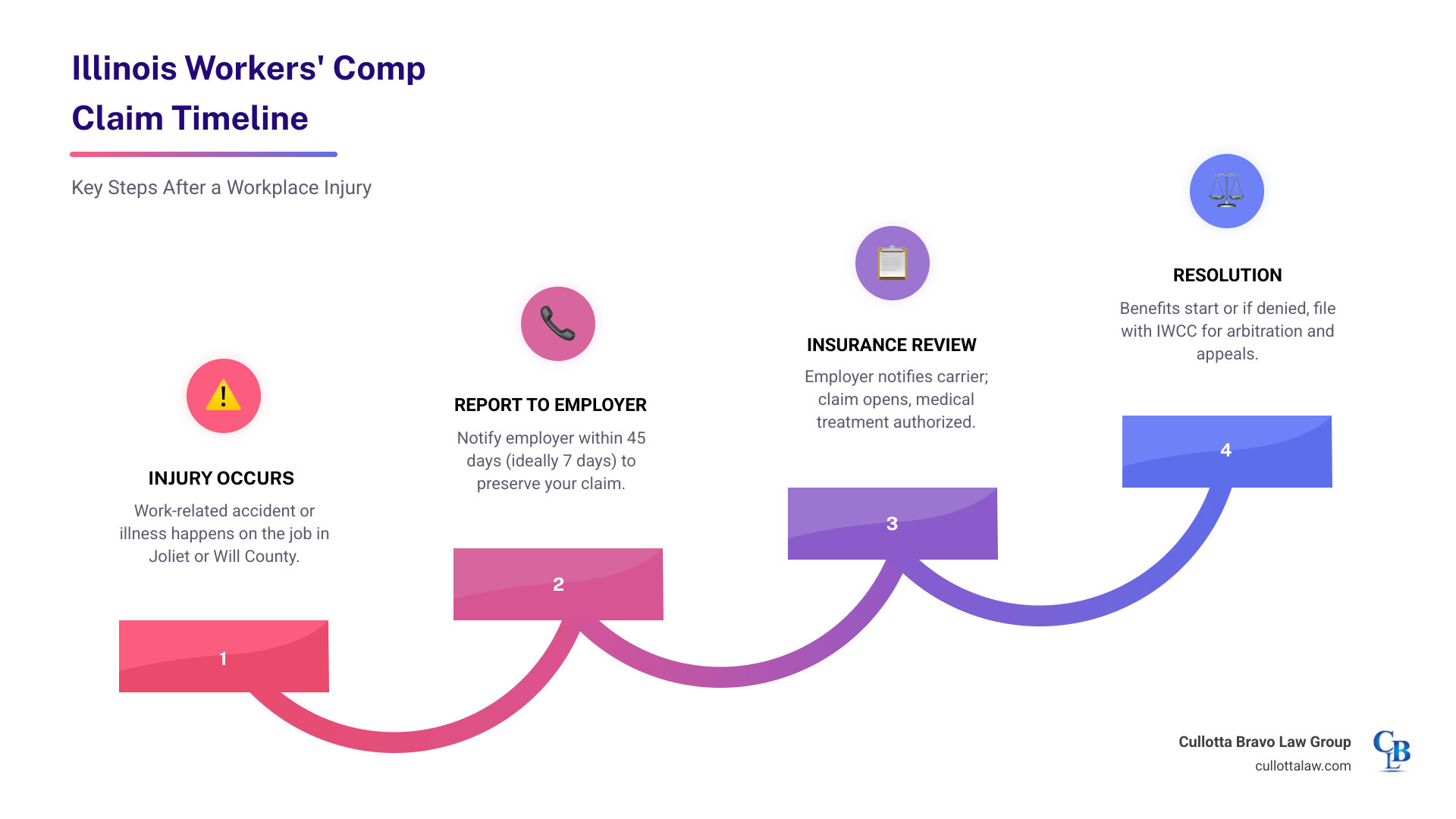
The lifecycle of an Illinois claim adjustment begins the moment an employer receives notice of an injury. Under the Act, an employee must notify the employer within 45 days of the accident. Failure to meet this deadline can be a complete bar to recovery, making the notification date a primary data point for any adjuster.
Verifying the "Arising Out Of" Standard
A central task in adjustment is determining if the risk was inherent to the employment. Illinois courts have refined this through three categories of risk:
- Risks distinctly associated with employment: Such as a factory worker getting a hand caught in a machine.
- Neutral risks: Such as being struck by lightning or a random act of violence at the workplace.
- Personal risks: Such as a fall caused by an internal medical condition (idiopathic fall).
Adjusters must conduct recorded statements, review security footage, and examine the First Report of Injury (Form IC45) to ensure the claim meets the legal threshold before a single benefit check is issued.
The Statute of Limitations
In 2026, the statute of limitations remains generally three years from the date of the accident or two years from the last payment of compensation, whichever is later. Adjusters must maintain meticulous records of "last payment dates" to determine when their liability for a claim legally expires.
Calculating Indemnity Benefits: The Adjustment Math
Adjustment accuracy in Illinois depends heavily on the calculation of the Average Weekly Wage (AWW). This figure is the foundation for all indemnity payments, including Temporary Total Disability (TTD) and Permanent Partial Disability (PPD).
Temporary Total Disability (TTD)
TTD is paid when an employee is unable to work or is restricted to light duty that the employer cannot accommodate. In Illinois, TTD is calculated at 66 and 2/3% of the employee’s AWW over the 52 weeks prior to the injury.
Adjusters must be wary of "grossing up" wages. Under Section 10 of the Act, overtime is generally calculated at the straight-time rate unless the overtime was mandatory or regular. In 2026, the state’s maximum and minimum TTD rates are adjusted semi-annually based on the State Average Weekly Wage (SAWW). Paying below the statutory minimum or above the maximum can lead to penalties and attorney fees under Sections 19(k) and 19(l) of the Act.
Permanent Partial Disability (PPD)
When an employee reaches Maximum Medical Improvement (MMI), the adjuster must evaluate the permanent nature of the disability. Illinois uses several methods to adjust PPD:
- Wage Differential: 66 and 2/3% of the difference between the old job's pay and the new, lower-paying job.
- Schedule of Injuries: A statutory list of "weeks" assigned to specific body parts (e.g., a thumb is worth 76 weeks).
- Person as a Whole: Used for injuries not on the schedule, such as neck or back injuries, typically capped at 500 weeks.
- Disfigurement: Compensation for permanent scarring to the head, face, neck, arms, or legs below the knee.
Medical Management and the "Two-Choice" Rule
One of the most distinctive aspects of Illinois claim adjustment is the Section 8(a) "Two-Choice" Rule. Unlike states where the employer chooses the doctor, Illinois allows the injured worker to select two primary healthcare providers.
Navigating Medical Chains
When a worker selects a doctor, that doctor can refer the patient to a "chain" of specialists, all of which count as only one choice. If the worker becomes dissatisfied and switches to a second independent doctor, that second choice and their subsequent referrals constitute the second and final choice. Any medical treatment sought beyond these two chains without employer consent is generally not the financial responsibility of the employer.
Utilization Review (UR)
To manage medical costs in 2026, adjusters frequently employ Utilization Review. Under Section 8.7 of the Act, an employer can challenge the necessity of a proposed treatment through a certified UR provider. If the UR professional determines the treatment is not "medically necessary" based on evidence-based guidelines (like ODG or ACOEM), the adjuster may legally withhold payment or authorization, shifting the burden to the employee to prove necessity before an Arbitrator.
Key Statutory Benefit Categories in 2026
The following table outlines the primary benefit types an adjuster must manage under the Illinois Workers’ Compensation Act.
| Benefit Type | Calculation Basis | Duration | Adjuster Note |
|---|---|---|---|
| Medical Expenses | 100% of reasonable/necessary care | Lifetime of the injury | Subject to the Two-Choice Rule and Fee Schedule. |
| TTD | 66 2/3% of AWW | Until MMI or return to work | Subject to a 3-day waiting period (paid if off >14 days). |
| TPD | 66 2/3% of wage difference | While on light duty/part-time | Temporary Partial Disability for "underemployment." |
| PPD | 60% of AWW (capped) | Based on "weeks" or % loss | Calculated after worker reaches MMI. |
| Vocational Rehab | Cost of retraining/schooling | Duration of approved program | Triggered if the worker cannot return to the original trade. |
| Death Benefits | 66 2/3% of AWW | Up to 25 years or $500k+ | Paid to legal primary beneficiaries (spouse/children). |
Dispute Resolution: The Arbitration Process
Adjustment does not always lead to a voluntary agreement. When a claim is contested, it moves toward Arbitration. The IWCC assigns an Arbitrator to the case based on the venue (usually the county where the accident occurred).
Section 19(b) and 19(b-1) Petitions
In 2026, the most aggressive tool for a petitioner is the 19(b) petition, which requests an emergency hearing. This is common when an adjuster has terminated TTD benefits or denied a surgery. The adjuster must be prepared with "competent medical evidence"—usually an Independent Medical Examination (IME) report—to defend the denial. Failure to prevail at a 19(b) hearing often results in an immediate order to pay back-due benefits plus interest.
Settlement Contracts
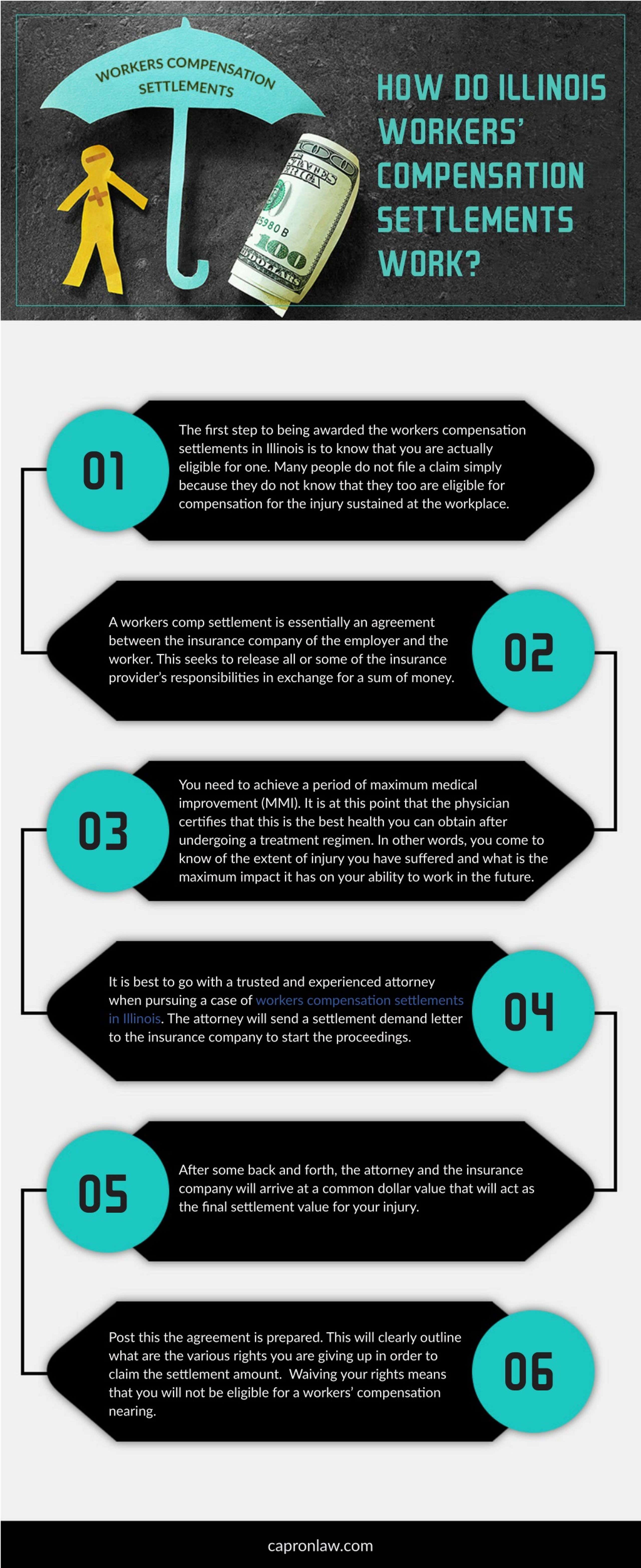
The majority of Illinois claims are resolved through a Lump Sum Settlement (LSS). These contracts must be drafted by the adjuster or defense counsel and approved by an IWCC Arbitrator. A signed agreement that has not been approved by the Commission is not legally binding in Illinois, meaning the worker could potentially reopen the claim later.
Common Pitfalls in Illinois Claim Adjustment
Professional adjusters often face specific hurdles that can inflate the "Total Incurred" cost of a file.
- Miscalculating the AWW: Forgetting to exclude fringe benefits like health insurance or failing to include a second job (if the employer had knowledge of it) can lead to litigation.
- Ignoring the "Manifestation Date" for Repetitive Trauma: In cases like carpal tunnel, the "accident date" is when the worker knows the condition is work-related. Adjusters must investigate when the worker first sought treatment to check the 45-day notice rule.
- Inadequate IME Selection: Using "heavy-handed" doctors who always find no injury can damage credibility with Arbitrators. Successful adjustment relies on IMEs from reputable, board-certified specialists.
- Failure to Respond to Demand Letters: Illinois has strict "bad faith" penalty provisions. Even if a claim is denied, the adjuster must provide a clear, written explanation based on medical or factual evidence.
FAQ: Illinois Workers Compensation Adjustment
What is the "waiting period" for TTD payments in Illinois? There is a three-day waiting period. The injured worker is not paid for the first three working days of disability unless the disability continues for 14 or more calendar days. If it lasts 14 days, the first three days are paid retroactively.
Can an adjuster record a statement from an injured worker? Yes, but the worker is not legally required to provide one under the Act. However, adjusters use these statements to lock in the facts of the accident. If the worker is represented by an attorney, the adjuster must go through the attorney to obtain any statement.
How is the "Fee Schedule" applied to medical bills? Illinois utilizes a Medical Fee Schedule that limits what providers can charge for specific CPT codes. Adjusters must ensure all bills are "re-priced" to the fee schedule or the actual charge, whichever is lower.
What happens if a worker has a pre-existing condition? In Illinois, an employer takes the employee "as they find them." If a work accident aggravates, accelerates, or exacerbates a pre-existing condition, the entire injury is usually compensable. The work accident only needs to be "a" causative factor, not the "sole" causative factor.
Can an employer fire a worker for filing a claim? No. This is considered "Retaliatory Discharge." While the adjustment of the workers' comp claim is handled through the IWCC, a retaliatory discharge lawsuit is a civil matter that can lead to significant punitive damages against the employer.
Strategic Recommendation for Claim Resolution
To achieve a cost-effective and compliant adjustment in 2026, prioritize early intervention and medical clarity. Ensure the Average Weekly Wage is calculated correctly within the first 14 days of the claim to avoid Section 19(l) penalties. If compensability is in doubt, schedule an Independent Medical Examination (IME) early in the process rather than waiting for a 19(b) emergency hearing. Finally, always aim for a settled closure via an IWCC-approved Lump Sum Settlement to "close the door" on future medical and vocational rehabilitation exposure.
Image Gallery