How the Net Worth Analysis Process Works: A Comprehensive Guide
A net worth analysis works by systematically identifying, valuing, and aggregating all of an entity's assets and then subtracting all outstanding liabilities. This process provides a definitive snapshot of financial health, enabling in...
A net worth analysis works by systematically identifying, valuing, and aggregating all of an entity's assets and then subtracting all outstanding liabilities. This process provides a definitive snapshot of financial health, enabling individuals, corporations, and lenders to measure solvency, track wealth accumulation over time, and make informed decisions regarding investment, credit, and estate planning.
Contents
Net worth is often described as the "bottom line" of a financial profile. While income indicates cash flow, net worth indicates stability and accumulated value. In 2026, the sophistication of net worth analysis has evolved to include complex digital holdings, globalized real estate portfolios, and sophisticated tax-deferred structures. Understanding the mechanics of this analysis is essential for anyone looking to navigate the modern financial landscape, whether for personal growth or institutional compliance.
The Mathematical Foundation: Assets Minus Liabilities
At its most fundamental level, the net worth formula is deceptively simple: Total Assets - Total Liabilities = Net Worth. However, the "work" involved in a professional-grade analysis lies in the precise identification and valuation of these two categories.
Defining Assets in the Modern Economy
Assets are resources with economic value that an individual or corporation owns or controls with the expectation that it will provide a future benefit. In a comprehensive analysis, assets are typically divided into three sub-categories:
- Liquid Assets: These are assets that can be converted into cash quickly with little to no impact on their value. This includes checking and savings accounts, money market funds, and certificates of deposit (CDs). In 2026, highly liquid cryptocurrencies or stablecoins are often categorized here as well.
- Investment Assets (Marketable): This category includes brokerage accounts, stocks, bonds, mutual funds, and exchange-traded funds (ETFs). These are valued based on real-time market prices, though they may be subject to capital gains taxes upon liquidation.
- Non-Liquid or Fixed Assets: These are often the most difficult to value. They include primary residences, investment real estate, business interests, private equity, and collectibles (art, jewelry, vintage automobiles). Valuation here requires periodic appraisals or "mark-to-market" adjustments to remain accurate.
Identifying Liabilities
Liabilities are financial obligations or debts owed to other parties. For a net worth analysis to be valid, it must account for every dollar owed, regardless of the interest rate or term.
- Short-Term Liabilities: Credit card balances, personal loans, and any bills due within the current year.
- Long-Term Liabilities: Mortgages, student loans, auto loans, and business debt.
- Contingent Liabilities: These are potential obligations that may arise depending on the outcome of a future event, such as a pending lawsuit or a guarantee provided for someone else’s loan. Professional analysts include these to provide a "worst-case" conservative net worth figure.
The Step-by-Step Mechanism of Net Worth Analysis
The "how" of net worth analysis involves a structured workflow that ensures no stone is left unturned. Professionals typically follow a five-stage process to arrive at a verified figure.
1. Data Aggregation and Inventory
The first step is the collection of all financial statements. This includes bank statements, brokerage reports, loan payoff balances, and credit card summaries. In the digital age, much of this is automated through financial aggregation software, but manual verification is still required for physical assets like real estate or private business holdings.
2. Asset Valuation and Fair Market Value (FMV)
The most critical part of the analysis is determining the Fair Market Value of non-cash assets. FMV is the price an asset would sell for on the open market between a willing buyer and a willing seller.
- Real Estate: Analysts use recent "comps" (comparable sales) or formal appraisals.
- Business Interests: For private companies, analysts may use a multiple of EBITDA (Earnings Before Interest, Taxes, Depreciation, and Amortization) or a discounted cash flow (DCF) model.
- Personal Property: Depreciation must be factored in. A car purchased for $50,000 three years ago might only contribute $30,000 to the net worth today.
3. Liability Verification
Unlike assets, which can fluctuate in value, liabilities are usually fixed in their principal amount. However, the analyst must ensure they are using the payoff balance, not the total of remaining payments, as the latter includes future interest that has not yet accrued.
4. Categorization and Calculation
The data is then organized into a balance sheet format. Assets are listed on the left (or top), and liabilities are listed on the right (or bottom). The subtraction is performed, resulting in the "nominal" net worth.
5. Adjustment for Liquidity and Taxation
A "raw" net worth figure can be misleading. For example, $1 million in a 401(k) is not the same as $1 million in a savings account because the 401(k) carries a future tax liability. A sophisticated analysis will often calculate a "Tangible Net Worth" (excluding intangibles like goodwill) or an "After-Tax Net Worth" to provide a more realistic view of spendable wealth.
Types of Net Worth Analysis and Their Purposes
Different entities perform net worth analyses for different reasons. The depth and methodology vary based on the intended outcome.
| Type of Analysis | Primary Focus | Common Use Case | Valuation Rigor |
|---|---|---|---|
| Personal Finance | Budgeting and Retirement | Tracking personal progress | Moderate (Self-reported) |
| Lending/Mortgage | Debt-to-Income & Collateral | Loan approval (e.g., Jumbo loans) | High (Third-party verified) |
| Corporate/Business | Solvency and Equity | M&A, SEC reporting, Valuations | Very High (Audited) |
| Estate Planning | Tax Liability & Succession | Reducing inheritance taxes | High (Appraisal-based) |
| High Net Worth (HNW) | Asset Protection & Growth | Family office management | Very High (Mark-to-market) |
The Difference Between Liquidity and Net Worth
A common misconception in net worth analysis is equating a high net worth with high liquidity. It is entirely possible to be "asset rich and cash poor."
For example, a farmer might own land worth $10 million with no debt, giving them a $10 million net worth. However, if they only have $5,000 in the bank and the land is not easily sellable, they have a liquidity crisis despite their high net worth. A proper analysis identifies this risk by calculating the Liquidity Ratio, which compares liquid assets to short-term liabilities. This distinction is vital for business owners who must meet payroll and operational costs regardless of their total equity.
Common Challenges in Net Worth Analysis
Even for experienced analysts, several factors can complicate the process and lead to inaccuracies.
Volatility and Timing
Market volatility can render a net worth analysis obsolete within days. If a significant portion of an individual’s wealth is held in volatile stocks or crypto-assets, the analysis represents only a "snapshot" in time. To combat this, many institutions use a rolling average or perform quarterly updates to smooth out the data.
Intangible Assets
How do you value a brand name, a patent, or a professional reputation? In corporate net worth analysis, these are labeled "Intangible Assets." While they have immense value, they are often excluded from "Tangible Net Worth" calculations used by banks for lending because they cannot be easily liquidated in a default scenario.
Hidden Liabilities
Contingent liabilities, such as being a co-signer on a child's mortgage or facing a potential tax audit, are often overlooked. A thorough analysis requires a deep dive into legal and contractual obligations that do not appear on a standard bank statement.
The Role of Technology in 2026
By 2026, the integration of Artificial Intelligence (AI) and blockchain technology has streamlined the analysis process. AI can now predict depreciation schedules for physical assets with higher accuracy, while blockchain provides a "golden record" of ownership for various asset classes, reducing the need for manual verification. Automated valuation models (AVMs) have also moved beyond residential real estate to provide near-real-time estimates for private equity and niche collectibles.
Frequently Asked Questions
1. Does my salary count toward my net worth?
No, your salary is a component of your income, not your net worth. Net worth measures what you own (assets) versus what you owe (liabilities) at a specific point in time. While your salary allows you to acquire assets or pay down debt, the income itself is not an asset until it is saved or invested.
2. Should I include my primary residence in my net worth analysis?
Yes, for a standard net worth calculation, your home is considered a non-liquid asset. You should include its current fair market value and subtract any remaining mortgage balance. However, some "Investment Net Worth" calculations exclude the primary residence because it is not an asset intended to generate income or be sold to fund retirement.
3. How often should a net worth analysis be performed?
For most individuals, an annual or semi-annual analysis is sufficient to track long-term trends. For business owners or high-net-worth individuals with complex portfolios, a quarterly analysis is recommended. Frequent updates are particularly important during periods of high market volatility or significant life changes, such as marriage, divorce, or the sale of a business.
4. What is a "negative net worth"?
A negative net worth occurs when your total liabilities exceed your total assets. This is common among recent college graduates with significant student loan debt and few savings. While it sounds alarming, it is often a temporary state that is resolved over time through debt repayment and asset accumulation.
5. Why do lenders care about net worth if I have a high income?
Lenders view net worth as a measure of "financial cushion." While a high income covers monthly payments, a high net worth indicates that you have assets to fall back on if your income is interrupted. It also shows a track record of financial responsibility and wealth preservation, which lowers the lender's risk.
Next Steps for Conducting Your Own Analysis
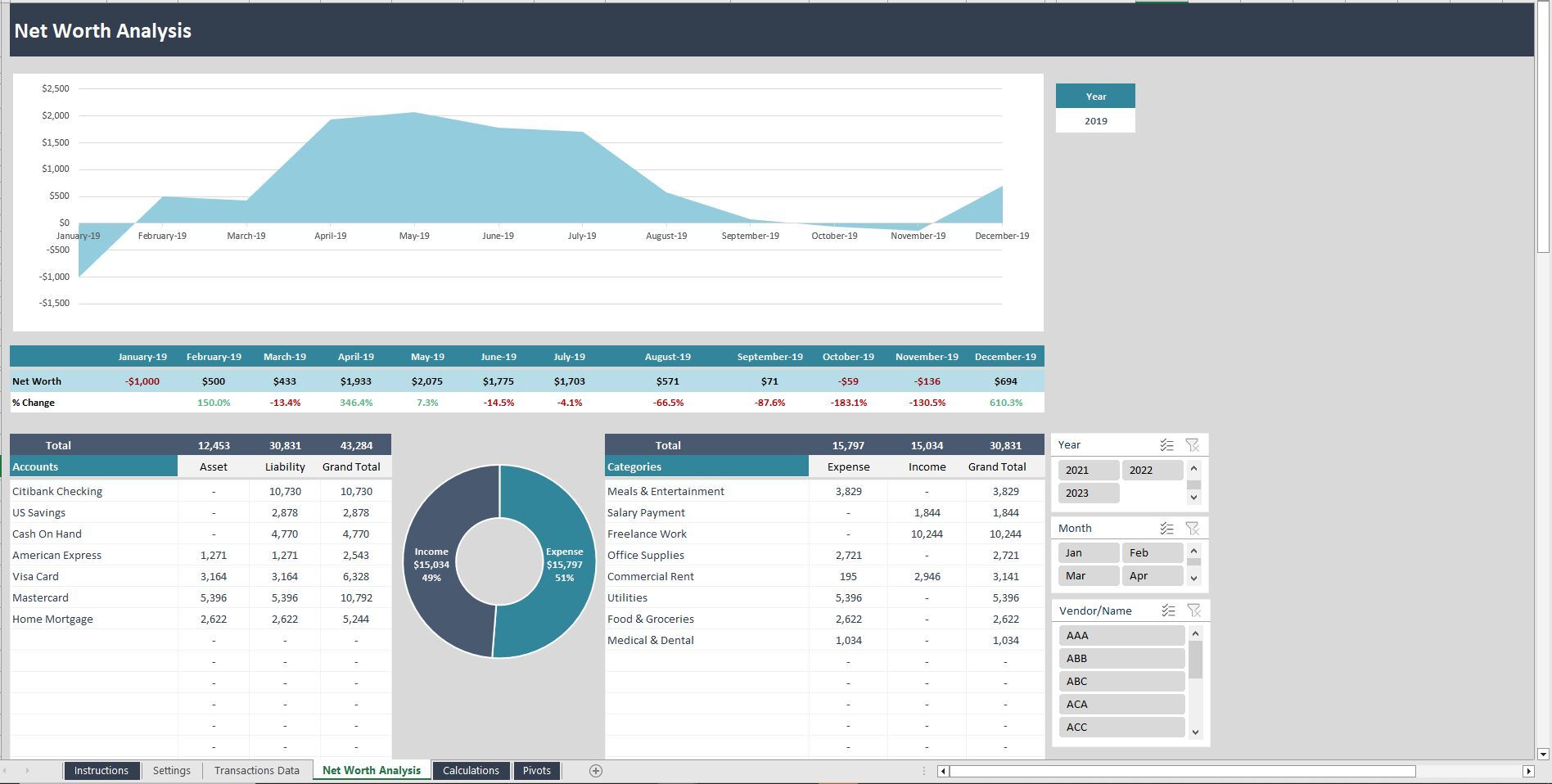
To begin a net worth analysis, start by creating a simple spreadsheet with two columns: Assets and Liabilities. List every account and item of value you own in the first column, using conservative estimates for non-cash items. In the second column, list every debt, including the current payoff balance.
For those with more complex needs—such as business owners or those looking into estate planning—it is advisable to consult with a Certified Financial Planner (CFP) or a Certified Public Accountant (CPA). These professionals can provide the "rigorous valuation" mentioned earlier, ensuring that your analysis is not only accurate but also optimized for tax and legal purposes. Regularly reviewing this analysis will allow you to see the direct impact of your financial decisions, helping you move from simply managing cash flow to building lasting wealth.
Image Gallery