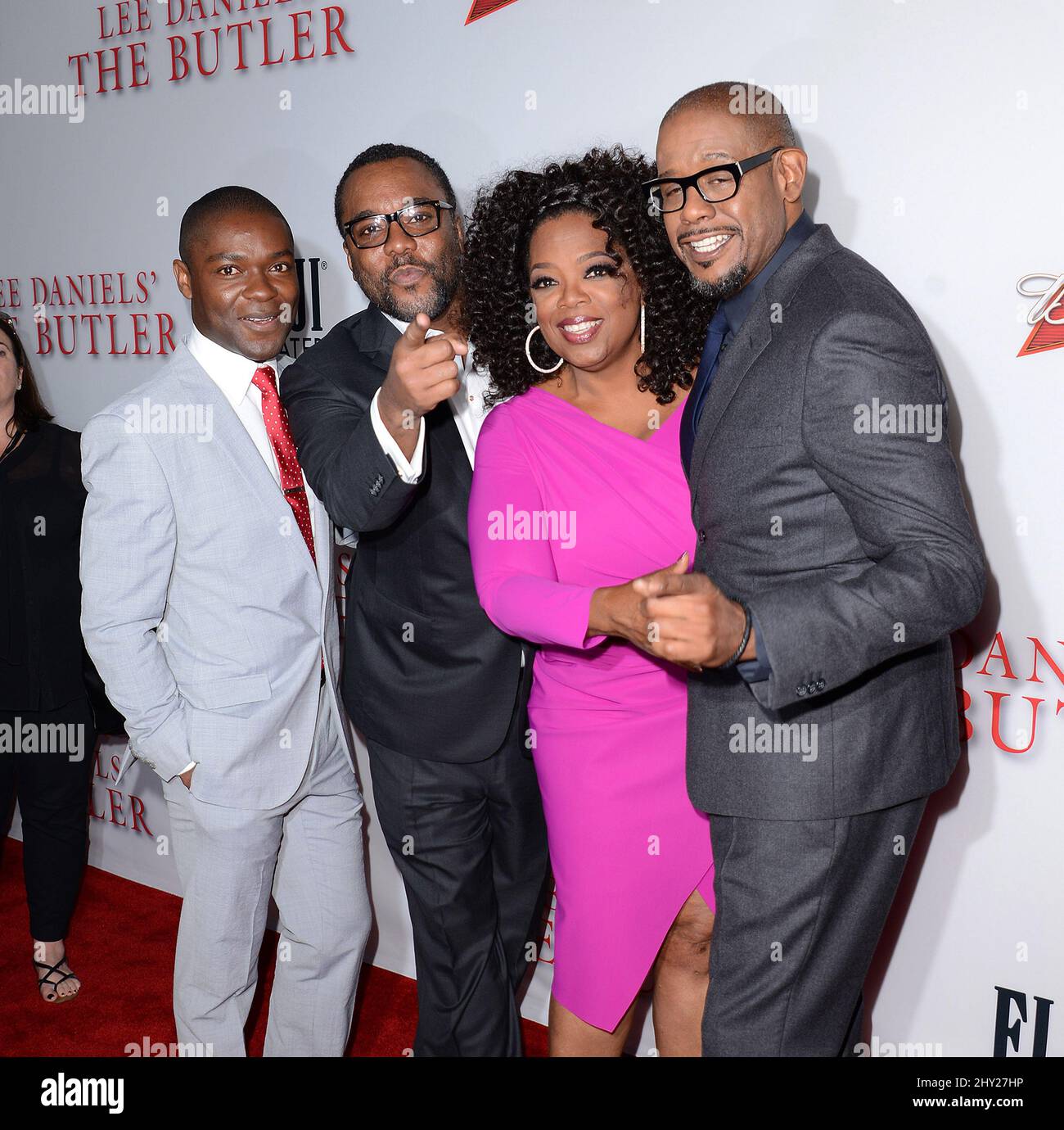
Oprah Winfrey in The Butler: A Defining Cinematic Turn
Oprah Winfrey delivered a critically acclaimed performance as Gloria Gaines in Lee Daniels' 2013 historical drama film The Butler, portraying the resilient wife of a longtime White House butler whose life mirrors the tumultuous civil r...
Oprah Winfrey delivered a critically acclaimed performance as Gloria Gaines in Lee Daniels' 2013 historical drama film The Butler, portraying the resilient wife of a longtime White House butler whose life mirrors the tumultuous civil rights movement in America.
Contents
Introduction to the Film and Casting Significance
Lee Daniels' 2013 biographical drama The Butler (released internationally as Lee Daniels' The Butler) stands as a monumental cinematic exploration of race, politics, and family in twentieth-century America. Inspired by Wil Haygood’s Washington Post article about Eugene Allen—a White House butler who served eight presidential administrations—the film weaves a fictionalized narrative around the historical backdrop. At the center of this emotional landscape is Gloria Gaines, played by media mogul and legendary television host Oprah Winfrey.
For Winfrey, taking on the role of Gloria marked a major return to narrative feature film acting. Prior to The Butler, her most notable cinematic appearances included her Academy Award-nominated turn as Sofia in Steven Spielberg's The Color Purple (1985) and her role in Jonathan Demme's Beloved (1998). Her casting in The Butler generated immense anticipation among critics and audiences alike, positioning her alongside a powerhouse ensemble cast led by Forest Whitaker as her husband, Cecil Gaines. This performance reestablished Winfrey's formidable dramatic range, proving her ability to anchor a complex character study within a sprawling historical epic.
Character Analysis: Gloria Gaines and the Domestic Reality
Gloria Gaines represents the emotional anchor of The Butler, serving as a window into the domestic sacrifices made by African American families during decades of systemic change. Unlike her husband Cecil, whose professional ethos requires him to remain a silent, unobtrusive fixture in the White House, Gloria must grapple with the psychological toll of her husband's absence and emotional detachment.
The character is far from a passive archetype. Gloria struggles with profound personal challenges, including alcoholism and loneliness, brought on by the isolation of her suburban life and Cecil's total dedication to his career. Winfrey brings a raw, unvarnished vulnerability to the role, portraying Gloria's flaws without judgment. Through these struggles, the film explores how the civil rights movement impacted not only the activists marching in the streets, but also the private lives of domestic workers whose labor kept the nation's highest office running.
Historical Context and Narrative Integration
The narrative of The Butler spans decades, beginning in the Jim Crow-era South and moving through the civil rights movement, the Vietnam War, and the election of Barack Obama. Gloria and Cecil's household becomes a microcosm of the generational shifts occurring across the country. While Cecil maintains a traditional, cautious view of race relations—believing that quiet excellence will eventually yield equality—their eldest son, Louis Gaines, fiercely rejects this approach.
Louis becomes a frontline activist, participating in freedom rides, lunch counter sit-ins, and joining the Black Panther Party. This ideological split creates profound friction within the Gaines household. Gloria’s role in this dynamic is vital; she attempts to bridge the emotional chasm between her conservative husband and her revolutionary son. Winfrey portrays this maternal anguish with intense emotional depth, capturing the terror of a mother watching her child face systemic violence while simultaneously mourning the growing distance between her husband and their children.
Critical Reception and Awards Recognition
Upon its release by The Weinstein Company, The Butler performed strongly at the box office and received generally favorable reviews from film critics. While some reviewers noted the film's melodramatic tendencies in handling complex historical events, the performances of the lead actors universally drew high praise.
Oprah Winfrey’s portrayal of Gloria Gaines earned widespread acclaim, establishing her as a serious contender during the awards season. Critics highlighted her transformation from a glamorous media icon into a weary, middle-aged homemaker grappling with heartbreak and inner turmoil. Although she did not win the Academy Award for Best Supporting Actress—a category that year featuring fierce competition—she received nominations from major industry bodies, including the Screen Actors Guild (SAG) Awards and the British Academy Film Awards (BAFTA).
Comparative Overview of Winfrey’s Major Acting Roles
To understand the significance of Winfrey's performance in The Butler, it is helpful to examine it within the context of her broader acting career.
| Film Title | Character | Release Year | Accolades and Recognition |
|---|---|---|---|
| The Color Purple | Sofia | 1985 | Academy Award Nomination (Best Supporting Actress), Golden Globe Nomination |
| Beloved | Sethe | 1998 | NAACP Image Award, Blockbuster Entertainment Award Nomination |
| Lee Daniels' The Butler | Gloria Gaines | 2013 | SAG Award Nomination (Outstanding Performance by a Female Actor in a Supporting Role) |
| The Immortal Life of Henrietta Lacks | Deborah Lacks | 2017 | Primetime Emmy Award Nomination (Outstanding Television Movie) |
Common Questions Regarding Oprah Winfrey in The Butler
Is The Butler based on a true story?
Yes, the film is loosely inspired by the life of Eugene Allen, who worked as a butler in the White House for 34 years, serving eight different U.S. presidents from Harry S. Truman to Ronald Reagan. However, the characters of Cecil and Gloria Gaines, along with their family dynamics, were fictionalized for the cinematic adaptation.
Did Oprah Winfrey win an Oscar for The Butler?
No, Oprah Winfrey did not win an Academy Award for her role in The Butler. While her performance as Gloria Gaines was widely praised by critics and earned her a nomination from the Screen Actors Guild, she was not nominated for an Oscar for this particular role. Her career features one competitive Oscar nomination for her debut performance in The Color Purple (1985), alongside receiving the Jean Hersholt Humanitarian Award in 2011.
How did Oprah prepare for the role of Gloria Gaines?
Winfrey has noted in interviews that she drew upon the experiences and mannerisms of the women who raised her in the American South, as well as the historical realities of domestic workers during the mid-twentieth century. She collaborated closely with director Lee Daniels to capture the specific emotional nuances of a woman caught between traditional domestic expectations and the changing social landscape.
What was the box office performance of The Butler?
The Butler was a commercial success, grossing over $177 million worldwide against a production budget of roughly $30 million. It performed particularly well in domestic markets, driven by strong word-of-mouth and the broad appeal of its ensemble cast.
Practical Recommendations for Viewers
For viewers looking to fully appreciate the historical and cultural context of The Butler, pairing the film with related media offers a deeper perspective. Reading Wil Haygood’s original Washington Post profile, A Butler Well Served by This Election, provides historical facts about Eugene Allen's actual life inside the White House. Additionally, exploring Lee Daniels' directorial filmography, such as Precious (2009), illuminates the filmmaker's signature visual style and his focus on intense family dramas.
Image Gallery