Understanding Permanent Life Insurance: Meaning, Mechanics, and Strategic Value
Permanent life insurance provides lifelong coverage and accumulates a cash value component that policyholders can access while living, combining a death benefit with an ongoing financial asset. Unlike term life insurance, which expires...
Permanent life insurance provides lifelong coverage and accumulates a cash value component that policyholders can access while living, combining a death benefit with an ongoing financial asset. Unlike term life insurance, which expires after a set number of years, permanent policies remain active for an individual's entire life as long as required premiums are paid. This dual function of protection and savings makes permanent coverage an essential tool for estate planning, wealth transfer, and supplemental retirement funding, though it requires higher upfront costs and careful long-term financial commitment.
Contents
Evaluating permanent life insurance requires looking past surface-level marketing to understand the structural mechanics, cost variables, and risk factors involved. Because these contracts blend insurance protection with cash accumulation, policyholders must examine how fees, interest crediting methods, and market fluctuations impact performance over decades. This guide explores the foundational meaning of permanent life insurance, analyzes its primary variations, weighs the structural pros and cons, and details how to determine if it fits your long-term financial strategy.
Defining Permanent Life Insurance and Core Mechanics
Permanent life insurance refers to any policy designed to remain in force for the insured's entire life, provided premiums are maintained. The defining characteristic that separates permanent insurance from term insurance is the cash value account. When you pay a premium on a permanent policy, a portion of that money covers the administrative costs and the pure cost of insurance (the mortality charge), while the remaining balance goes directly into a tax-advantaged cash value account.
This cash value grows over time on a tax-deferred basis, meaning you do not pay taxes on the growth while it remains inside the policy. Policyholders can leverage this accumulated value during their lifetimes through tax-free policy loans or withdrawals, or use it to pay future premiums. Upon the death of the insured, the insurance company pays the guaranteed death benefit to the designated beneficiaries. However, the cash value generally stays with the insurance company unless the contract includes a specific rider returning both the cash value and the death benefit.
The Role of the Death Benefit and Cash Value
The interaction between the death benefit and the cash value forms the engine of any permanent life insurance policy. In most permanent contracts, the death benefit is fixed, while the cash value grows dynamically based on the policy's underlying structure. As the cash value increases, the insurer's actual financial risk—the net amount at risk—decreases, because the cash value effectively helps fund the eventual payout.
Understanding this dynamic helps clarify why premiums are substantially higher for permanent insurance compared to term insurance. You are essentially pre-funding the higher mortality costs of later life. Insurers use level-premium pricing structures where you pay more than the actual cost of insurance in your younger years to offset the higher costs when you are older. This overpayment accumulates as the cash value, ensuring the policy does not become unaffordable as you age.
Major Types of Permanent Life Insurance
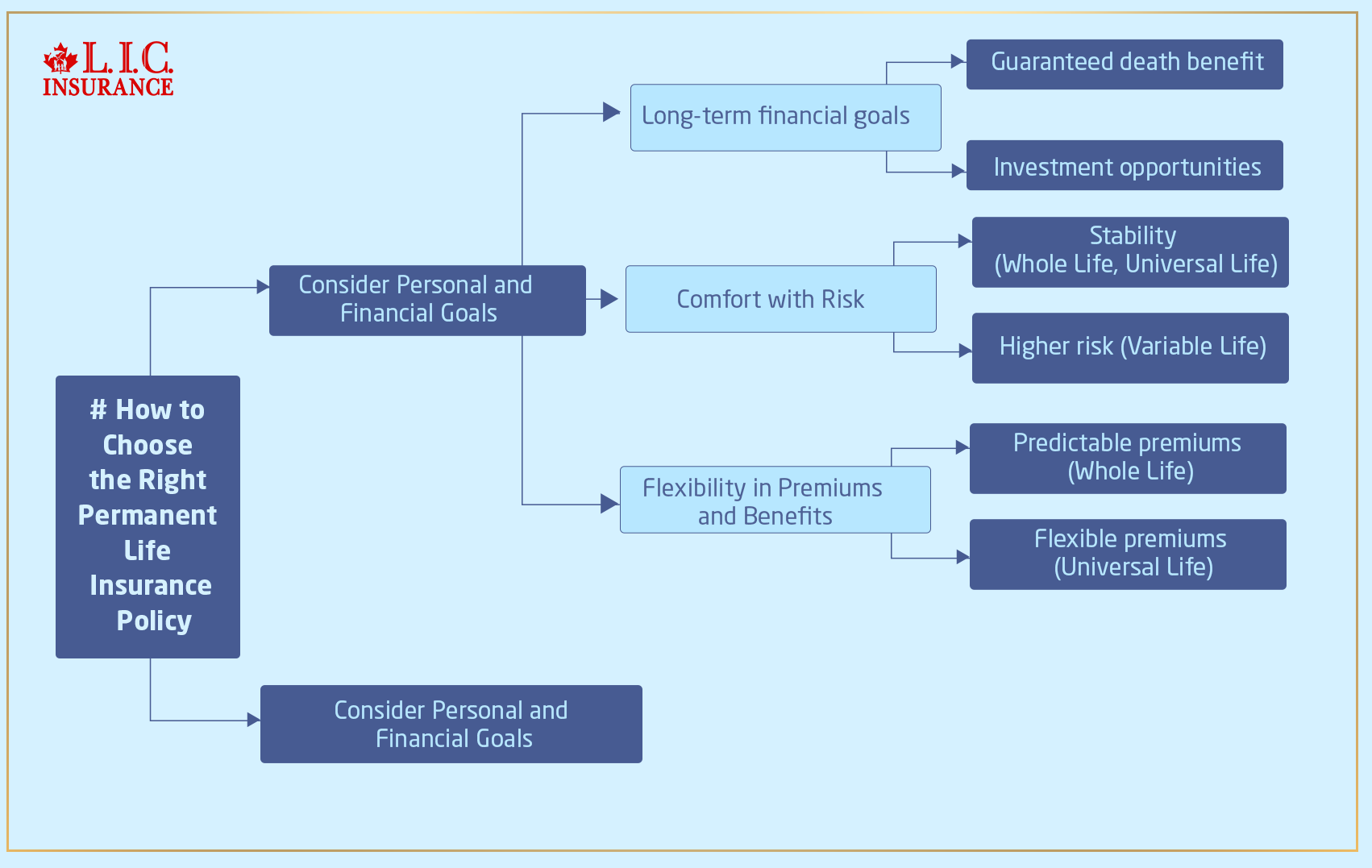
Permanent life insurance is not a monolith; it encompasses several distinct financial products with varying levels of risk, flexibility, and investment control. Choosing the right policy requires matching your risk tolerance and financial goals to the appropriate product structure.
Whole Life Insurance
Whole life insurance is the most traditional and straightforward form of permanent coverage. It offers guaranteed premiums, a guaranteed death benefit, and a guaranteed minimum rate of return on the cash value.
- Guaranteed Premiums: Your premium payments are locked in when you purchase the policy and will never increase, regardless of your age or health changes.
- Dividends: Many whole life policies are issued by mutual insurance companies, which may pay annual dividends to policyholders. While not guaranteed, these dividends can be taken as cash, used to reduce premiums, or funneled back into the policy to buy paid-up additions, thereby increasing both the cash value and the death benefit.
- Predictability: The conservative nature of whole life makes it popular for individuals who want absolute certainty in their financial planning, though it typically offers lower long-term growth potential than market-linked policies.
Universal Life (UL) Insurance
Universal life insurance introduces flexibility into permanent coverage. Unlike whole life, UL policies allow policyholders to adjust their premium payments and death benefits within certain contract limits, responding to changing financial circumstances.
- Flexible Premiums: After an initial payment, you can generally pay more or less than the target premium, provided the accumulated cash value is sufficient to cover monthly administrative and mortality deductions.
- Adjustable Death Benefit: Policyholders can typically lower the death benefit to reduce insurance costs or raise it (subject to evidence of insurability) if family needs grow.
- Interest Crediting: The cash value earns interest based on prevailing market rates, often tied to a minimum guaranteed floor set by the insurer.
Indexed Universal Life (IUL) Insurance
Indexed universal life insurance ties the cash value's growth to the performance of a major stock market index, such as the S&P 500, without directly investing in the market.
- Caps and Floors: IUL policies feature participation rates, caps (maximum crediting rates), and floors (typically 0%). If the index drops, your cash value does not lose money from market downturns due to the floor. If the index rises, your gains are capped at a predetermined maximum.
- Complexity: While IULs protect against market crashes, they involve complex fee structures, participation rates that can change at the insurer's discretion, and aggressive historical performance illustrations that require careful scrutiny.
Variable Universal Life (VUL) Insurance
Variable universal life insurance offers direct investment control, allowing policyholders to allocate their cash value into sub-accounts that function similarly to mutual funds, investing in stocks, bonds, and money market funds.
- Investment Risk: Because the cash value is directly exposed to market fluctuations, VULs offer the highest potential growth among permanent policies, but they also carry the risk of significant financial loss.
- Active Management: Policyholders must actively monitor their sub-account allocations and may need to inject additional premium payments if market downturns deplete the cash value below the level required to keep the policy active.
Comparative Overview of Permanent Life Insurance Types
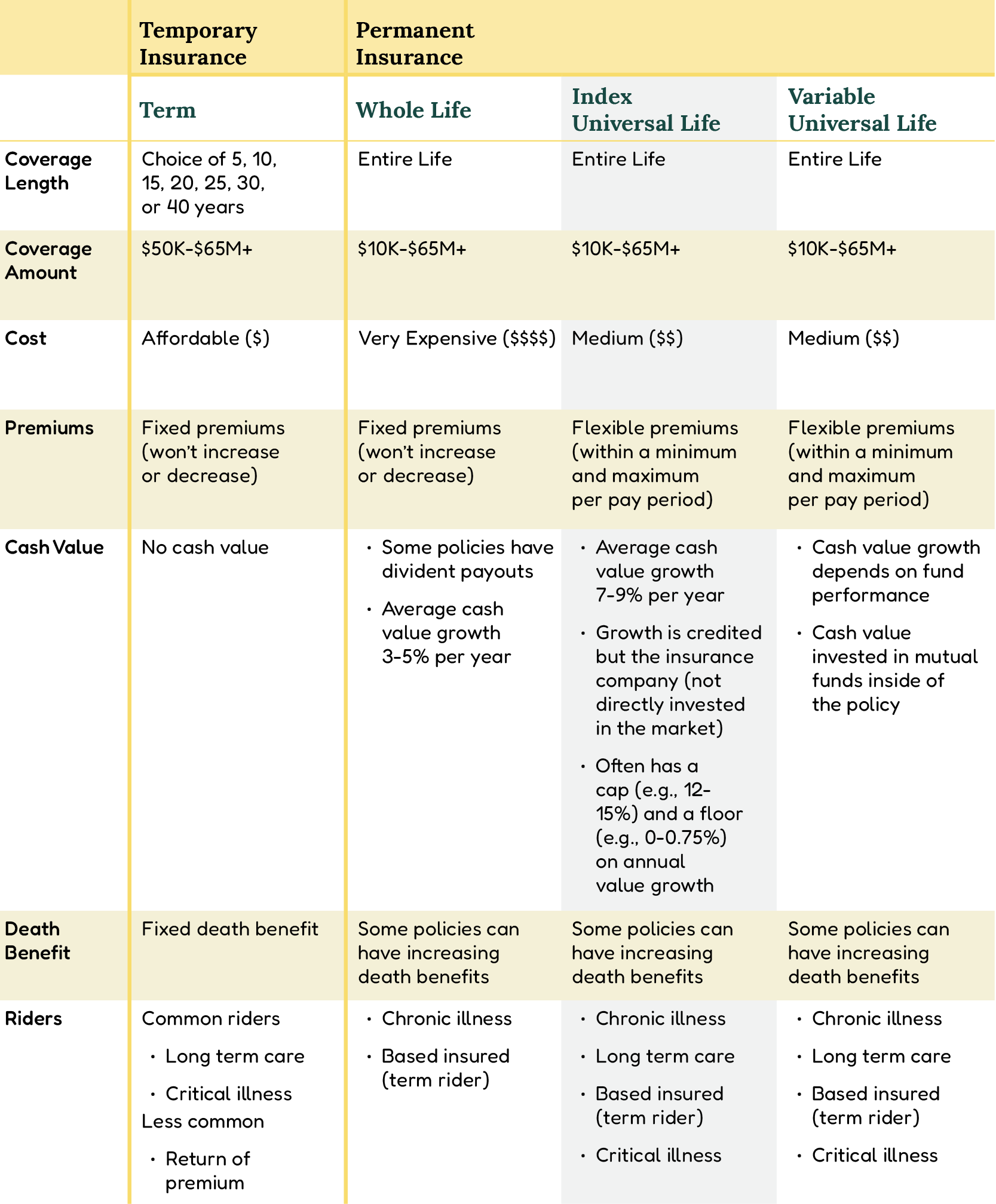
| Policy Type | Premium Flexibility | Cash Value Growth Mechanism | Risk Level | Primary Use Case |
|---|---|---|---|---|
| Whole Life | Fixed and unchanging | Guaranteed minimum rate + potential dividends | Low | Estate planning, guaranteed lifelong protection |
| Universal Life (UL) | Flexible within limits | Adjustable interest rates tied to current yields | Low-Moderate | Flexible budgeting, lifelong coverage |
| Indexed Universal Life (IUL) | Flexible within limits | Linked to stock market index with caps and floors | Moderate | Growth potential with downside market protection |
| Variable Universal Life (VUL) | Flexible within limits | Directly invested in market sub-accounts | High | Aggressive growth, active investors, high net worth |
Financial Advantages and Strategic Uses
Permanent life insurance provides unique financial benefits that term insurance cannot match, making it a cornerstone for sophisticated personal finance and estate planning strategies.
Lifetime Security and Estate Liquidity
The most obvious advantage is lifelong protection. No matter how long you live, your beneficiaries are guaranteed to receive the death benefit, provided the policy remains in good standing. This certainty is valuable for individuals with lifelong dependents, such as a child with special needs who will require financial support indefinitely.
Furthermore, permanent life insurance creates immediate liquidity upon death. Estate taxes, final medical bills, and probate costs can drain an estate of cash, forcing heirs to sell real estate or business assets quickly at a discount. A tax-free life insurance payout provides immediate funds to cover these liabilities, preserving family wealth and business continuity.
Tax Advantages
The internal growth of the cash value in a permanent life insurance policy is tax-deferred, meaning you do not pay income tax on the interest, dividends, or capital gains accumulating inside the account.
Additionally, policyholders can access this cash value during their lifetimes through policy loans. Because these loans are borrowed against the collateral of the cash value rather than withdrawn directly, they are generally not classified as taxable income. However, if the policy lapses or is surrendered with an outstanding loan balance exceeding your basis (total premiums paid), the excess can trigger a significant taxable event.
Structural Risks, Costs, and Limitations
Despite their benefits, permanent life insurance policies are complex financial instruments that carry substantial costs and structural risks, making them unsuitable for everyone.
High Cost and Expense Loadings
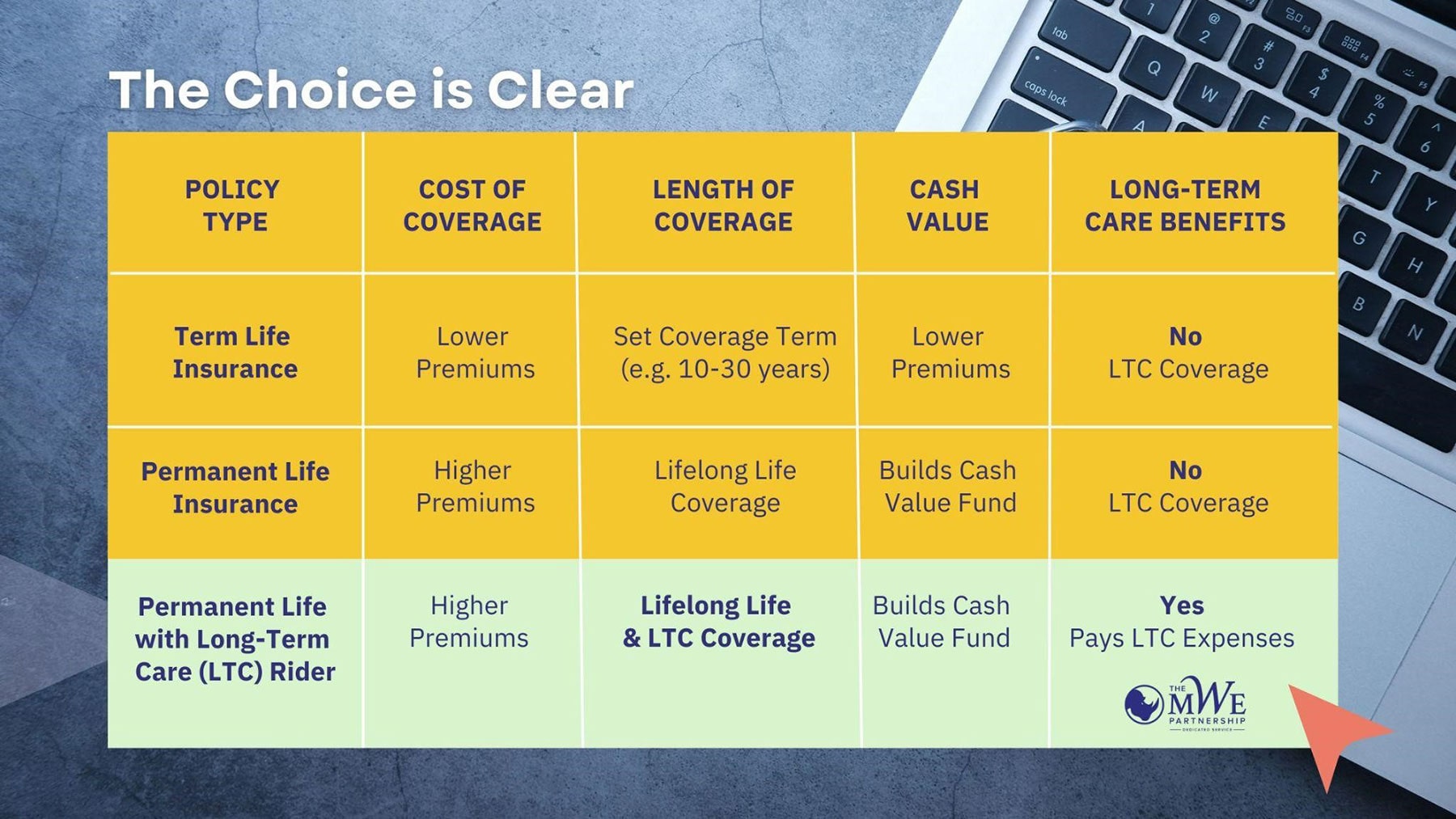
Permanent insurance is significantly more expensive than term insurance—often 5 to 15 times more costly for the same initial death benefit. A large portion of your early premium payments goes toward broker commissions, underwriting fees, and administrative expenses, which means it can take several years for the cash value to equal the premiums you have paid.
The Danger of Policy Lapse
If the cash value of a universal or variable policy drops too low—due to poor investment performance, low premium payments, or high policy loans—the policy can enter a state of lapse. When a policy lapses, the insurance coverage terminates entirely, and the policyholder may face a massive tax bill if the outstanding loans exceed their cost basis. Reinstating a lapsed permanent policy later in life can be prohibitively expensive or impossible due to declining health.
Frequently Asked Questions
Can I convert a term life insurance policy into permanent life insurance?
Many term life policies include a conversion rider that allows you to switch your term coverage to a permanent policy without undergoing a new medical exam. This option is valuable if your health deteriorates during the term period, though your new permanent premiums will be based on your age at the time of conversion.
How do policy loans work, and do they have to be repaid?
You can borrow against your policy's cash value at interest rates set by the insurance company. While these loans technically do not require mandatory monthly repayments, any outstanding loan balance plus accrued interest will be permanently deducted from the death benefit when you pass away. If the loan balance exceeds the total cash value, the policy will lapse.
Are permanent life insurance dividends guaranteed?
No. Dividends are only paid by participating whole life policies issued by mutual insurers, and they are declared annually by the company's board of directors based on investment returns, mortality experience, and operational expenses. While some long-established insurers have paid dividends for over a century, past performance does not guarantee future payouts.
What happens to my cash value if I surrender the policy?
If you decide to cancel your permanent policy, you are entitled to the surrender value, which is the cash value minus any surrender charges and outstanding loans. Surrender charges are highest in the initial years of the policy and gradually decrease to zero over a set schedule, typically lasting 10 to 15 years.
Is permanent life insurance a good investment vehicle?
Permanent life insurance should be viewed primarily as an insurance product with a savings component rather than a standalone investment. While the tax-deferred cash accumulation is attractive, the high fee structures and administrative costs mean that traditional retirement vehicles like 401(k)s and IRAs usually yield higher investment returns for retirement savings alone. Permanent insurance is best utilized for its specific risk-management, tax-planning, and estate-liquidity benefits.
Next Actions and Strategic Recommendations
Before purchasing a permanent life insurance policy, conduct a thorough assessment of your financial timeline, cash flow stability, and long-term objectives. Begin by calculating your exact insurance need and determining whether temporary needs (such as a mortgage or young children) can be met more cost-effectively with term insurance. If permanent coverage aligns with your goals—such as funding an estate tax liability or securing lifelong estate legacy—request policy illustrations from multiple carriers, and examine the underlying assumptions regarding interest rates and mortality charges. Consult with a fee-only fiduciary financial advisor or an independent insurance specialist who can model how a permanent policy integrates with your broader investment and tax strategy before committing to a lifelong contract.
Image Gallery