The Story of Loki in Norse Mythology: Origins, Deception, and Ragnarök
The story of Loki in Norse mythology depicts him as a complex, shape-shifting trickster who acts as both a catalyst for catastrophe and a vital problem-solver for the gods of Asgard. Unlike other figures, Loki is not a god of a specifi...
The story of Loki in Norse mythology depicts him as a complex, shape-shifting trickster who acts as both a catalyst for catastrophe and a vital problem-solver for the gods of Asgard. Unlike other figures, Loki is not a god of a specific natural element; instead, he represents cunning, chaos, and linguistic manipulation, ultimately engineering the death of Balder and triggering the events of Ragnarök.
Contents
Origins and Lineage of the Trickster
To understand the trajectory of Loki’s actions in Norse myth, one must examine his unorthodox parentage and his unique integration into the pantheon of the Æsir. Unlike Odin, who is the son of Bestla and Borr, or Thor, who is the son of Odin and Fjörgyn, Loki originates from outside the traditional divine bloodline. According to the Prose Edda compiled by Snorri Sturluson, Loki is the son of the giant Fárbauti and a mother named Laufey (or Nál).
Despite his jötunn (giant) ancestry, Loki secures a blood-brotherhood pact (fóstbrœðralag) with Odin, the Allfather. This sacred oath allows him to sit among the highest gods in Asgard, bridging the gap between the divine Æsir and their primordial adversaries, the giants. This dual heritage defines his entire narrative function. He possesses the physical strength and magical capabilities of the giants combined with the intellect and access of the gods, placing him in a perpetual balancing act between loyalty to Asgard and his chaotic nature.
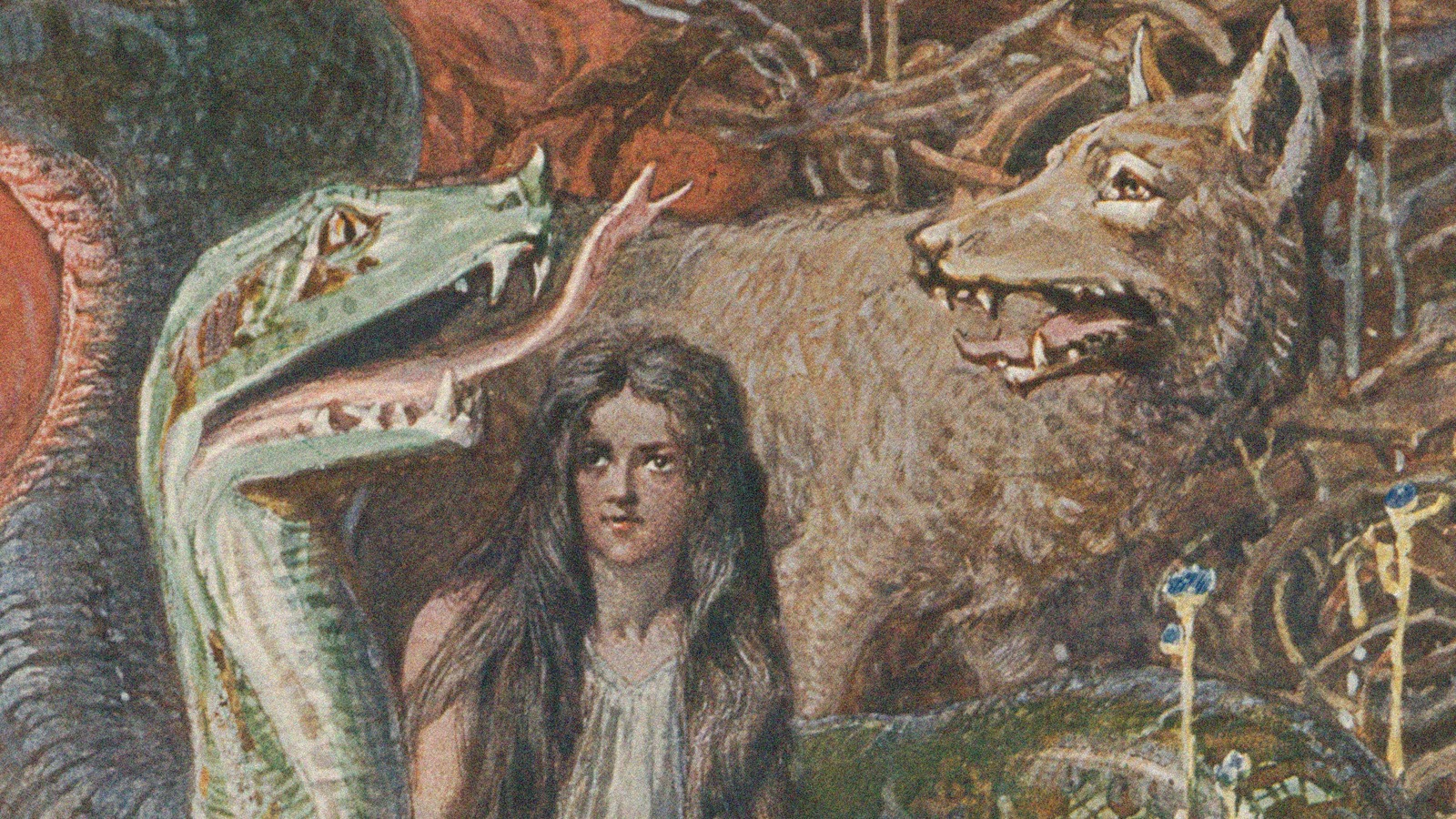
Furthermore, Loki's lineage extends beyond his divine associations through his monstrous offspring. With the giantess Angrboða, Loki sires three children who become central figures in the doom of the cosmos:
- Fenrir: The colossal wolf destined to break his fetters and devour Odin during Ragnarök.
- Jörmungandr: The Midgard Serpent, cast into the great ocean where it grows large enough to encircle the entire world and bite its own tail.
- Hel: The ruler of Helheim, the cold and dismal realm reserved for those who die of sickness or old age rather than in honorable battle.
Loki’s Role as Asgard's Problem-Solver and Troublemaker
Within the surviving poems of the Poetic Edda and the narrative framing of the Prose Edda, Loki frequently functions in a dual capacity. In many myths, he creates a severe crisis for the gods, only to use his superior wit and shape-shifting abilities to resolve the very problem he initiated.
A prominent example of this dynamic involves the construction of Asgard's massive defensive walls. A master builder (disguised as a giant) approaches the gods, offering to build impregnable fortifications in exchange for the sun, the moon, and the goddess Freyja. Loki convinces the gods to accept the terms, provided the builder completes the task in a single winter without assistance. As the builder nears completion ahead of schedule—aided by his mighty stallion Svaðilfari—the panicked gods threaten Loki with torture unless he sabotages the construction.
Loki transforms into a mare and lures Svaðilfari away into the forests, disrupting the builder's progress. This scheme successfully prevents the loss of Freyja and the celestial bodies, but it results in Loki giving birth to Sleipnir, the eight-legged gray horse that subsequently becomes Odin’s primary mount. This recurring pattern highlights Loki's utilitarian value to Asgard; even when his malicious or selfish impulses endanger the realm, his cunning provides the gods with indispensable treasures and escapes.
Divine Treasures and Craftsmanship
Loki’s cleverness is directly responsible for many of the most iconic artifacts wielded by the Norse gods. Following a prank in which he shears off the golden hair of Sif, Thor's wife, a furious Thor threatens to break every bone in Loki's body. Desperate, Loki travels to Svartalfheim, the subterranean realm of the dwarves, to commission replacement treasures.
| Artifact | Maker / Dwarf Group | Recipient / Owner | Special Properties |
|---|---|---|---|
| Gungnir | Sons of Ivaldi | Odin | A spear that never misses its target |
| Skíðblaðnir | Sons of Ivaldi | Freyr | A massive ship that can be folded into a cloth |
| Sif’s Hair | Sons of Ivaldi | Sif | Real gold hair that grows naturally like organic locks |
| Mjölnir | Brokkr and Eitri | Thor | A war hammer that always returns to the thrower |
| Draupnir | Brokkr and Eitri | Odin | A gold ring that drops eight identical rings every ninth night |
Through wagers and verbal sparring with the dwarf brothers Brokkr and Eitri, Loki manages to secure these legendary items for the gods, demonstrating how his self-preservation instincts frequently benefit the entire pantheon despite his reckless beginnings.
The Death of Balder: The Turning Point
While Loki’s earlier exploits involve mischief, theft, and temporary disruptions, his narrative takes a definitively dark turn with the murder of Balder the Good. Balder, the son of Odin and Frigg, is universally beloved, radiant, and pure. When Balder begins experiencing prophetic nightmares regarding his own death, his mother Frigg extracts oaths from every object, element, metal, plant, and animal in existence promising never to harm him.
Believing her son to be entirely invulnerable, the gods amusedly throw stones, iron, and weapons at Balder during their assemblies, watching the objects bounce off him harmlessly. Jealous of this immunity, Loki disguises himself as an old woman and visits Frigg. Through careful questioning, he discovers one minor exception to the universal oath: the mistletoe plant growing west of Valhalla was deemed too young and insignificant to swear an oath.
Loki procures a twig of mistletoe, crafts it into a dart, and brings it to the assembly. He guides the hand of Balder's blind brother, Höðr, directing him to throw the projectile at Balder. The mistletoe pierces Balder’s chest, killing him instantly and plunging Asgard into profound mourning.
When the gods discover Loki's complicity, he flees into the mountains, constructing a dwelling with four doors so he can watch for pursuers in every direction. He even invents the first fishing net to hide from the gods as a salmon in the river Fránangr. However, the gods capture him using the very net he left behind.
Binding and Punishment
Loki’s punishment for orchestrating Balder's death is among the most severe and symbolic tortures described in Norse mythology. The Æsir drag Loki to a secluded, rocky cavern, bringing along his two remaining sons from another union, Vali and Narfi. The gods transform Vali into a wolf, and Vali tears his brother Narfi apart.
Using Narfi’s entrails as binding cords, the gods tie Loki to three jagged stone slabs within the cavern. The giantess Skaði places a venomous serpent directly above Loki’s face, so that venom continuously drips down upon him.
Loki's faithful wife, Sigyn, stands by his side holding a basin to catch the caustic venom before it hits his skin. However, whenever the basin fills and Sigyn must turn away to empty it, the venom drips onto Loki's face. The excruciating pain causes him to writhe violently, shaking the foundations of the earth and producing what humans experience as earthquakes. He remains bound in this dark subterranean prison throughout the ages, awaiting the final twilight of the gods.
Ragnarök and Ultimate Fate
Loki’s imprisonment ends when the cataclysmic events of Ragnarök unfold, shaking the cosmic order to its core. As predicted by ancient seers, the bonds holding Loki and his monstrous children snap simultaneously.
- The wolf Fenrir breaks his heavy shackles.
- Jörmungandr rises from the depths of the ocean, flooding the lands.
- The ship Naglfar, constructed from the unpared fingernails of dead men, breaks free, piloted by the giant Hrym.
- Loki himself steers Naglfar toward the battlefield of Vígríðr, leading an army of jötnar, frost giants, and the inhabitants of Hel against the forces of Asgard.
During the final battle, Loki faces his ultimate nemesis: Heimdallr, the vigilant watchman of the Bifröst bridge. In the poetic accounts of their clash, Loki and Heimdallr fight with relentless fury until they inflict mortal wounds upon one another. Loki dies on the battlefield, fulfilling his ancient prophecy as the ultimate architect of destruction who brings down the old cosmic order, clearing the way for a renewed world to rise from the sea.
Frequently Asked Questions
Is Loki the biological father of Sleipnir?
Yes. According to Norse mythological texts, Loki transformed into a mare to lure away the giant builder’s stallion, Svaðilfari. This union resulted in the birth of Sleipnir, the swift, eight-legged horse that Odin rides.
Why is Loki often confused with the Marvel Cinematic Universe version?
Pop culture adaptations, particularly comic books and cinematic universes, have popularized a sanitized, anti-hero version of Loki. Traditional Norse myths portray him as a much darker, malicious, and disruptive figure whose actions directly lead to the death of Balder and the destruction of the cosmos.
Was Loki considered one of the primary gods of Asgard?
Loki lived among the Æsir and acted as a blood-brother to Odin, but he was not an object of worship. Norse pagans did not build temples or offer sacrifices to Loki because he represented chaos, deceit, and the eventual doom of the gods.
What happened to Loki's children after Ragnarök?
Almost all of Loki’s immediate monstrous children perish during Ragnarök. Fenrir is slain by Odin’s son Víðarr, Jörmungandr is killed by Thor (though Thor dies shortly after from the serpent's venom), and Loki dies fighting Heimdallr. Only a few divine survivors remain to rebuild the world.
How did the ancient Norse view Loki's character?
The ancient Norse culture valued oaths, community loyalty, and predictable honor. Loki embodied the exact antithesis of these values: a breaker of oaths, an instigator of internal strife, and an unpredictable force who undermined societal stability, yet remained entirely necessary for the narrative cycles of life, death, and renewal.
Conclusion and Next Steps
To deepen your understanding of the story of Loki, read direct translations of primary source materials such as the Poetic Edda (specifically poems like Lokasenna and Völuspá) and Snorri Sturluson’s Prose Edda. Examining these original texts offers direct insight into how pre-Christian Scandinavian societies conceptualized fate, chaos, and the inevitable cycle of mythology.
Image Gallery