BYU Joins the Big 12: A Comprehensive Look at the 2023-24 Transition and Its Lasting Impact
BYU officially joined the Big 12 Conference on July 1, 2023, ending 12 seasons of football independence and 12 years in the West Coast Conference for other sports. This move provided the Cougars with Power Four membership, increased me...
BYU officially joined the Big 12 Conference on July 1, 2023, ending 12 seasons of football independence and 12 years in the West Coast Conference for other sports. This move provided the Cougars with Power Four membership, increased media revenue, and stabilized their long-term athletic standing in a rapidly changing collegiate landscape.
Contents
The transition of Brigham Young University (BYU) into the Big 12 was one of the most significant shifts in the school’s athletic history. For over a decade, BYU navigated the difficult waters of football independence, a path that offered high visibility through a partnership with ESPN but presented immense challenges in late-season scheduling and access to the College Football Playoff. By the time the 2023-24 season arrived, the move was viewed not just as an upgrade, but as a necessity for survival in the upper echelon of college sports.
The Road to July 1, 2023: Ending Independence
The journey to the Big 12 began in earnest in September 2021, when the conference extended invitations to BYU, the University of Central Florida (UCF), the University of Cincinnati, and the University of Houston. This expansion was a direct response to the announced departures of Texas and Oklahoma to the SEC. For BYU, this was the culmination of a decades-long quest to return to a major conference after the dissolution of the original Western Athletic Conference (WAC) and their subsequent departure from the Mountain West.
From 2011 to 2022, BYU Football operated as an Independent. While this era produced memorable wins against traditional powers and allowed the program to play a national schedule, the "Independent Ceiling" was a constant reality. Without a conference tie-in, BYU had to go undefeated or near-undefeated against a grueling schedule just to be considered for a New Year’s Six bowl. Joining the Big 12 for the 2023-24 season fundamentally changed this equation, providing a guaranteed path to the postseason through conference tie-ins.
The administrative preparation for the 2023-24 season involved massive logistical shifts. BYU had to align its broadcast schedules, ticket operations, and compliance departments with Big 12 standards. As a private institution owned by The Church of Jesus Christ of Latter-day Saints, BYU also maintained its unique policy of not competing on Sundays, a condition the Big 12 agreed to accommodate across all sports.
Athletic Performance in the Inaugural 2023-24 Season
The 2023-24 season served as a "reality check" for many programs making the jump to a Power Four environment. BYU experienced a mix of immediate success in Olympic sports and a steep learning curve in the marquee revenue sports of football and basketball.
Football: A Trial by Fire
The 2023 football season was the first time BYU played a full round-robin conference schedule in over a decade. Led by head coach Kalani Sitake, the Cougars started the season 5-2, appearing to be on track for a bowl game. However, the depth requirements of a Big 12 schedule became apparent in November. BYU suffered five consecutive losses to end the season 5-7, failing to reach bowl eligibility for the first time since 2017.
The transition highlighted the need for increased roster depth and "Big 12 size" in the trenches. Facing teams like Oklahoma, Texas, and Oklahoma State in consecutive weeks proved more taxing than the Independent schedules of the past, where late-season games were often played against lower-tier FBS opponents or FCS schools.
Men’s Basketball: Exceeding Expectations
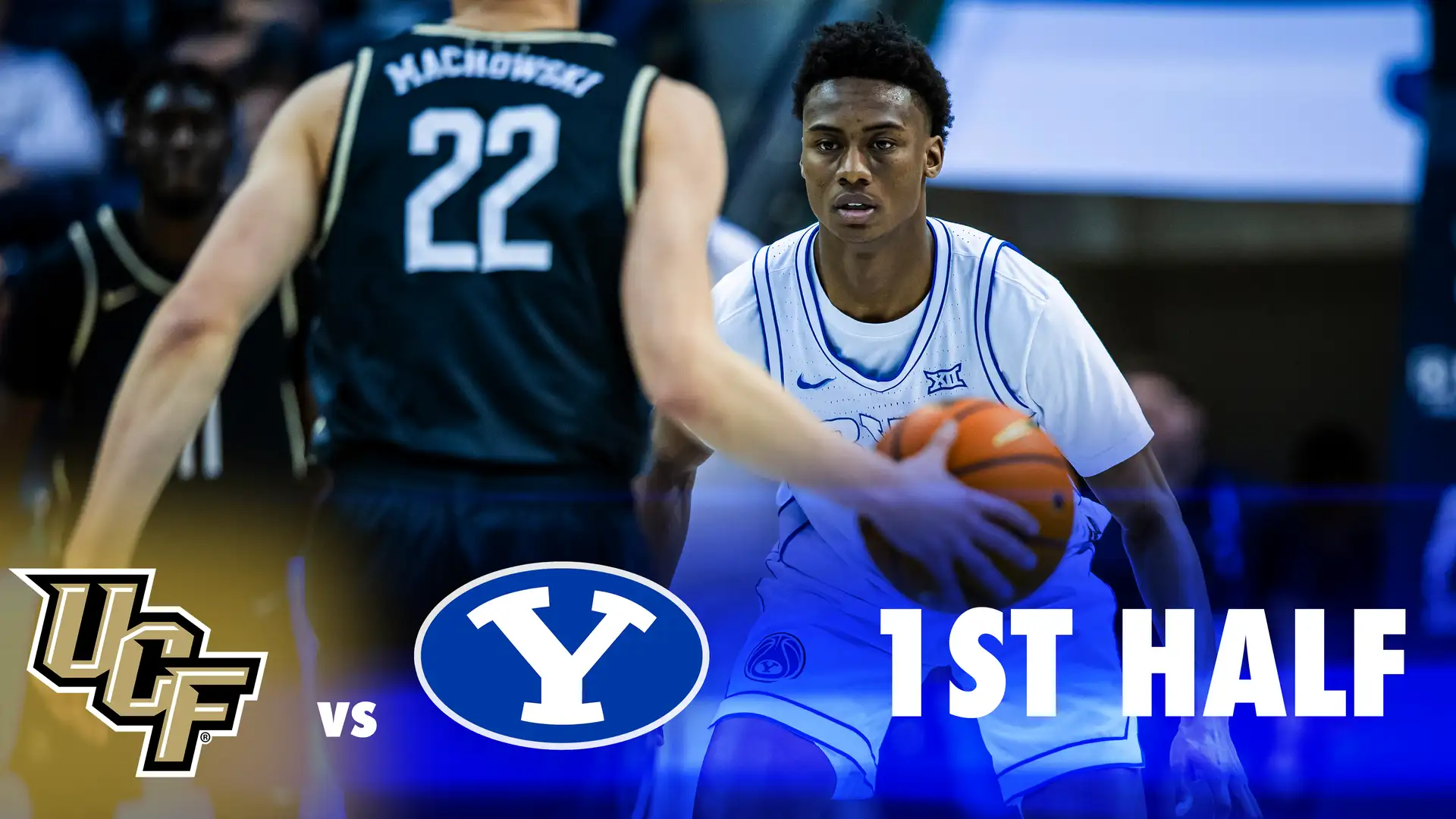
While football struggled, the men's basketball program, then led by Mark Pope, exceeded nearly all preseason expectations. Projected to finish near the bottom of the conference by most analysts, the Cougars utilized a high-volume three-point shooting offense to finish the 2023-24 season with a 10-8 conference record (23-11 overall).
The Marriott Center in Provo quickly gained a reputation as one of the toughest venues in the Big 12. BYU secured marquee wins over ranked opponents, including a signature road victory against Kansas at Allen Fieldhouse. The Cougars earned a 6-seed in the 2024 NCAA Tournament, proving they could compete immediately in what is widely considered the toughest basketball conference in the nation.
Women’s Athletics and Olympic Sports
The BYU Women’s Soccer program was perhaps the most successful "Year One" story. They reached the NCAA College Cup (Final Four) in 2023, demonstrating that BYU’s infrastructure in Olympic sports was already at a championship level. Similarly, the track and field and cross-country programs remained national contenders, as the move to the Big 12 offered more consistent high-level competition during the regular season.
Financial Impact and Media Rights Valuations
One of the primary drivers for BYU joining the Big 12 was financial stability. In the final years of independence, BYU’s media revenue was estimated to be significantly lower than that of Power Five schools.
The Revenue Leap
Upon joining in 2023, BYU, along with the other three new members, entered a transitionary period regarding revenue distribution. While they did not receive a full "legacy" share in year one, the increase in revenue from the Big 12’s media deal with ESPN and FOX was substantial. By 2025 and 2026, BYU's share of conference revenue significantly eclipsed anything the school could have generated as an independent.
The Big 12's proactive move to secure a new six-year media rights deal worth approximately $2.3 billion (running through 2031) provided BYU with long-term fiscal security. This funding has been directly funneled into:
- Coaching Salaries: Retaining top-tier talent in an era of high turnover.
- NIL (Name, Image, Likeness) Support: Creating robust collectives to help BYU compete for blue-chip recruits.
- Facility Upgrades: Renovating the Student Athlete Building and enhancing fan experiences at LaVell Edwards Stadium.
| Metric | Independent Era (Final Years) | Big 12 Era (2023-Present) |
|---|---|---|
| Annual Media Revenue | Estimated $15M–$20M | Estimated $30M–$45M (at full share) |
| Primary Media Partner | ESPN (BYUtv for secondary) | ESPN and FOX |
| Football Scheduling | 12 individual contracts | 9 Conference games + 3 Non-Con |
| Postseason Path | At-large or specific bowl tie-ins | Automatic P4 bids and CFP access |
| Basketball Conference | West Coast Conference (WCC) | Big 12 |
The 2024 Expansion: From 12 to 16 Members
To understand the 2023-24 season, one must look at what happened immediately after. In 2024, the Big 12 expanded again, adding the "Four Corners" schools: Arizona, Arizona State, Colorado, and Utah. This was a pivotal moment for BYU, as it reunited them with their primary rival, the University of Utah.
For BYU fans, the 2023-24 season was a lone year of being the "new kids on the block" before the conference transformed into a 16-team national powerhouse. The addition of Utah in 2024 restored the "Holy War" as a conference game, ensuring that one of the most intense rivalries in college sports would have conference championship and playoff implications every year. As of 2026, the Big 12 is recognized as the premier basketball conference and a stable, aggressive player in the "Power Two" vs. "Middle Class" debate of conference realignment.
Recruiting and the "Big 12 Bump"
Since joining the Big 12, BYU has seen a measurable shift in recruiting. Previously, BYU often lost out on four-star and five-star LDS (Latter-day Saint) athletes to Pac-12 or Big Ten schools because those players wanted the "Power Five" stage.
The move for the 2023-24 season removed this hurdle. BYU can now offer the same platform as any other major program, combined with its unique cultural environment. In the 2024 and 2025 recruiting cycles, the Cougars saw an uptick in defensive line and offensive line depth—areas that were previously weaknesses. The ability to tell a recruit they will play in front of national audiences against the likes of Oklahoma State, Kansas State, and Utah every year has been a game-changer for the coaching staff.
Frequently Asked Questions
When did BYU officially join the Big 12?
BYU officially became a member of the Big 12 Conference on July 1, 2023. They participated in their first conference games in August and September of 2023 for the fall sports season.
Did BYU have to pay an exit fee to join the Big 12?
Because BYU was an Independent in football, they did not have a football exit fee. However, they were members of the West Coast Conference (WCC) for other sports. BYU reached an agreement with the WCC to pay an undisclosed exit fee and provided the conference with a multi-year notice period to ensure a smooth transition for both parties.
How did BYU’s "No Sunday Play" rule work in the Big 12?
The Big 12 Conference officially agreed to honor BYU’s long-standing policy of not competing on Sundays. This required the conference to adjust tournament brackets and regular-season scheduling for sports like baseball, softball, and soccer to ensure BYU's games were held on Thursdays, Fridays, or Saturdays.
Who were the other teams that joined with BYU in 2023?
BYU joined the Big 12 alongside three former American Athletic Conference (AAC) members: the University of Central Florida (UCF), the University of Cincinnati, and the University of Houston.
Has BYU won a Big 12 championship since joining?
In the 2023-24 season, BYU was highly competitive in several sports, particularly in cross country and soccer, though the football and basketball programs are still chasing their first Big 12 conference titles as of 2026. The competition level in the Big 12 is significantly higher than in the WCC, making conference titles much harder to achieve.
Moving Forward: The 2026 Outlook
As we look at the landscape in 2026, BYU’s decision to join the Big 12 has been fully vindicated. The school has successfully integrated into the conference culture and has become a cornerstone of the league's Western footprint. The initial growing pains of the 2023-24 football season have led to a more robust approach to roster building, and the basketball program remains a perennial Top 25 contender.
For fans and stakeholders, the next step is leveraging this stability into consistent postseason success. With the College Football Playoff now expanded, BYU’s path to a national championship is clearer than it has been at any point since 1984. The "Big 12 Era" is no longer a novelty; it is the established reality of BYU athletics.
Recommendation: For those tracking BYU’s ongoing progress, monitor the official Big 12 Conference website and BYU Cougars Athletics for the latest scheduling and media rights updates as the conference continues to evolve in the 2026-2027 cycle.
Image Gallery