Understanding the Visual Cup Size Chart for Accurate Bra Fitting
A visual cup size chart displays bra size relationships by illustrating the numerical difference between your bust and band measurements alongside cup volume. Because cup size is relative to band size—not an absolute static volume—a vi...
A visual cup size chart displays bra size relationships by illustrating the numerical difference between your bust and band measurements alongside cup volume. Because cup size is relative to band size—not an absolute static volume—a visual chart helps identify your baseline cup size, compare international conversion systems, and pinpoint equivalent sister sizes for a precise fit.
Contents
The Mechanics of Bra Sizing: Band, Bust, and Volume Ratios
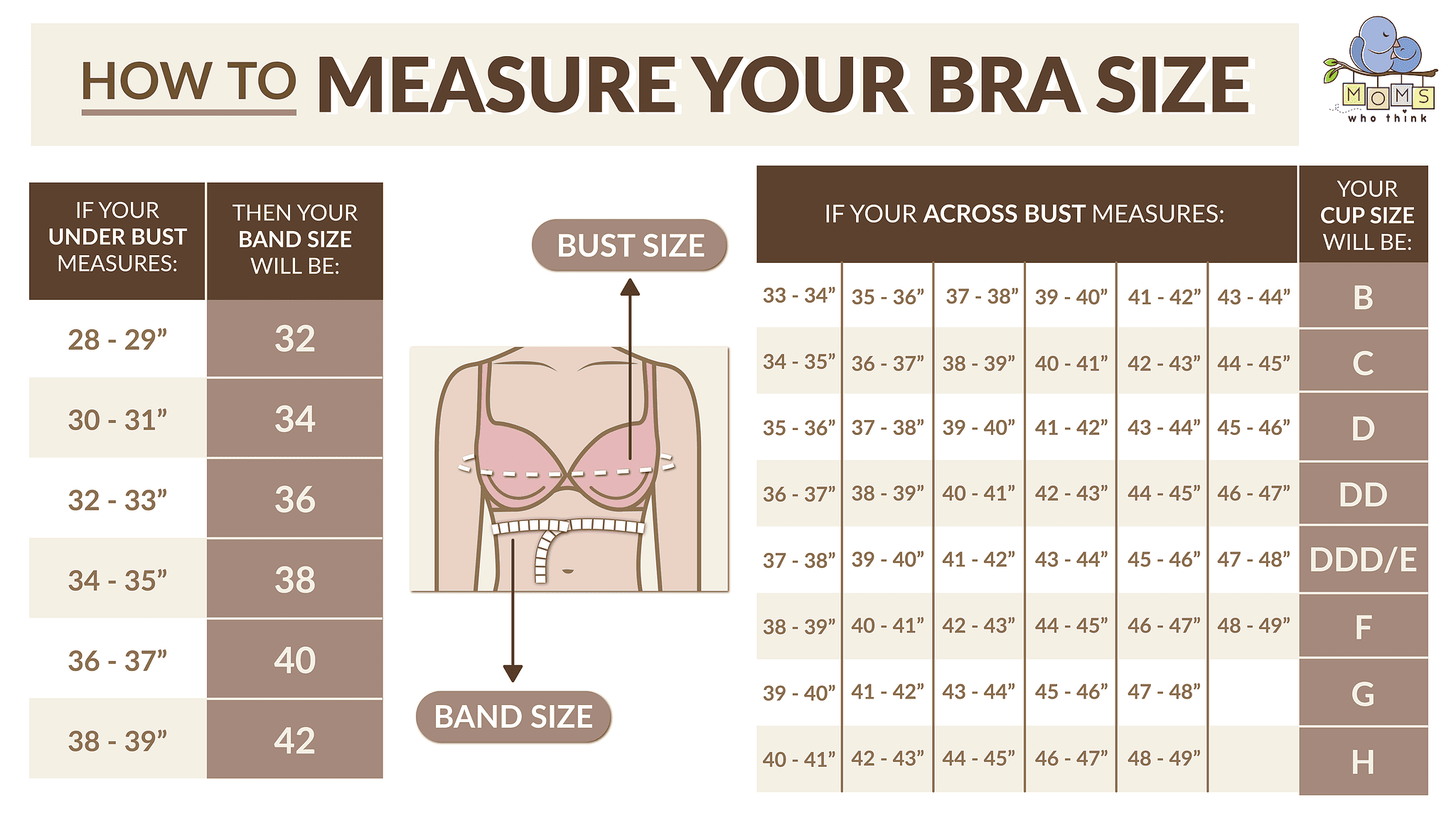
Many consumers view bra cup letters such as A, B, C, D, or DD as fixed, independent volumes. However, bra sizing operates on a proportional system where cup volume is directly linked to the underbust band measurement. A cup letter simply represents the dimensional difference between the fullest part of the breast (bust measurement) and the ribcage directly beneath the breast (underbust measurement).
Because cup volume scales proportionally with band size, a 30D cup contains significantly less volumetric space than a 38D cup. Each standard cup letter step represents a one-inch increase in the difference between your bust and underbust measurements:
- 1-inch difference: A cup
- 2-inch difference: B cup
- 3-inch difference: C cup
- 4-inch difference: D cup
- 5-inch difference: DD cup (or E cup depending on the regional system)
- 6-inch difference: DDD cup (US) / E cup (UK)
Understanding this relationship is essential when evaluating a visual cup size chart. Visual charts map these mathematical differences graphically, allowing you to see how volume expands across both band sizes and cup letters.
The Concept of Sister Sizing
Sister sizes are groups of bra sizes that hold the exact same cup volume despite having different band measurements. When you increase the band size by one step (for example, from 32 to 34), you must decrease the cup letter by one step (from E to DD) to maintain an identical cup volume.
The following sizes all share the same physical cup volume:
- 30F (UK) / 30G (US)
- 32E (UK) / 32DDD (US)
- 34DD (UK/US)
- 36D (UK/US)
- 38C (UK/US)
Visual cup size charts frequently highlight sister size diagonals. If a bra feels uncomfortably tight around your ribcage but the cups enclose your breast tissue perfectly, moving up one band size and down one cup letter maintains your required cup volume while providing a looser, more comfortable band.
How to Read a Visual Cup Size Chart
Visual bra fitting charts translate numerical measurement differences into structured matrices or visual silhouette guides. To read a chart effectively, you must understand its core axes and layout components.
1. Primary Grid Axes
Most standardized visual cup charts use a two-axis grid:
- Horizontal Axis (Band Size): Displays underbust measurements, typically ranging from 28 to 44 inches (or 60 to 100 cm in European metrics).
- Vertical Axis (Bust Difference): Displays the difference between overbust and underbust measurements in 1-inch (2.54 cm) increments.
By locating your snug underbust measurement on the horizontal axis and your calculated difference on the vertical axis, the intersecting cell reveals your starting bra size.
2. Silhouette and Volume Illustrations
Advanced visual charts include profile diagrams showing breast projection, shape distribution, and cup root depth. These illustrations help distinguish between different breast shapes with identical overall volumes:
- Shallow Breast Tissue: Breast tissue is spread broadly across a wider area of the chest wall with minimal forward projection. On a visual chart, shallow shapes often require wider cup wires and shallower cup depths.
- Projected Breast Tissue: Breast tissue extends outward from the chest wall with a narrower root base. Visual charts indicate that projected shapes need deeper cup profiles to prevent tissue squishing.
Navigating International Sizing Systems: US, UK, and EU
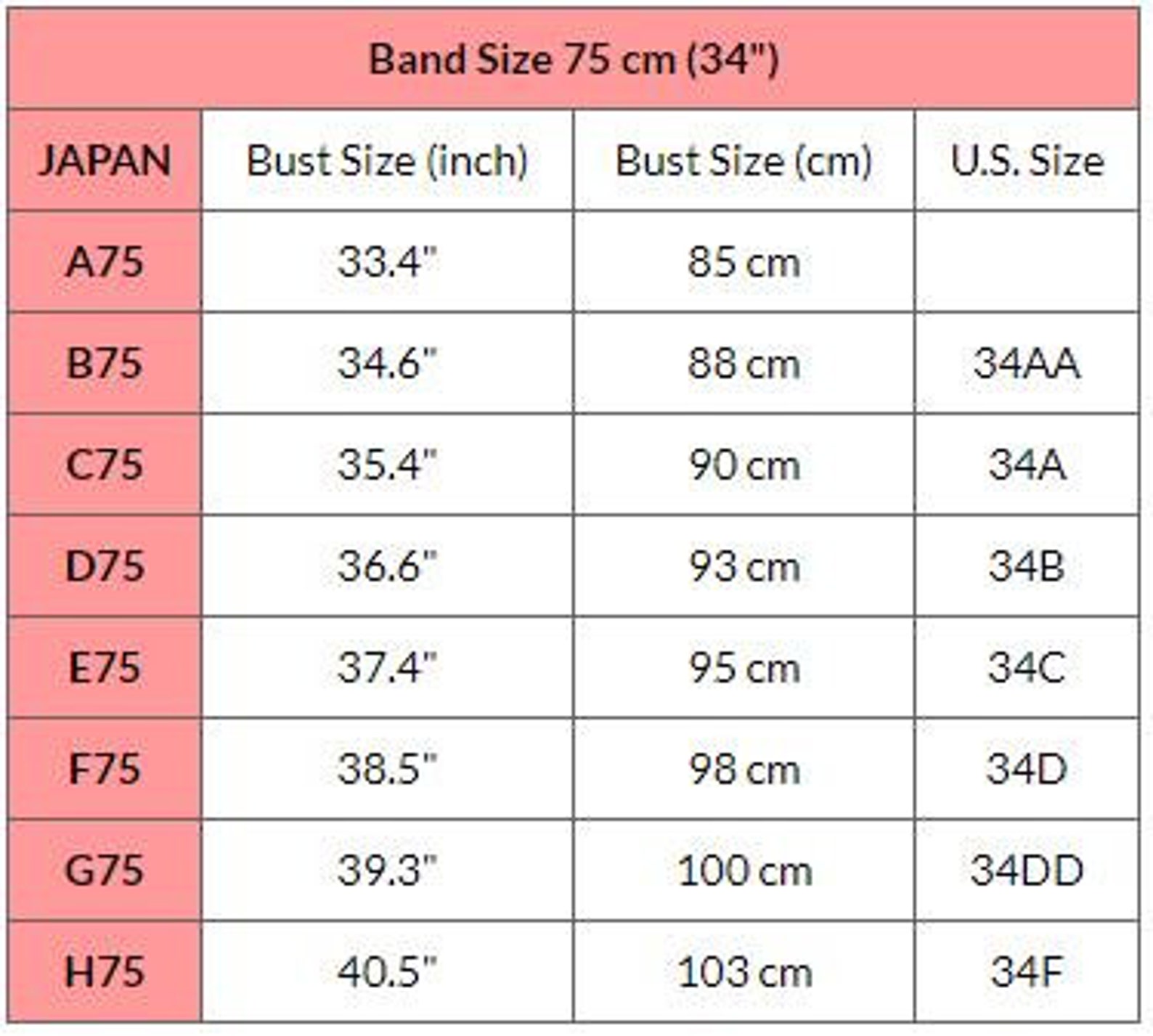
One of the primary causes of sizing confusion is the divergence among global sizing conventions. A visual cup size chart must specify which regional sizing standard it utilizes, as cup lettering diverges significantly above a D cup.
United States (US) System
The US system typically progresses as follows: A, B, C, D, DD, DDD (or F), G, H, I, J, K, L, M, N. Some American manufacturers use "E" in place of DD or "F" in place of DDD, which creates inconsistency within the domestic market.
United Kingdom (UK) System
The UK system is widely recognized as a consistent standard for D+ cup sizes. It uses double letters for specific increments: A, B, C, D, DD, E, F, FF, G, GG, H, HH, J, JJ, K, KK. Because the UK system maintains uniform 1-inch steps without skipping letters, many visual charts reference UK sizes as a baseline.
European Union (EU) System
The EU system uses metric measurements for both band sizes and cup steps. Band sizes are stated in centimeters (65, 70, 75, 80, etc.), which correspond to underbust measurements minus approximately 10 cm of stretch allowance. Cup sizes progress in single letters without double letters: A, B, C, D, E, F, G, H, I, J, K, L. Each cup step represents a 2 cm (0.79 inch) difference rather than a 1-inch (2.54 cm) difference.
Comparative Cup Size Progression and Volume Mapping
The following reference table maps bust-to-band measurement differences in inches to their corresponding cup sizes across the US, UK, and EU sizing standards, along with relative cup volume scaling.
| Measurement Difference (Bust minus Band) | US Cup Size | UK Cup Size | EU Cup Size | Relative Cup Volume Scale (Base 34 Band) |
|---|---|---|---|---|
| 1 inch (2.5 cm) | A | A | A | 150 cm³ |
| 2 inches (5.0 cm) | B | B | B | 300 cm³ |
| 3 inches (7.5 cm) | C | C | C | 450 cm³ |
| 4 inches (10.0 cm) | D | D | D | 580 cm³ |
| 5 inches (12.5 cm) | DD | DD | E | 710 cm³ |
| 6 inches (15.0 cm) | DDD / F | E | F | 850 cm³ |
| 7 inches (17.5 cm) | G | F | G | 1,000 cm³ |
| 8 inches (20.0 cm) | H | FF | H | 1,160 cm³ |
| 9 inches (22.5 cm) | I | G | I | 1,320 cm³ |
| 10 inches (25.0 cm) | J | GG | J | 1,490 cm³ |
| 11 inches (27.5 cm) | K | H | K | 1,670 cm³ |
| 12 inches (30.0 cm) | L | HH | L | 1,860 cm³ |
Note: Volumetric scales are approximate estimations based on a standard 34 band baseline. Actual volumetric displacement varies by wire width, gore height, and individual garment construction.
Step-by-Step Guide to Taking Accurate Measurements
To obtain accurate results from a visual cup size chart, precision during measurement is essential. Using a twisted or outstretched measuring tape will yield inaccurate baseline numbers.
Required Tools
- A flexible, non-stretch soft cloth measuring tape.
- A non-padded, unlined bra that lifts tissue without compressing or altering natural shape.
- A full-length mirror to ensure the tape remains level across your back.
Step 1: Measure the Underbust (Band Size)
- Wrap the measuring tape around your ribcage directly beneath your breast tissue.
- Ensure the tape is completely horizontal, parallel to the floor, and snug against the skin without digging in.
- Exhale completely to record your smallest ribcage circumference.
- If your underbust measurement is an even number (such as 32 inches), that is your starting band size. If your measurement is an odd number (such as 33 inches), round up or down based on personal comfort and band elasticity. Note: Modern elastane bands are designed to match true ribcage measurements, so avoid the outdated method of adding 4 inches to your underbust.
Step 2: Measure the Fullest Bust Circumference
Because breast tissue changes shape under gravity, taking multiple bust measurements ensures higher accuracy:
- Standing Measurement: Wrap the measuring tape loosely around the fullest part of your bust across your nipples, keeping the tape level across your back.
- Leaning Measurement: Bend forward at the waist at a 90-degree angle so your torso is parallel to the floor. Measure around your torso over the fullest point of your hanging breast tissue. This measurement captures softer or pendulous tissue that may disperse when standing.
- Lying Down Measurement: Lie flat on your back and measure across the fullest part of your bust.
- Calculating Average Bust: For firm tissue, the standing measurement is often sufficient. For softer tissue, calculate the average between your standing and leaning measurements to determine your primary bust baseline.
Step 3: Calculate the Difference and Map to the Chart
Subtract your snug underbust measurement from your final bust measurement to find your cup difference:
$$\text{Bust Measurement} - \text{Underbust Measurement} = \text{Cup Difference (Inches)}$$
Match this integer difference to the vertical axis of your chosen visual chart. For example, a 3-inch difference maps to a C cup, whereas a 6-inch difference maps to a US DDD or UK E cup.
Evaluating Bra Fit Beyond the Visual Chart
A visual cup size chart provides a starting baseline, but human anatomy requires empirical verification. A mathematically correct size on paper must be verified against key physical fit indicators:
- The Underband: The band provides 80% to 90% of a bra's structural support. A properly fitted band stays level across your back, parallel to the floor. If the band rides up between your shoulder blades, the band size is too large. You should be able to slide no more than two fingers comfortably beneath the band at your spine.
- The Center Gore: The center gore is the fabric bridge between the cups. In wired bras, the gore must tack—rest completely flat against your sternum without resting on top of breast tissue. If the gore floats away from your chest wall, either the cup size is too small or the bra lacks sufficient cup depth for your breast shape.
- The Underwires: The wire should completely enclose all breast tissue, tracing the natural crease beneath the breast (the inframammary fold) and extending toward the armpit without pressing into side breast tissue or pinching the ribcage.
- The Cups: Tissue overflowing the top or sides of the cup (quadding) indicates the cup is at least one size too small. Conversely, excess fabric or space at the top of the cup (gaping) indicates the cup is too large or that the cup profile is too projected for your breast shape.
- The Straps: Straps should support only 10% to 20% of total weight. They should hold the cup against the chest wall without digging into shoulder muscles or sliding off.
Common Pitfalls When Using Visual Cup Size Charts
- Treating Chart Sizes as Universal: Sizing varies between manufacturers due to fabric elasticity, cup seam patterns, and regional grading standards. Always check whether a brand uses US, UK, or EU sizing.
- Ignoring Tissue Density and Root Shape: Two individuals with identical 4-inch differences may require different cup styles. A wide, shallow root requires wide wires with shallow projection, while a narrow, projected root requires deep cups with narrower wires.
- Sticking to Outdated Band Math: Older fitting instructions recommended adding 4 or 5 inches to the underbust measurement. Modern bra bands contain stretch elastane; adding extra inches results in an oversized band that fails to provide lift, transferring weight directly to shoulder straps.
- Failing to Scoop and Swoop: When trying on a bra, always put your hands inside the cups, pull breast tissue forward from under the arms into the center of the cup (the "scoop and swoop" technique), and adjust straps to your torso height.
Frequently Asked Questions
What does "sister size" mean on a visual cup size chart?
Sister sizes are bra sizes that share identical cup volume across different band measurements. For example, 32D, 34C, and 36B all hold the exact same volume of breast tissue. If a 34C fits well in the cup but feels too tight in the ribs, moving to its sister size of 36B provides a larger ribcage band while keeping the cup volume identical.
Why do US and UK cup sizes differ on visual charts?
US and UK manufacturers use different lettering standards above a D cup. While both systems use A, B, C, D, and DD identically, the UK system uses double letters (E, F, FF, G, GG, H) to denote single-inch increases. The US system frequently uses triple letters or single progressive letters (DDD/F, G, H, I). Consequently, a UK F cup corresponds to a US G cup.
How often should I re-evaluate my bra size using a fitting chart?
You should measure your underbust and bust measurements every six to twelve months, as well as after notable body changes such as weight fluctuations, hormonal shifts, pregnancy, post-partum recovery, or changes in exercise routines.
Why is my calculated cup size gaping if the chart says it is correct?
Cup gaping does not always mean the cup is too large. It often occurs when the cup shape is mismatched to your breast tissue—such as wearing a projected, full-coverage cup on a shallow breast shape—or when the band size is too loose, causing the cups to pull away from the body.
Should I measure while wearing a bra or bare-chested?
Measure while wearing a thin, unlined, non-padded bra that holds your tissue in a natural, uplifted position without squishing or altering your shape. Measuring bare-chested can lead to underestimating cup size if soft or pendulous tissue extends downward.
Practical Recommendation
To achieve an accurate fit using a visual cup size chart, start by recording your snug underbust measurement on an exhale and taking both standing and leaning bust measurements. Calculate the difference between your average bust measurement and your underbust measurement to establish your baseline size.
When ordering from international brands, cross-reference your measurements using the UK sizing progression, as it offers the most standardized fit across D+ categories. Once your bra arrives, evaluate the fit by confirming the band stays parallel to the floor, the center gore tacks flat against your sternum, and all tissue is comfortably contained without overflow or gaping.
Image Gallery