The Indian God of Prosperity: Understanding Ganesha and Kubera
Lord Ganesha is the most widely recognized Indian god of prosperity, revered as the "Remover of Obstacles" and the herald of good fortune. While Ganesha facilitates the path to success, Lord Kubera serves as the "Treasurer of the Gods,...
Lord Ganesha is the most widely recognized Indian god of prosperity, revered as the "Remover of Obstacles" and the herald of good fortune. While Ganesha facilitates the path to success, Lord Kubera serves as the "Treasurer of the Gods," specifically overseeing the accumulation and protection of material wealth and terrestrial treasures.
Contents
Prosperity in Indian culture is a multi-dimensional concept that encompasses material wealth, spiritual growth, and the removal of hindrances that prevent one from achieving their goals. To understand the "Indian god of prosperity," one must look at the distinct roles played by Lord Ganesha and Lord Kubera, often worshiped alongside Goddess Lakshmi, the primary female deity of wealth.
Lord Ganesha: The Lord of Beginnings and Success
Ganesha, identifiable by his elephant head, is the primary deity invoked before any new venture. Whether starting a business, moving into a new home, or beginning a ritual, Ganesha is worshiped first (Prathama-pujya) to ensure that the path ahead is clear of difficulties.
The Symbolism of Ganesha’s Form
Every element of Ganesha’s iconography is a lesson in achieving prosperity. His large ears signify the importance of listening—a critical skill for any successful person. His small eyes represent focused concentration, while his large stomach symbolizes the ability to peacefully "digest" all the good and bad experiences of life.
In 2026, many scholars emphasize that Ganesha represents "intellectual prosperity." In the Vedic tradition, wealth without wisdom is considered fleeting. Ganesha is the son of Shiva (consciousness) and Parvati (nature/matter), signifying that prosperity arises when human consciousness aligns with the laws of the natural world.
Riddhi and Siddhi: The Consorts of Prosperity
Ganesha is frequently associated with two consorts, Riddhi (Prosperity) and Siddhi (Attainment/Success). This pairing suggests that Ganesha does not merely provide money; he provides the capability to achieve success and the wisdom to turn that success into lasting prosperity. Worshiping Ganesha is intended to bring about a balanced state where one has both the means (Riddhi) and the spiritual/intellectual fulfillment (Siddhi) to use those means effectively.
Lord Kubera: The Celestial Treasurer
If Ganesha is the one who opens the door to prosperity, Lord Kubera is the one who guards the vault. Kubera is specifically designated in Hindu mythology as the "Dhanpati" (Lord of Wealth) and the king of the Yakshas (nature spirits).
The Guardian of the North
In the science of Vastu Shastra (Indian traditional architecture), the North direction is governed by Kubera. In 2026, traditional practitioners continue to advise placing lockers, safes, or financial offices in the northern part of a building to align with Kubera’s energy. Unlike Ganesha, who is a major deity (a son of Shiva), Kubera is often categorized as a "Dikpala" or directional guardian.
The Relationship with Goddess Lakshmi
It is a common misconception that Kubera is the source of wealth. In the spiritual hierarchy, Goddess Lakshmi is the source of all abundance, while Kubera is the administrator or the "banker." Legends describe Kubera as once being prideful of his wealth until he was humbled by Lord Ganesha, teaching the lesson that wealth is a tool for service rather than an end for ego.
The Triad of Abundance: Lakshmi, Ganesha, and Kubera
During major festivals like Diwali, the most common ritual involves the simultaneous worship of Ganesha and Lakshmi. In many households and business establishments, a triad is formed:
- Ganesha: To remove obstacles and provide the wisdom to manage success.
- Lakshmi: To invite the light of fortune and material resources.
- Kubera: To ensure that the wealth gained is preserved, protected, and managed wisely.
This triad represents a holistic financial philosophy. It suggests that for true prosperity, one needs the opportunity (Ganesha), the resource (Lakshmi), and the management (Kubera).
Comparing the Roles of Prosperity Deities
The following table outlines the distinct attributes and roles of the male deities associated with prosperity in the Indian tradition.
| Feature | Lord Ganesha | Lord Kubera |
|---|---|---|
| Primary Role | Remover of Obstacles (Vighnaharta) | Treasurer of the Gods (Dhanpati) |
| Symbolic Focus | Wisdom, Intellect, and New Beginnings | Accumulation and Distribution of Wealth |
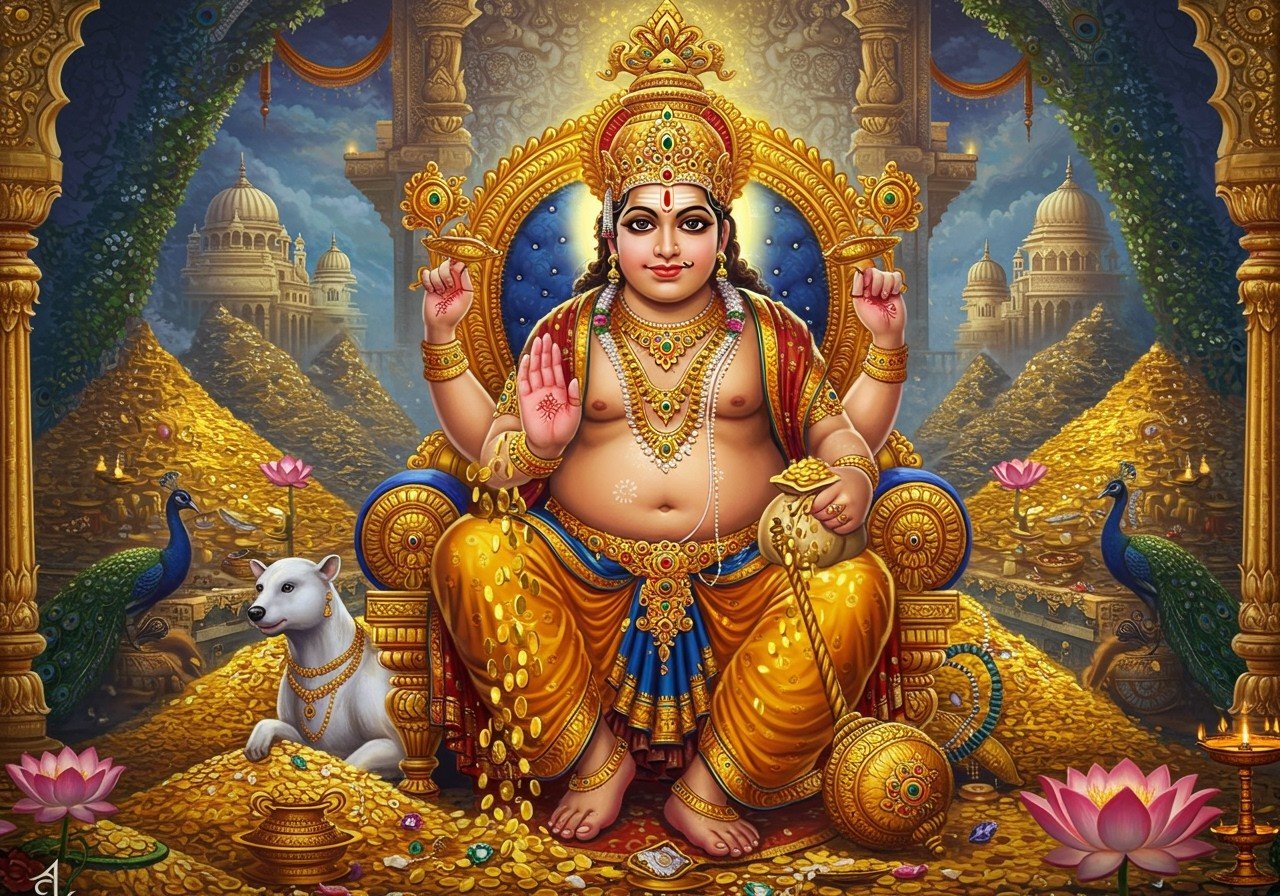
| Iconography | Elephant head, four arms, riding a mouse | Pot-bellied, holding a mace and money pot |
| Direction | No specific direction (omnipresent) | North |
| Consorts/Attendants | Riddhi (Prosperity) and Siddhi (Success) | Manibhadra and the Yakshas |
| Key Festival | Ganesh Chaturthi | Dhanteras and Diwali |
| Nature of Wealth | Holistic (Material + Spiritual) | Material and Terrestrial |
Rituals and Practices for Invoking Prosperity
As of 2026, the traditional methods of honoring these deities remain deeply integrated into both personal and corporate Indian culture. These practices are not merely religious but are viewed as psychological anchors for discipline and focus.
The Ganesha Atharvashirsha
This is a late Upanishad dedicated to Ganesha. Reciting or listening to these verses is believed to align the practitioner's mind with the "Ganesha Principle," fostering clarity and removing the internal obstacles of doubt and fear that prevent financial progress.
Kubera Yantra and Mantras
The Kubera Yantra is a geometric diagram etched on metal plates (usually copper or gold). It is used as a focal point for meditation to attract financial stability. The most common mantra associated with him is the Kubera Dhana Prapti Mantra, which practitioners use to seek divine intervention in debt recovery or business growth.
The Ethics of Artha
In Hindu philosophy, "Artha" (wealth/prosperity) is one of the four goals of human life (Purusharthas). However, it must be pursued according to Dharma (righteousness). The Indian gods of prosperity are rarely worshiped in isolation from ethical considerations. It is believed that wealth acquired through "Adharma" (wrongdoing) will not be protected by Kubera and will eventually lead to obstacles that even Ganesha will not remove until the individual returns to a righteous path.
Common Misconceptions About the Indian God of Prosperity
Several nuances are often lost in translation or through general summaries of Hindu mythology.
1. Is Ganesha only for Hindus? Culturally, Ganesha has transcended religious boundaries. In many parts of Southeast Asia and among various business communities globally, Ganesha is respected as a universal symbol of overcoming challenges. In 2026, his image is frequently found in non-religious contexts as a symbol of "Success Science."
2. Is Kubera the same as the "Laughing Buddha"? While both are depicted with large bellies and signify prosperity, they belong to different traditions. The Laughing Buddha (Budai) is a figure from Chinese folklore and Zen Buddhism, whereas Kubera is a Vedic and Puranic deity. However, their shared iconography of "abundance" often leads to them being placed in similar locations for Vastu and Feng Shui.
3. Does worshiping these gods guarantee wealth? Theologically, these deities are seen as facilitators. The concept of "Karma" remains central; the gods provide the environment and the removal of supernatural or mental blocks, but the individual must perform the "Karma" (action) to generate the "Phala" (fruit/result).
Frequently Asked Questions
Which god should I worship for a new business?
Lord Ganesha is the primary deity for any new business venture. It is traditional to perform a "Ganesha Puja" at the site of the business or at an altar before signing contracts or launching a product. This is intended to ensure the project starts on a positive vibration without unforeseen interruptions.
Why is an elephant head used for the god of prosperity?
The elephant is a symbol of great strength, yet it is also known for its intelligence and gentleness. In the wild, elephants are "pathfinders" that can walk through dense jungle, creating a trail for other animals to follow. This mirrors Ganesha’s role as the pathfinder for humans seeking success.
Where should I place a Kubera idol in 2026?
According to Vastu Shastra principles, a Kubera idol or Yantra should ideally be placed in the North corner of your home or office. It is recommended that the idol faces South so that you are facing North when you offer your prayers or focus on the deity.
Is Lakshmi more important than Ganesha for wealth?
They represent different aspects. Lakshmi is the energy and the essence of wealth itself (the "what"), while Ganesha is the wisdom and the removal of barriers (the "how"). Most practitioners believe that one should not seek wealth (Lakshmi) without the wisdom to handle it (Ganesha).
What is the significance of Ganesha's mouse?
Ganesha’s "vahan" (vehicle) is a mouse, which represents desire. A mouse can nibble through a huge rope or a storehouse of grain if left unchecked. By sitting on the mouse, Ganesha symbolizes the control of desires. In the context of prosperity, this means that one must control their impulses and greed to maintain long-term wealth.
Practical Recommendations for 2026
To integrate the principles of the Indian god of prosperity into your life or business, consider the following actionable steps:
- Establish a "Start-Up" Ritual: Whenever beginning a new task, take a moment of silence to visualize the removal of obstacles, effectively invoking the "Ganesha principle."
- Audit Your Space: Use the North direction of your workspace for financial planning or accounting to align with the traditional domain of Kubera.
- Balance Wealth with Wisdom: Ensure that your pursuit of material gain (Lakshmi/Kubera) is always balanced by the acquisition of knowledge and ethical grounding (Ganesha).
- Practice Gratitude: Traditional worship of these deities always involves offerings (Prasad). In a modern context, this translates to the practice of philanthropy and sharing one's success with the community.
Image Gallery