Understanding Whole Chicken Temperature Guidelines: Safety, Science, and Roasting Precision
Understanding whole chicken temperature guidelines requires balancing food safety regulations with culinary precision. According to official food safety standards established by the United States Department of Agriculture (USDA), all p...
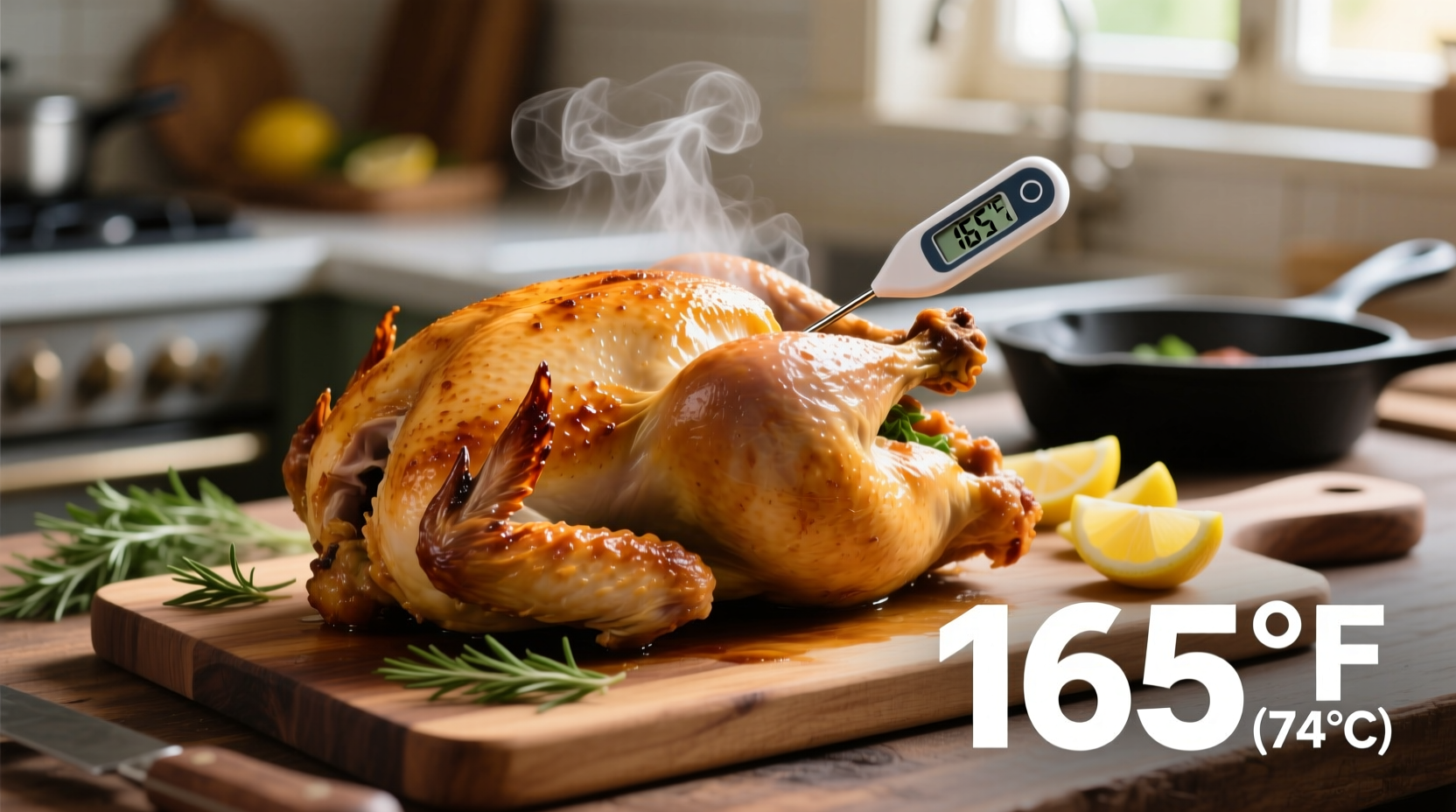
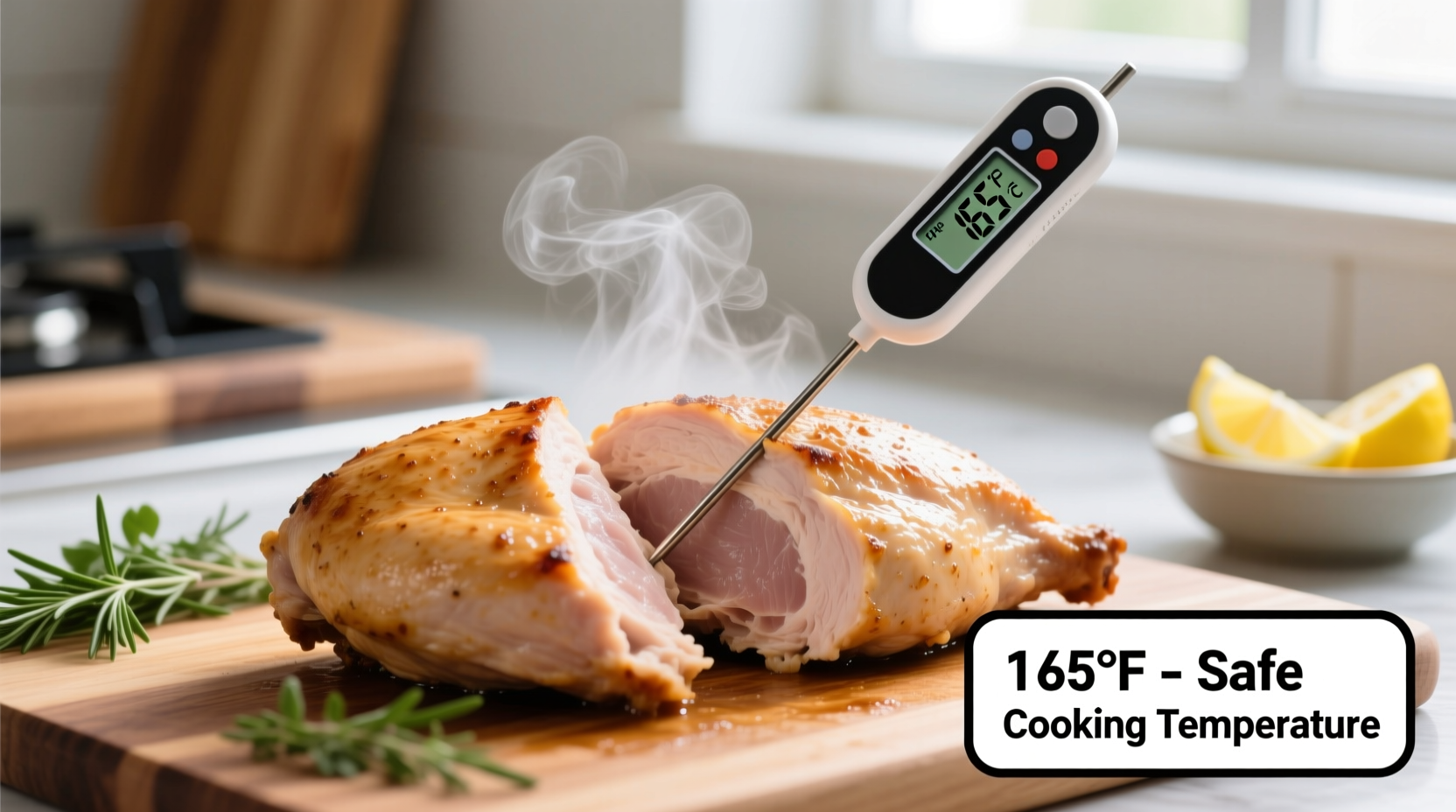
Understanding whole chicken temperature guidelines requires balancing food safety regulations with culinary precision. According to official food safety standards established by the United States Department of Agriculture (USDA), all poultry must reach a minimum internal temperature of 165°F (74°C) to eliminate harmful pathogens like Salmonella and Campylobacter. Achieving this safely throughout an entire bird involves precise thermometer placement, accounting for carryover cooking, and managing the distinct thermal profiles of white and dark meat.
Contents
1. The Core Guidelines: USDA Requirements and Thermal Safety Standards
Food safety agencies worldwide set strict thermal targets for poultry due to the prevalence of foodborne pathogens within raw avian tissue. The benchmark for safe poultry consumption is a 7-log10 reduction in Salmonella, meaning that out of 10,000,000 bacterial cells present on or within the meat, only 1 survives.
Bacterial Reduction Threshold:
- 165°F (74°C): Instantaneous 7-log reduction of Salmonella & Campylobacter
- 160°F (71°C): Requires ~14 seconds of sustained temperature
- 155°F (68°C): Requires ~44 seconds of sustained temperature
- 150°F (65°C): Requires ~3 minutes of sustained temperature
While reaching an instantaneous internal core temperature of 165°F (74°C) provides guaranteed pasteurization, bacterial death is actually a function of both temperature and time. At 165°F, microbial destruction occurs in less than a second. At slightly lower temperatures, such as 160°F (71°C) or 155°F (68°C), pasteurization still occurs if the meat holds that exact thermal state for a specific minimum duration (approximately 14 seconds at 160°F and 44 seconds at 155°F).
However, regulatory agencies like the USDA Food Safety and Inspection Service (FSIS) advise home cooks and food service operators to hit 165°F as a single, absolute threshold. Whole birds present complex geometric shapes, varying densities, and uneven fat distribution, making uniform heat distribution challenging. Defining 165°F as the universal target ensures that even the slowest-heating portions of the bird cross the safety threshold.
2. Thermometer Placement and Measurement Techniques
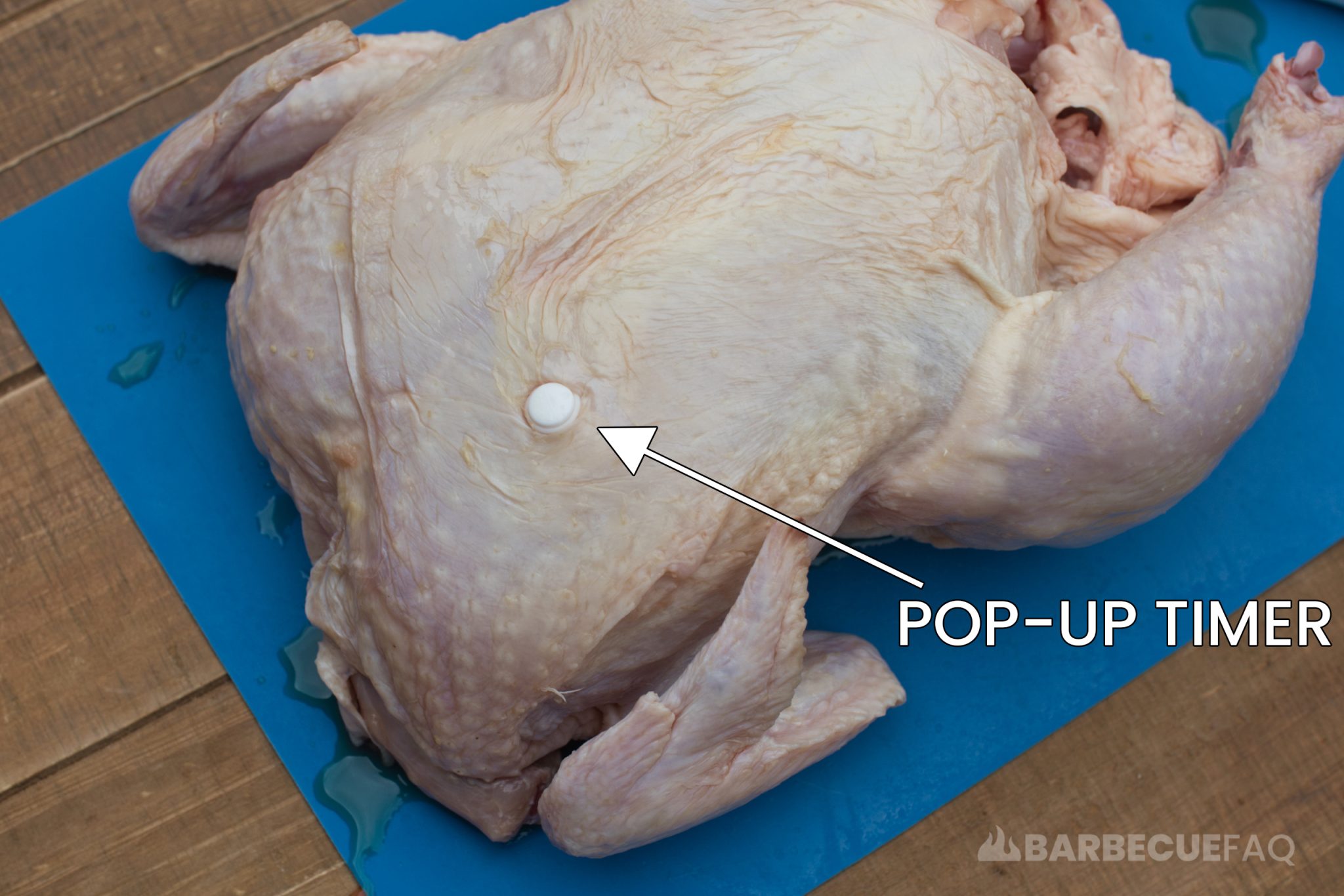
Accurate temperature measurement is the only reliable method for verifying that a whole chicken is fully cooked. Visual cues such as clear juices, golden-brown skin, or loose leg joints are helpful indicators, but they are subject to optical misinterpretation and cannot guarantee pathogen destruction.
Primary Insertion Points for Whole Birds
When probing a whole chicken, check multiple zones to account for variations in thermal penetration across different muscle groups:
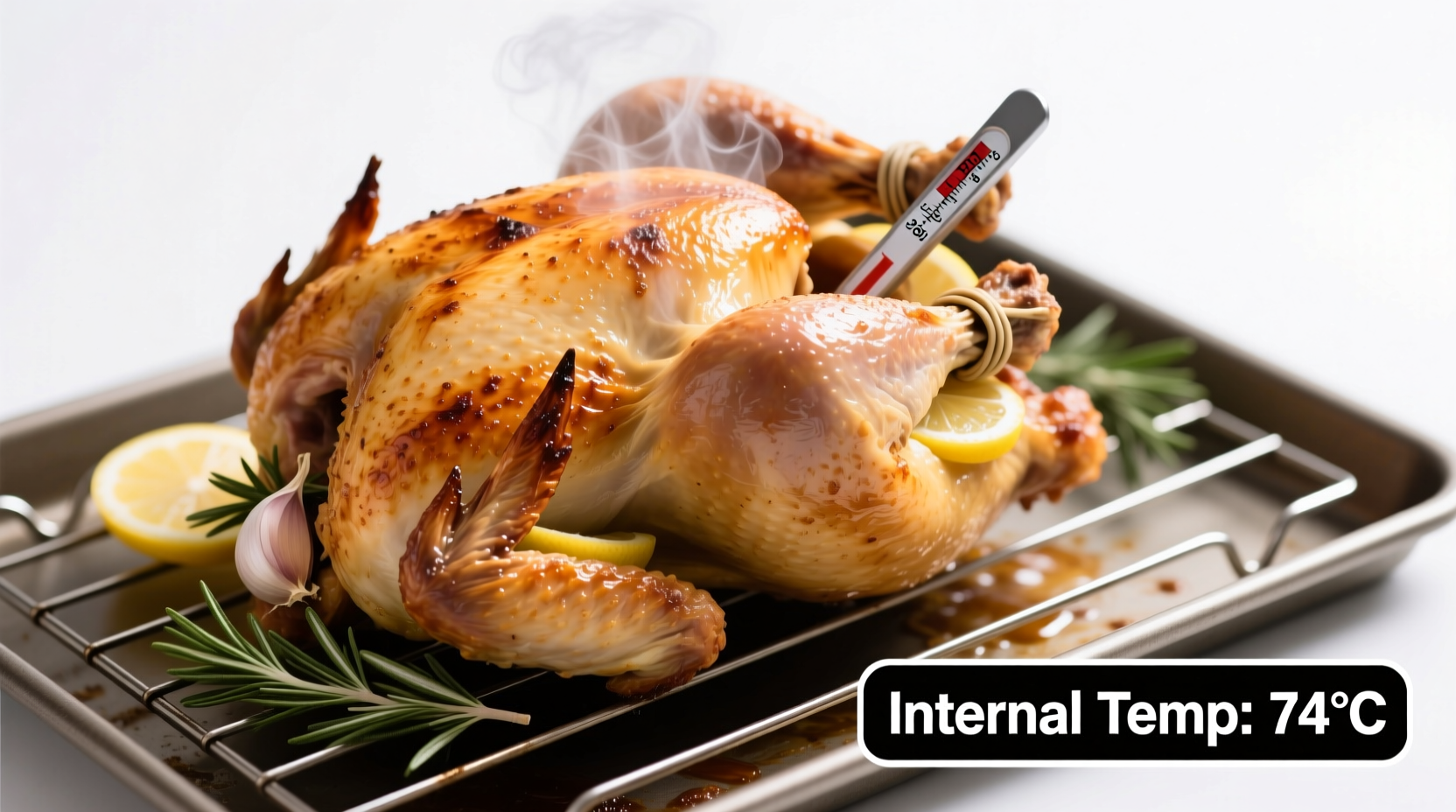
- The Deepest Part of the Thigh: Insert the probe into the thickest section of the thigh, keeping the needle parallel to the bone without touching it. The thigh joint is typically the slowest region to heat due to its proximity to the central carcass cavity and dense connective tissue.
- The Thickest Part of the Breast: Insert the probe horizontally into the center of the breast muscle, avoiding the central breastbone (sternum). The breast is dense and susceptible to drying out if overcooked, making accurate readings vital for balancing safety and moisture.
- The Thickest Section of the Wing/Shoulder Joint: Check the inner wing region near the body cavity. Heat often penetrates this joint unevenly, making it a critical secondary validation point.
- Breast Probe Placement: Horizontal insertion into thickest muscle (Avoid sternum bone)
- Thigh Probe Placement: Deepest muscle tissue near joint (Avoid femur bone)
Avoiding Common Measurement Errors
- Bone Contact: Bone conducts heat faster than surrounding muscle tissue. Touching a bone with the probe tip yields an artificially elevated reading, leading to undercooked meat in adjacent regions.
- Air Pockets and Cavities: Inserting the probe through to the empty abdominal cavity measures ambient cavity air rather than internal meat temperature.
- Shallow Insertion: Most digital dial probes require at least one inch of sensor immersion, whereas digital instant-read thermistors measure temperature at the very tip (the last 2–3 millimeters). Ensure the sensor zone is positioned in the center of the target tissue.
- Thermometer Calibration: Regularly verify thermometer accuracy using an ice-water bath. Fill a glass with crushed ice, top it with cold tap water, stir, and submerge the probe tip for 30 seconds. The display should read exactly 32°F (0°C). Adjust or re-calibrate the device if it deviates by more than 1°F (0.5°C).
3. Dark Meat vs. White Meat: Thermal Dynamics and Quality
A whole chicken comprises two distinct types of muscle tissue that reach optimal palatability at different thermal points: white meat (pectoralis major/minor of the breast) and dark meat (thighs and legs).
- WHITE MEAT (Breast)
- High protein, low fat / collagen
- Safe at 165°F (Instantaneous pasteurization)
- Overcooked threshold: >170°F (Proteins contract, push out moisture)
- DARK MEAT (Thigh / Leg)
- High myoglobin, elevated intramuscular fat & collagen
- Safe at 165°F
- Culinary target: 175°F - 185°F (Collagen hydrolyzes into gelatin)
White Meat (Breast)
Breast meat contains minimal intramuscular fat and low levels of connective tissue. When heated beyond 165°F (74°C), muscle fibers contract tightly, squeezing out bound water and creating a dry, stringy texture. The culinary target for breast meat is to reach 160°F–165°F after carryover resting, maintaining juiciness while adhering to microbial safety standards.
Dark Meat (Thighs and Legs)
Dark meat muscles are rich in myoglobin and heavily laden with collagen-rich connective tissue. While dark meat is safe to consume at 165°F, it remains tough and chewy at this minimum temperature. Collagen denaturation accelerates between 160°F and 180°F, turning collagen into rich, liquid gelatin. Consequently, dark meat reaches its ideal texture, tenderness, and flavor profile when cooked to 175°F–185°F (79°C–85°C).
Strategies for Thermal Balance
Achieving tender breast meat alongside fully rendered dark meat in a whole roaster requires deliberate heat management:
- Spatchcocking (Butterflying): Removing the backbone and flattening the bird exposes the thighs to outer oven heating while levelling the profile, allowing dark meat to cook faster than the elevated breast portion.
- Ice-Pack Method: Placing an ice pack on the chicken breasts for 15–20 minutes before roasting lowers the starting temperature of the white meat relative to the thighs, bringing both muscle groups to their respective ideal doneness simultaneously.
- Positioning: Orienting the chicken in the oven so the legs point toward the hotter rear wall while the breast points toward the cooler front door ensures higher heat exposure for dark meat.
4. Carryover Cooking and Rest Periods
Cooking does not stop when you remove a whole chicken from the oven, grill, or smoker. Thermal kinetic energy continues to transfer from the hot exterior layers of the bird into the cooler interior core—a process known as carryover cooking.
- Heat Source Removed: Outer surface layers retain intense thermal energy
- Heat conducts inward to core
- Core temperature rises 5°F to 10°F
- Internal moisture redistributes
Understanding Thermal Mass and Carryover
The extent of carryover temperature rise depends on the size of the bird, roasting temperature, and overall thermal mass:
- Small Chickens (3.0–4.0 lbs): Core temperature increases by approximately 3°F to 6°F during resting.
- Large Roasters (5.5–7.0+ lbs): Core temperature increases by 7°F to 10°F during resting.
- High-Temperature Roasting (400°F+ / 200°C+): Creates a steep internal thermal gradient, driving higher carryover rises compared to low-and-slow smoking techniques.
To prevent overcooking, remove a whole chicken from heat when the internal breast temperature reaches 155°F–160°F (68°C–71°C), provided the bird rests undisturbed until carryover heat pushes the final core reading to a verified 165°F (74°C).
Proper Resting Guidelines
- Rest Duration: Allow a whole chicken to rest for 15 to 20 minutes before carving.
- Surface Air Flow: Place the chicken on a wire rack elevated over a rimmed baking sheet. Resting directly on a flat cutting board steams the bottom skin, destroying crispness.
- Foil Tenting: Cover the bird loosely with aluminum foil to retain ambient warmth. Do not wrap the chicken tightly in foil, as trapped moisture degrades skin crispness.
5. Cooking Methods and Temperature Profile Comparison
The following table details target internal temperatures, target pull temperatures, probe insertion zones, and expected resting times across various preparation techniques.
| Cooking Method | Typical Cooking Temp | Target Pull Temp (Breast) | Target Pull Temp (Thigh) | Final Rest Temp (Safe Target) | Minimum Rest Time |
|---|---|---|---|---|---|
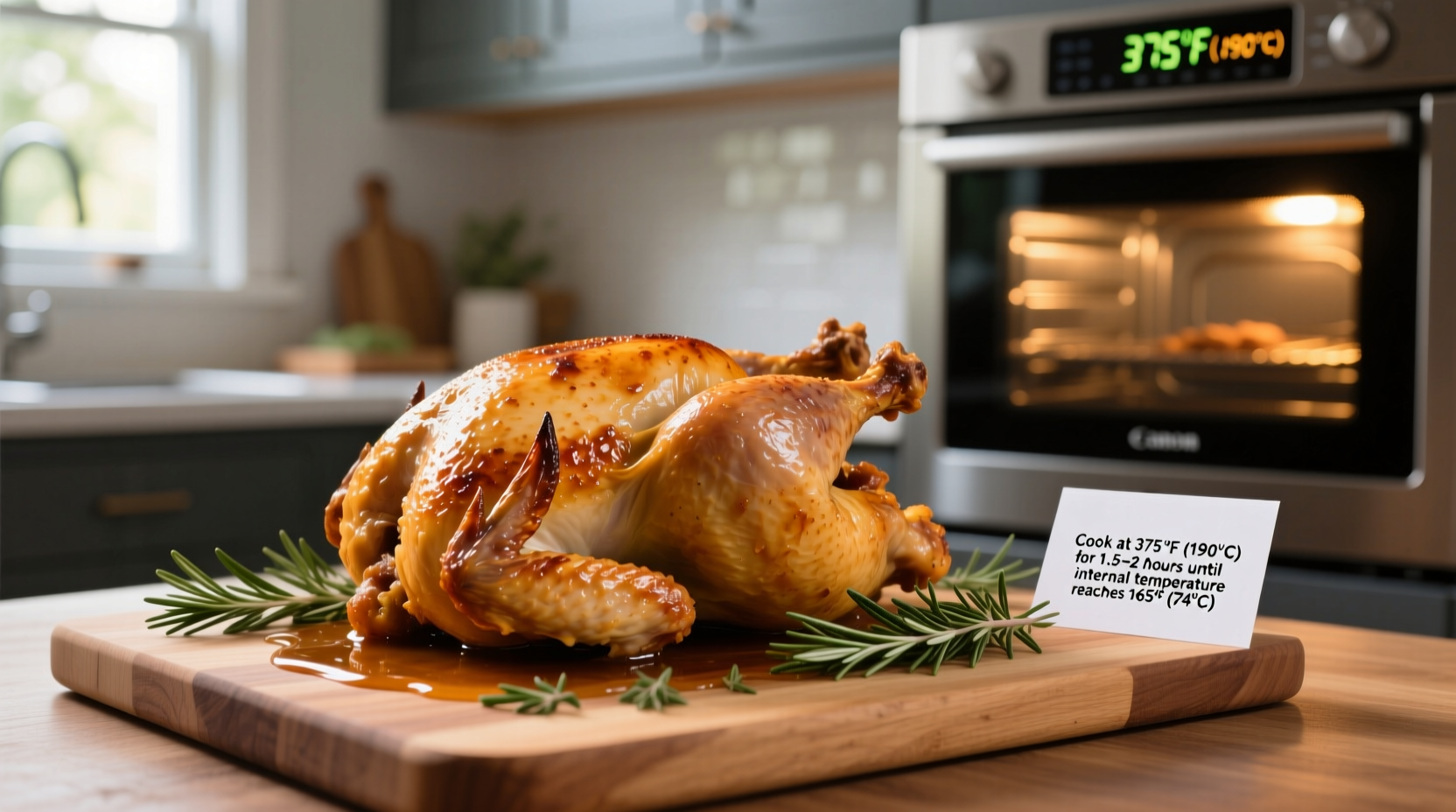
| Traditional Oven Roast | 375°F–400°F (190°C–200°C) | 155°F–160°F (68°C–71°C) | 170°F–175°F (77°C–79°C) | 165°F Breast / 175°F+ Thigh | 15–20 min |
| High-Heat Roast | 425°F–450°F (220°C–230°C) | 150°F–155°F (65°C–68°C) | 165°F–170°F (74°C–77°C) | 165°F Breast / 175°F+ Thigh | 20 min |
| Low-and-Slow Smoking | 225°F–250°F (107°C–121°C) | 160°F–162°F (71°C–72°C) | 175°F–180°F (79°C–82°C) | 165°F Breast / 180°F+ Thigh | 10–15 min |
| Spatchcock Roasting | 400°F–425°F (200°C–220°C) | 157°F–160°F (69°C–71°C) | 175°F–180°F (79°C–82°C) | 165°F Breast / 180°F+ Thigh | 10–15 min |
| Air Fryer Whole Bird | 360°F–380°F (182°C–193°C) | 155°F–158°F (68°C–70°C) | 170°F–175°F (77°C–79°C) | 165°F Breast / 175°F+ Thigh | 15 min |
| Rotisserie Roasting | 350°F–375°F (177°C–190°C) | 158°F–160°F (70°C–71°C) | 175°F–180°F (79°C–82°C) | 165°F Breast / 180°F+ Thigh | 15 min |
6. Pasteurization Time vs. Temperature: The Science of Pathogen Reduction
While government regulatory bodies highlight 165°F (74°C) as a single reference point for home cooks, food safety scientists rely on logarithmic destruction curves based on the USDA FSIS pasteurization tables for poultry.
Bacterial reduction follows an exponential decay model. Higher thermal exposure kills bacteria faster, while lower thermal exposure achieves identical safety levels when held over longer durations.
Time Required for 7-Log Reduction of Salmonella
- 136°F (58°C): 64.0 minutes
- 140°F (60°C): 27.0 minutes
- 145°F (63°C): 9.2 minutes
- 150°F (65°C): 2.7 minutes
- 155°F (68°C): 44.2 seconds
- 160°F (71°C): 13.7 seconds
- 165°F (74°C): Instantaneous (< 1 second)
Understanding these logarithmic kinetics explains why culinary professionals utilizing precise, low-temperature water baths (sous-vide cooking) can safely process whole poultry or poultry cuts at 145°F–150°F (63°C–65°C), provided the core of the meat remains held at that exact temperature for the entire duration mandated by food science standards.
For conventional hot-air roasting, however, internal temperature recovery is dynamic and variable. Relying on lower pasteurization temperatures during conventional roasting exposes food to safety risks if oven temperatures fluctuate or if probes are incorrectly positioned. Therefore, maintaining 165°F as the target core threshold remains the safest operational rule for home and commercial roasting.
7. Common Pitfalls and Troubleshooting
Pink Meat Near the Bone
A common issue when cooking whole birds is discovering pink tissue near the thigh or leg bones, even after a thermometer confirms an internal temperature above 165°F.
- Cause: Young commercial broilers (typically harvested at 6 to 8 weeks of age) have soft, porous bones. Hemoglobin and myoglobin from the bone marrow filter through the porous bone structure into the surrounding muscle tissue during cooking. When exposed to heat, this pigment fixes into a persistent pink or reddish hue.
- Safety Verification: If a calibrated thermometer verified that the thigh tissue reached at least 165°F (or preferably 175°F–185°F for quality), the pink discoloration is chemically stable nitrosyl-hemochrome or myoglobin derivative—not an indicator of raw or undercooked meat.
Unreliable Juice Clarity
Older cooking guidelines frequently advised waiting until "juices run clear." This is an imprecise safety metric:
- Juices may appear clear at 150°F (below safe thresholds) if pigment proteins denature early due to low tissue pH.
- Juices may remain pinkish at 170°F due to nitrates present in the cooking environment or specific water chemistry.
- Resolution: Rely exclusively on a digital thermistor thermometer, never on juice opacity or color.
Handling Partially Frozen Birds
Roasting a whole chicken that is still frozen or slushy at the core results in severe thermal unevenness:
- The outer breast meat may reach 180°F (drying out completely) while the deep inner thigh core remains undercooked at 135°F.
- Safety Protocol: Always thaw whole poultry completely in a refrigerator set at or below 40°F (4°C). Allow approximately 24 hours of cold thawing for every 4 to 5 pounds of whole bird. Never thaw whole poultry at room temperature on a countertop, as this allows surface bacteria to enter the danger zone (40°F–140°F / 4°C–60°C) long before the core thaws.
Frequently Asked Questions
FAQ 1: Is a whole chicken safe to eat if the thigh is 165°F but the breast is higher?
Yes, the chicken is microbially safe to consume. The official standard requires that all edible portions reach a minimum of 165°F (74°C). Having breast meat read higher than 165°F (for instance, 175°F) does not pose a health risk; however, the breast meat may taste dry because its proteins have contracted and lost moisture.
FAQ 2: Can I remove a whole chicken from the oven at 155°F?
You can safely pull a whole chicken at 155°F (68°C) measured in the thickest part of the breast only if you allow the bird to rest covered so that carryover heat raises the core internal temperature to 165°F (74°C), or if the core temperature holds at 155°F continuously for at least 44.2 seconds during resting. For whole birds weighing over 4 pounds, carryover heat reliably provides this required rise.
FAQ 3: Why does my instant-read thermometer give different readings in different spots?
A whole chicken consists of diverse muscle groups, fat pockets, bone structures, and empty air cavities that absorb heat at different rates. Outer layers cook faster than deep interior core muscles. Always take multiple readings—prioritizing the thickest section of the breast and the deepest muscle of the inner thigh away from bone—and use the lowest valid reading to assess overall safety.
FAQ 4: What is the best type of thermometer for checking whole chicken temperatures?
A digital instant-read thermistor probe is the most accurate tool for validating doneness. Thermistors feature tiny sensors at the very tip of the probe, providing precise readings within 2 to 3 seconds. For continuous monitoring during cooking, dual-sensor probe thermometers with heat-resistant cables allow you to track real-time internal core temperatures without opening the oven door.
FAQ 5: What is the food temperature "Danger Zone" for raw chicken preparation?
The food temperature "Danger Zone" spans between 40°F and 140°F (4°C and 60°C). Within this temperature window, bacteria like Salmonella enterica multiply rapidly. Never leave raw or cooked whole chicken at room temperature within this range for longer than 2 cumulative hours (or 1 hour if the ambient room temperature exceeds 90°F / 32°C).
Actionable Next Steps and Summary Recommendations
To achieve optimal food safety and texture when cooking a whole chicken, follow this streamlined operational process:
- Thaw Completely: Verify the cavity is free of ice crystals by thawing in the refrigerator at 38°F–40°F (3°C–4°C) for 24–48 hours prior to cooking.
- Calibrate Equipment: Perform an ice-water calibration test on your digital thermometer to confirm zero-point accuracy at 32°F (0°C).
- Monitor Thermals Active: Insert a leave-in probe into the thickest region of the breast tissue without contacting bone.
- Target the Pull Temp: Remove the bird from your heat source when the breast reads 155°F–160°F and the thigh reads 170°F–175°F.
- Rest and Verify: Place the bird on an elevated wire rack, tent loosely with aluminum foil, and rest for 15 to 20 minutes. Confirm that residual carryover heat drives the lowest internal breast reading to a minimum of 165°F (74°C) before carving.
Image Gallery