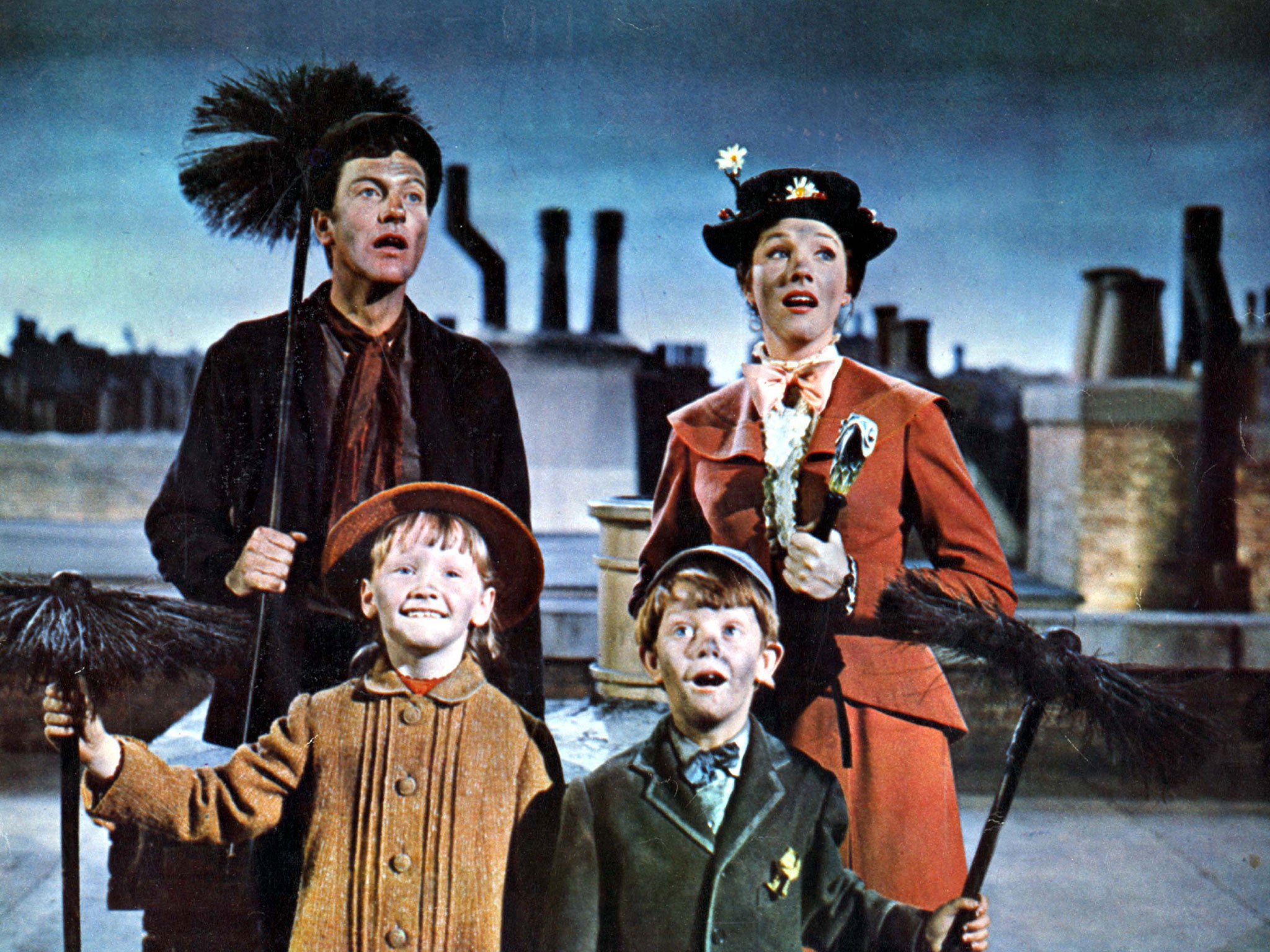
The Mary Poppins Movie Net Worth Overview: Box Office Breakdown, IP Valuation, and Legacy Revenue
The Mary Poppins film franchise represents one of the most commercially successful and enduring intellectual properties in the history of The Walt Disney Company. With a cumulative global box office gross exceeding $450 million across...
The Mary Poppins film franchise represents one of the most commercially successful and enduring intellectual properties in the history of The Walt Disney Company. With a cumulative global box office gross exceeding $450 million across its original release and 2018 sequel—and an estimated total asset franchise valuation exceeding $2 billion through stage adaptations, music publishing, home media sales, and streaming rights—the property remains a cornerstone of Disney's live-action library.
Contents
The Financial Impact of the 1964 Original Masterpiece
When Walt Disney released Mary Poppins in August 1964, the film represented the studio's most ambitious and expensive live-action production to date. Produced on an estimated budget of $4.4 million to $6 million, the project combined live-action performances with intricate sequence animation, state-of-the-art visual effects, and an original musical score composed by Richard M. Sherman and Robert B. Sherman.
The financial risk paid off immediately upon release. During its initial theatrical run, the film generated roughly $31 million in North American theatrical rentals, quickly becoming the highest-grossing film of 1964. Subsequent theatrical re-releases in 1973, 1980, and 1989 further expanded its lifetime domestic theatrical earnings to over $102 million.
1964 Production Budget: ~$4.4M - $6.0M Initial Theatrical Gross: ~$31.0M Lifetime Domestic Gross: ~$102.3M Estimated Modern Adjusted Domestic Box Office: $700M+
When evaluated in contemporary monetary terms, the performance of the 1964 film is even more pronounced. Adjusted for ticket-price inflation, the original Mary Poppins has generated an equivalent domestic box office return of over $700 million, placing it among the top 30 highest-grossing films in North American cinematic history.
Beyond direct theatrical receipts, the net profits generated by Mary Poppins in the mid-1960s provided critical liquidity for The Walt Disney Company. Historically, profits from the film directly funded the underground land acquisitions in Central Florida that ultimately became the Walt Disney World Resort, establishing a physical real estate legacy derived entirely from a single motion picture's financial windfall.
Commercial Performance of Mary Poppins Returns (2018)
More than five decades after the original release, Walt Disney Pictures produced a direct sequel, Mary Poppins Returns (2018), directed by Rob Marshall and starring Emily Blunt in the title role alongside Lin-Manuel Miranda.
The economic model for the 2018 sequel reflected contemporary blockbuster film finance:
- Production Budget: $130 million
- Domestic Box Office: $171.9 million
- International Box Office: $177.6 million
- Worldwide Box Office Total: $349.5 million
While the sequel did not match the cultural phenomenon or extraordinary return on investment (ROI) ratio of the 1964 original, it yielded a solid commercial return. Studios typically retain roughly 50% of domestic box office receipts and between 25% and 40% of international theatrical revenue. Under this split, Mary Poppins Returns collected approximately $150 million to $160 million in net theatrical rentals.
After accounting for production costs and marketing expenditures (estimated at $100 million globally), theatrical receipts alone approached breakeven status. Modern studio economics dictate that theatrical runs function as launching pads for long-term ancillary revenue streams, including premium video-on-demand (PVOD), physical home video, broadcast licensing, and digital streaming catalog retention.
Revenue Streams: Stage, Soundtrack, and Ancillary Rights
The net asset value of the Mary Poppins movie property extends far beyond theatrical ticket sales. Disney has systematically monetized the underlying intellectual property across multiple revenue channels over six decades.
1. Music Publishing and Licensing
The original score by the Sherman Brothers—featuring classics such as "Supercalifragilisticexpialidocious," "A Spoonful of Sugar," and the Academy Award-winning "Chim Chim Cher-ee"—remains one of the most profitable music publishing catalogs in film history. Music licensing fees, physical album sales, digital downloads, and streaming royalties across platforms like Spotify and Apple Music continue to generate passive annual revenue estimated in the millions of dollars.
2. Stage Musical Adaptations
In 2004, Disney Theatrical Productions partnered with West End producer Cameron Mackintosh to launch Mary Poppins: The Stage Musical. The production merged elements from the 1964 Disney film with P.L. Travers' original book series.
- Broadway & West End Lifetime Gross: Over $800 million worldwide.
- Global Attendance: Exceeding 15 million audience members across global tours and resident productions in London, New York, Tokyo, and Melbourne.
The stage adaptation significantly increased the overall economic net worth of the brand, establishing an ongoing theatrical licensing stream for professional and amateur theater groups globally.
3. Home Entertainment and Digital Rights
Mary Poppins was among the first titles issued on home video formats during the VHS boom of the early 1980s. Across VHS, DVD, 4K Ultra HD, and Blu-ray releases, the original film has earned hundreds of millions of dollars in direct consumer purchases. In the current streaming landscape, both the 1964 original and 2018 sequel serve as core library assets for Disney+, driving subscriber retention without requiring recurring third-party licensing expenditures.
Mary Poppins Financial Comparison Table
The following matrix compares the core financial metrics, production figures, and commercial yields of the primary film entries within the Mary Poppins property:
| Financial Metric | Mary Poppins (1964) | Mary Poppins Returns (2018) | Combined Franchise Impact |
|---|---|---|---|
| Production Budget | $4.4M – $6.0M | $130.0M | ~$135M |
| Domestic Box Office (Unadjusted) | $102.3M | $171.9M | $274.2M |
| International Box Office | Unreported initial data | $177.6M | $177.6M+ |
| Worldwide Box Office Total | ~$103M+ (historic releases) | $349.5M | ~$452.5M+ |
| Inflation-Adjusted Domestic Box Office | ~$700M+ | ~$210M (2026 adjusted) | ~$910M+ |
| Academy Awards Won | 5 (Best Actress, Score, Song, Editing, Visual Effects) | 0 (4 Nominations) | 5 Oscar Wins |
| Primary Secondary Monetization | Music Publishing, Home Video, Theme Parks | Digital PVOD, Streaming, Merchandising | Stage Adaptation ($800M+ gross) |
Principal Cast Compensation and Net Worth Overview
The overall economic narrative of Mary Poppins is closely tied to the personal careers and net worth valuations of its key creative talent. Over time, performance structures shifted dramatically from mid-century studio contracts to modern profit-participation models.
Julie Andrews
- Estimated Net Worth: ~$30 Million
- Role & Impact: Playing Mary Poppins marked Julie Andrews' feature film debut. Her contract in 1963 was signed prior to her rise to global stardom, earning her a modest weekly studio salary compared to modern compensation rates. However, winning the Academy Award for Best Actress for her performance launched a legendary career that included The Sound of Music (1965), stage performances, book publishing deals, and royalty streams that built her total net worth.
Dick Van Dyke
- Estimated Net Worth: ~$50 Million
- Role & Impact: Already a television star via The Dick Van Dyke Show, Van Dyke played both Bert the chimney sweep and the elderly bank director Mr. Dawes Sr. His sustained career in television, film, stage, and commercial endorsements over seven decades established a broad financial footprint, supported by lifelong royalties from classic Disney re-licensing.
Emily Blunt
- Estimated Net Worth: ~$80 Million
- Role & Impact: Taking over the titular role in Mary Poppins Returns (2018), Emily Blunt commanded an upfront multi-million-dollar compensation package typical of modern A-list Hollywood talent, complemented by backend participation structures.
Lin-Manuel Miranda
- Estimated Net Worth: ~$90 Million
- Role & Impact: Starring as Jack the lamplighter, Miranda brought significant star equity following his creation of the Broadway phenomenon Hamilton. His earnings encompass theater royalties, film acting, directing, and composing for major studios, including Disney's Encanto and Moana.
Total Estimated Franchise Enterprise Valuation
When assessing the overall net financial worth of the Mary Poppins movie ecosystem, entertainment economists evaluate the sum of all historical and ongoing cash flows.
Direct Box Office Receipts: ~$452.5 Million Global Stage Production Revenues: ~$800.0 Million+ Home Video & Digital Retail Sales: ~$350.0 Million+ Music Rights & Publishing Valuation: ~$200.0 Million+ Disney Theme Park & Consumer Products: ~$250.0 Million+ ------------------------------------------------------ Estimated Total Enterprise Asset Value: ~$2.05 Billion+
Rather than existing solely as a pair of standalone films, Mary Poppins operates as an evergreen media enterprise. Its overall franchise value exceeds $2 billion, making it one of the most commercially profitable live-action intellectual properties created in the 20th century.
Frequently Asked Questions
What was the original box office profit of Mary Poppins (1964)?
The 1964 film was produced for approximately $4.4 million to $6 million and generated over $31 million during its initial domestic run, eventually topping $102 million in lifetime domestic box office receipts through re-releases. Its net theatrical profits exceeded $25 million in mid-1960s dollars, providing unprecedented profit margins for Walt Disney Productions.
How much money did Mary Poppins Returns make worldwide?
Mary Poppins Returns grossed $171.9 million in North America and $177.6 million in international territories, bringing its global theatrical box office total to $349.5 million against a production budget of $130 million.
How much was Julie Andrews paid for playing Mary Poppins?
While exact individual contract figures remain private studio records, Julie Andrews was signed to a standard mid-20th-century studio contract rate during her feature film debut. Her earnings from the film were modest by modern standards, but the role earned her an Academy Award and established her market value for future blockbuster roles.
How much money has the Mary Poppins stage musical generated?
The stage musical adaptation, co-produced by Disney Theatrical Productions and Cameron Mackintosh, has grossed over $800 million worldwide since its 2004 debut in London and subsequent Broadway opening in 2006.
What is the overall net worth of the Mary Poppins movie franchise?
When combining historical box office revenue, stage show gross earnings, music publishing royalties, home media sales, and long-term streaming asset value, the total financial enterprise value of the Mary Poppins property is estimated at over $2 billion.
Strategic Financial Takeaway
The commercial trajectory of Mary Poppins illustrates the enduring power of high-quality live-action intellectual property. For film investors, studio executives, and media analysts, the key lesson of the Mary Poppins financial model is diversification: initial theatrical box office performance represents merely the front door to multi-decade recurring revenues spanning music publishing, physical/digital licensing, theatrical stage adaptations, and theme park integration.
To analyze similar film enterprise valuations or assess studio financial performance metrics, cross-referencing box office reporting databases such as Box Office Mojo with SEC annual filings (Form 10-K) for studio parent corporations offers the clearest picture of underlying asset yields.
Image Gallery