Comprehensive Pool Robotic Cleaner Reviews and Buyer's Guide
Selecting the right pool robotic cleaner requires matching your pool’s dimensions, surface material, and typical debris profile with a unit's filtration capacity, drive mechanics, and navigation system. Unlike suction-side or pressure-...
Selecting the right pool robotic cleaner requires matching your pool’s dimensions, surface material, and typical debris profile with a unit's filtration capacity, drive mechanics, and navigation system. Unlike suction-side or pressure-side vacuum systems, robotic cleaners operate independently from your main pool pump, utilizing internal electric motors and fine filtration baskets to reduce energy consumption and improve water clarity.
Contents
Technical Overview: How Robotic Cleaners Outperform Legacy Systems
To evaluate pool robotic cleaner reviews effectively, it helps to understand the operational differences between legacy pool cleaners and autonomous robotic units. Legacy systems rely on external water pressure or pump suction, which forces your primary pool filtration system to work harder, increasing energy costs and mechanical wear.
| Feature | Suction-Side | Pressure-Side | Robotic Cleaner |
|---|---|---|---|
| Power Source | Main Pool Pump | Booster / Main Pump | Low-Voltage DC |
| Energy Draw | High (1,000W-2,000W) | High (750W-1,500W) | Low (120W-200W) |
| Water Filtration | Pool Filter | Dedicated Bag | Internal Basket |
| Filtration Particle | Depends on Filter | ~100+ Microns | Down to 2 Microns |
| Wall & Waterline | Limited | Rare | Advanced |
Direct Drive Motors vs. Hydraulic Propulsion
Robotic cleaners utilize low-voltage direct-current (DC) electric motors. Most mid-tier and premium models feature a dual-motor design: one drive motor to propel the tracks or wheels and one pump motor to draw water through the filtration basket. Advanced units feature three motors, allowing split-tube brush maneuvering where each side of the cleaning roller can rotate independently for zero-radius turning.
Independent Filtration
Because robotic cleaners collect debris inside their own internal filter canisters or pleated cartridge inserts, they prevent large leaves, twigs, sand, and fine silt from reaching your skimmer basket or sand/DE pool filter. This reduces how often you need to backwash or rinse your main filter, saving thousands of gallons of water annually.
Key Performance Features to Evaluate in Reviews
When analyzing reviews for robotic pool cleaners, focus on standardized engineering metrics rather than aesthetic designs or marketing buzzwords.
- ROBOTIC POOL CLEANER
- NAVIGATION
- Gyroscopic / Sensor
- Sonar / Optical Mapping
- Systemic Grid Patterns
- FILTRATION
- Fine (100 micron)
- Ultra-Fine (2 micron)
- Multi-Layer Canisters
- DRIVE TRAIN
- Rubber Tracks
- Direct DC Motors
- Water Jet Vectoring
- NAVIGATION
1. Navigation and Mapping Technology
Basic robotic cleaners use randomized impact navigation. When the bumper hits a pool wall or step, an internal mechanical switch causes the unit to reverse at a slight angle. While functional for small rectangular pools, random navigation often leaves uncleaned spots in complex, freeform, or large pools.
Higher-end models employ gyroscopic mapping, accelerometer sensors, or optical/sonar navigation systems. These technologies calculate the dimensions of your pool, track the cleaner’s location, and execute systematic grid patterns across the floor, walls, and waterline.
2. Filtration Ratings (Micron Size)
Filtration performance determines what type of debris the cleaner can capture:
- Standard Mesh Filters (100–200 Microns): Designed for autumn leaves, large seeds, acorn hulls, and coarse debris.
- Fine Filters (50–100 Microns): Ideal for small organic matter, pine needles, and insects.
- Ultra-Fine Pleated Filters (2–5 Microns): Capable of trapping fine dust, silt, algae spores, sand, and microscopic organic film.
The best robotic cleaners offer modular filter systems, allowing pool owners to swap out coarse mesh baskets during opening season for ultra-fine pleated cartridges during daily maintenance cycles.
3. Drive System and Surface Grip
A cleaner's mobility depends on its drive train:
- Continuous Rubber Tracks: Provide superior traction on smooth surfaces like fiberglass, vinyl liners, and polished tile. Tracks maintain contact with the floor even when climbing steep transitions or vertical walls.
- Multi-Wheel Systems: Common on entry-level models; works well on textured plaster or gunite floors but can slip on slippery tile or smooth fiberglass.
- Specialized Brushing Materials: PVC rubber slat brushes scrub textured surfaces well, while high-density PVA sponge brushes are required for smooth glazed tile surfaces to maintain grip while climbing.
4. Power Delivery: Swivel Cables vs. Cordless Battery Packs
- Corded (Floating Cable): Features an endless power supply from a low-voltage transformer plugged into a GFCI outlet. To prevent tangling during rotation cycles, look for models equipped with an anti-tangling swivel device on the power cord.
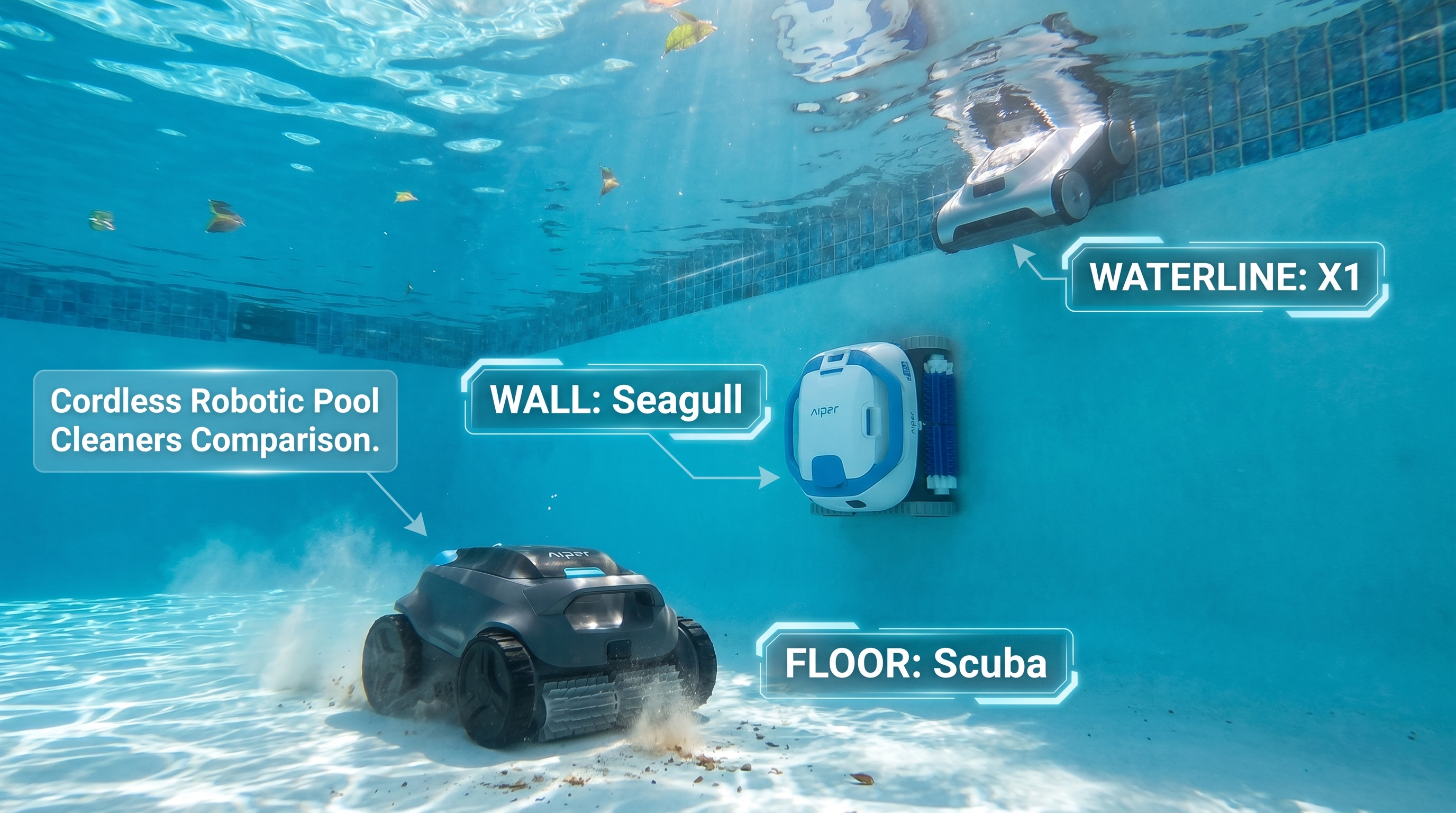
- Cordless (Lithium-Ion Battery): Eliminates cables entirely, making storage and deployment easier. However, cordless models are limited by battery runtimes (typically 90 to 180 minutes) and require recharge times between 2 to 4 hours. Lithium-ion batteries also have a finite charge-cycle lifespan before capacity degrades.
Comprehensive Breakdown of Robotic Cleaner Tiers
To help select the proper unit, robotic pool cleaners are categorized into four distinct performance classes based on pool structural needs and automation requirements.
| Class Tier | Recommended Pool | Coverage Area | Core Features |
|---|---|---|---|
| 1. Entry-Level | Above-Ground / Small In-Ground | Floor Only | Single Motor, Mesh Basket |
| 2. Mid-Range | Standard In-Ground | Floor, Walls, Transition Slopes | Dual Motor, Swivel Cable, Fine Filter |
| 3. Premium Smart | Large / Custom In-Ground | Floor, Walls, Tile, Waterline Scrubbing | Gyro Mapping, App Control, Ultra-Fine |
| 4. Commercial | Public / Large Commercial | High-Volume Floor & Wall Coverage | Heavy Duty Pump, High Gallon Flow |
Tier 1: Entry-Level Floor-Only Cleaners
Designed primarily for above-ground pools and small flat-bottom in-ground pools (up to 24 or 30 feet in length).
- Strengths: Lightweight, lower initial purchase cost, simple operation with single-button interface.
- Limitations: Incapable of climbing vertical walls, scaling steps, or scrubbing the tile waterline. Usually equipped with basic mesh debris bags or single-stage filters.
Tier 2: Mid-Range Wall-Climbing Cleaners
Engineered for residential in-ground pools made of vinyl liner, gunite, or fiberglass.
- Strengths: Features dual-motor propulsion, dynamic wall-climbing capability, and active scrubbing brushes that spin at double the speed of the robot’s movement.
- Limitations: May struggle on steep vertical drop-offs or extremely slick porcelain waterline tiles unless equipped with PVA brushes.
Tier 3: Premium Smart & Cordless Cleaners
High-performance units built for complex pool architectures featuring tanning ledges, deep ends, safety ledges, and wrap-around steps.
- Strengths: Integrates gyroscopic navigation, app connectivity (Wi-Fi/Bluetooth) for manual spot-cleaning, weekly programming, and full floor-to-waterline scrubbing. Includes multi-layer filtration units that separate coarse debris from fine silt in one pass.
- Limitations: Higher upfront investment and heavier dry weight, requiring integrated caddies or retrieval hooks.
Tier 4: Commercial-Grade Robotic Cleaners
Designed for municipal pools, hotel facilities, athletic clubs, and large residential estates (pools exceeding 50 feet in length).
- Strengths: High flow rates (often exceeding 70–90 gallons per minute), dual pumps, extra-wide suction intake paths, and heavy-duty wear components.
- Limitations: Industrial weight; requires a dedicated transport caddy and specialized electrical connections.
Feature Comparison Matrix
The table below outlines technical specifications across different feature configurations to help prioritize what matters for your pool setup.
| Feature / Metric | Entry-Level Floor Units | Mid-Range Wall Climbers | Premium Smart Corded | Advanced Cordless |
|---|---|---|---|---|
| Typical Cable / Power | 40 ft Cord (No Swivel) | 50–60 ft Cord w/ Swivel | 60 ft Swivel Cable | Cordless Li-Ion Battery |
| Cycle Run Time | 1.5 to 2.0 Hours | 2.0 Hours | 1.5 to 3.5 Hours | 1.5 to 2.5 Hours |
| Suction Rate (GPM) | ~40–50 GPM | ~45–55 GPM | ~50–75 GPM | ~45–65 GPM |
| Filtration Type | Single Mesh Basket | Fine Mesh + Cartridge | Multi-Layer Ultra-Fine | Fine / Ultra-Fine Basket |
| Coverage Area | Floor Only | Floor, Walls, Slopes | Floor, Walls, Waterline | Floor, Walls, Waterline |
| Scrubbing Brush Type | Single Static / Passive | Single Active PVC Brush | Dual Active PVC/PVA Brushes | Dual Active Scrubbers |
| Smart App Control | No | Optional Bluetooth | Wi-Fi / Remote Drive | Wi-Fi / App Monitoring |
| Ideal Pool Surfaces | Vinyl, Concrete | Vinyl, Concrete, Fiber | Concrete, Tile, Fiber, Vinyl | Vinyl, Concrete, Fiber |
Matching Cleaner Specifications to Pool Surface & Layout
Installing an incompatible cleaner on a specialized pool surface can lead to poor cleaning performance, stuck units, or premature wear on the robot.
| Pool Surface Material | Recommended Drive Type | Recommended Brush Material |
|---|---|---|
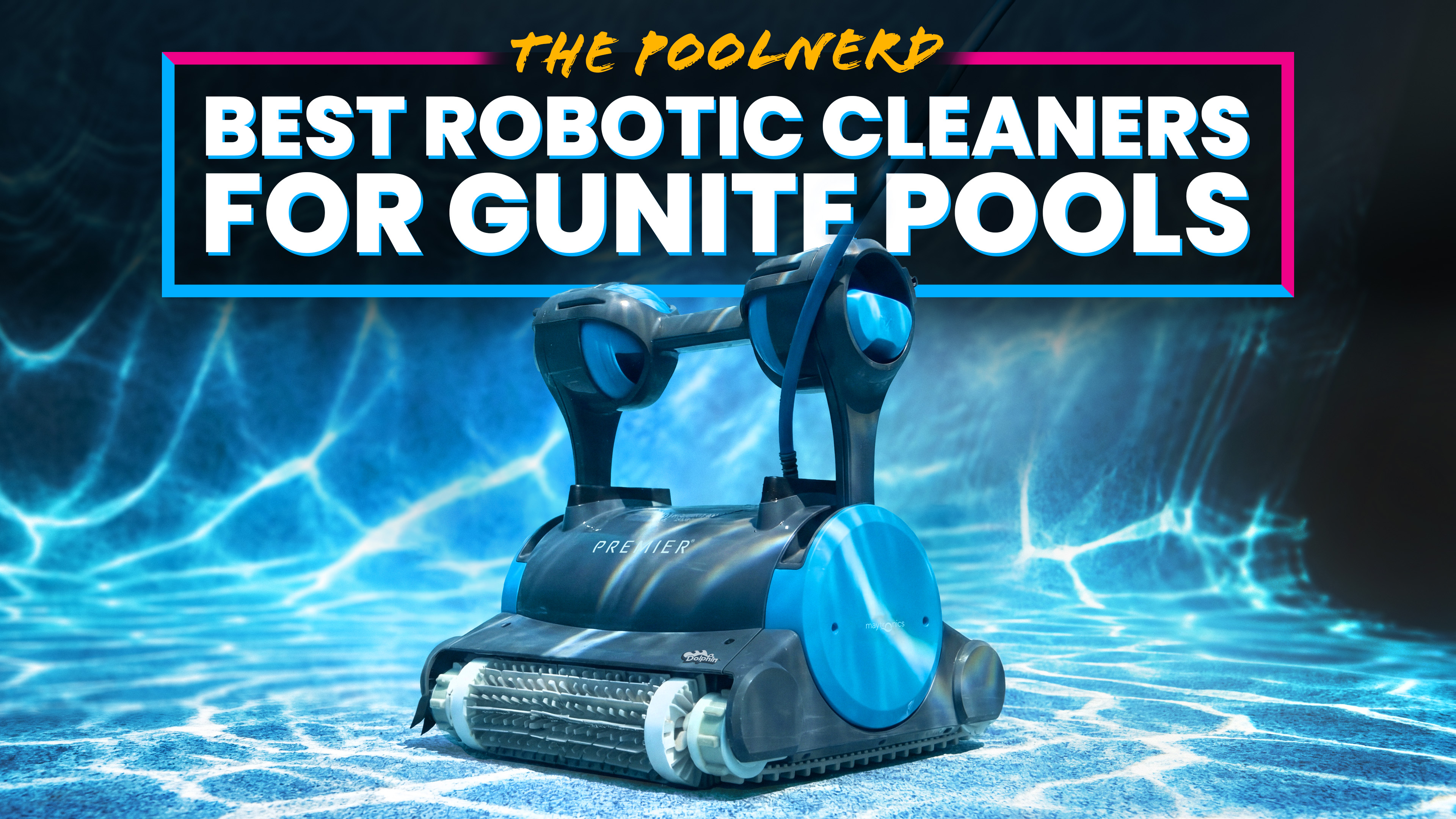
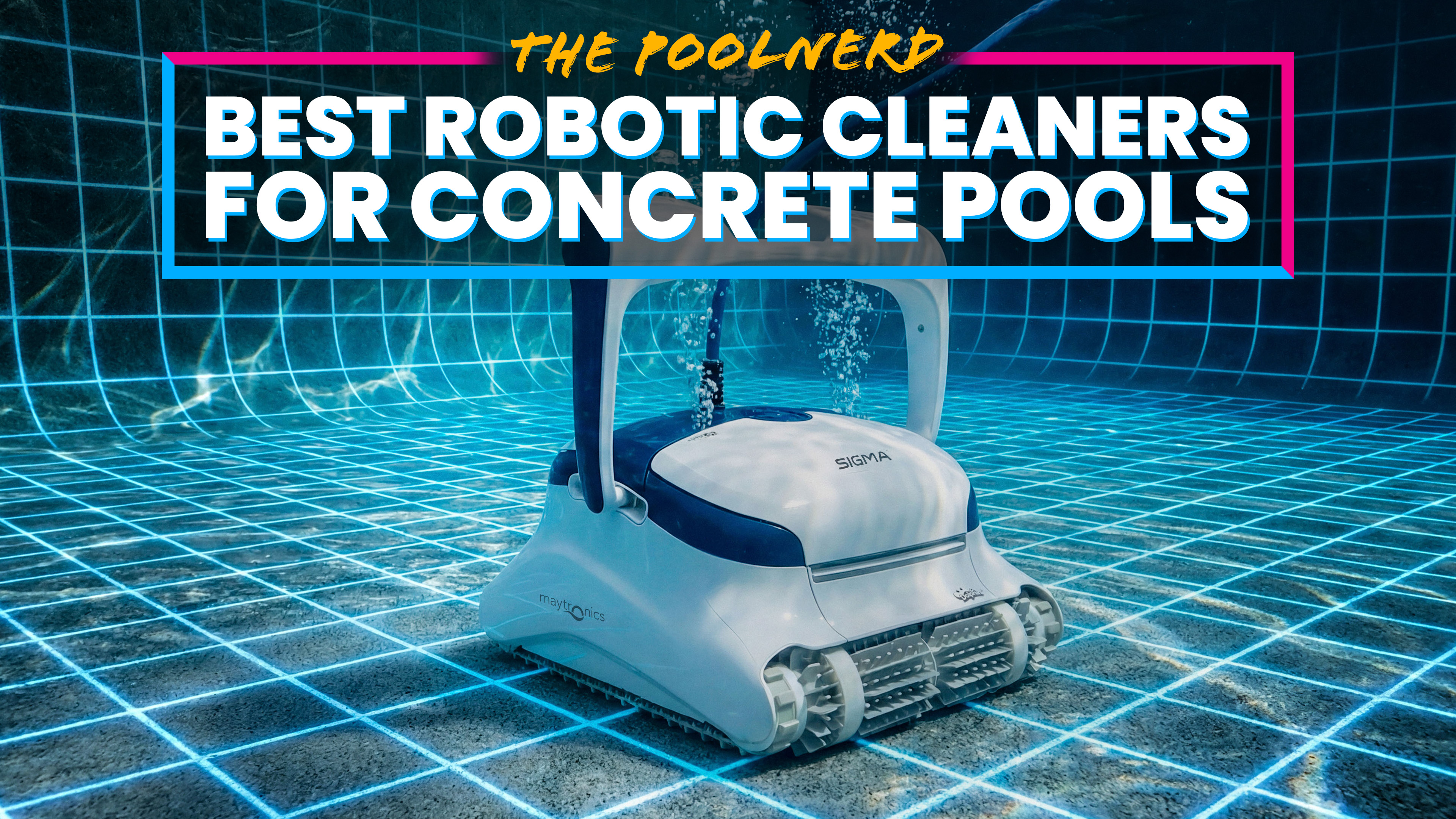
| Concrete / Gunite | Rubber Tracks or Wheels | Standard PVC Slat Brushes |
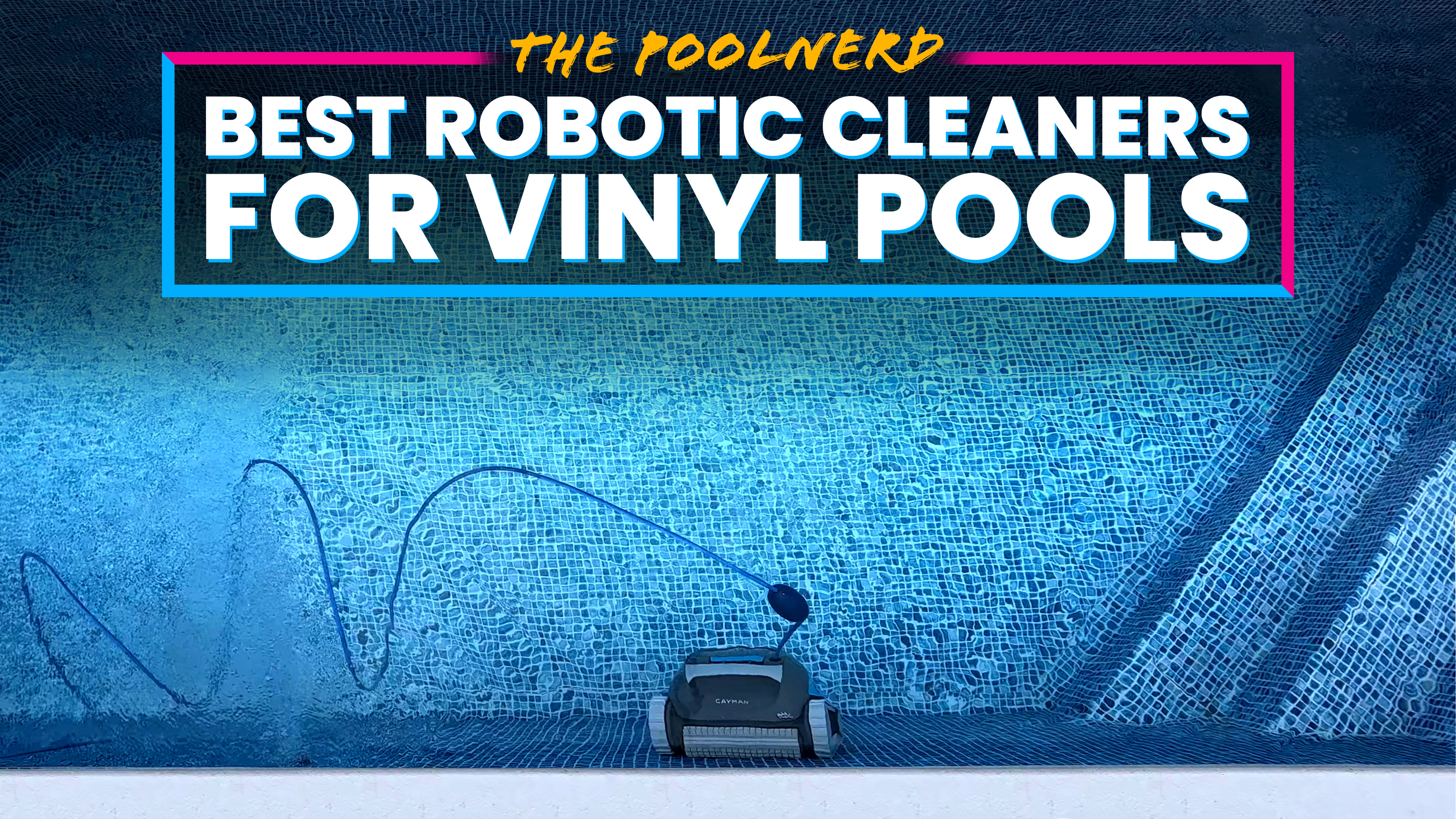
| Vinyl Liner | Continuous Rubber Tracks | Soft PVC Brushes |
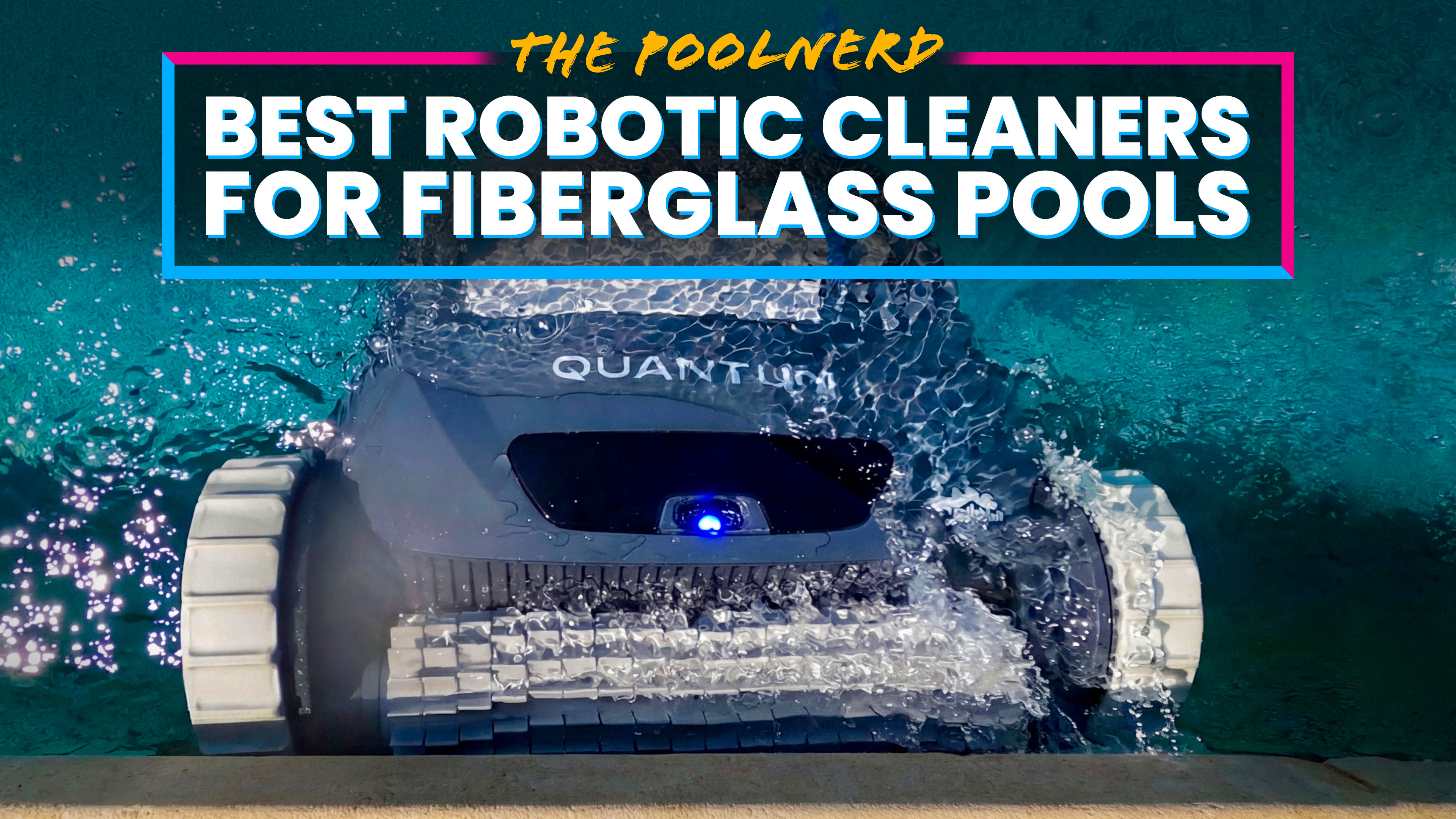
| Fiberglass | Continuous Rubber Tracks | High-Traction Wonder/PVA Brushes |
| Smooth Ceramic Tile | Continuous Rubber Tracks | PVA Sponge Brushes (Required) |
Gunite and Textured Concrete
Textured plaster and exposed aggregate surfaces offer high physical traction. Rubber tracks or wheel setups work well here. Focus on units with durable, heavy-duty PVC scrubbing brushes that can withstand abrasive plaster without wearing down quickly.
Vinyl Liners
Vinyl surfaces require smooth drive tracks to prevent snagging or over-scrubbing seam overlaps. Ensure the robot’s weight distribution is balanced to prevent high friction spots on older, delicate vinyl liners.
Fiberglass and Glazed Tile
Fiberglass gel-coats and glazed ceramic tiles are extremely slippery. Standard PVC brushes often spin without gaining traction on steep wall transitions. Select models equipped with PVA sponge brushes (sometimes referred to as "Wonder Brushes"), which expand when saturated with water to create friction on slick vertical surfaces.
Operational Costs, Energy Savings, and Maintenance
Understanding operating expenses and regular maintenance routines protects your equipment investment and maximizes energy savings over time.
Energy Efficiency Calculations
Standard pool filtration pumps (1.5 HP to 3.0 HP) draw between 1,200 and 2,500 watts per hour. When using suction or pressure cleaners, running your main pump at high RPMs for 4 to 6 hours costs significant energy daily.
In contrast, a robotic pool cleaner operates on a step-down transformer that converts standard AC power to approximately 24V to 30V DC, consuming only 120 to 200 watts per hour.
- Main Pump Running Cleaner (4 hrs @ 2,000W): 8.0 kWh per cycle.
- Robotic Cleaner Running (2.5 hrs @ 150W): 0.375 kWh per cycle.
This mechanical separation yields an energy reduction of over 90% per cleaning cycle for the pool cleaning process.
Operational Lifespan & Wear Parts Maintenance
To maximize the working lifespan of a robotic cleaner (typically 5 to 8 years for quality units):
- Balance Water Chemistry: High chlorine levels (above 4.0 PPM) or acidic water (pH below 7.2) degrade rubber drive belts, track bands, internal shaft seals, and motor gaskets. Always balance pool chemistry before deploying the unit.
- Empty the Filter Basket Promptly: Never allow organic debris to decay inside the cleaner basket. Rinse the pleated filter cartridges with a low-pressure hose after every cleaning cycle to maintain optimal suction flow.
- Manage the Power Cord: If using a corded unit, lay the cord out flat in the sun periodically to remove memory coils, preventing internal wiring strain.
- Remove After Cleaning: Remove the robot from the pool once the cycle finishes. Storing the unit submerged continuously accelerates plastic degradation from UV exposure and pool sanitizer chemicals.
Frequently Asked Questions
Can a pool robotic cleaner remove fine yellow mustard algae?
While ultra-fine pleated filters (2 to 5 microns) can trap dead algae particles after treatment, a robotic cleaner alone cannot eliminate live algae. Live mustard algae must be chemically treated with an algaecide and chlorine shock. Once dead, the robot can collect the settled algae dust from the pool floor.
How often should I run my robotic pool cleaner?
For most residential pools, running a robotic cleaner 2 to 3 times per week keeps floors and walls clear of organic material. If your pool is surrounded by heavy foliage or experiences frequent windstorms, running the unit daily during peak leaf season helps maintain water clarity.
What is the difference between active scrubbing brushes and passive brushes?
Passive brushes are stationary strips located under the robot's chassis that rub against the floor as the unit moves. Active scrubbing brushes are motorized components connected directly to the drive train that spin 1.5 to 2 times faster than the robot's movement speed, providing active friction to break up stuck dirt and film.
Are cordless battery-powered robotic cleaners better than corded models?
Cordless models eliminate cable tangling and streamline storage. However, corded models provide continuous power for long or repeated cleaning cycles and do not face eventual battery degradation. Choose cordless models for small to mid-sized pools where cord management is inconvenient, and corded models for large pools or heavy daily debris loads.
Why does my robotic cleaner get stuck on the main floor drain?
Cleaners can get stuck on raised main drain covers if their underside clearance is low. You can resolve this issue by installing a anti-hang-up drain ramp/ring over your main drain or adjusting the robot's directional jets to increase forward drive force over obstacles.
Practical Action Plan: Choosing Your Cleaner
Follow these steps to select the right model for your pool:
- Measure Your Pool: Note the total length, maximum depth, and distance to the nearest GFCI outlet. Ensure the robot’s cable length exceeds the distance from the power source to the furthest corner of the pool by at least 10 feet.
- Identify Your Debris Type: Select standard mesh baskets for large tree leaves; demand ultra-fine pleated cartridges for fine sand, clay, or silt.
- Verify Surface Traction Needs: Check if your pool material requires PVA sponge rollers (for slick tile/fiberglass) or standard rubber tracks (for gunite/vinyl).
- Set Your Budget: Allocate funds for mid-tier or smart feature sets if you require vertical wall climbing and waterline scrubbing, as entry-level models are restricted to floor-only clearing.
Image Gallery