Dominican Golf Courses: Scenic Coastal Views and World-Class Championship Competition
The Dominican Republic stands as the premier golfing capital of the Caribbean, combining breathtaking cliffside ocean views with tour-tested championship layouts. From PGA Tour host venues to iconic designs by Pete Dye and Jack Nicklau...
The Dominican Republic stands as the premier golfing capital of the Caribbean, combining breathtaking cliffside ocean views with tour-tested championship layouts. From PGA Tour host venues to iconic designs by Pete Dye and Jack Nicklaus, Dominican golf courses challenge competitive players with coastal tradewinds, strategic hazards, and pristine Paspalum turf across unforgettable tropical landscapes.
Contents
The Rise of the Dominican Republic as a Golf Powerhouse
Over the past several decades, the Dominican Republic has transformed its eastern and northern coasts into a global destination for high-caliber golf. Driven by significant infrastructure investment, luxury resort development, and partnerships with legendary golf architects, the country has built a portfolio of courses that compete directly with world-renowned coastal tracks such as Pebble Beach, Turnberry, and Cape Kidnappers.
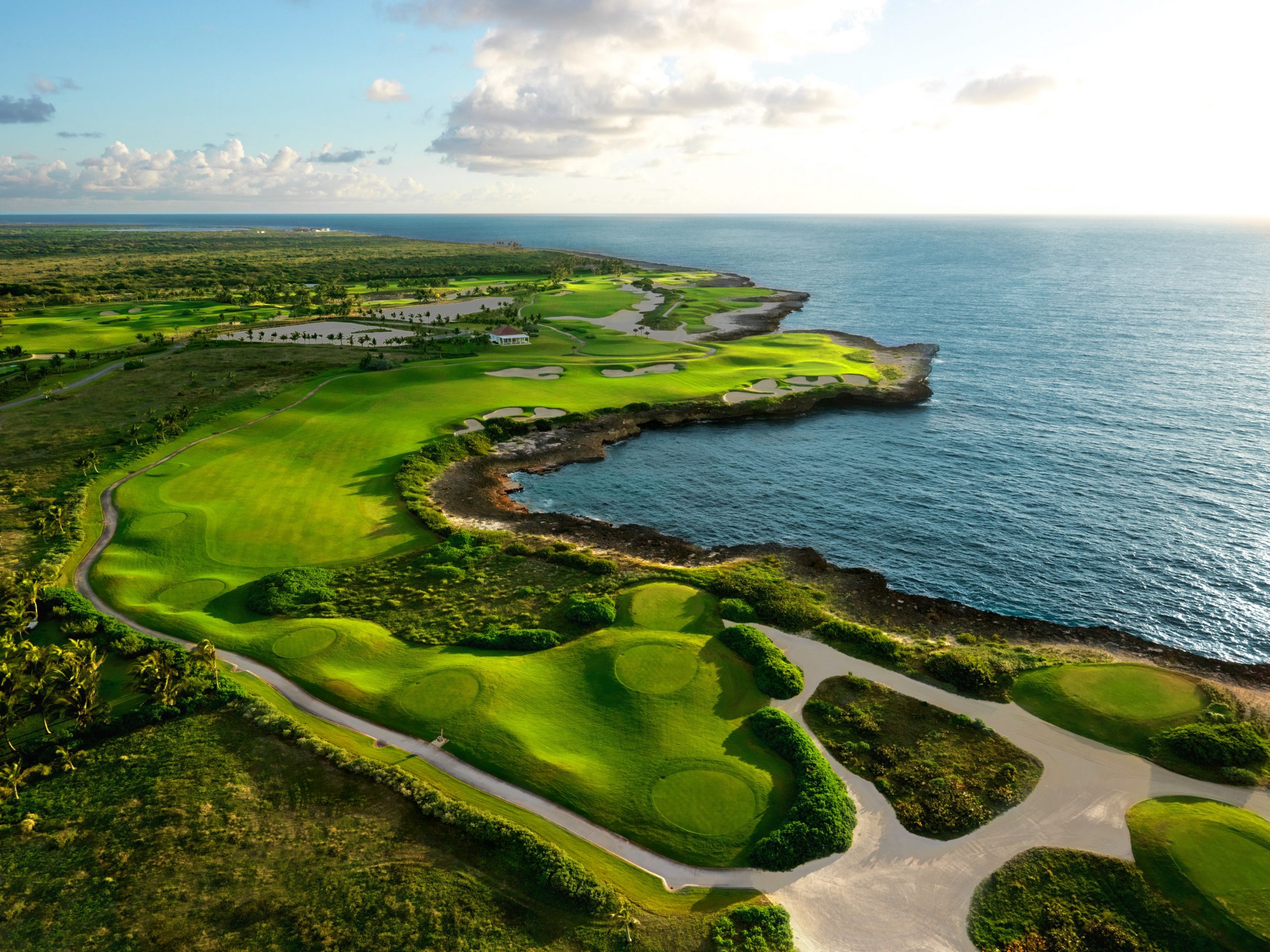
What sets Dominican golf apart is the deliberate integration of natural topography with rigorous competition architecture. Designers were not merely handed inland acreage; they were given miles of rugged sea cliffs, coral formations, river gorges, and dense palm groves. The resulting courses offer dramatic visual contrast—turquoise Caribbean waters crashing against dark limestone cliffs—while demanding precise shot-making, disciplined course management, and mastery over fluctuating ocean winds.
Professional golf tours have consistently validated the region's competitive standards. With official PGA Tour events, PGA Tour Champions tournaments, and major amateur qualifiers hosted on its shores, the Dominican Republic offers handicap players and elite amateurs the opportunity to play the exact layouts contested by the world's best golfers.
Premier Championship Courses: Scenic Highlights and Tournament Pedigree
1. Teeth of the Dog (Casa de Campo Resort & Villas, La Romana)
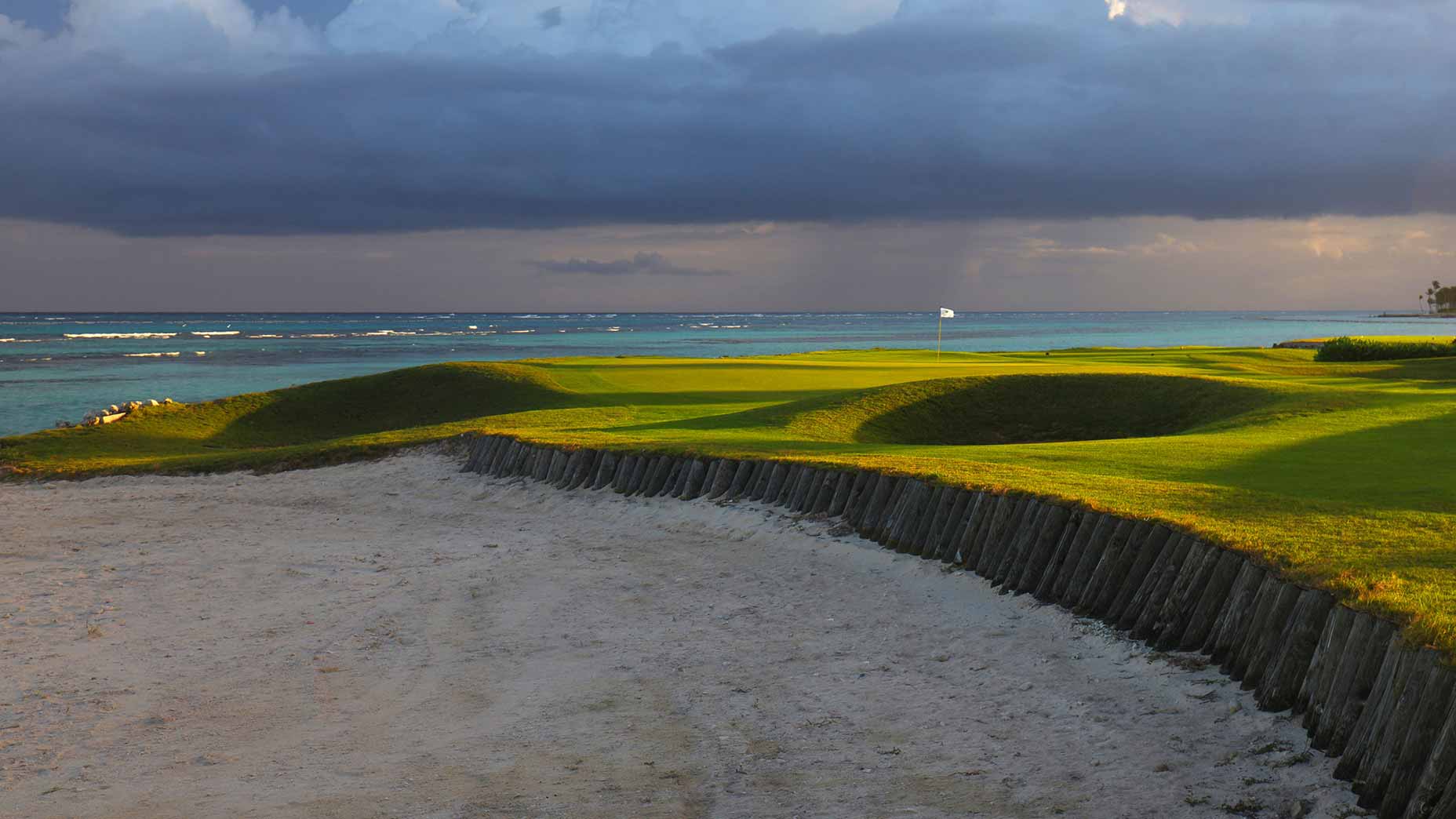
Opened in 1971 and designed by World Golf Hall of Fame architect Pete Dye, Teeth of the Dog remains the benchmark for Caribbean golf. Dye famously remarked that he designed eleven holes, but "God created seven." Those seven holes sit directly along the edge of the Caribbean Sea, with tees and greens carved into sharp, jagged coral rock formations.
- Architectural Profile: Pete Dye Signature Design
- Coastal Exposure: 7 holes directly abutting the ocean (Holes 5, 6, 7, 8, 15, 16, and 17)
- Competitive Challenge: Dye’s signature visual deception is on full display. Ocean breezes blow across open fairways into small, elevated greens guarded by deep pot bunkers and coral outcroppings. The par-3 5th hole, requiring a carry over crashing surf to a peninsula green, is one of the most famous short holes in world golf.
- Tournament Legacy: Host of multiple Latin America Amateur Championships (LAAC), where winners earn direct exemptions into The Masters, The Open Championship, and the U.S. Amateur.
Key Stat: Teeth of the Dog features 7 oceanfront holes where miss-hits result in direct water or coral hazards, requiring supreme mentally controlled shot execution.
2. Corales Golf Club (Punta Cana Resort & Club)
Designed by Tom Fazio and opened in 2010, Corales Golf Club is engineered to test elite touring professionals while delivering expansive coastal scenery. The layout weaves through natural cliffs, ocean coves, and inland lakes.
- Architectural Profile: Tom Fazio Design
- Coastal Exposure: 6 oceanfront holes, culminating in a dramatic three-hole stretch known as the "Devil’s Elbow."
- Competitive Challenge: Wide, forgiving fairways tempt players to hit aggressive drives, but approaching the greens demands exact distance control into strong crosswinds. The 18th hole—a 500+ yard par 4 requiring a forced carry over the ocean inlet of Corales Bay on the drive—is one of the most demanding finishing holes on the PGA Tour.
- Tournament Legacy: Home to the PGA Tour's Corales Puntacana Championship, an official FedExCup event held annually. It provides a true benchmark for how competitive layouts hold up under professional conditions.
3. Punta Espada Golf Club (Cap Cana)
Designed by Jack Nicklaus and opened in 2006, Punta Espada is frequently ranked among the finest courses in Mexico and the Caribbean. Nicklaus integrated the natural bluffs, beaches, and jungle terrain into a seamless 18-hole championship venue.
- Architectural Profile: Jack Nicklaus Signature Design
- Coastal Exposure: 8 oceanfront holes, with views of the Caribbean Sea available from all 18 holes.
- Competitive Challenge: The layout features extensive use of waste bunkers filled with crushed white limestone, contrasting green fairways against dark turquoise sea waters. The par-3 13th hole requires a 250-yard tee shot entirely over a ocean bay to a green perched precariously on a rock ledge.
- Tournament Legacy: Hosted the PGA Tour Champions Cap Cana Championship for three consecutive years, receiving widespread acclaim from professional veterans for its condition and strategic variety.
4. Playa Grande Golf & Ocean Club (Río San Juan, North Coast)
Originally designed by Robert Trent Jones Sr. in 1997 and extensively renovated by his son Rees Jones in 2015, Playa Grande sits on the Dominican Republic's rugged northern coast. Often called the "Pebble Beach of the Caribbean," the course is set atop dramatic sea bluffs high above the Atlantic Ocean.
- Architectural Profile: Robert Trent Jones Sr. / Rees Jones Redesign
- Coastal Exposure: 10 oceanfront holes played directly along high coastal cliffs.
- Competitive Challenge: The northern shoreline experiences stronger, more variable Atlantic wind patterns than the calm southern Caribbean coast. Deep fairway bunkering, undulating greens, and dramatic cliffside drop-offs penalize offline shots heavily.
- Tournament Legacy: Renowned as a private and resort competitive test, offering raw Atlantic exposures that require lower trajectory shots and precise wind calculations.
5. Dye Fore (Casa de Campo Resort & Villas)
Another Pete Dye creation at Casa de Campo, Dye Fore is a 27-hole complex comprising three distinct nines: Chavón, Marina, and Lagos. Perched 300 feet above the Chavón River valley, it offers panoramic mountain and ocean views combined with extreme elevation changes.
- Architectural Profile: Pete Dye 27-Hole Layout
- Coastal Exposure: High-altitude views overlooking the Chavón River gorge and the Caribbean Sea.
- Competitive Challenge: Standing on the tees of the Chavón nine, players face 40 mph gusts coming off the river canyon. Wide fairways are framed by tall native grasses, deep waste areas, and severe slopes that funnel mediocre shots into penalty areas.
Architectural Dynamics and Competitive Factors
Playing golf at a competitive level in the Dominican Republic requires adapting to technical and environmental conditions rarely found on inland courses.
Wind & Turf Factors: [Steady Coastal Tradewinds] ---> Demands knock-down trajectories & club selection changes [Seashore Paspalum Grass] ---> Enables tight lies, fast greens & high salt tolerance
Ocean Tradewinds: The Primary Defender
The dominant geographical influence on Dominican golf courses is the tropical tradewind. Operating almost constantly off the sea, winds can range from a gentle 10–15 knot breeze in the morning to 25–35 knot gusts by mid-afternoon.
- Strategy: Competitive players must master low-launch, low-spin "knock-down" shots. High-launching shots that rely purely on swing speed often get caught in crosswinds and pushed into coastal hazards or native coral.
- Club Selection: On holes playing directly into the prevailing wind (such as the 17th at Corales), players routinely adjust by two to three full clubs to cover standard yardages.
Seashore Paspalum Turf Dynamics
Unlike North American or European courses that rely on Bentgrass, Bermuda, or Poa Annua, the top oceanfront courses in the Dominican Republic utilize Seashore Paspalum grass.
- Saltwater Resistance: Paspalum thrives on brackish water and high-salinity ocean spray, allowing greenkeepers to irrigate coastal turf without turf burn.
- Playing Characteristics: Paspalum produces an exceptionally dense, upright blade structure. Ball lie on fairways is often sit-up clean, resembling a tee lie. On greens, Paspalum exhibits very little grain compared to Bermuda grass, producing true, predictable rolls. However, it can feel "sticky" or heavy on chip shots around the green if a player fails to strike the ball cleanly.
Coral Rock and Coastal Hazards
Out-of-bounds parameters on Dominican coastal courses are rarely marked by simple white stakes. Instead, fairways terminate directly into razor-sharp volcanic or fossilized coral rock (locally referred to as diente de perro).
Ball recovery from these zones is nearly impossible, and attempting to play out often risks severe club damage or physical injury. Strategic play dictates favoring the safe side of fairways, even if it leaves longer approach angles into heavily guarded greens.
Comparative Overview: Championship Dominican Golf Courses
The following table provides a structural comparison of the top championship courses in the Dominican Republic, highlighting their locations, layout specs, and competitive design features:
| Course Name | Location / Region | Primary Architect | Oceanfront Holes | Par / Length (Max) | Signature Competitive Feature | Public Access Level |
|---|---|---|---|---|---|---|
| Teeth of the Dog | La Romana (South Coast) | Pete Dye | 7 Holes | Par 72 / 7,471 yards | Coral rock margins, small elevated greens, heavy sea breeze | Resort Guests & Registered Visitors |
| Corales Golf Club | Punta Cana (East Coast) | Tom Fazio | 6 Holes | Par 72 / 7,650 yards | "Devil's Elbow" stretch (Holes 16–18), wide fairways, penal greens | Resort Guests & Limited Daily Play |
| Punta Espada | Cap Cana (East Coast) | Jack Nicklaus | 8 Holes | Par 72 / 7,396 yards | Forced carries over sea coves, extensive limestone waste bunkers | Open to Public / Resort Play |
| Playa Grande | Río San Juan (North Coast) | R.T. Jones Sr. / Rees Jones | 10 Holes | Par 72 / 7,259 yards | High Atlantic cliffside bluffs, severe elevation shifts, variable winds | Private / Select Resort Access |
| Dye Fore | La Romana (South Coast) | Pete Dye | Cliffside Views (300 ft above river) | Par 72 / 7,740 yards | Massive gorge elevation changes, extreme crosswinds on Chavón nine | Resort Guests & Visitors |
Logistics, Booking, and On-Course Execution
Planning a competitive golf itinerary in the Dominican Republic involves managing resort privileges, booking lead times, caddie expectations, and regional transport.
Navigating Access and Tee Times
While many elite Dominican courses are situated within private gated communities or world-class resorts, most accept non-resort play with advance reservations:
- Peak Season (December through April): Tee times at premier courses like Teeth of the Dog and Punta Espada sell out months in advance. Golfers should secure tee times at least 60 to 90 days prior to arrival.
- Shoulder & Green Season (May through November): Offers greater flexibility, lower green fees, and cooler early morning tee times, though afternoon tropical showers are more frequent.
- Resort Privileges: Staying on-site at Casa de Campo or Puntacana Resort & Club provides preferred tee-time windows, discounted green fees, and seamless shuttle transportation directly to practice facilities.
The Mandatory Caddie Culture
At elite Dominican venues—specifically Teeth of the Dog, Dye Fore, and Punta Espada—the use of a caddie is either mandatory or highly recommended for first-time visitors.
Caddie Value Proposition: + Wind Direction & Velocity Assessment + Precise Target Lines over Blind Hazards + Green Reading on Paspalum Surfaces
- Target Lines: Coastal topography creates optical illusions where fairways appear narrower or wider than they are. Caddies provide exact target lines off the tee over carry hazards.
- Reading Paspalum Greens: While Paspalum has minimal grain, ocean topography creates subtle breaks toward the water that are difficult for visiting players to spot.
- Gratuity Etiquette: Caddie fees are typically charged at check-in or paid directly in cash (USD or DOP). Carrying cash for caddie tips ($30–$50+ per bag depending on service and walk/ride setup) is standard practice across all top-tier courses.
Seasonal Weather Considerations and Wind Strategy
- Morning vs. Afternoon Play: To experience low-wind conditions for lower scoring, book tee times between 7:00 AM and 8:30 AM. By 11:30 AM, coastal winds typically reach peak intensity, transforming forgiving holes into rigorous tactical challenges.
- Hydration and Heat: Tropical heat paired with humidity requires active hydration. Most luxury courses provide complimentary water stations every 3 to 4 holes and refreshed cooling towels post-round.
Frequently Asked Questions
Which Dominican Republic golf course hosts an official PGA Tour event?
Corales Golf Club, located within the Punta Cana Resort & Club, hosts the PGA Tour's Corales Puntacana Championship. The event features elite professional golfers competing over the Tom Fazio design, culminating at the famous cliffside "Devil's Elbow" finishing stretch.
How difficult are the coastal winds on Dominican golf courses?
Coastal winds can fundamentally alter course playability. In the morning, winds typically range from 5 to 15 mph. By mid-afternoon, tradewinds frequently exceed 25 mph. This requires players to adjust club selection by 2 to 3 clubs and play lower-trajectory control shots to avoid hazard penalties.
What type of turf grass is used on top Dominican courses, and how does it play?
Most premium oceanfront courses in the Dominican Republic utilize Seashore Paspalum turf. Paspalum tolerates saltwater irrigation and ocean spray. It produces plush, upright fairway lies and smooth, true-rolling greens with less directional grain than Bermuda grass.
Are caddies required when playing championship courses like Teeth of the Dog?
Yes, caddies are mandatory or strongly recommended at premier venues including Teeth of the Dog, Dye Fore, and Punta Espada. Caddies assist with lines over coastal carry hazards, wind calculations, bunker maintenance, and reading subtle breaks on Paspalum greens.
Can non-resort guests book tee times at Punta Espada and Casa de Campo?
Yes. While resort guests receive booking priority and discounted rates, non-resort guests can reserve visitor tee times at Punta Espada, Teeth of the Dog, and Dye Fore directly through course reservation desks or authorized golf travel operators, subject to availability.
Strategic Recommendations for Golf Travelers
To maximize both competitive performance and scenic enjoyment when traveling to the Dominican Republic, align course selection with your handicap profile and trip itinerary:
For the Ultimate Championship Challenge (Low Handicaps / Competitive Golfers): Prioritize a 54-hole swing featuring Teeth of the Dog, Corales Golf Club, and Punta Espada. Play morning rounds for low-scoring conditions, then attempt an afternoon round into maximum coastal winds to test true shot-making versatility.
For High Scenic Density (Photographic & Coastal Views): Book Punta Espada and Playa Grande. Together, these two layouts feature 18 combined oceanfront holes perched directly over rocky bays and high ocean bluffs.
For Large Groups and Variety: Base your trip at Casa de Campo Resort & Villas to access 63 total holes of Pete Dye architecture (Teeth of the Dog, 27 holes at Dye Fore, and The Links), minimizing travel transfers while maintaining world-class competitive variety.
Image Gallery