Star Hunger Games Explained: Stardom, Propaganda, and the Star-Crossed Lovers Strategy
In Suzanne Collins’ The Hunger Games universe, the concept of the "star" refers primarily to the strategic invention of the "star-crossed lovers of District 12" and the Capitol’s broader weaponization of celebrity culture. By turning t...
In Suzanne Collins’ The Hunger Games universe, the concept of the "star" refers primarily to the strategic invention of the "star-crossed lovers of District 12" and the Capitol’s broader weaponization of celebrity culture. By turning tributes into national stars, the Capitol sought to pacification through entertainment, while mentors like Haymitch Abernathy subverted this media machinery to save Katniss Everdeen and Peeta Mellark.
Contents
Understanding the "Star" Dynamic in The Hunger Games
When analyzing "star" in the context of The Hunger Games, readers and viewers encounter a multi-layered narrative framework. While custom gaming mods (such as Star Wars or Minecraft survival games) occasionally borrow the "Hunger Games" title, the definitive core of the topic lies within the canonical lore created by Suzanne Collins.
In Panem, "stardom" is not an innocent byproduct of fame; it is an instrument of political coercion and psychological warfare. The Capitol converts children into household names to distract its populace from totalitarian oppression, generate revenue through betting and sponsorship, and maintain a narrative of total control over the twelve outer districts.
To understand how stardom functions within the franchise, one must examine three interconnected elements:
- The Star-Crossed Lovers Strategy: The engineered romantic narrative between Katniss Everdeen and Peeta Mellark during the 74th Hunger Games.
- Capitol Stardom as Coercion: How winning Victors (such as Finnick Odair and Johannah Mason) were commodified by President Coriolanus Snow.
- The Subversion of Stardom: How Katniss transformed her compulsory celebrity into the ultimate symbol of revolution—the Mockingjay.
The Origin of the "Star-Crossed Lovers" Gambit
During the 74th Hunger Games, District 12 tributes Katniss Everdeen and Peeta Mellark entered the Capitol as severe underdogs. District 12 was historically impoverished, undernourished, and lacked the specialized training of the "Career Tributes" from Districts 1, 2, and 4. Their mentor, Haymitch Abernathy—a hardened Victor from the 50th Hunger Games—recognized that martial skill alone would not keep his tributes alive.
The Caesar Flickerman Interview
The turning point of the 74th Games occurred during the mandatory pre-game television interviews hosted by Caesar Flickerman. When Peeta took the stage, he revealed a seemingly unrequited love for Katniss. This revelation instantly rebranded the pair in the eyes of the Capitol public.
Rather than being seen as two tragic sacrifices destined to murder each other, Katniss and Peeta became the "Star-Crossed Lovers of District 12." This narrative played directly into the Capitol’s appetite for dramatic entertainment, melodrama, and reality-television narratives.
- Capitol Media Machine
- Capitol Audience (Emotional Investment)
- Arena Mechanics (Sponsor Gifts / Rule Changes)
- Survival of Tributes
Strategic Benefits of the Romantic Stardom
Haymitch immediately seized upon this narrative, forcing Katniss—who was naturally guarded and suspicious—to play along. The "star-crossed" angle yielded critical tactical advantages:
- Sponsor Acquisition: Wealthy Capitol citizens paid exorbitant sums to send life-saving supplies (medicine, hot soup, bread) into the arena. Sponsors invested in the survival of the couple because they wanted to see the love story continue.
- Public Sympathy: The romantic framing made it politically uncomfortable for the Gamemakers to eliminate both tributes early without disappointing millions of Capitol viewers.
- The Rule Change: Capitalizing on the public obsession with the couple, Head Gamemaker Seneca Crane announced a dramatic rule modification mid-game: two tributes from the same district could both survive if they were the last remaining competitors.
Stardom as Political Currency: How the Capitol Uses Victors
The Capitol's obsession with stars extends far beyond the annual broadcast of the Games. Winning the Hunger Games does not grant true freedom; instead, it transitions a tribute from a temporary combat contestant to a permanent property of the state.
The Exploitation of Victors
Once a tribute wins, they are given a luxurious home in the Victor’s Village of their home district and provided with financial wealth. However, President Coriolanus Snow utilized this celebrity status to manipulate and control Victors throughout their adult lives.
- Finnick Odair (District 4): After winning the 65th Hunger Games at age 14, Finnick was transformed into the Capitol’s premier heartthrob. President Snow forced Finnick into sexual servitude, auctioning his company to wealthy Capitol elites. Snow secured Finnick’s compliance by threatening to murder anyone Finnick loved.
- Johannah Mason (District 7): When Johannah refused to allow the Capitol to exploit her celebrity status after her win, Snow retaliated by murdering her entire family, leaving her isolated and bitter.
- Gloss and Cashmere (District 1): Siblings who won back-to-back Games were marketed as the golden standards of Capitol beauty, acting as living propaganda for the regime's perfection.
By turning Victors into elite celebrities, the Capitol detached them from their working-class roots in the districts, creating envy and resentment among the oppressed populations while keeping the Victors under constant surveillance.
Historical Origins: From Execution to Entertainment
The strategic use of stardom was not part of the original Hunger Games design. As established in Suzanne Collins’ prequel novel, The Ballad of Songbirds and Snakes, the early Hunger Games (Games 1 through 9) were brutal, untelevised executions conducted in a bare amphitheater with minimal public viewership.
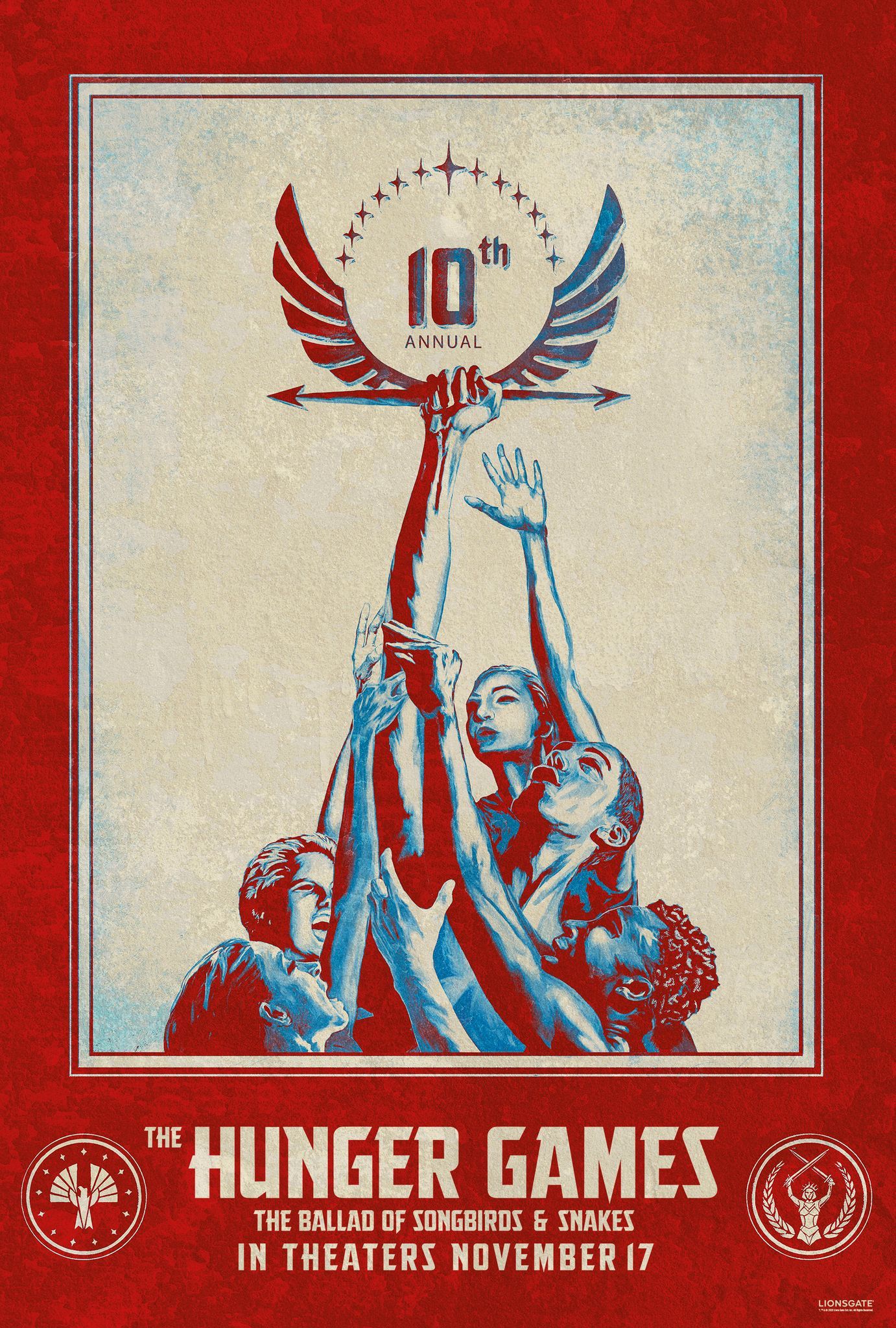
Coriolanus Snow and the 10th Hunger Games
It was a young Coriolanus Snow, serving as a student mentor in the 10th Hunger Games, who proposed integrating media spectacle, public betting, and tribute sponsorship into the games. Snow realized that fear alone was insufficient to control Panem; the Capitol needed entertainment and emotional engagement.
The prototype for the "star tribute" was Lucy Gray Baird, a performer from the Covey assigned to District 12. Lucy Gray used her musical talent, charismatic stage presence, and colorful dress to capture the attention of Capitol viewers, earning the sponsorships necessary to survive her arena. Her performance laid the groundwork for the modern, media-saturated Hunger Games seen decades later.
The Subversion of Stardom: The Nightlock Berries and Mockingjay Iconography
The Capitol's strategy of using stardom for pacification backfired when Katniss Everdeen weaponized the media machinery against the state.
The Nightlock Gambit
At the climax of the 74th Hunger Games, Katniss and Peeta were the last two survivors. The Gamemakers, seeking a dramatic single victor, abruptly revoked the dual-victor rule. Expecting one lover to kill the other for Capitol entertainment, the Gamemakers were caught off guard when Katniss produced poisonous nightlock berries.
Katniss and Peeta prepared to consume the berries simultaneously. This move placed Seneca Crane in an impossible dilemma:
- Allow both tributes to die, leaving the 74th Games with zero victors, exposing the Capitol's rule change as a hollow trick and destroying the beloved romantic narrative.
- Intervene and allow both to live, conceding political authority to a teenager on live television.
Crane halted the execution and declared both Katniss and Peeta victors. By threatening mutual suicide, Katniss turned her "star-crossed" persona into an act of supreme political defiance.
- The Capitol's Dilemma
- Allow Dual Suicide
- Zero Victors
- Destroys Romantic Narrative
- Spark Instant Rebellion
- Concede to Tributes
- Katniss & Peeta Live
- Exposes Capitol Weakness
- Subverts Gamemaker Authority
- Allow Dual Suicide
Transition to the Mockingjay
In Catching Fire and Mockingjay, the rebel movement led by District 13 recognized that Katniss's stardom was the most potent weapon in Panem. Media strategist Plutarch Heavensbee and President Alma Coin leveraged Katniss’s authentic public image to film propaganda broadcasts (Propos).
Katniss was no longer playing the Capitol's script of a smitten tribute; she was transformed into the Mockingjay—a star of the revolution whose image united the warring districts against the Capitol.
Comparison of Tribute Stardom Strategies Across Panem
The following table details how different tributes were branded by the Capitol media apparatus, their underlying survival strategies, and their ultimate political impacts on Panem.
| Tribute / Victor | District & Games | Marketed "Star" Image | Strategic Objective | Ultimate Political / Narrative Impact |
|---|---|---|---|---|
| Katniss Everdeen & Peeta Mellark | District 12 (74th Games) | Star-Crossed Lovers / Girl on Fire | Garner Capitol sympathy & secure vital sponsor gifts | Forced mid-game rule changes; sparked national revolution via nightlock defiance. |
| Finnick Odair | District 4 (65th Games) | Golden Boy / Capitol Heartthrob | Utilize physical perfection and charm to dominate arena | Exploited by Capitol elites; secretly gathered state secrets used during the rebellion. |
| Lucy Gray Baird | District 12 (10th Games) | The Songbird / Folk Performer | Secure viewer votes through musical performance | Established the historical precedent for tribute sponsorship and media stardom. |
| Johanna Mason | District 7 (71st Games) | Weak, Defenseless Orphan | Deceive opponents by feigning weakness until final stage | Exposed Capitol cruelty through defiance; joined the underground Victor rebellion. |
| Haymitch Abernathy | District 12 (50th Quarter Quell) | Cynical Outcast / Rebellious Combatant | Leverage arena physics (forcefield) to outsmart opponents | Punished by President Snow; became master media strategist for Katniss and Peeta. |
| Cashmere & Gloss | District 1 (74th / 75th Games) | Imperial Models / Career Royalty | Reinforce Capitol superiority through perfection | Served as living propaganda; killed in the 75th Quarter Quell rebellion break-out. |
Common Misconceptions About the "Star Hunger Games" Concept
1. Was the Romance Between Katniss and Peeta Entirely Staged?
No. While Katniss initially treated the romance purely as a calculated survival tactic orchestrated by Haymitch, Peeta’s feelings for Katniss were genuine from childhood. Over the course of Catching Fire and Mockingjay, Katniss’s pragmatic performance evolved into genuine romantic devotion, making their partnership authentic by the narrative's conclusion.
2. Did the Capitol Invent Tribute Stardom Out of Compassion?
No. Tribute stardom was designed as a psychological tool. By forcing districts to watch their children transformed into Capitol-style celebrities before being slaughtered, the Capitol demonstrated absolute ownership over district identity, body, and soul.
3. Was Seneca Crane Executed for the Berry Incident?
Yes. President Snow forced Head Gamemaker Seneca Crane to commit suicide (by nightlock berries in the film adaptation) because Crane allowed himself to be outmaneuvered by Katniss's romantic narrative, prioritizing short-term television ratings over state security.
Frequently Asked Questions
Why did Haymitch insist on keeping Katniss and Peeta's star-crossed narrative going?
Haymitch realized that an impoverished District 12 tribute had virtually no chance of surviving a physical confrontation against trained Career Tributes. By creating an unprecedented romantic storyline, he ensured a steady stream of expensive sponsor gifts—such as medicine and food—that proved essential to keeping both tributes alive through injuries and infection.
How did President Snow use stardom against the Victors after they won?
President Snow viewed Victors as potential threats who could become rebel figureheads. To neutralize them, he stripped away their privacy, forced many into high-society prostitution, and threatened to murder their family members if they displayed any disloyalty. Stardom became a golden cage that kept Victors under total surveillance.
What is the connection between "Star Hunger Games" and real-world media satire?
Suzanne Collins derived the concept of Hunger Games stardom from combining Roman gladitorial combat with modern American reality television and war coverage. The media spectacle highlights how infotainment can desensitize populations to systemic violence and human suffering.
How did the 75th Hunger Games (Quarter Quell) dismantle the Capitol's star system?
In the 75th Games, President Snow re-reaped existing Victors to eliminate them. However, because these Victors were already famous stars with personal connections across districts, their return to the arena horrified Capitol citizens and allowed an underground rebel alliance (led by Plutarch Heavensbee, Haymitch, and Finnick) to execute a coordinated escape.
Practical Takeaways for Analyzing The Hunger Games Franchise
For students, literary analysts, and fans reviewing The Hunger Games narrative structure:
- Trace the Media Evolution: Compare The Ballad of Songbirds and Snakes with The Hunger Games to observe how Coriolanus Snow transformed raw military force into a media-driven totalitarian regime.
- Examine Narrative Subversion: Pay attention to how propaganda tools (interviews, costumes designed by Cinna, Propos) are used identically by both the oppressor (President Snow) and the resistance (President Coin).
- Analyze Character Archetypes: Study how different Victors adapted to their enforced stardom—Finnick through superficial charm, Johanna through angry defiance, and Katniss through authentic reluctance.
Image Gallery