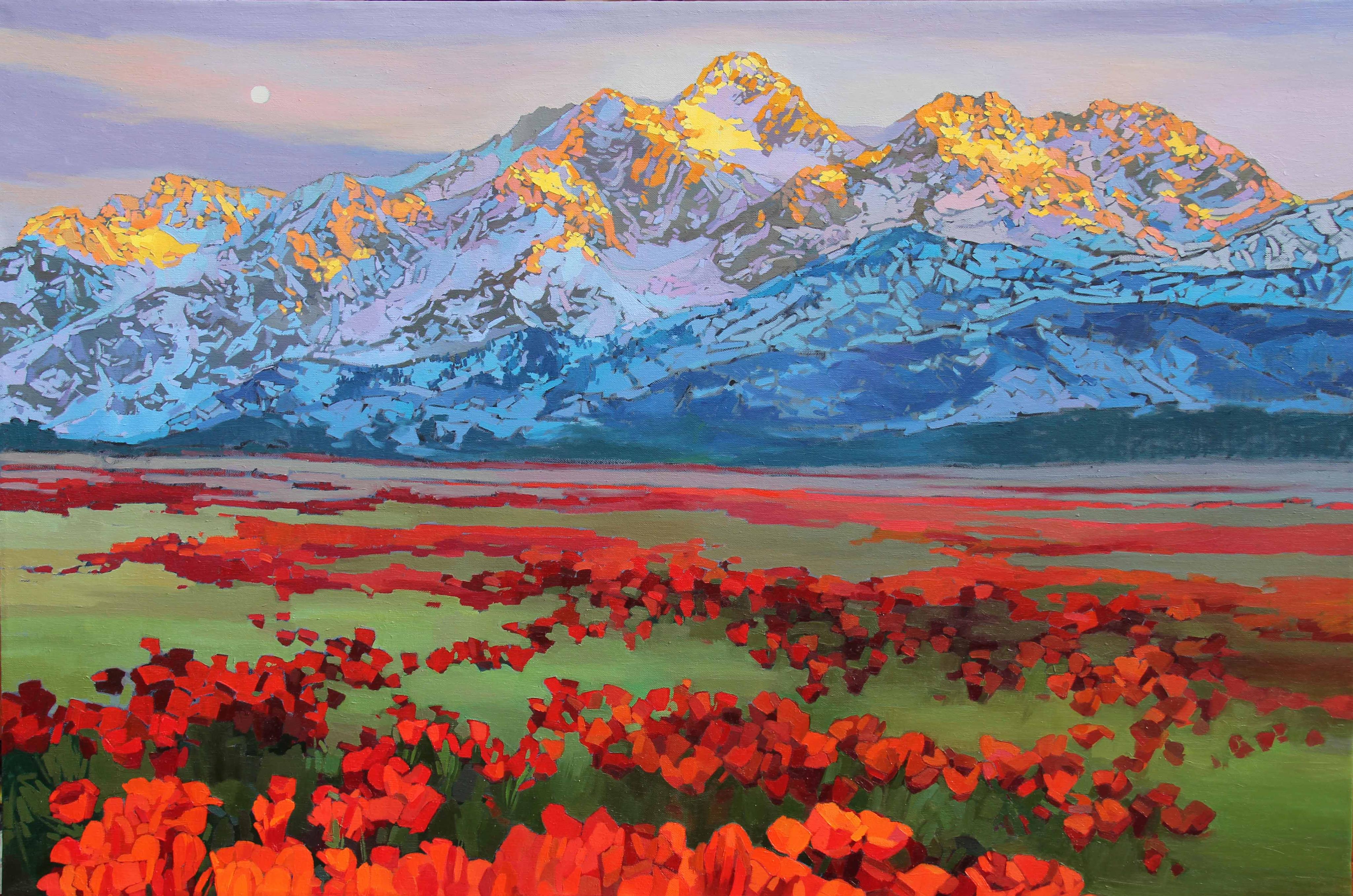
The Artist in Nature: Intersecting Creativity with the Natural Environment
The artist in nature engages in a creative process that transcends traditional studio boundaries, utilizing the physical landscape as both medium and gallery. This practice, encompassing Land Art, Eco-Art, and ephemeral installations,...
The artist in nature engages in a creative process that transcends traditional studio boundaries, utilizing the physical landscape as both medium and gallery. This practice, encompassing Land Art, Eco-Art, and ephemeral installations, seeks to redefine the human relationship with the Earth by integrating organic materials and geological sites directly into the work's conceptual and physical structure.
Contents
Defining the Relationship Between Art and the Environment
The concept of the artist working within nature is not a modern invention, yet its formal recognition as a distinct movement—often called Land Art or Earthworks—solidified in the late 1960s. Unlike traditional landscape painting, which seeks to represent nature on a canvas, the artist in nature interacts with the environment's physical reality. This interaction is characterized by a shift from observation to participation.
In 2026, this field has evolved significantly. While early pioneers often sought to mark the land, contemporary practitioners focus on "site-responsiveness." This involves a deep study of a location’s ecology, history, and geology before a single stone is moved. The goal is no longer just to create an aesthetic object but to facilitate a dialogue between the human spirit and the biological systems that sustain it. The work often addresses themes of deep time, entropy, and the climate crisis, serving as a visual bridge between scientific data and emotional resonance.
Historical Evolution of Land Art and Earthworks
To understand the work of the artist in nature today, one must examine the foundational shifts that occurred in the mid-20th century. This era marked a rebellion against the "white cube" of the gallery system, which many artists felt commodified art and stripped it of its environmental context.
The 1960s Revolution: Scaling the Landscape
The initial wave of Land Art was characterized by monumental scale and a focus on permanence or geological time. Artists like Robert Smithson and Michael Heizer moved hundreds of tons of earth to create works that could only be fully appreciated from the air or through physical pilgrimage. Smithson’s Spiral Jetty (1970), located in the Great Salt Lake, remains a primary example of how an artist uses natural materials—basalt rock, salt crystals, and water—to create a form that changes according to the lake's water levels and mineral density.
These early works were often critiques of urban industrialization. By placing art in remote deserts or abandoned quarries, artists forced the audience to confront the vastness of the American West and the inevitability of natural erosion. This period established the "site-specific" nature of the work: the art is inseparable from its location; to move it is to destroy it.
The Shift Toward Ephemeral and Ecological Art
As the environmental movement gained momentum in the late 20th century, the technical depth of the work shifted. Artists began to move away from heavy machinery and permanent scars on the land, favoring "ephemeral art." This practice emphasizes the temporary nature of beauty. Andy Goldsworthy, a prominent figure in this transition, uses only his hands and found natural objects—leaves, ice, twigs, and stones—to create intricate structures that are designed to be reclaimed by the wind, tide, or decay. This methodology highlights the artist's role as a transient visitor rather than a permanent conqueror of the landscape.
Categorizing the Work: From Monoliths to Restorative Actions
The "work" produced by an artist in nature is not a monolith. It can be categorized by its intent, duration, and the degree of intervention required. Understanding these distinctions is crucial for researchers, collectors, and practitioners in 2026.
| Category | Primary Materials | Intended Duration | Key Objective |
|---|---|---|---|
| Land Art / Earthworks | Earth, rock, concrete, industrial materials | Permanent or long-term | To explore geological time and physical scale. |
| Ephemeral Art | Ice, leaves, flower petals, sand, water | Minutes to weeks | To document the process of change and natural entropy. |
| Ecological Art (Eco-Art) | Living plants, reclaimed water, bio-filters | Indefinite (self-sustaining) | To remediate damaged ecosystems or raise climate awareness. |
| Site-Specific Installation | Mixed media, wood, textiles, light | Temporary (exhibition-based) | To highlight the unique historical or physical traits of a site. |
Ecological Art (Eco-Art) as Functional Activism
Ecological art represents the most technically demanding segment of the field in 2026. These artists often collaborate with biologists, hydrologists, and urban planners. Their work is "restorative," meaning the art itself performs a biological function. For instance, an artist might design a sculpture that doubles as an oyster reef or a floating garden that filters nitrogen from urban runoff. In this context, the "work" is measured not just by its visual impact, but by the measurable improvement in local biodiversity or soil health. This functional approach distinguishes Eco-Art from traditional Land Art, which was occasionally criticized for its negative environmental footprint.
Technical Methods and Materials in Nature-Based Work
Working in the wild requires a unique set of technical skills and a high degree of adaptability. Unlike the controlled environment of a studio, nature introduces variables like weather, tidal shifts, and biological decomposition.
- Material Sourcing: Artists typically adhere to the "found material" principle. This involves using what is indigenous to the site to ensure the work harmonizes with its surroundings. Using non-native species or processed materials can disrupt local ecosystems and is generally discouraged in professional environmental art circles.
- Structural Integrity Without Adhesives: Many ephemeral artists eschew glue or nails. Instead, they use natural binding techniques such as weaving, gravity-stacking, or using the freezing point of water to fuse elements together. This requires an intimate understanding of the physical properties of natural matter.
- Documentation as the Primary Medium: Because many works are located in remote areas or are designed to disappear, photography and film are vital. For many artists in nature, the "work" that the public eventually sees is a high-resolution digital record or a cinematic time-lapse of the creation and subsequent destruction of the piece.
- Site Selection and Permitting: In 2026, the legal landscape for working in nature is strictly regulated. Artists must navigate the requirements of agencies such as the National Park Service or local conservation boards. This includes conducting Environmental Impact Assessments (EIAs) to ensure that the installation does not disturb nesting birds, rare flora, or archaeological sites.
Ethical Frameworks and Conservation Standards
The ethics of the artist in nature are grounded in the principle of stewardship. As the global climate continues to shift, the responsibility of the artist has expanded from mere expression to active protection of the landscape.
The modern standard is often aligned with the "Leave No Trace" philosophy. This means that if an artist is working in a protected wilderness area, the work must be either fully biodegradable or completely removed after its exhibition period. Furthermore, the 2026 ethical guidelines emphasize the importance of acknowledging Indigenous lands. Many contemporary artists work in consultation with local Indigenous communities to ensure the work respects the cultural and spiritual history of the site.
Common mistakes in this field include the introduction of invasive species through decorative elements or the use of heavy equipment that causes long-term soil compaction. Professional organizations, such as the Center for Art + Environment, provide resources for artists to vet their projects against sustainability benchmarks.
Digital Integration: The Hybrid Frontier of 2026
A significant development in 2026 is the integration of technology within natural settings. "Digital Land Art" uses Augmented Reality (AR) to place virtual sculptures in physical landscapes. This allows the artist in nature to create massive, complex works without physically altering the soil.
Furthermore, some artists use bio-sensors to translate natural phenomena—such as the movement of sap in a tree or the vibration of seismic waves—into sound or light installations. This work aims to give "voice" to the non-human world, making invisible ecological processes perceptible to the human senses. This hybrid approach solves the problem of environmental impact while still allowing for large-scale creative exploration.
Frequently Asked Questions
What is the difference between Land Art and Environmental Art?
Land Art is a historical movement (starting in the late 1960s) that focused on using the earth itself as a medium, often on a monumental scale. Environmental Art is a broader, more modern term that includes Land Art but places a heavier emphasis on ecological health, sustainability, and the artist's relationship with biological systems.
Does working in nature require special legal permits?
Yes. If you are working on public land, you generally need a "Special Use Permit" from the governing agency (such as the Bureau of Land Management or a state park office). On private land, written permission from the owner is required. In 2026, many jurisdictions also require an environmental impact review for any project that involves moving significant amounts of earth or water.
How do ephemeral artists preserve their work for sale or exhibition?
Since the physical work disappears, ephemeral artists sell high-quality photographic prints, limited-edition books, or video documentations of the process. In some cases, collectors may purchase a "commission" where the artist creates a new, temporary work on the collector's property.
What are the most common materials used by artists in nature?
The most common materials are stone, wood, water, ice, sand, mud, and living vegetation. The choice is usually dictated by what is available at the specific site. In 2026, there is a growing trend of using "bio-plastics" and other lab-grown, fully compostable materials for temporary installations.
Can anyone become an artist in nature, or do you need formal training?
While anyone can create art in nature, professional environmental artists often have backgrounds in fine arts, landscape architecture, or environmental science. Formal training helps in understanding the technical requirements of structural stability, the ethics of conservation, and the logistics of site-specific documentation.
Recommendation for Aspiring Practitioners
For those looking to explore the role of the artist in nature, the best first step is to practice "active observation." Before creating, spend time at a specific site across different times of the day and weather conditions. Focus on the textures, the light, and the existing biological patterns. Start small with ephemeral gestures—stacking stones or arranging fallen leaves—and document the results. As you progress, familiarize yourself with local conservation laws and environmental ethics to ensure your work supports, rather than hinders, the health of the natural world.
Image Gallery