Comprehensive Guide to Ford Ranger Straight Pipe Exhaust Systems
A straight pipe exhaust on a Ford Ranger involves removing restrictive factory components like the muffler, resonator, and catalytic converter, replacing them with a continuous length of unobstructed piping. This modification increases...
A straight pipe exhaust on a Ford Ranger involves removing restrictive factory components like the muffler, resonator, and catalytic converter, replacing them with a continuous length of unobstructed piping. This modification increases exhaust flow and engine volume but often violates emissions laws and noise ordinances while significantly altering the truck's backpressure and torque curve.
Contents
The Ford Ranger has evolved significantly through its generations, from the classic compact pickups of the early 2000s to the high-tech, turbocharged mid-size trucks dominating the market in 2026. Regardless of the model year, the "straight pipe" remains one of the most debated modifications in the enthusiast community. While the allure of a raw, aggressive exhaust note and potential horsepower gains is strong, the reality of living with a straight-piped Ranger involves a complex balance of technical trade-offs, legal risks, and mechanical considerations.
Understanding the Ford Ranger Exhaust Architecture
To understand the impact of a straight pipe, one must first understand what is being removed. In a modern Ford Ranger, specifically those equipped with the 2.3L EcoBoost I4 engine, the exhaust system is a sophisticated assembly designed to manage heat, noise, and pollutants.
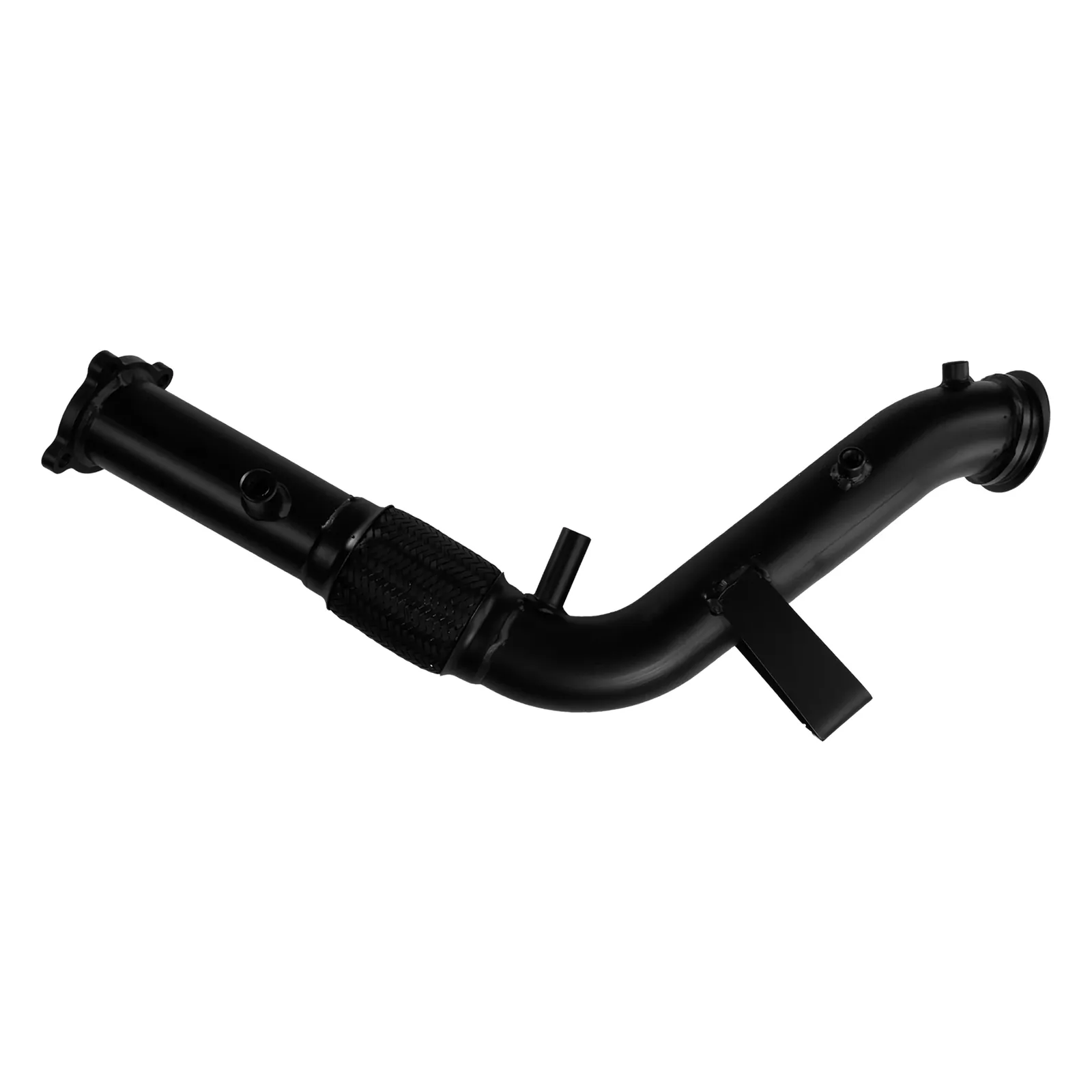
The factory system typically consists of a downpipe (containing the primary catalytic converter), a secondary catalytic converter (in some regions), a resonator designed to cancel out specific drone frequencies, and a large muffler at the rear. A "true" straight pipe removes every one of these components. In contrast, a "cat-back" straight pipe only removes the resonator and muffler, leaving the emissions equipment intact.
For older Rangers, such as the 3.0L or 4.0L V6 models, the architecture is simpler but the principles remain the same. These naturally aspirated engines rely more heavily on specific backpressure levels to maintain low-end torque. When you "straight pipe" these older units, the change in exhaust velocity is immediate and noticeable, often resulting in a much "raspier" sound compared to the deeper growl of the turbocharged modern variants.
Performance Impacts: Horsepower vs. Torque
The most common justification for a straight pipe is the pursuit of performance. By removing restrictions, the engine can theoretically expel spent gasses more efficiently. However, the results in 2026 show that the "more flow equals more power" mantra is an oversimplification.
Turbocharged 2.3L EcoBoost Dynamics
On the modern turbocharged Ranger, the turbocharger itself acts as a significant restriction and a natural muffler. Installing a straight pipe—particularly a larger diameter downpipe—reduces "pumping losses." This allows the turbo to spool up slightly faster, potentially increasing peak horsepower at high RPMs. However, without a corresponding ECU (Engine Control Unit) tune, the vehicle may not be able to capitalize on this increased flow. The factory computer is programmed for specific backpressure parameters; once those are removed, the engine may over-boost or run lean, triggering "limp mode" to protect the internals.
Naturally Aspirated V6 and I4 Engines
On older, non-turbo Rangers, a straight pipe often results in a measurable loss of low-end torque. These engines benefit from "scavenging," a process where the pulse of one exhaust gas charge helps pull the next one out of the cylinder. A wide-open straight pipe can slow down exhaust gas velocity at lower RPMs, disrupting this scavenging effect. While the truck might feel faster because it is significantly louder, dyno testing often reveals a "hollow" power band where the truck struggles to get off the line as quickly as it did with a stock or high-flow muffled system.
The Sound Profile and Cabin Experience
Sound is subjective, but the physics of a straight pipe are constant. When you remove the muffler and resonator from a Ford Ranger, you are not just increasing volume; you are changing the frequency of the exhaust note.
- The "Drone" Factor: This is the most significant drawback for daily drivers. Drone is a sustained, vibrating resonance that occurs at specific RPM ranges—usually between 2,000 and 3,000 RPM. This coincides with highway cruising speeds. A straight-piped Ranger can produce an interior hum so intense it makes conversation or listening to music difficult and can lead to driver fatigue on long trips.
- Cold Start Volume: Without a muffler, the initial high-idle period when you start the truck in the morning is exceptionally loud. In a residential neighborhood, this is frequently a source of friction with neighbors.
- Tone Quality: Small displacement four-cylinder engines, like the 2.3L EcoBoost, can sound "raspy" or "buzzy" when straight-piped. Unlike a V8, which has a rhythmic thrum, a straight-piped I4 can sound agricultural or unrefined at high RPMs.
Legal, Ethical, and Environmental Constraints
As of 2026, environmental regulations regarding vehicle modifications have become increasingly stringent. It is essential to distinguish between what is physically possible and what is legally permissible.
Federal and State Emissions Laws
In the United States, the Clean Air Act prohibits the removal or tampering with "emission control devices," which includes catalytic converters. Removing a catalytic converter for street use is a federal offense, regardless of whether your local municipality requires emissions testing. Vehicles found without catalytic converters can be impounded, and owners may face significant fines.
Noise Ordinances
Many cities have implemented decibel (dB) limits for passenger vehicles. A straight-piped Ford Ranger can easily exceed 100 dB under hard acceleration, which is well above the legal limit in most urban areas (typically 80–90 dB). Law enforcement officers often use "modified exhaust" as a primary reason for traffic stops, which can lead to "fix-it" tickets or mandatory vehicle inspections.
Technical Implementation and Materials
If you are building a dedicated off-road or track Ranger where these regulations do not apply, the quality of the installation is paramount.
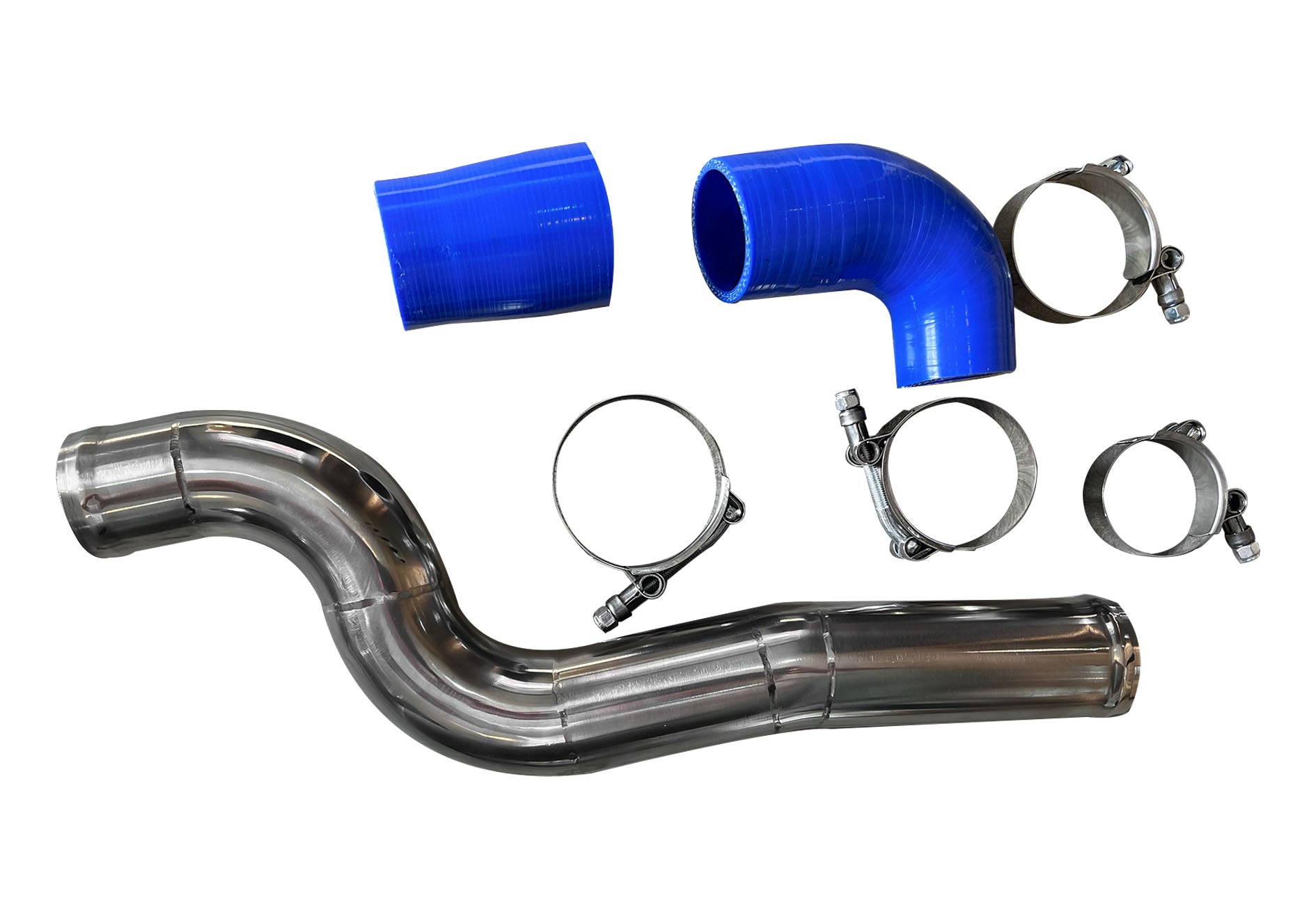
- Piping Diameter: For the 2.3L EcoBoost, a 3-inch diameter is the industry standard. Going larger (3.5 or 4 inches) on a stock turbo can actually hurt performance by dropping exhaust velocity too low. For older 3.0L V6 engines, 2.25 to 2.5 inches is usually sufficient.
- Material Choice: T304 Stainless Steel is the premium choice in 2026. It is highly resistant to corrosion and salt, making it ideal for trucks that see off-road use or winter driving. T409 Stainless is a cheaper alternative that will surface-rust but remains structurally sound. Aluminized steel is the most budget-friendly but can rot through in as little as two or three years in humid or snowy climates.
- Mounting and Vibration: Straight pipes are prone to "rattle" if not hung correctly. Because they lack the heavy dampening of a muffler, the entire pipe vibrates more aggressively. High-quality polyurethane hangers are recommended over stock rubber ones to keep the pipe secure.
Comparison: Exhaust Configurations for Ford Ranger
| Configuration | Sound Level | Performance Gain | Legality | Cabin Drone |
|---|---|---|---|---|
| Stock System | Very Quiet | N/A | Fully Legal | None |
| Cat-Back Straight Pipe | Moderate/Loud | Low (1-3 HP) | Generally Legal* | Moderate |
| Full Straight Pipe | Extremely Loud | Moderate (5-12 HP)** | Illegal for Street | Severe |
| High-Flow Performance | Aggressive/Tuned | Moderate (4-8 HP) | Usually Legal | Low/Controlled |
*Subject to local noise ordinances. **Requires ECU tuning to realize gains and avoid CEL.
Common Mistakes and Troubleshooting
One of the most frequent issues after straight piping a Ranger is the appearance of a Check Engine Light (CEL). This is usually caused by the secondary O2 sensor detecting that the catalytic converter is missing or underperforming. While "O2 spacers" exist, they are often ineffective on modern 2026-era sensors that use complex logic to monitor exhaust chemistry. The only reliable way to clear these codes is through a professional tune, which can be costly.
Another mistake is neglecting the "weeping hole." Factory mufflers often have a small hole to let condensation out. Straight pipes can accumulate moisture in low bends if the truck is only driven for short distances, potentially leading to internal corrosion even in stainless steel if the grade is low.
Frequently Asked Questions
Will a straight pipe void my Ford Ranger warranty?
Under the Magnuson-Moss Warranty Act, a manufacturer cannot void your entire warranty because of an aftermarket part. However, if the straight pipe causes a failure (e.g., an engine over-boost condition or burnt exhaust valves), Ford can legally deny coverage for those specific repairs. Additionally, any damage to the emissions system will not be covered.
Does a straight pipe improve gas mileage?
In theory, reducing backpressure can slightly improve engine efficiency. However, most drivers find their fuel economy decreases after straight piping. This is usually because the increased sound encourages more aggressive driving, and the loss of low-end torque requires the driver to stay in a lower gear or use more throttle to maintain speed.
Can I pass an emissions test with a straight pipe?
If the straight pipe removes the catalytic converter, the vehicle will fail both the visual inspection and the OBD-II tailpipe test. If you have a "cat-back" straight pipe (muffler delete only), you will likely pass emissions, provided your "Check Engine" light is not on and the vehicle meets local noise requirements.
What is the difference between a straight pipe and a muffler delete?
A "muffler delete" is a type of straight piping where only the muffler is removed and replaced with a pipe. A "full straight pipe" removes all restrictions, including the catalytic converters and resonators. The muffler delete is significantly quieter and more likely to be street-legal than a full straight pipe.
Practical Recommendation
For the majority of Ford Ranger owners in 2026, a full straight pipe is not recommended for daily street use due to legal risks, excessive drone, and the requirement for expensive ECU tuning. Instead, consider a high-flow "Cat-Back" exhaust system or a "Muffler Delete." These options provide a much-improved exhaust note and a slight performance bump while keeping the truck emissions-compliant and reducing the ear-splitting resonance that makes long drives unbearable. If you are building a dedicated trail rig or race truck, ensure you use 304 stainless steel and a professional tune to protect the engine's longevity.
Image Gallery