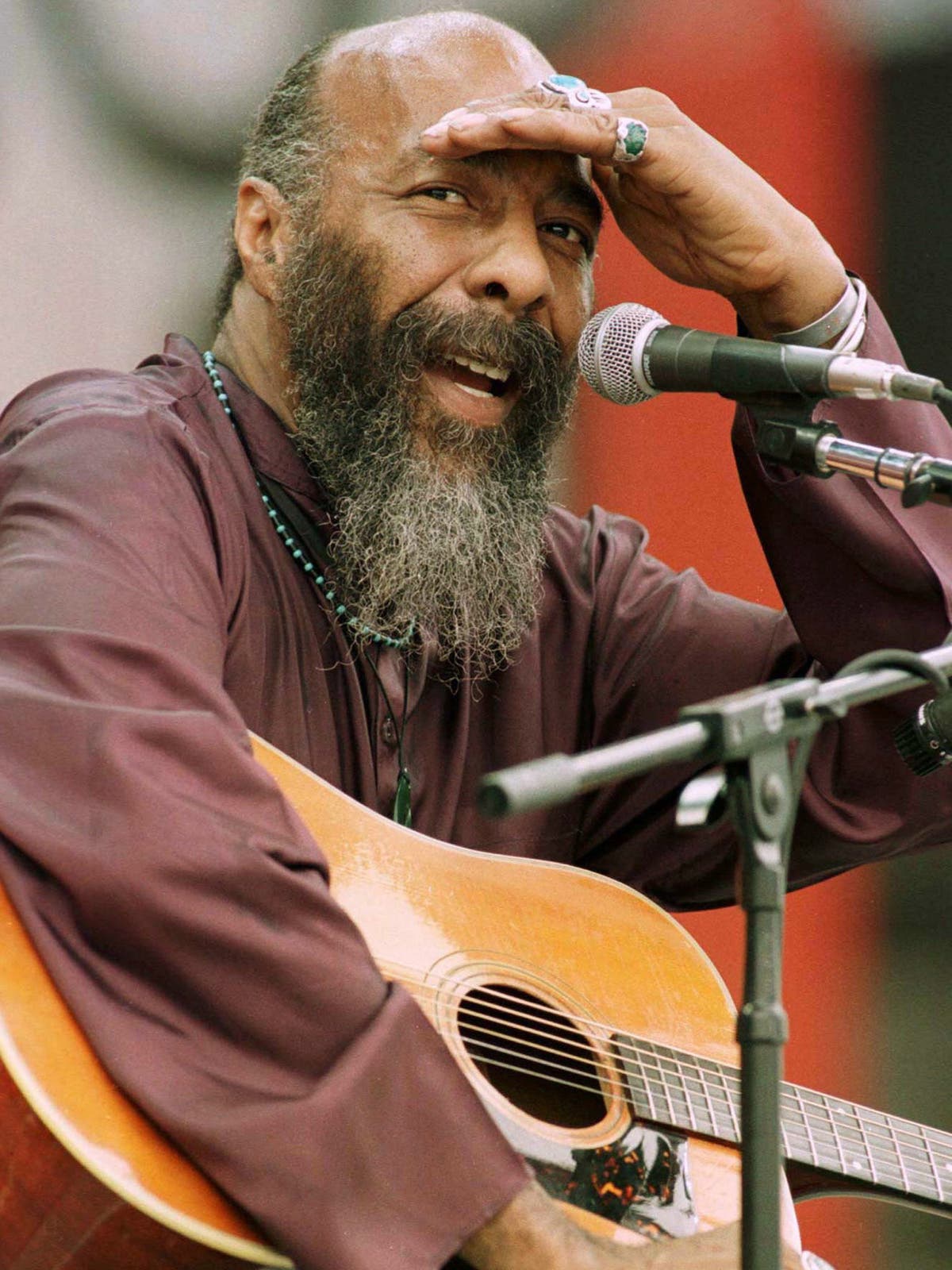
Richie Havens Net Worth at Death: The Financial Legacy of a Woodstock Legend
At the time of his death on April 22, 2013, Richie Havens had an estimated net worth of $300,000 to $500,000. While he was a foundational figure in American folk music and the iconic opening act of the 1969 Woodstock Festival, his weal...
At the time of his death on April 22, 2013, Richie Havens had an estimated net worth of $300,000 to $500,000. While he was a foundational figure in American folk music and the iconic opening act of the 1969 Woodstock Festival, his wealth was representative of a lifelong "working musician" rather than a commercial pop superstar.
Contents
Richie Havens was an artist whose value to the cultural landscape far exceeded his bank balance. Unlike the stadium-filling rock acts of his era who secured massive royalty deals and real estate empires, Havens maintained a career built on constant touring, independent spirit, and social activism. To understand his financial standing at the time of his passing, one must look beyond the "Freedom" performance at Woodstock and analyze the economics of the folk music industry, the challenges of independent label ownership, and the shifts in the music business over his five-decade career.
The Financial Reality of a Folk Icon
For many observers, it is surprising that a man whose voice defined a generation at Woodstock did not leave behind a multi-million-dollar estate. However, the folk-rock genre of the late 1960s and early 1970s operated on significantly tighter margins than the burgeoning hard rock and pop scenes. Havens was primarily an interpreter of songs and a soulful performer; while he did write original material, he did not hold the massive publishing catalogs associated with contemporaries like Bob Dylan or Paul Simon.
In the music industry, the bulk of long-term wealth is generated through "mechanical royalties" (songwriting) and "performance royalties" (radio play). Because Havens often covered songs by The Beatles, Bob Dylan, and others, a significant portion of the royalties generated by his recordings flowed back to the original songwriters. His financial stability was therefore dependent on his ability to perform live—a task he performed with legendary consistency until his health began to decline in the years leading up to 2013.
Woodstock 1969: A Career-Defining Moment with Limited Payoff
The 1969 Woodstock Music & Art Fair is the event most synonymous with Richie Havens. Due to logistical delays involving other performers, Havens was asked to open the festival and ended up performing for nearly three hours. His improvised version of "Motherless Child," which became "Freedom," became a global anthem.
Despite the historical magnitude of this performance, the immediate financial reward was modest. In 1969, Havens was paid roughly $6,000 for his Woodstock appearance—a respectable sum at the time, but not a life-changing windfall. While the subsequent Woodstock movie and soundtrack provided him with lifelong visibility and a steady stream of smaller royalty checks, the "Woodstock legend" status primarily served as a marketing tool for his live concert bookings for the next 40 years. It ensured he could always fill a mid-sized theater or headline a folk festival, but it did not translate into the tens of millions of dollars seen by the era's guitar gods.
Discography and the Business of Independent Labels
Throughout his career, Richie Havens released over 25 albums. His early success with Verve Forecast, including the breakthrough album Mixed Bag (1966), established his unique rhythmic guitar style and gravelly baritone. However, Havens was an early pioneer of artistic independence, which came with its own financial risks.
In the early 1970s, he founded his own record label, Stormy Forest. While owning a label allows an artist to keep a larger percentage of the profits, it also requires them to shoulder the costs of production, distribution, and marketing.
- Revenue Control: Havens gained more control over his creative output and a higher per-unit royalty than he would have at a major label.
- Overhead Costs: Maintaining an independent label in the pre-digital era was expensive. Marketing and physical distribution often ate into the margins of even successful folk records.
- Market Shifts: As the 1970s progressed into the 1980s, the market for acoustic folk music contracted significantly, making it harder for independent labels like Stormy Forest to compete with the heavy-spending major labels of the "MTV era."
The "Havens Rhythm" and Intellectual Property
Richie Havens’ wealth was also tied to his unique technical contribution to music. He was known for his idiosyncratic guitar tuning (Open D) and his aggressive, percussive thumb-chord technique. While this made him a "musician's musician," such technical innovations are difficult to monetize through traditional intellectual property channels.
Unlike a songwriter who can license a melody, a performer with a unique style primarily earns through the demonstration of that style. Havens remained a sought-after collaborator and session guest, contributing to projects ranging from Peter Gabriel’s Us to Groove Armada’s Goodbye Country (Hello Nightclub). These guest appearances provided "work-for-hire" income but rarely resulted in long-term equity or substantial back-end royalties.
Professional Diversification: Acting and Voiceovers
One often overlooked aspect of Richie Havens' net worth was his work outside the recording studio. To maintain a stable income during the leaner years of the folk industry, Havens diversified into acting and commercial voiceovers.
- Film and Stage: He appeared in several films, including the 1972 original production of The Who's Tommy and the 1977 film Greased Lightning alongside Richard Pryor. These roles provided significant lump-sum payments that helped bolster his savings.
- Commercials: Havens’ distinctive, authoritative voice was a valuable asset in the advertising world. He recorded voiceovers for numerous brands, providing a steady stream of residual income that supplemented his touring earnings.
- Public Speaking: In his later years, Havens was often invited to speak at universities and environmental conferences, further diversifying his revenue streams beyond just ticket sales.
Touring: The Primary Revenue Engine
Until his retirement from touring in 2012 due to health issues, Havens was a tireless performer. For a folk artist of his stature, the "road" was the primary source of liquidity. His net worth at death was largely a reflection of a career spent on the road, where a successful year could see him grossing several hundred thousand dollars in ticket sales and merchandise, though travel expenses, management fees, and taxes would significantly reduce the net take-home pay.
By the time he passed in 2013, his estate included the rights to his later-career recordings, his personal collection of vintage Guild guitars (which have significant value to collectors), and his modest personal holdings. He lived a relatively quiet life in Jersey City, New Jersey, eschewing the opulent lifestyle of the "rock star" archetype.
Comparing Richie Havens’ Wealth and Context
To understand where Havens stood financially, it is helpful to compare the economic outcomes of different types of 1960s musical icons.
| Artist Type | Example Contemporaries | Estimated Wealth Bracket | Primary Income Source |
|---|---|---|---|
| Folk/Acoustic Interpreter | Richie Havens, Odetta | $300k – $2M | Touring & Session Work |
| Major Songwriter/Icon | Bob Dylan, Neil Young | $200M – $500M | Publishing & Catalog Sales |
| Rock Band Leader | Pete Townshend, Jimmy Page | $100M – $250M | Stadium Tours & Royalties |
| Pop/Crossover Star | Paul Simon, James Taylor | $80M – $150M | High-Volume Record Sales |
FAQs
What was Richie Havens' highest-charting song?
Richie Havens’ most successful commercial single was his 1971 cover of George Harrison's "Here Comes the Sun," which reached number 16 on the Billboard Hot 100. This recording provided a consistent source of royalty income throughout his life, as it remained a staple of classic rock and "oldies" radio.
Did Richie Havens own the rights to the song "Freedom"?
"Freedom" was largely an improvisation based on the spiritual "Motherless Child." While Havens was credited as a writer and performer on the Woodstock recordings, the nature of the song (partly public domain, partly improvised) meant that the publishing rights were not as lucrative as a standard pop composition. Most of the revenue from "Freedom" came from the performance royalties of the Woodstock film and soundtrack.
Why was his net worth lower than other Woodstock stars?
Unlike stars like Jimi Hendrix or Santana, Havens did not have a string of multi-platinum studio albums. His impact was more cultural and performative than commercial. Furthermore, Havens spent a significant portion of his income on environmental activism and educational programs, such as the North Wind Undersea Institute, which he co-founded.
Did Richie Havens' estate gain value after his death?
Commonly referred to as the "death boost," many artists see an increase in sales following their passing. However, because Havens was an independent artist and a folk singer, the spike was modest. His estate continues to manage his back catalog and likeness, ensuring his legacy remains intact for new generations of folk enthusiasts.
What happened to Richie Havens' ashes?
In a final tribute to the event that defined his public life, Richie Havens' ashes were scattered from the air over the site of the original 1969 Woodstock festival (now the Bethel Woods Center for the Arts) on August 18, 2013. This event was a public memorial rather than a private financial matter, emphasizing his role as a spiritual figurehead of the "Woodstock Nation."
Final Considerations for Researchers
When evaluating the net worth of a figure like Richie Havens, it is essential to distinguish between commercial net worth and cultural capital. Financially, Havens was a middle-class professional within the music industry—a man who worked hard for his earnings and managed them well enough to live comfortably. Culturally, his "net worth" is immeasurable, as his contributions to the Civil Rights movement, environmentalism, and the evolution of the acoustic guitar continue to influence artists in 2026 and beyond. For those studying his estate, the focus should remain on the enduring value of his recordings and his pioneering model of musical independence.
Image Gallery