Navigating Vet Tech Schools in Pittsburgh: A Comprehensive Guide for 2026
Choosing a veterinary technician program in Pittsburgh requires evaluating AVMA accreditation, clinical rotation access, and VTNE success rates. Local options like the Vet Tech Institute and the Community College of Allegheny County of...
Choosing a veterinary technician program in Pittsburgh requires evaluating AVMA accreditation, clinical rotation access, and VTNE success rates. Local options like the Vet Tech Institute and the Community College of Allegheny County offer specialized pathways to certification. Prospective students must balance tuition costs against starting salaries in Western Pennsylvania’s growing animal healthcare sector.
Contents
Becoming a Certified Veterinary Technician (CVT) in Pittsburgh is a rewarding but rigorous journey. As of 2026, the demand for skilled veterinary professionals in the Greater Pittsburgh Area continues to climb, driven by the expansion of specialty emergency centers and a robust network of local clinics. However, not all educational paths are equal. To ensure your investment leads to licensure and a sustainable career, you must look beyond the brochures and analyze the technical and logistical foundations of each program.
Understanding the Role and Certification in Pennsylvania
In Pennsylvania, the distinction between a veterinary assistant and a veterinary technician is governed by the state’s Veterinary Practice Act. While an assistant may perform basic restraint and cleaning, a Certified Veterinary Technician (CVT) is authorized to perform advanced medical tasks, such as inducing anesthesia, performing dental extractions (under supervision), and administering vaccines.
To earn the "Certified" title in Pennsylvania, you must graduate from a program accredited by the American Veterinary Medical Association (AVMA) and pass the Veterinary Technician National Exam (VTNE). When researching schools in Pittsburgh, your first question should always be regarding their accreditation status. Attending a non-accredited school may prevent you from sitting for the board exams, rendering your degree less effective for clinical practice.
The Pennsylvania State Board of Veterinary Medicine oversees licensure. In 2026, the board continues to emphasize continuing education (CE) requirements for license renewal every two years. This means your choice of school should not just prepare you for your first day on the job, but provide the theoretical foundation needed for lifelong learning in the field.
Top Veterinary Technician Programs in Pittsburgh
Pittsburgh offers two primary brick-and-mortar pathways for veterinary technology. Each serves a different type of student based on their learning style, budget, and timeline.
Vet Tech Institute (VTI)
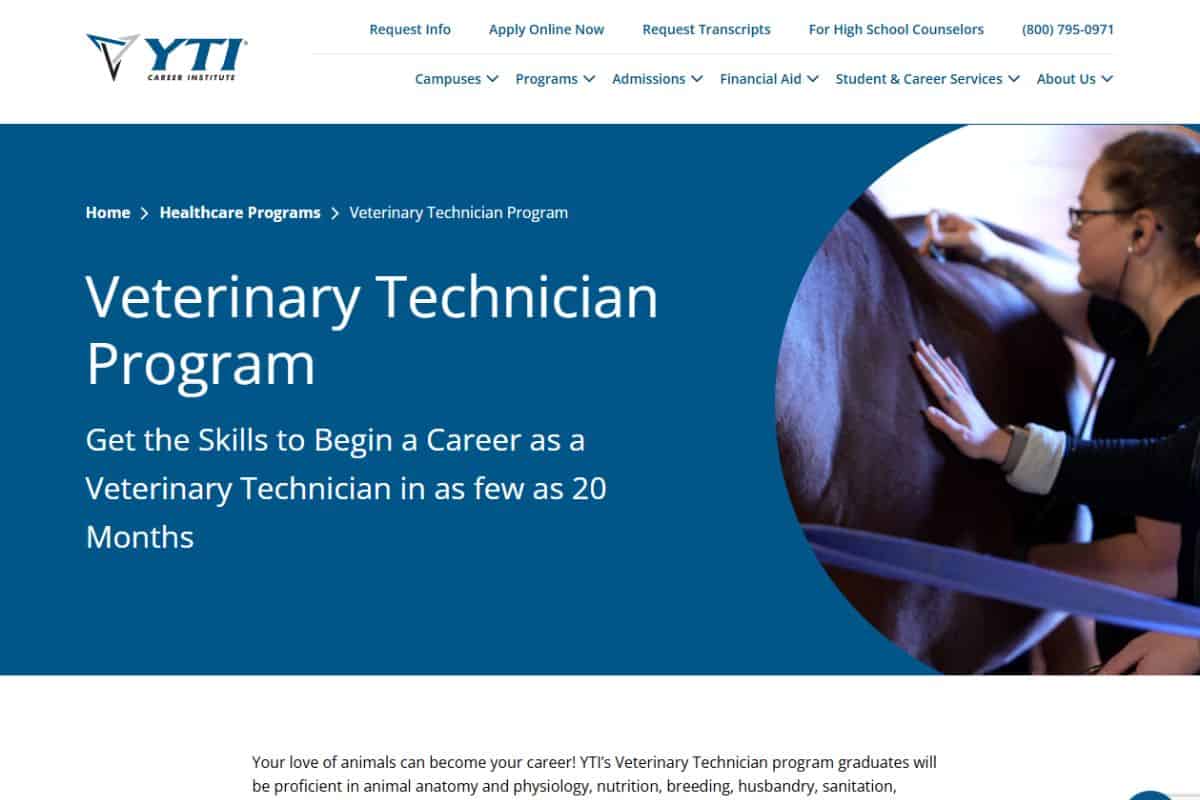
Located in the heart of downtown Pittsburgh, the Vet Tech Institute offers an accelerated, 18-month program leading to an Associate in Specialized Technology degree. VTI is a private institution that caters to students who want an immersive, fast-paced environment.
- Clinical Focus: VTI maintains an on-site kennel where students are responsible for the daily care of animals, providing immediate hands-on experience.
- Speed to Market: The compressed schedule allows students to enter the workforce faster than traditional two-year programs.
- Career Services: Because it is a specialized school, its career placement office has deep ties with local clinics like BluePearl and VCA hospitals.
Community College of Allegheny County (CCAC)
The CCAC program, typically hosted at the Boyce Campus in Monroeville, offers an Associate of Science in Veterinary Technology. As a public institution, it is often the more affordable route, though it is highly competitive.
- Academic Rigor: CCAC’s curriculum is known for its strong scientific foundation, often requiring prerequisites in chemistry and biology before formal entry into the vet tech sequence.
- Flexibility: While still demanding, the community college environment can sometimes offer more flexible scheduling compared to the rigid cohort model of private institutes.
- Accreditation Status: CCAC maintains full AVMA accreditation, ensuring its graduates are eligible for the VTNE.
Key Factors to Consider When Evaluating Schools
Beyond the name of the school, several technical and practical metrics should influence your decision.
1. VTNE Pass Rates
The Veterinary Technician National Exam (VTNE) is the benchmark for success. Schools are required to publish their three-year average pass rates. A high pass rate (typically 80% or higher) indicates that the curriculum effectively covers the nine primary domains of veterinary technology, including pharmacology, surgical nursing, and laboratory procedures. If a school in Pittsburgh is hesitant to share these numbers, it is a significant red flag.
2. Faculty Credentials and Ratio
In a technical field, the quality of instruction is paramount. Look for programs where a significant portion of the faculty are Licensed Veterinarians (DVMs) and experienced CVTs. In 2026, the best programs maintain a low student-to-teacher ratio in lab settings—ideally no more than 10 students per instructor—to ensure safety and proper technique when handling animals and medical equipment.
3. Clinical Rotation and Internship Quality
Your "externship" or clinical rotation is where you bridge the gap between classroom theory and real-world practice. Pittsburgh is home to some of the most advanced veterinary facilities in the country, such as the Pittsburgh Veterinary Specialty & Emergency Center (PVSEC). Ask the school:
- Which clinics do you partner with for internships?
- Are students responsible for finding their own placement, or does the school coordinate it?
- Do the rotations include exposure to large animals (equine/bovine) and exotic species?
4. On-Site Facilities
A reputable program must have modern diagnostic equipment. This includes digital radiography (X-ray), ultrasound, anesthetic monitoring machines, and a fully equipped clinical pathology lab. During your campus tour, observe whether the equipment looks well-maintained and if it mirrors what is currently used in modern veterinary practice.
The Financial Reality: Costs vs. Earnings in 2026
Veterinary technology is a labor of love, but it must also be financially viable. In 2026, the cost of an associate degree in this field in Pittsburgh can range from $12,000 to $35,000, depending on whether you choose a public or private institution.
| Feature | Community College (CCAC) | Private Institute (VTI) |
|---|---|---|
| Duration | 2 Years (4-5 semesters) | 18 Months (fast-track) |
| Estimated Tuition | $12,000 - $16,000 (In-county) | $28,000 - $34,000 |
| Degree Earned | Associate of Science (AS) | Assoc. in Specialized Tech (AST) |
| Class Schedule | Traditional Semester | Year-round / Compressed |
| Hands-on Lab | Heavy emphasis on science | Heavy emphasis on clinical skills |
While the private route is more expensive, some students find the shorter duration allows them to start earning a salary sooner, which can offset the higher tuition. However, CCAC remains the gold standard for those looking to minimize student debt. According to 2026 labor data for Western Pennsylvania, entry-level CVTs can expect to earn between $42,000 and $55,000 annually, with higher pay scales in emergency and specialty surgery centers.
Application Prerequisites and Timeline
Entrance into these programs is rarely "open enrollment." Because of the high demand and the physical limitations of lab spaces, most Pittsburgh schools require a formal application process.
- Academic Prerequisites: Most programs require a "C" or better in high school or college-level biology and chemistry.
- Observation Hours: It is highly recommended (and sometimes required) to document 20–40 hours of shadowing at a veterinary clinic. This ensures you understand the physical and emotional demands of the job—such as standing for long periods, lifting animals, and dealing with end-of-life care.
- Deadlines: CCAC often has a spring deadline for fall admission. VTI operates on a rolling basis but fills its cohorts months in advance.
The Pittsburgh Job Market for CVTs
Pittsburgh’s veterinary landscape is diverse. Beyond general practice, the city offers unique opportunities in:
- Shelter Medicine: Working with organizations like Humane Animal Rescue of Pittsburgh or Animal Friends.
- Research: Institutions like the University of Pittsburgh and Carnegie Mellon University employ CVTs in laboratory animal medicine.
- Specialty Care: BluePearl Specialty and Emergency Pet Hospital provides high-level care in oncology, cardiology, and neurology, which often pays a premium for skilled technicians.
Frequently Asked Questions
How long does it take to become a vet tech in Pittsburgh?
Typically, it takes between 18 months and two years to earn an associate degree. Following graduation, you must schedule and pass the VTNE. Most students in Pittsburgh complete the entire process—from starting school to receiving their state certification—in approximately 2.5 years.
Is CCAC better than VTI?
Neither is objectively "better," as they serve different needs. CCAC is more affordable and offers a traditional academic pace, which is excellent for students planning to eventually pursue a bachelor's degree or vet school. VTI is designed for those who want to focus almost exclusively on technical skills and enter the workforce as quickly as possible.
Can I work while attending vet tech school?
It is possible but challenging. Both programs require significant time for labs and "kennel duty" (caring for school animals on weekends or early mornings). Students are generally advised to keep outside work to under 20 hours per week to maintain the necessary GPA for graduation.
What is the difference between a vet tech and a vet assistant?
A vet tech has graduated from an accredited 2-year program and passed a national exam; they are licensed by the Pennsylvania State Board of Veterinary Medicine. An assistant usually has a certificate or on-the-job training and is legally restricted from performing certain medical tasks.
Are there online vet tech schools available for Pittsburgh residents?
Yes, programs like Penn Foster or Purdue University offer online AVMA-accredited degrees. However, online students must still secure a local "clinical site" in Pittsburgh to complete their hands-on requirements. Many students find that local brick-and-mortar schools provide better networking and immediate access to equipment.
Practical Recommendation
If you are considering a career as a veterinary technician in Pittsburgh, your first step should be to schedule a shadow day at a local clinic. This will give you a realistic view of the daily responsibilities and help you decide if the investment in schooling is right for you.
Once you are committed, attend an open house at both CCAC and VTI. Compare their financial aid packages and, most importantly, ask for their latest VTNE pass rates. Choosing a program with a strong track record of board exam success is the single most important factor in ensuring you can practice as a CVT in 2026 and beyond.
Image Gallery