Why the Community Degree Matters in Urban Design: Bridging People and Place
A community degree in urban design—such as a degree in community planning, community development, or urban studies from regional institutions and community colleges—matters because it grounds spatial development in lived human experien...
A community degree in urban design—such as a degree in community planning, community development, or urban studies from regional institutions and community colleges—matters because it grounds spatial development in lived human experience. Unlike traditional top-down architectural design, community-focused programs equip planners with participatory tools, local policy knowledge, and equity-driven frameworks necessary to build resilient, accessible cities.
Contents
Defining the Community Degree in the Built Environment Context
In the field of urban design and spatial planning, a "community degree" refers to higher education credentials—ranging from Associate degrees at community colleges to specialized Bachelor’s and Master’s degrees in Community Planning, Community Development, or Urban and Community Studies. These degree programs differ fundamentally from classical architecture or abstract urban economics degrees by placing local populations, socio-economic equity, and civic participation at the center of the design process.
Historically, urban design was dominated by physical master-planning approaches that treated cities primarily as collections of buildings, transit corridors, and zoning districts. While structural engineering and aesthetic form remain vital, this top-down tradition frequently neglected the social fabric, cultural heritage, and micro-economics of existing neighborhoods. The rise of community-centered degree programs emerged directly to address this gap, training practitioners who understand that physical interventions cannot be separated from social outcomes.
Types of Community-Focused Urban Design Programs
Academic institutions structure community-focused urban design credentials across several tiers:
- Associate of Science (A.S.) / Associate of Applied Science (A.A.S.) in Urban Studies or Built Environment: Offered predominantly by community colleges, these two-year programs provide foundational skills in Computer-Aided Design (CAD), Geographic Information Systems (GIS), basic zoning, and civic administration. They serve as critical entry points for diverse, non-traditional students entering municipal government or transferring to four-year institutions.
- Bachelor of Arts (B.A.) / Bachelor of Science (B.S.) in Community Development or Urban & Regional Planning: These four-year undergraduate degrees blend spatial design courses with sociology, public policy, local economic development, and environmental justice.
- Master of Community Planning (M.C.P.) or Master of Urban and Community Design: Graduate-level degrees accredited by bodies such as the Planning Accreditation Board (PAB) that prepare professionals to direct public agencies, manage complex community development corporations (CDCs), or lead participatory design consulting practices.
Key Reasons Why Community Degrees Drive Better Urban Outcomes
- Traditional Top-Down Design
- Focus: Physical Form & Blueprint Grid
- Primary Actor: External Design Expert
- Outcome: Risk of Displacement/Mismatch
- Community-Centered Design
- Focus: Social Fabric & Micro-Context
- Primary Actor: Resident & Co-Designer
- Outcome: Sustainable, Inclusive Growth
The integration of community degree graduates into urban design teams fundamentally shifts how projects are conceived, executed, and maintained. Rather than imposing blueprint solutions onto a neighborhood, designers with community-focused training apply methodologies that ensure projects serve existing residents.
Grounding Spatial Design in Social and Economic Equity
Urban interventions carry major consequences for housing affordability, commercial rents, and displacement risks. Practitioners trained in community-focused programs undergo rigorous instruction in environmental justice, anti-displacement strategies, and equitable zoning. They learn to evaluate spatial plans not merely by visual aesthetics or vehicle throughput, but by metrics such as:
- Affordability Preservation: Ensuring transit-oriented developments include permanently affordable housing units.
- Spatial Access: Reducing physical barriers between lower-income neighborhoods and essential services, such as healthcare, healthy food, and high-frequency transit.
- Cultural Preservation: Designing public spaces that celebrate local ethnic, historic, and social identity rather than sanitizing public realms for speculative real estate interests.
Fostering Meaningful Civic Engagement and Co-Design
A common failure in contemporary urban redevelopment is superficial public consultation—often limited to mandatory, late-stage public hearings where residents are presented with fully rendered plans they cannot meaningfully change.
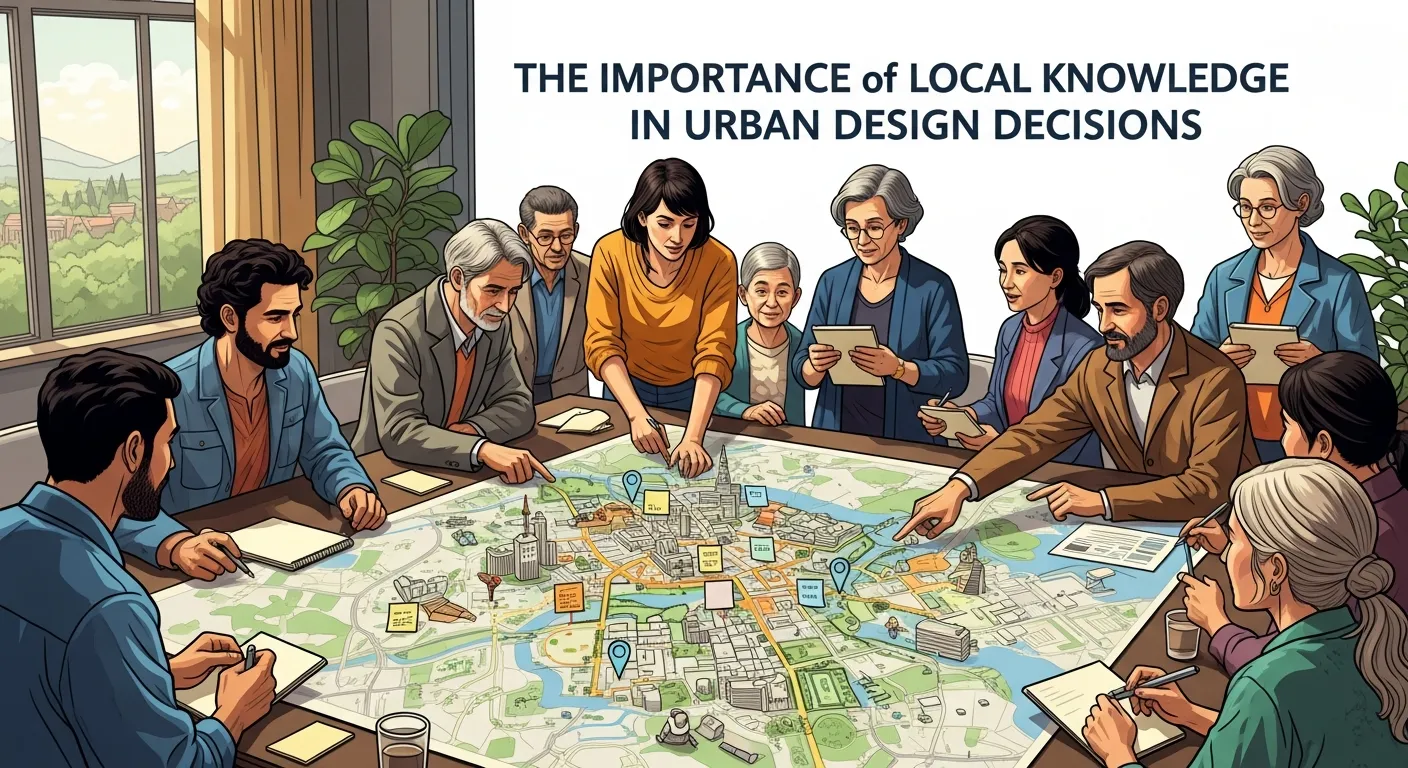
Graduates with community degrees are explicitly trained in participatory action research (PAR) and co-design workshop facilitation. They know how to structure design charrettes, participatory budgeting exercises, and multilingual community workshops early in the site-conception phase. This collaborative methodology turns community members into co-creators of their built environment, which significantly reduces project friction, litigation, and community backlash during entitlement phases.
Enhancing Local Economic and Climate Resilience
Urban resilience depends heavily on hyper-local adaptation. Community planning curricula emphasize micro-scale economic interventions—such as micro-retail incubators, community land trusts (CLTs), and green infrastructure tailored to local microclimates. Designers with this educational background are better equipped to implement decentralized storm-water management, urban canopy expansion, and localized clean-energy microgrids that account for how neighborhood residents actually use public and private land.
Core Educational Curriculum and Skillsets
The academic curriculum of a community-focused urban design degree is interdisciplinary, bridging hard technical proficiencies with soft human-facilitation skills.
| Technical Skills | Social & Policy Skills |
|---|---|
| Spatial Analysis (GIS) | Community Facilitation & Charrettes |
| Site Planning & CAD | Affordable Housing Policy |
| Environmental Impact Mapping | Local Economic Development & CDCs |
| Graphic & Visual Communication | Land Use Law & Zoning Code Analysis |
Technical Proficiencies
- Geographic Information Systems (GIS): Spatial mapping software used to analyze demographic shifts, heat-island impacts, transit deserts, and land-use patterns.
- Site Planning and Visualization: Proficiency in tools like SketchUp, AutoCAD, or ArcGIS Urban to model proposed density, shadowing, and pedestrian flows.
- Demographic and Statistical Analysis: Quantitative research methods to interpret Census data, housing supply trends, and economic displacement indicators.
Policy and Social Methodologies
- Land Use Law and Zoning Reform: Understanding municipal codes, form-based codes, inclusionary zoning ordinance mechanics, and variances.
- Qualitative Field Research: Conducting structured interviews, ethnographic observation, and neighborhood survey design to capture lived spatial experiences.
- Grant Writing and Project Finance: Navigating federal funding mechanisms, Low-Income Housing Tax Credits (LIHTC), state infrastructure grants, and philanthropic capital for local improvement districts.
Comparing Community Design Degrees to Traditional Architecture and Planning Paths
To understand the specific value proposition of a community degree, it is helpful to contrast its focus, methodology, and typical project outcomes with traditional degrees in Architecture or Urban Planning.
| Dimension | Community Degree (Urban Studies / Community Development) | Traditional Architecture (B.Arch / M.Arch) | Traditional Urban Planning (M.U.P.) |
|---|---|---|---|
| Primary Focus | Human-centered spatial justice, local policy, and public process | Physical building structures, aesthetics, and building systems | Macro-scale land use, regional transportation, and economic policy |
| Core Methodology | Participatory co-design, qualitative surveys, neighborhood-scale GIS | Structural modeling, parametric design, physical drafting | Demographic forecasting, regional zoning models, traffic engineering |
| Primary Stakeholder | Local residents, neighborhood groups, non-profits, CDCs | Private developers, corporate clients, institutional owners | Municipal leadership, regional transit agencies, state governments |
| Engagement Phase | Early pre-design, visioning, and post-occupancy evaluation | Schematic design through construction administration | Policy formulation, entitlement, and regulatory review |
| Key Output | Community-driven master plans, land trusts, adaptive reuse strategies | Building blueprints, structural specifications, construction documents | Zoning codes, long-range comprehensive plans, environmental impact reports |
Career Pathways and Professional Value in the Industry
As cities face compound crises around housing supply, climate adaptation, and infrastructure equity, demand for professionals who possess both technical spatial skills and community engagement competencies has expanded across multiple sectors.
- Public Sector
- Municipal Planner
- Zoning Administrator
- Equity Officer
- Private & Consulting
- Urban Design Associate
- Community Outreach Lead
- Engagement Consultant
- Non-Profit & CDC
- Housing Director
- CDC Executive Director
- Land Trust Manager
1. Municipal and Regional Government
Local planning departments increasingly hire community degree graduates for roles such as Neighborhood Planner, Community Engagement Coordinator, or Equity Specialist. These professionals act as the vital link between city council mandates and community members, preventing the alienation that often occurs during major re-zoning initiatives.
2. Private Urban Design and Architecture Firms
Private consulting practices recognize that project delays frequently stem from community opposition and regulatory friction. By employing design staff with formal training in community facilitation and socio-spatial dynamics, firms can conduct authentic stakeholder workshops early in the design cycle, leading to smoother approval processes and more context-sensitive designs.
3. Community Development Corporations (CDCs) and Non-Profits
Non-profit housing developers, park conservancies, and neighborhood advocacy groups regularly employ community degree graduates to lead land-acquisition strategies, manage community land trusts (CLTs), and orchestrate neighborhood-led infrastructure projects.
Accessible Educational Pathways and Diversity in the Field
One of the most consequential aspects of community degrees—particularly those offered through community colleges and regional public universities—is their role in diversifying the design professions.
Historically, degrees in architecture and urban planning have carried high tuition costs, lengthy degree cycles, and uncompensated studio hours, creating systemic barriers for lower-income students and underrepresented communities. Community college pathways (such as an A.A.S. in Sustainable Urban Design or Built Environment Studies) provide an affordable entry point.
By creating seamless credit transfer agreements (articulation agreements) with four-year universities offering accredited urban planning degrees, community degrees lower financial barriers to entry. This ensures that the people designing future neighborhoods often come from the very communities most impacted by urban development decisions.
Practical Steps to Pursue or Integrate a Community Degree
For prospective students, mid-career professionals, or municipal leaders looking to leverage community-centered design education, the following strategic actions are recommended:
For Prospective Students
- Evaluate Accreditation and Credit Transfer: If starting at a community college, confirm that course credits transfer directly to programs accredited by the Planning Accreditation Board (PAB).
- Look for Applied Fieldwork: Prioritize programs that incorporate real-world studio projects, internships with local Community Development Corporations, or active municipal partnerships.
- Build a Dual Portfolio: Ensure your student work showcases both spatial technical skills (GIS maps, site plans, zoning analysis) and process-oriented outcomes (workshop summaries, policy briefs, participatory design guides).
For Municipalities and Firm Leadership
- Revise Hiring Requirements: Expand job descriptions for entry-level planning and design roles to explicitly recognize community development and urban studies degrees alongside traditional architecture or civil engineering backgrounds.
- Partner with Local Community Colleges: Create internship pipelines and co-op programs with regional institutions offering built-environment associate degrees to cultivate local planning talent.
Frequently Asked Questions
What is the difference between urban planning and community development degrees?
Urban planning focuses heavily on macro-level policy, regional transportation networks, environmental regulation, and municipal land-use codes. Community development degrees focus primarily on micro-level spatial strategy, neighborhood-scale economic equity, affordable housing, and direct civic engagement techniques.
Can you work as an urban designer with an Associate degree in community planning?
Yes. An Associate degree in urban studies or community planning qualifies graduates for entry-level technical roles such as GIS technician, planning assistant, zoning code inspector, or junior graphics specialist. Many practitioners work in these roles while pursuing a Bachelor’s or Master’s degree to unlock senior licensure and management opportunities.
Why do traditional architecture programs often lack community engagement training?
Traditional architecture programs primarily focus on structural engineering, building systems, aesthetic theory, spatial composition, and code compliance for individual structures. Because their historic focus is the discrete building rather than the surrounding socio-spatial ecosystem, community outreach and participatory planning are often left to specialized planning or community development programs.
How does a community degree impact project timelines for developers?
Projects that incorporate community-focused design principles early often experience fewer public opposition delays, lower litigation risks during environmental reviews, and faster entitlement approvals from planning commissions because neighborhood concerns are addressed during the initial design phase rather than during formal public protests.
Are online community urban design degrees recognized by employers?
Online degrees from regionally accredited public universities and programs recognized by relevant planning associations carry equal weight with employers. It is critical to ensure that online options still include practical field components, GIS software training, and local capstone projects.
Image Gallery