Understanding What Constitutes Total Net Worth in Finance
Total net worth is a comprehensive measure of financial health, representing the specific dollar value that remains after subtracting all liabilities from the fair market value of all owned assets. It serves as a definitive snapshot of...
Total net worth is a comprehensive measure of financial health, representing the specific dollar value that remains after subtracting all liabilities from the fair market value of all owned assets. It serves as a definitive snapshot of an individual’s or entity’s economic standing, effectively quantifying what would be left if all debts were paid immediately using existing resources.
Contents
The Foundational Equation of Financial Health
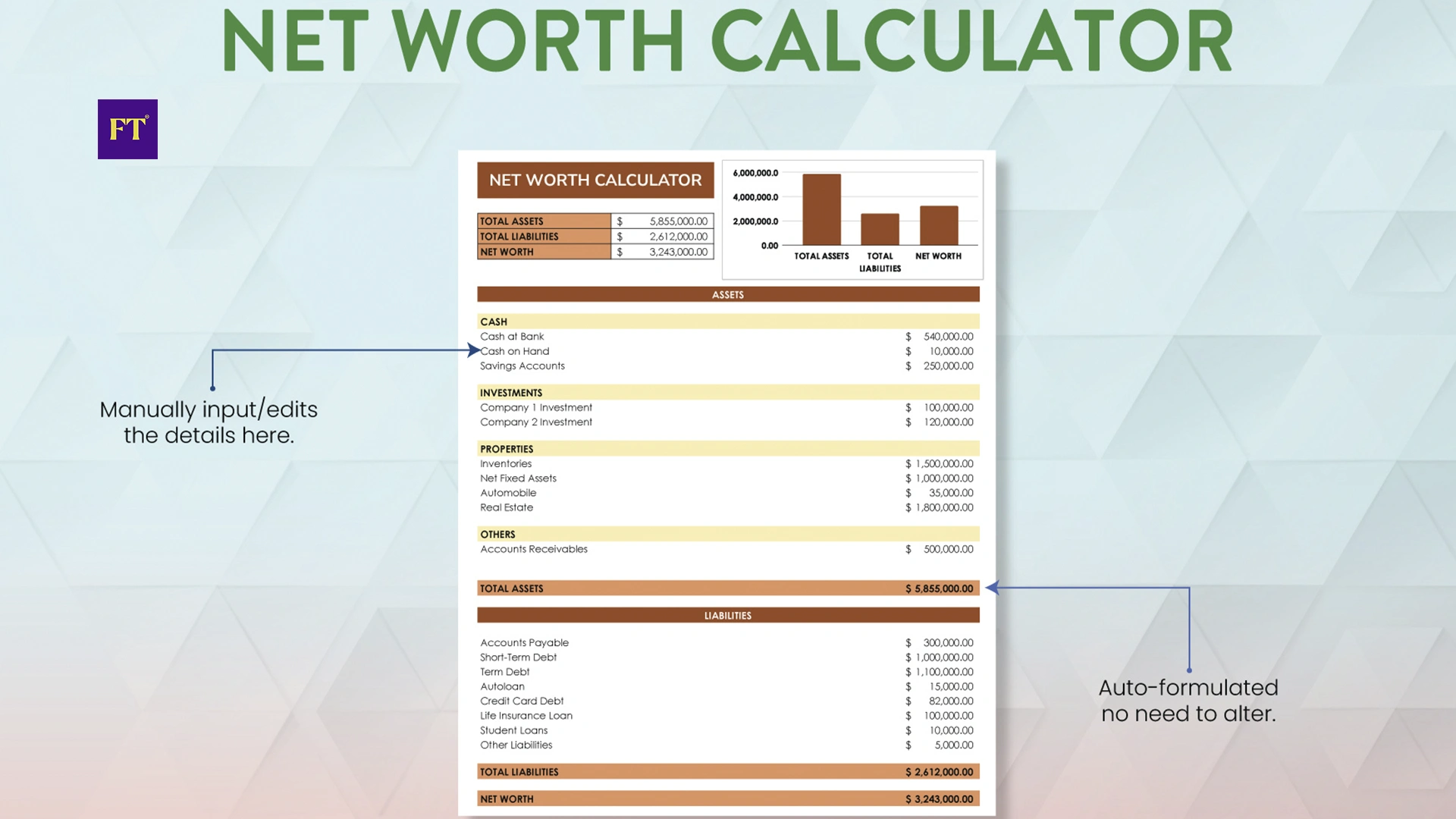
In the world of finance, net worth is the ultimate scorecard. Whether applied to a household, a high-net-worth individual (HNWI), or a multi-national corporation, the formula remains constant: Total Assets - Total Liabilities = Net Worth. While the formula is simple, the complexity lies in accurately identifying, valuing, and categorizing the components within those two primary pillars.
As of 2026, financial transparency and digital asset integration have made tracking net worth more precise, yet the volatility of global markets requires a disciplined approach to valuation. Understanding what constitutes total net worth is not merely an academic exercise; it is a prerequisite for estate planning, securing high-value credit facilities, and determining retirement readiness.
Identifying the Asset Pillar
Assets are resources with economic value that an individual or corporation owns or controls with the expectation that they will provide a future benefit. When calculating total net worth, assets are typically categorized by their liquidity—how quickly they can be converted into cash without significant loss of value.
Liquid and Cash Equivalent Assets
These are the most accessible forms of wealth. They provide the necessary "buffer" for financial stability and are recorded at their current face value.
- Cash and Savings: This includes physical currency, checking accounts, high-yield savings accounts, and certificates of deposit (CDs).
- Money Market Accounts: These offer higher interest rates than standard savings and are considered near-cash.
- Treasury Bills: Short-term government securities that are highly liquid and low-risk.
Invested Assets and Marketable Securities
Investment assets represent wealth positioned for growth or income generation. In 2026, these often include a mix of traditional and digital vehicles.
- Equities (Stocks): Ownership shares in public or private companies. For net worth purposes, public stocks are valued at their current market price.
- Fixed-Income (Bonds): Debt instruments issued by governments or corporations.
- Retirement Accounts: 401(k)s, IRAs, and pension valuations. It is important to note that while these are assets, they often carry "embedded" tax liabilities that some conservative analysts subtract when calculating "after-tax net worth."
- Mutual Funds and ETFs: Pooled investment vehicles that track various sectors or indices.
- Digital Assets: Verified holdings in cryptocurrency, tokenized securities, and other blockchain-based assets that have a determinable market value.
Real Estate and Physical Property
For many individuals, real estate constitutes the largest portion of their total net worth.
- Primary Residence: The market value of the home where the owner resides.
- Investment Properties: Rental units, commercial spaces, or undeveloped land.
- Personal Property: High-value items such as vehicles, jewelry, collectibles (art, rare coins), and specialized equipment. While these are part of total net worth, they are often depreciating assets and should be valued conservatively.
Identifying the Liability Pillar
Liabilities are financial obligations or debts owed to other parties. To determine a true net worth figure, one must be exhaustive in listing all outstanding claims against their assets.
Secured Liabilities
Secured debts are backed by collateral. If the debt is not repaid, the lender can seize the underlying asset.
- Mortgages: The remaining principal balance on primary or secondary residences.
- Auto Loans: The balance owed on vehicles.
- Home Equity Lines of Credit (HELOC): Any drawn balance against the equity of a property.
Unsecured Liabilities
Unsecured debts are not backed by collateral and are often the most detrimental to net worth due to higher interest rates.
- Credit Card Debt: The total outstanding balances across all revolving credit lines.
- Student Loans: Federal and private educational debts.
- Personal Loans: Unsecured loans from banks or private lenders.
- Medical Debt: Outstanding obligations to healthcare providers.
Strategic and Contingent Liabilities
These are often overlooked but are essential for a technical understanding of finance.
- Tax Liabilities: Unpaid income taxes, property taxes, or capital gains taxes owed on sold assets.
- Legal Judgments: Amounts owed due to court rulings or settlements.
- Business Debts: If the individual is a sole proprietor or personally guarantees business loans, these debts must be included.
Net Worth Component Comparison Table
| Category | Asset Examples | Liability Examples | Valuation Basis |
|---|---|---|---|
| Liquid | Cash, Checking, CDs | Short-term credit balances | Face Value |
| Investments | Stocks, Bonds, Crypto | Margin loans, Investment debt | Current Market Value |
| Real Estate | Primary Home, Land | Mortgages, HELOCs | Appraised Fair Market Value |
| Personal | Vehicles, Jewelry | Auto loans, Lease obligations | Resale Value (Depreciated) |
| Professional | Business Equity | Business lines of credit | Book Value or Multiples |
The Nuance of Valuation: Fair Market Value vs. Book Value
A common mistake in determining what constitutes total net worth is using the purchase price of an asset rather than its Fair Market Value (FMV). FMV is the price an asset would sell for on the open market between a willing buyer and a willing seller.
- Appreciation: Assets like real estate and well-managed stock portfolios generally appreciate. Their contribution to net worth increases over time regardless of the initial cost.
- Depreciation: Vehicles and electronic equipment lose value the moment they are acquired. For a precise net worth calculation in 2026, one must use the current resale value (Blue Book or market comps) rather than the original invoice price.
- Illiquidity Discount: For private business interests or restricted stock, a "discount" is often applied because these assets cannot be sold quickly. While they are part of total net worth, they may not be accessible in a financial emergency.
Why Net Worth is Distinct from Income
It is vital to distinguish between income (cash flow) and net worth (stock of wealth). A high-income earner can have a low or even negative net worth if their spending and debt accumulation outpace their asset growth. Conversely, a retiree may have zero earned income but a multi-million dollar net worth derived from decades of compounding assets.
Finance professionals focus on net worth because it measures resilience. Income can be interrupted by market shifts or health issues, but a robust net worth provides the capital necessary to sustain a lifestyle or fund future ventures without active labor.
Common Obstacles in Net Worth Calculation
Calculating total net worth is rarely a linear process. Several technical factors can complicate the final figure:
- Jointly Held Assets: When assets are owned with a spouse or business partner, only the individual's share should be counted toward their personal net worth.
- Fluctuating Markets: In 2026, the speed of market cycles means that a net worth statement can change significantly within a single trading day. Most advisors recommend a quarterly "true-up" to account for these shifts.
- Intangible Assets: While a corporation might list "Goodwill" or "Patents" on a balance sheet, individuals rarely include intangible assets unless they have a direct, verifiable cash flow or resale market.
Frequently Asked Questions
Does my salary count toward my total net worth?
No, salary is a component of cash flow, not net worth. Net worth measures what you own and owe at a specific point in time. While a high salary can help you build net worth by allowing you to purchase assets or pay down debt, the income itself is not an asset until it is saved or invested.
Should I include my primary residence in my net worth calculation?
Yes, for a total net worth calculation, the primary residence is included at its current market value, with the mortgage balance listed as a liability. However, some "liquid net worth" calculations exclude the primary residence because it is difficult to sell quickly and everyone requires a place to live.
How do I value a private business for net worth purposes?
Valuing a private business is complex and usually involves using a multiple of earnings (EBITDA) or the book value of the company’s assets. If the business is a significant portion of your wealth, it is advisable to seek a professional valuation to ensure the net worth figure is not artificially inflated.
Is a negative net worth always a sign of financial failure?
Not necessarily. Many young professionals, particularly those in medicine or law, begin their careers with a negative net worth due to high student loan balances. As they utilize their high earning potential to pay down debt and acquire assets, their net worth typically trends upward.
How often should I calculate my total net worth?
For most individuals, a quarterly or annual calculation is sufficient. Frequent daily or weekly tracking can lead to unnecessary stress due to standard market volatility. Consistent tracking over years is more valuable than precision over days, as it reveals the long-term trajectory of your financial health.
Strategic Actions for Financial Growth
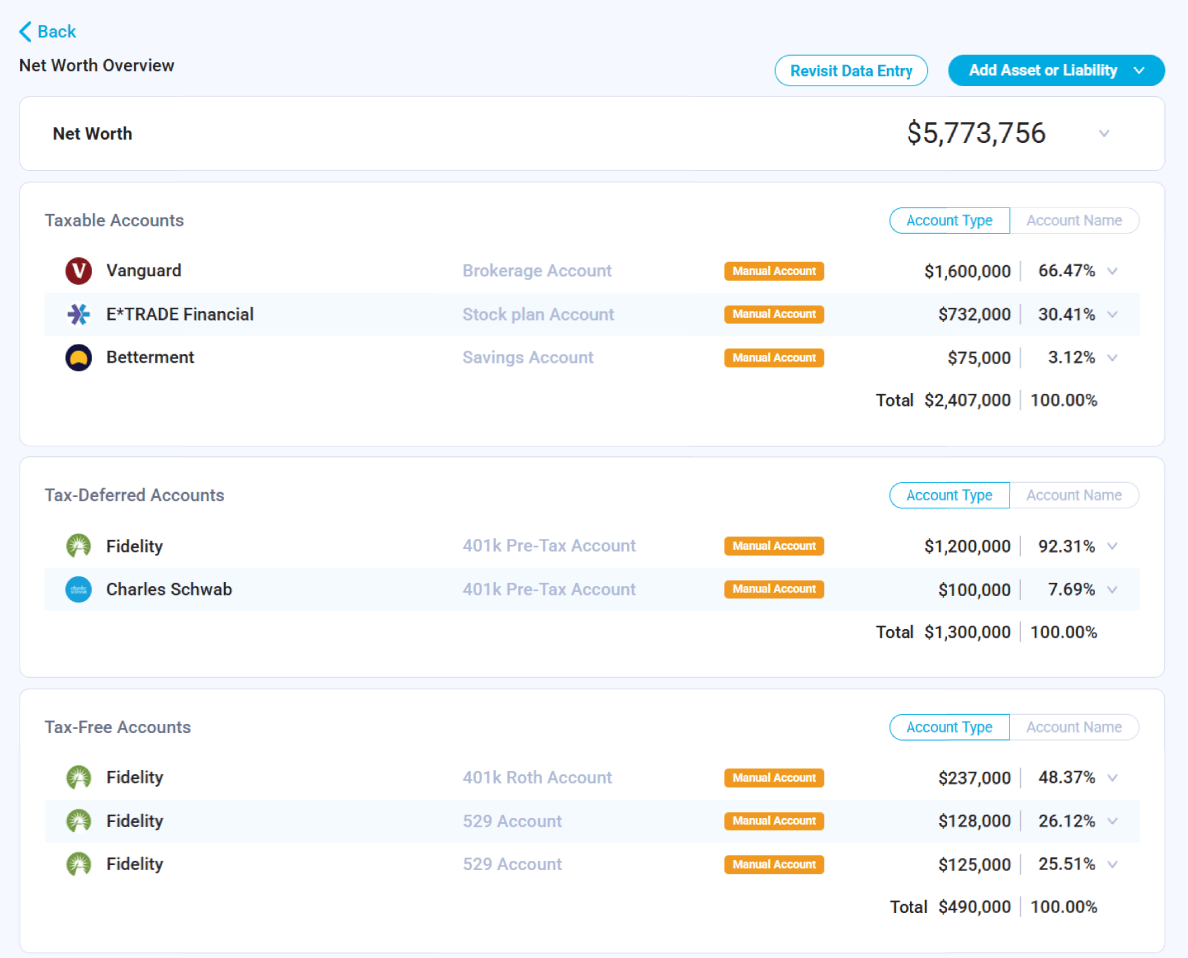
To effectively manage and grow your total net worth, you must transition from passive observation to active management. The first step is to create a centralized ledger—either through a digital aggregator or a manual spreadsheet—listing every entity identified in the asset and liability pillars above.
Once your baseline is established, focus on debt optimization and asset diversification. Reducing high-interest unsecured liabilities provides a guaranteed "return" on your net worth by stopping the erosion caused by interest. Simultaneously, ensuring your assets are spread across different classes (equities, real estate, and fixed income) protects your total net worth from sector-specific downturns. By 2026 standards, a healthy net worth is not just about the final number, but about the quality and liquidity of the assets that comprise it.
Image Gallery