Percentage of Small Business Failures: Comprehensive Statistics and Survival Guide for 2026
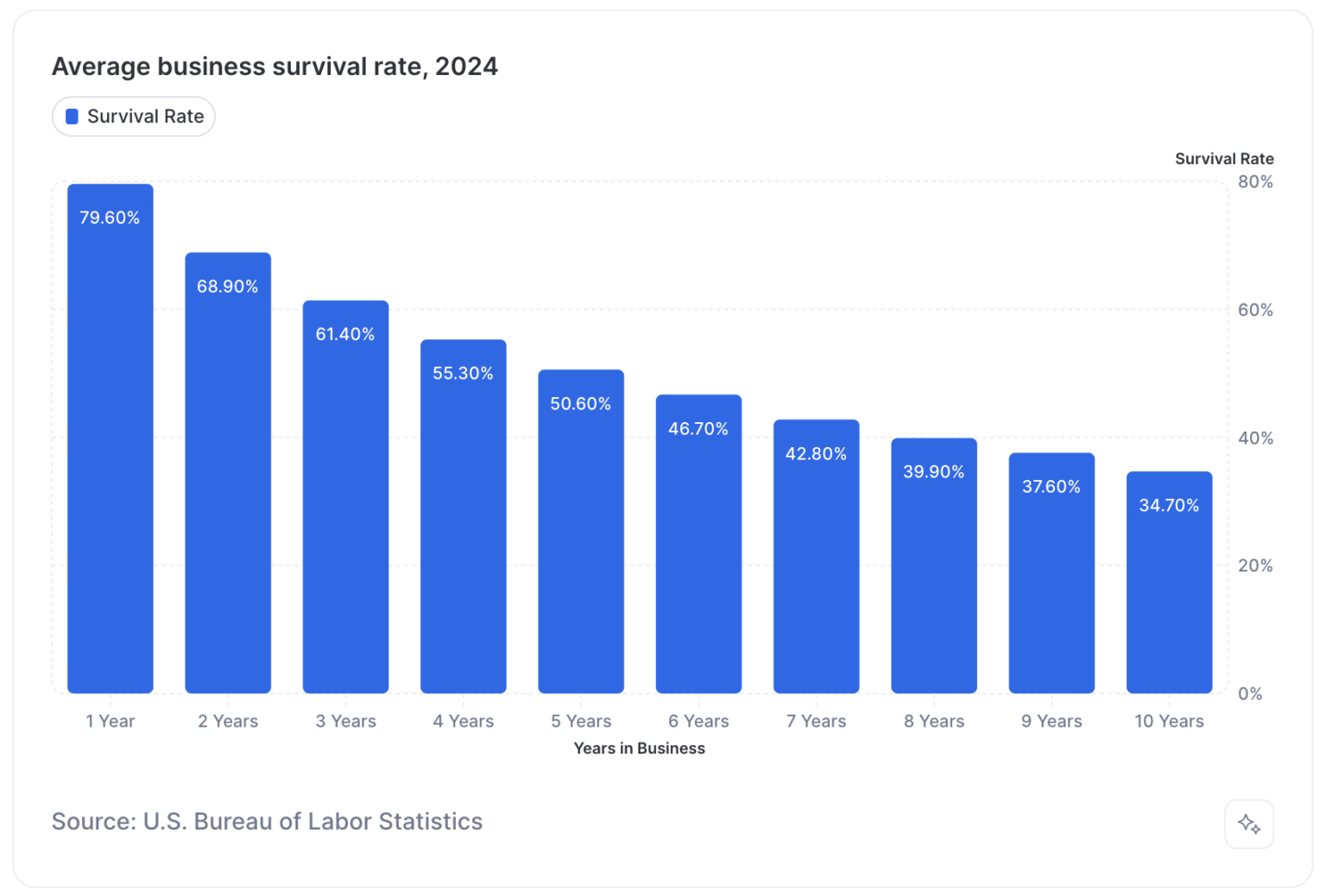
Approximately 20% of small businesses fail within their first year of operation. This figure rises significantly over time, with 50% failing by the end of the fifth year and roughly 70% closing their doors by the tenth year. These benc...
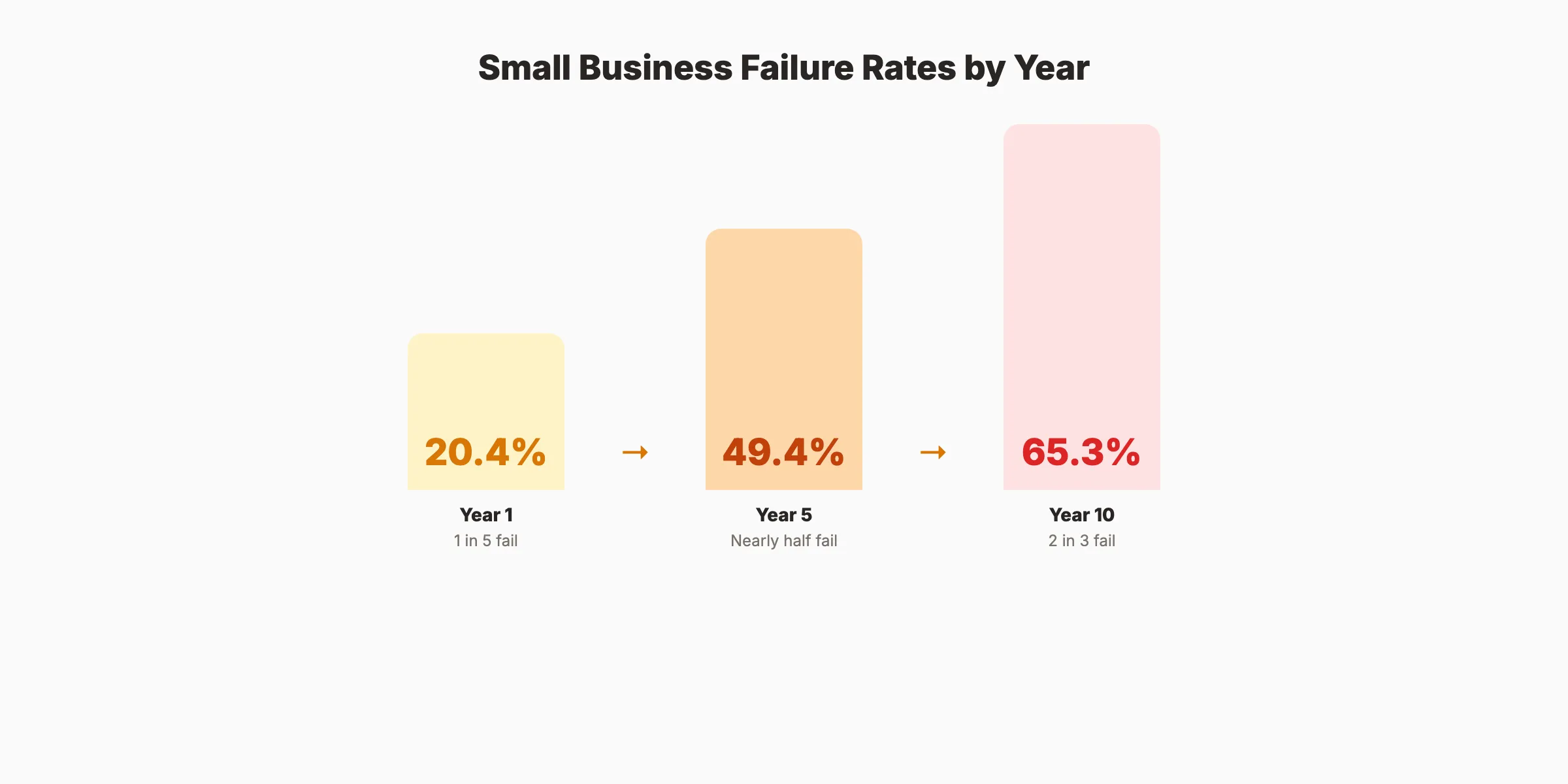
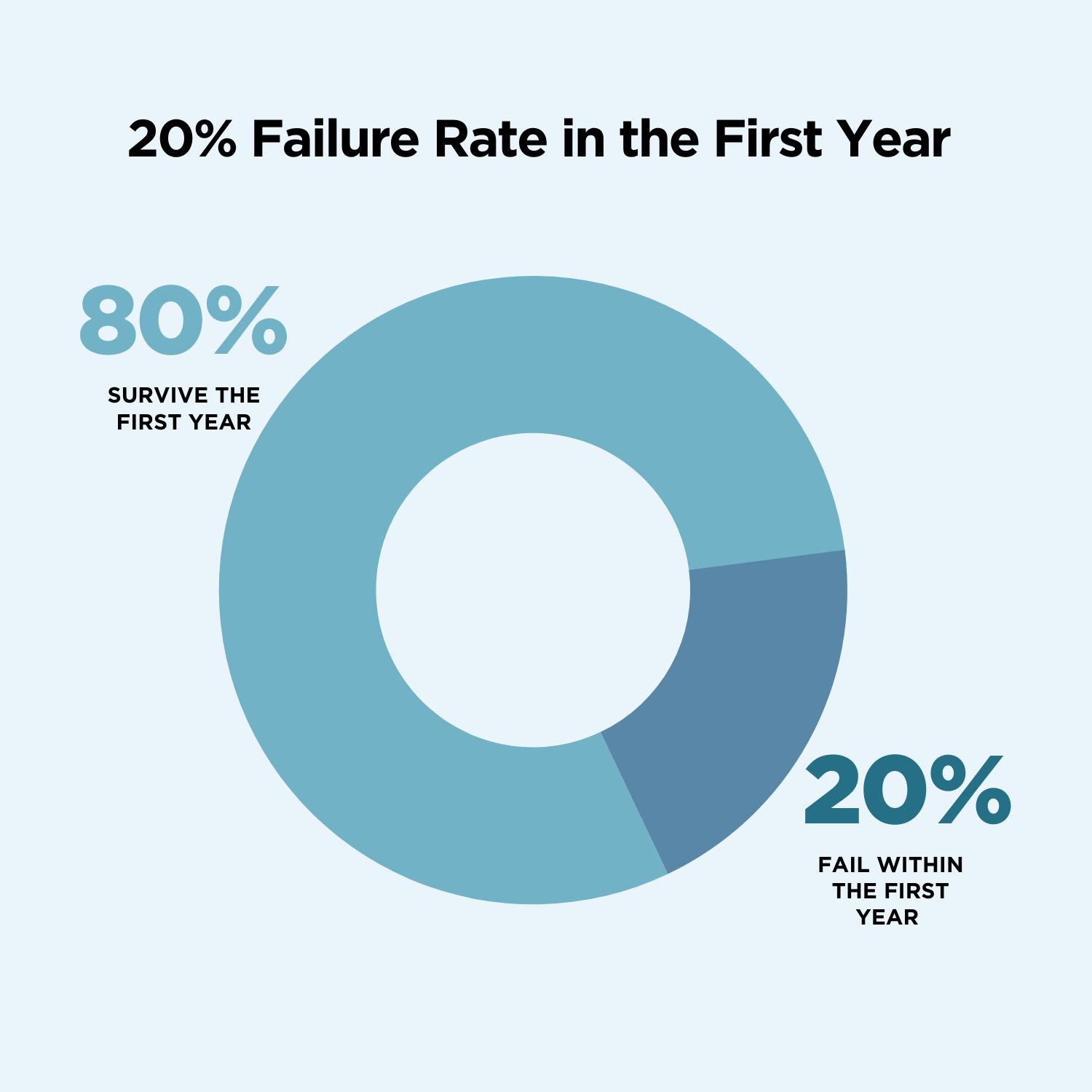
Approximately 20% of small businesses fail within their first year of operation. This figure rises significantly over time, with 50% failing by the end of the fifth year and roughly 70% closing their doors by the tenth year. These benchmarks remain consistent across the United States economic landscape, driven primarily by cash flow challenges and market misalignment.
Contents
Understanding the percentage of small business failures requires more than a cursory glance at survival charts. For entrepreneurs and investors in 2026, these statistics represent a roadmap of potential pitfalls and a guide for strategic resilience. While the headline numbers often seem daunting, they vary significantly by industry, capital structure, and the founder’s ability to adapt to a rapidly evolving technological environment.
The Longitudinal View: Survival Rates from Year One to Year Ten
The survival of a small business is rarely a matter of luck; it is a measurable progression through various risk phases. Data from the Bureau of Labor Statistics (BLS) and the Small Business Administration (SBA) consistently demonstrate a "thinning of the herd" that follows a predictable pattern regardless of the broader economic climate.
The First Year: The Critical Launch Phase
During the first 12 months, approximately 20% of businesses fail. This initial attrition is usually attributed to "infant mortality" in the business world—situations where the business model was fundamentally flawed from the start or the initial capital was insufficient to cover the setup costs. In 2026, the barrier to entry remains low due to digital platforms, but the cost of customer acquisition has risen, making that first year more precarious for those without a clear marketing strategy.
The Five-Year Mark: The Valley of Death
By the fifth year, the failure rate reaches 50%. This is often referred to as the "valley of death" because businesses that survive the first year often struggle to scale. A business that worked with two employees and a small client base may buckle under the operational complexity of a larger team or the need for more sophisticated infrastructure. Many founders find that the "sweat equity" that powered them through the first 24 months is no longer sustainable, and without a transition to professional management practices, the business stagnates and eventually closes.
The Ten-Year Horizon: Long-Term Sustainability
Reaching a decade of operation is a significant milestone, yet only about 30% to 33% of businesses achieve it. The failures occurring between years five and ten are often different in nature than early-stage failures. These are frequently "disruption failures," where a once-successful company fails to innovate or adapt to changing consumer behaviors. In the 2020s, we have seen this specifically with traditional retail and service businesses that failed to integrate AI-driven efficiencies or hybrid service models.
Industry-Specific Failure Rates and Risk Profiles
Not all industries carry the same level of risk. The percentage of small business failures is heavily influenced by the capital intensity, regulatory environment, and competitive density of a specific sector.
| Industry Sector | 1-Year Survival Rate | 5-Year Survival Rate | Primary Failure Driver |
|---|---|---|---|
| Healthcare and Social Assistance | ~85% | ~60% | Regulatory compliance & billing complexity |
| Finance and Insurance | ~82% | ~58% | Market volatility & capitalization requirements |
| Construction | ~75% | ~45% | Project cyclicality & labor shortages |
| Retail Trade | ~78% | ~42% | E-commerce competition & inventory costs |
| Transportation and Warehousing | ~72% | ~35% | Fuel costs & high equipment depreciation |
| Food Services (Restaurants/Bars) | ~70% | ~30% | Thin margins & extreme competition |
High-Stability Sectors: Healthcare and Finance
Healthcare and social assistance consistently show the highest survival rates. This stability is driven by consistent demand—people require medical services regardless of economic downturns. However, the failures that do occur in this sector are often terminal, resulting from massive regulatory fines or catastrophic insurance reimbursement shifts. Finance and insurance also trend higher in survival, largely because the barrier to entry (licensing and capital) filters out many underprepared entrepreneurs before they even start.
High-Volatility Sectors: Food Service and Construction
The restaurant industry remains one of the most difficult to sustain. While the "90% failure in the first year" myth has been debunked, the 70% failure rate by year ten is very real. Low margins mean that a single bad month can lead to insolvency. Similarly, the construction industry faces high attrition because it is extremely sensitive to interest rate fluctuations. In the mid-2020s, as interest rates stabilized following the volatility of 2023-2024, construction survival improved slightly, yet it remains a high-risk endeavor due to its reliance on debt and timely payments from developers.
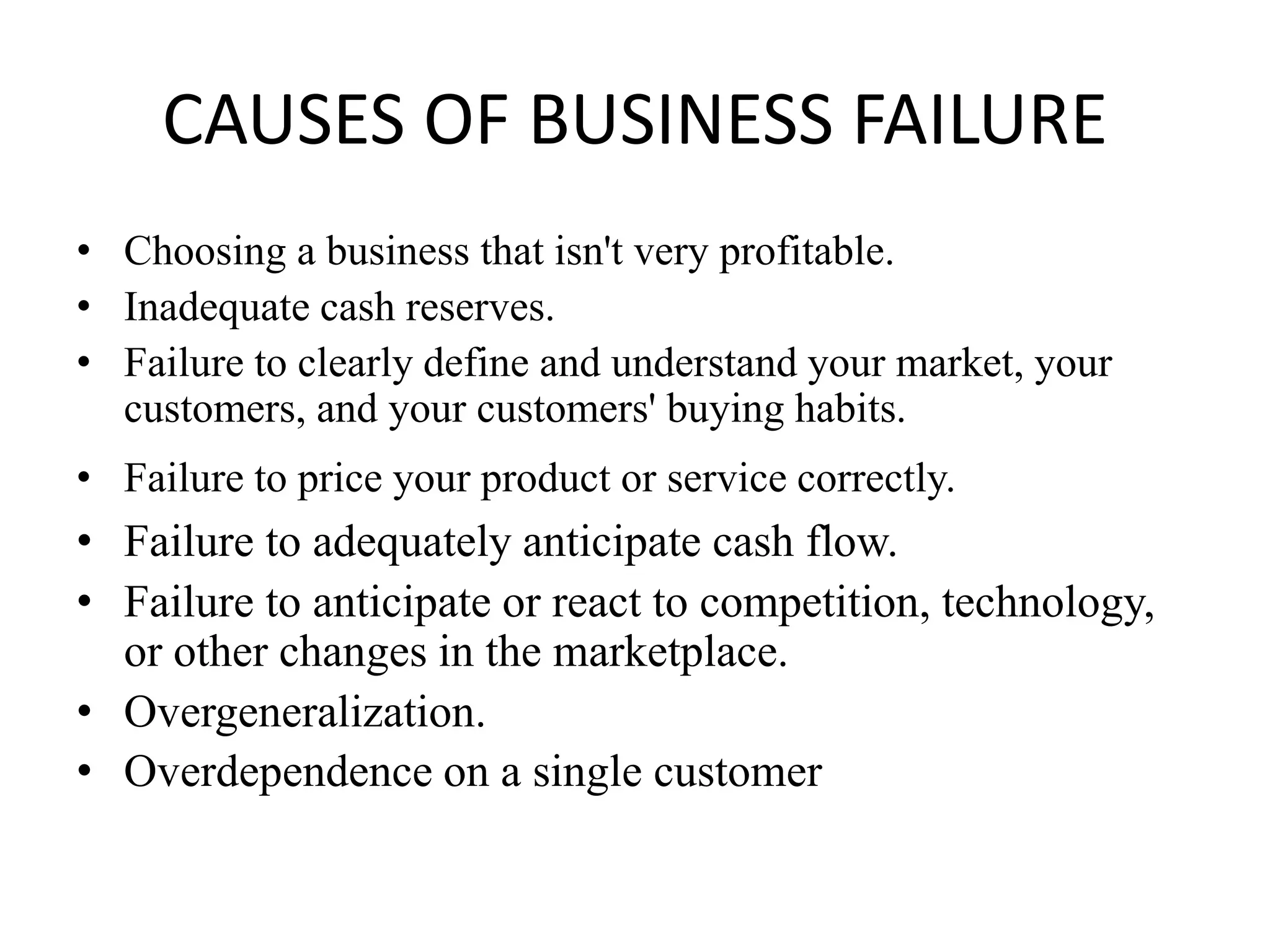
Root Causes: Why 70% of Businesses Eventually Fail
To lower the percentage of small business failures, one must diagnose the underlying causes. Financial planners and business consultants generally categorize these into three primary domains: financial mismanagement, lack of market fit, and leadership stagnation.
1. Cash Flow and Capitalization Issues
The most cited reason for failure is running out of cash. This is distinct from a lack of "profit." A business can be profitable on paper while being insolvent in reality if its bills are due before its customers pay. Many small businesses fail because they do not maintain a "cash buffer" for seasonality. Furthermore, the cost of debt in 2026 remains a significant factor; businesses that over-leveraged during expansion phases find themselves unable to service high-interest loans when growth slows.
2. Inadequate Market Research and "No Market Need"
According to various post-mortem analyses of startups, nearly 35% of failures occur because there was simply no market need for the product or service. Entrepreneurs often fall in love with an idea without verifying that customers are willing to pay for it at a price point that sustains the business. This is especially prevalent in the tech and app-based sectors, where "cool" features are prioritized over "essential" solutions.
3. Management and Operational Inefficiency
As a business grows, the founder must transition from a "doer" to a "leader." Failure to delegate, poor hiring choices, and a lack of documented processes lead to operational collapse. In 2026, operational failure is often tied to a digital divide; businesses that refuse to adopt automation and AI-assisted workflows find themselves with overhead costs that are 20% to 30% higher than their modernized competitors, leading to a slow but certain loss of market share.
The Economic Context of 2026: New Challenges and Opportunities
While historical failure rates provide a baseline, the current year presents unique variables. In 2026, the small business landscape is shaped by the tail-end of the "Great Reshuffle" and the widespread integration of generative AI in administrative functions.
The Impact of AI on Survival
For the first time, we are seeing a divergence in failure rates based on technology adoption. Small businesses that utilize AI for predictive inventory management, customer service, and basic accounting are showing a 12% higher survival rate than those relying on manual legacy systems. This is primarily because these tools allow small teams to operate with the efficiency of much larger corporations, effectively lowering the "break-even" point for new ventures.
Labor Dynamics and the "Silver Tsunami"
A significant portion of current business "failures" are actually planned closures. As the "Silver Tsunami" continues, many Baby Boomer business owners are reaching retirement age without a clear succession plan. When these businesses close, they are often recorded in the same statistics as bankruptcies, though the underlying cause is a lack of buyer interest or family transition rather than financial insolvency. This highlights the importance for 2026 entrepreneurs to build businesses that are "sellable" assets rather than just self-employment vehicles.
How to Beat the Statistics: Prevention and Resilience
To fall into the successful 30% that survive past the decade mark, entrepreneurs must move beyond the "hustle" and toward structured business architecture.
- Rigorous Financial Monitoring: Successful businesses in 2026 utilize real-time dashboards rather than waiting for end-of-month reports. Understanding the "burn rate" and "days of cash on hand" is non-negotiable.
- Customer-Centric Iteration: Instead of a static five-year plan, survivors use "agile" methodologies, pivoting their offerings based on direct customer feedback every quarter.
- Diverse Revenue Streams: The highest percentage of failures occur in businesses that rely on a single client or a single product. Diversification acts as insurance against market shifts.
- Strategic Debt Management: In the current interest rate environment, debt should be used for revenue-generating assets only, not for covering operational deficits.
Frequently Asked Questions
What is the single most common reason for small business failure? The most common reason is the depletion of cash reserves, often referred to as "running out of runway." This usually happens because the business has failed to align its pricing with its actual operational costs or has failed to collect receivables in a timely manner. Even a "successful" business with high sales can fail if those sales do not translate into available cash.
Do franchises have a lower failure rate than independent businesses? Generally, yes. Statistics suggest that franchises have a five-year survival rate that is roughly 10% to 15% higher than independent startups. This is because franchises provide a proven business model, established brand recognition, and a support network. However, the initial cost and ongoing royalty fees can make them less profitable for the individual owner in the long run.
How has the percentage of failures changed over the last decade? The baseline percentages—20% in year one, 50% in year five—have remained remarkably stable for over 30 years. What has changed is the reason for failure. Historically, physical location was the primary driver; today, digital visibility and the ability to manage remote or hybrid workforces have become the dominant factors in determining who survives.
Can a business be successful and still be part of the "failure" statistics? Yes. Statistical reports often track "business dissolutions," which include businesses that close because the owner retired, moved on to a new project, or sold the assets. While these are technically closures, they are not always "failures" in the sense of financial ruin. It is estimated that 15% to 20% of closures fall into this "successful exit" or "voluntary closure" category.
Does the amount of initial funding correlate with survival? Up to a certain point, yes. Businesses started with $100,000 or more tend to have higher survival rates in the first three years than those started with less than $10,000. This is because higher capital provides a longer "buffer" to find a market fit. However, "over-funding" can also lead to failure by encouraging wasteful spending and masking underlying structural problems in the business model.
Strategic Recommendation for 2026 Entrepreneurs
The data is clear: the first 24 months are a test of viability, while years three through five are a test of scalability. To ensure your venture does not become a statistic, prioritize liquidity over growth in your first year. Before investing in aggressive expansion or high-end office space, secure a cash reserve that can cover six months of operating expenses without a single dollar of incoming revenue. In the current economic climate, resilience is the most valuable asset a small business can possess.
Image Gallery