Does Ice Have Thermal Energy? Understanding Heat and Molecular Motion
Yes, ice possesses thermal energy. In thermodynamics, thermal energy exists in any substance whose temperature is above absolute zero (0 Kelvin or -273.15°C). Although ice feels cold, its water molecules are still vibrating within thei...
Yes, ice possesses thermal energy. In thermodynamics, thermal energy exists in any substance whose temperature is above absolute zero (0 Kelvin or -273.15°C). Although ice feels cold, its water molecules are still vibrating within their crystalline lattice, representing a measurable amount of internal kinetic and potential energy.
Contents
Defining Thermal Energy in the Context of Solids
To understand why ice has thermal energy, we must first define what thermal energy actually represents. In the simplest terms, thermal energy is the internal energy of an object due to the kinetic energy of its atoms and molecules. While we often associate "energy" with heat or movement we can see, science looks at the microscopic level.
Every substance is made of particles. In a gas, these particles zoom around at high speeds. In a liquid, they slide past one another. In a solid like ice, they are locked into a specific structure but are not stationary. They jiggle, vibrate, and oscillate around fixed positions. As long as this movement exists, thermal energy is present.
As of 2026, our understanding of thermodynamics remains rooted in the principle that temperature is a measurement of the average kinetic energy of these particles. Because ice has a temperature—whether it is 0°C or -50°C—it inherently possesses thermal energy. The only theoretical point where thermal energy would reach zero is absolute zero, a state where all molecular motion ceases, which is a condition that cannot be fully achieved in a laboratory setting.
The Kinetic Molecular Theory and the Structure of Ice
The Kinetic Molecular Theory (KMT) provides the framework for explaining why ice is not "energy-less." According to KMT, the state of matter (solid, liquid, or gas) is determined by the balance between the kinetic energy of the particles and the attractive forces between them.
Molecular Vibration in the Lattice
In ice, water molecules ($H_2O$) are arranged in a hexagonal crystalline lattice held together by hydrogen bonds. While these bonds are strong enough to keep the ice rigid, they are not rigid enough to stop the molecules from vibrating. Think of the molecules as being connected by tiny springs. These "springs" allow the molecules to move back and forth. This vibrational motion is a form of kinetic energy.
Potential Energy of Position
Thermal energy is not just about kinetic energy (motion); it also includes potential energy. In ice, the potential energy is stored in the arrangement of the molecules and the hydrogen bonds. When you add energy to ice, you aren't just making the molecules vibrate faster; you are also affecting the potential energy stored in those bonds.
Why "Cold" is a Misleading Sensation
The primary reason many people assume ice lacks thermal energy is due to human sensory perception. Our skin does not measure the absolute amount of thermal energy in an object; rather, it detects the rate and direction of heat transfer.
When you touch a cube of ice, your hand feels "cold" because thermal energy is rapidly leaving your skin (which is around 37°C) and moving into the ice (which is 0°C or lower). Heat always moves from a region of higher temperature to a region of lower temperature. This loss of energy from your body is interpreted by your brain as the sensation of cold.
If you were to compare two blocks of ice—one at -10°C and one at -100°C—the block at -10°C actually has significantly more thermal energy than the one at -100°C. Even though both would feel painfully cold to the touch, the "warmer" ice contains molecules that are vibrating with much higher frequency and intensity.
Calculating the Thermal Energy of Ice
To quantify the energy within ice, scientists use specific physical constants. One of the most important is specific heat capacity, which is the amount of heat required to change the temperature of one gram of a substance by one degree Celsius.
The specific heat of ice is approximately 2.108 Joules per gram per degree Celsius (J/g°C). This is about half the specific heat of liquid water (~4.186 J/g°C).
The Heat Capacity Formula
The amount of energy added or removed to change the temperature of ice can be calculated using the formula: $Q = m \cdot c \cdot \Delta T$
- $Q$: The total heat energy (in Joules).
- $m$: The mass of the ice.
- $c$: The specific heat capacity of ice (2.108 J/g°C).
- $\Delta T$: The change in temperature.
This formula demonstrates that ice is a reservoir of energy. If you have 1 kilogram of ice at -20°C and you want to bring it to 0°C, you must add approximately 42,160 Joules of energy. That energy is stored as thermal energy within the ice before it even begins to melt.
Comparison of Thermal Properties: Ice vs. Water vs. Steam
To visualize the energy levels across different states of $H_2O$, the following table compares key thermodynamic markers at standard atmospheric pressure.
| Property | Ice (Solid) | Water (Liquid) | Steam (Gas) |
|---|---|---|---|
| Typical Temperature Range | Below 0°C | 0°C to 100°C | Above 100°C |
| Primary Molecular Motion | Vibration in fixed lattice | Translation, Rotation, Vibration | Rapid, Random Translation |
| Specific Heat Capacity | ~2.108 J/g°C | ~4.186 J/g°C | ~1.996 J/g°C |
| Relative Thermal Energy | Lowest | Intermediate | Highest |
| Intermolecular Forces | Strong (Hydrogen bonds) | Moderate (Breaking/reforming) | Negligible |
The Role of Latent Heat in Phase Changes
A fascinating aspect of thermal energy in ice occurs at the melting point (0°C). When ice reaches 0°C, adding more thermal energy does not immediately raise its temperature. Instead, the temperature remains constant while the ice undergoes a phase change into liquid water.
This energy is called the Latent Heat of Fusion. For ice, this value is approximately 334 Joules per gram. This energy is used exclusively to break the hydrogen bonds that hold the crystalline lattice together. Even though the temperature doesn't rise, the thermal energy of the system increases significantly as the solid turns into a liquid. This is why a mixture of ice and water stays at exactly 0°C until all the ice has melted; the ice is acting as a "thermal buffer," absorbing energy without allowing the temperature to increase.
Practical Applications of Ice’s Thermal Energy
Understanding that ice has thermal energy (and the capacity to absorb more) is crucial for various industries and scientific fields in 2026.
1. Thermal Energy Storage (TES)
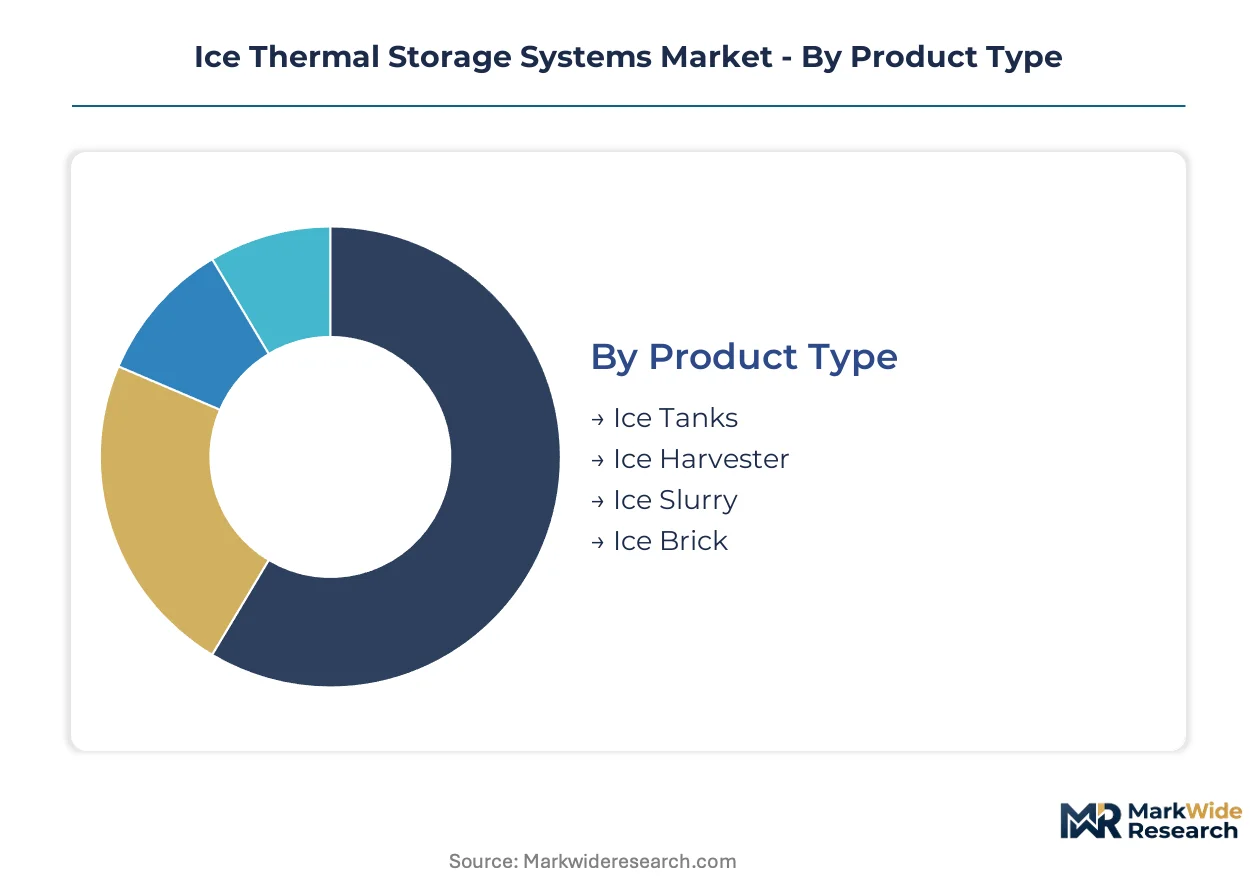
In modern green building design, ice is used for thermal energy storage. Air conditioning systems can freeze water at night when electricity is cheaper and demand is lower. During the heat of the day, the system uses the "cold" (by absorbing heat from the building into the ice) to provide cooling. This process is essentially managing the thermal energy levels of the ice to regulate indoor climates.
2. Glaciology and Climate Science
Scientists studying the polar ice caps must calculate the thermal energy of massive glaciers. By measuring the temperature profiles of ice sheets, researchers can determine how much energy the oceans and atmosphere are transferring to the poles. Even a slight increase in the thermal energy of "sub-zero" ice can lead to structural instabilities and faster melting rates.
3. Food Preservation
Ice is an effective coolant not because it "radiates cold," but because it has a high capacity to absorb thermal energy from its surroundings. Because it takes a significant amount of energy to move ice through its phase change (latent heat), it remains a stable, low-temperature medium for preserving perishables.
Common Misconceptions About Ice and Heat
- "Cold is a thing that exists." In physics, "cold" is not a form of energy. It is simply a word we use to describe a lower concentration of thermal energy compared to a reference point.
- "Ice at 0°C has no heat." As established, heat is the transfer of energy, and thermal energy is the internal energy. Ice at 0°C has a significant amount of internal energy; it just has less than water at 0°C.
- "Absolute zero is just very cold ice." Absolute zero is a state of zero thermal energy. Ice, even at the coldest temperatures found on Earth (around -89°C in Antarctica), is still nearly 184 degrees Celsius warmer than absolute zero.
Frequently Asked Questions
Can ice have more thermal energy than liquid water?
Generally, no, if you are comparing equal masses. Liquid water at 0°C has more thermal energy than ice at 0°C because of the latent heat of fusion required to melt the ice. However, a very large iceberg at -10°C has more total thermal energy than a single cup of boiling water simply because it contains many more molecules.
Does the thermal energy of ice change if you break it?
Breaking a block of ice into smaller pieces does not change its temperature or the thermal energy per gram. However, it increases the surface area, which allows the ice to absorb thermal energy from its surroundings more quickly, leading to faster melting.
Is thermal energy the same as temperature?
No. Temperature is the measurement of the average kinetic energy of the particles. Thermal energy is the total energy (kinetic plus potential) of all particles in the object. A larger object will have more thermal energy than a smaller object at the same temperature.
At what point does ice lose all its thermal energy?
Ice would lose all its thermal energy only at absolute zero (0 Kelvin or -273.15°C). At this point, molecular motion would stop entirely. In practical, real-world conditions, ice always has some amount of thermal energy.
Why does ice feel colder than wood at the same temperature?
This is due to thermal conductivity. Ice (and the water film that forms on it) conducts heat away from your skin much faster than wood does. Even if both are at 0°C, the ice "steals" your body heat more efficiently, making it feel colder.
Summary Recommendation
When analyzing the properties of ice, always distinguish between perceived temperature and internal thermal energy. If you are a student or professional working with thermodynamics, remember that every degree above absolute zero represents active molecular vibration.
For those looking to apply this knowledge—whether in culinary arts, HVAC engineering, or environmental science—focus on the Latent Heat of Fusion. The most significant "energy event" for ice isn't just getting warmer; it is the massive amount of energy absorbed during the transition from solid to liquid. Understanding this allows for better calculations in heat exchange and energy conservation projects.
Image Gallery