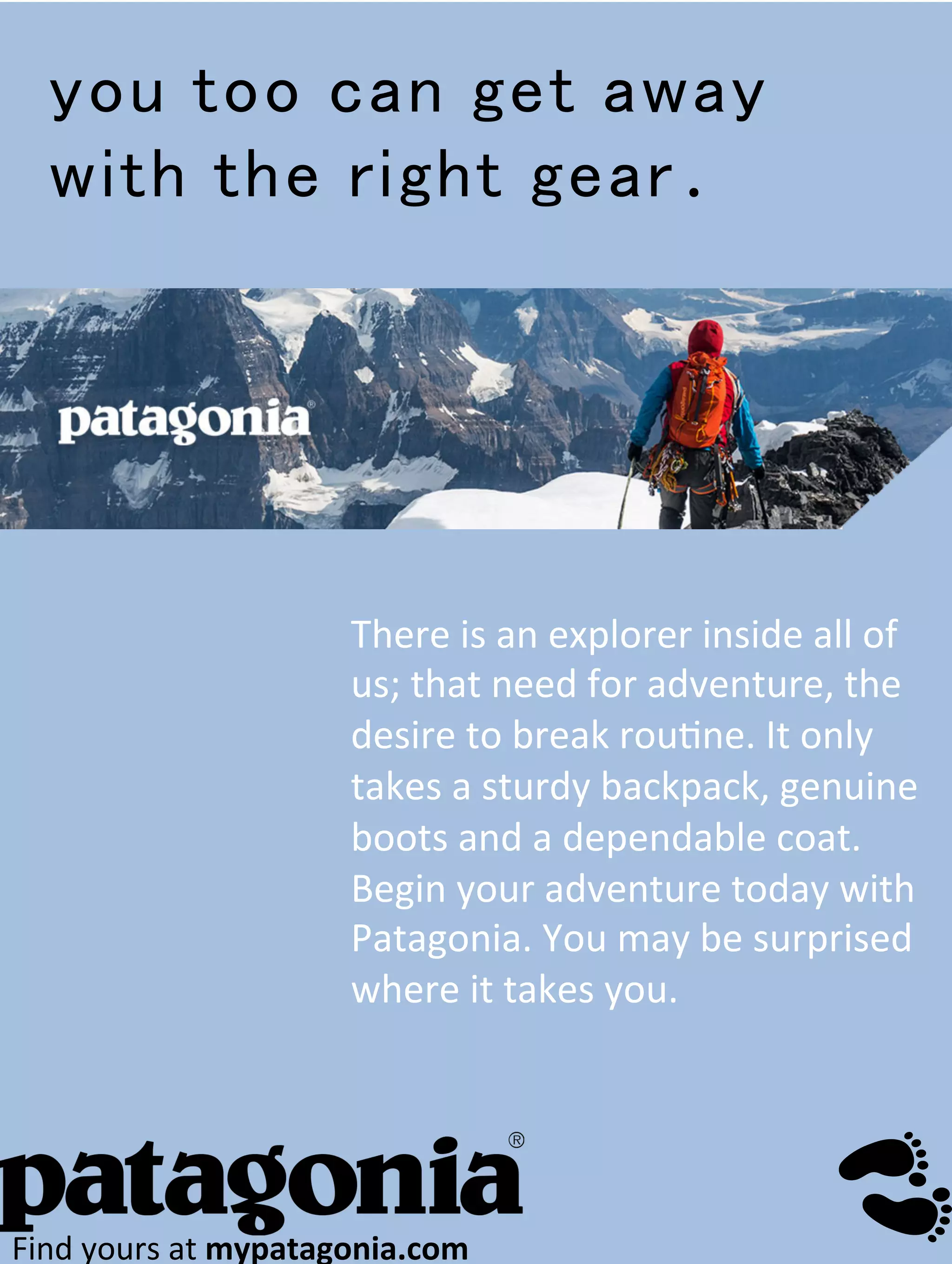
Patagonia Advertisements: An Analysis of Counter-Intuitive Marketing Strategy
Patagonia advertisements represent a distinct departure from conventional retail marketing by frequently discouraging consumerism rather than incentivizing it. By prioritizing environmental advocacy, supply chain transparency, and prod...
Patagonia advertisements represent a distinct departure from conventional retail marketing by frequently discouraging consumerism rather than incentivizing it. By prioritizing environmental advocacy, supply chain transparency, and product longevity over traditional sales volume, the company has created a unique brand narrative that emphasizes corporate responsibility, sustainable production, and long-term brand loyalty through shared ethical values.
Contents
The Evolution of Patagonia’s Anti-Consumerist Message
Patagonia’s advertising strategy is often categorized as "counter-marketing." Rather than focusing solely on the technical specifications of their outdoor apparel, the brand leverages its platform to influence consumer behavior. The most famous example remains the 2011 "Don’t Buy This Jacket" advertisement, published in The New York Times on Black Friday. The campaign highlighted the environmental cost of manufacturing a single fleece jacket, encouraging customers to consider the ecological footprint of their purchases.
This approach functions as a brand-building mechanism. By acknowledging the negative externalities of the apparel industry—such as water consumption, carbon emissions, and waste—Patagonia positions itself as a partner in the consumer's sustainability journey rather than a transactional vendor. The strategy relies on radical transparency. When the company promotes a new product, it frequently includes data regarding the fair-trade certification of the factory or the percentage of recycled material used in the garment, effectively shifting the advertisement’s focus from "why you need this item" to "why this item is the responsible choice."
Core Pillars of Patagonia’s Advertising Strategy
To understand why these campaigns are effective, one must examine the foundational pillars upon which the company constructs its outreach. The primary objective is not merely to sell units but to build a community of brand advocates who identify with the company’s environmental mission.
1. Environmental Advocacy as Marketing
Patagonia treats the Earth as its primary stakeholder. Its advertisements often feature landscapes under threat or highlight grassroots environmental organizations. This aligns the brand with causes important to its target demographic—outdoor enthusiasts and environmentally conscious consumers. By donating a portion of profits (typically 1% for the Planet) and using advertisements to draw attention to conservation, the company ensures that marketing expenditures contribute to the brand's core mission.
2. Radical Transparency and Supply Chain Disclosure
Technical SEO editors and marketing analysts note that Patagonia’s digital presence emphasizes supply chain documentation. Their advertisements often link to the "Footprint Chronicles," a proprietary tracking tool that details the provenance of their materials. This level of technical depth serves as a trust-building device, differentiating the brand from competitors who may use vague "green" terminology without verifiable evidence.
3. Emphasizing Product Longevity
"Worn Wear" is a central pillar of the brand's contemporary marketing. By advertising the repairability and durability of its products, Patagonia discourages the "fast fashion" cycle. Marketing campaigns that promote the "Ironclad Guarantee" serve as implicit advertisements for quality; by standing behind the product for its entire lifespan, the company reduces the perceived risk of a higher initial price point.
Comparing Marketing Approaches: Conventional vs. Patagonia
The following table contrasts the standard industry approach with Patagonia’s established methodology.
| Feature | Conventional Outdoor Retail | Patagonia’s Methodology |
|---|---|---|
| Primary Goal | Maximize short-term sales volume | Build long-term brand affinity |
| Call to Action | "Buy now before it's gone" | "Repair before you replace" |
| Messaging Focus | Feature-based, performance | Values-based, environmental |
| Pricing Strategy | Deep discounts during holidays | Value-retention and repair services |
| Transparency | Minimal supply chain detail | Detailed footprint and impact data |
Operational Challenges and Limitations
While the brand’s marketing strategy is highly successful in building equity, it carries inherent operational risks. By explicitly telling consumers to buy less, the company places a cap on its potential market share growth. This strategy requires high price points to maintain the financial health of the business, as the company cannot rely on high-volume, low-margin turnover.
Furthermore, "purpose-driven" marketing subjects the company to intense public scrutiny. Any discrepancy between the brand’s advertising claims and its actual operational practices is amplified. For instance, if a material supplier is found to be non-compliant with labor regulations, the company's marketing narrative is directly compromised. Consequently, Patagonia’s advertising department functions as a de facto audit team, ensuring that every claim made in a campaign can withstand rigorous external review.
Managing the Balance: Growth vs. Sustainability
For a business operating in 2026, the intersection of marketing and environmental impact is a critical differentiator. Companies attempting to emulate this model often fail because they lack the "proof of concept" that Patagonia has cultivated over decades.
To achieve a similar brand identity, a firm must transition from reactive advertising—responding to seasonal trends—to proactive advocacy. This requires:
- Verifiable Data: Moving beyond "green" labels to providing granular supply chain data.
- Post-Purchase Support: Investing in repair and resale infrastructure as a core marketing asset.
- Consistency: Maintaining the brand voice across all touchpoints, even when it is financially disadvantageous to do so in the short term.
Frequently Asked Questions
Why does Patagonia use anti-consumerist messaging?
Patagonia uses anti-consumerist messaging to cultivate trust and long-term loyalty. By encouraging customers to buy only what they need, the brand differentiates itself from competitors that prioritize rapid consumption, ultimately positioning itself as a leader in the sustainable apparel space.
Does Patagonia’s "Don't Buy" strategy hurt revenue?
Historically, this strategy has strengthened brand equity and contributed to growth. While it may discourage impulse purchases, it fosters high customer lifetime value (CLV) and deep brand loyalty, which are more stable indicators of long-term financial success than immediate, one-off sales.
How can other companies replicate this marketing success?
Replicating this success requires authentic alignment between marketing claims and internal business operations. Companies must be willing to sacrifice short-term gains for transparency and must provide tangible value-adds, such as robust repair services or clearly documented ethical labor practices.
What is the "Worn Wear" program?
Worn Wear is a program and marketing channel dedicated to keeping clothing in circulation. It encourages customers to trade in used Patagonia gear for credit, which is then repaired and sold as "Pre-Loved," reinforcing the message that the most sustainable product is the one already in the customer's closet.
Are Patagonia’s advertisements regulated differently?
Patagonia is subject to the same advertising standards as all consumer brands, including regulations against "greenwashing." Because the company makes specific claims about environmental impact, they must be able to substantiate those claims with verifiable data to avoid legal penalties and maintain consumer trust.
Recommendation for Brand Strategy
For organizations looking to refine their advertising approach, the primary takeaway is the power of "value-aligned narrative." Instead of focusing on transactional outcomes, develop an advertising strategy centered on the lifecycle of your product. By investing in the longevity of your goods and providing the data to prove their environmental and social impact, you can build a resilient brand identity that transcends market volatility. Focus your 2026 marketing roadmap on verifiable sustainability markers rather than ephemeral trends.
Image Gallery