Appointy Reviews 2026: A Comprehensive Analysis of Performance, Features, and Value
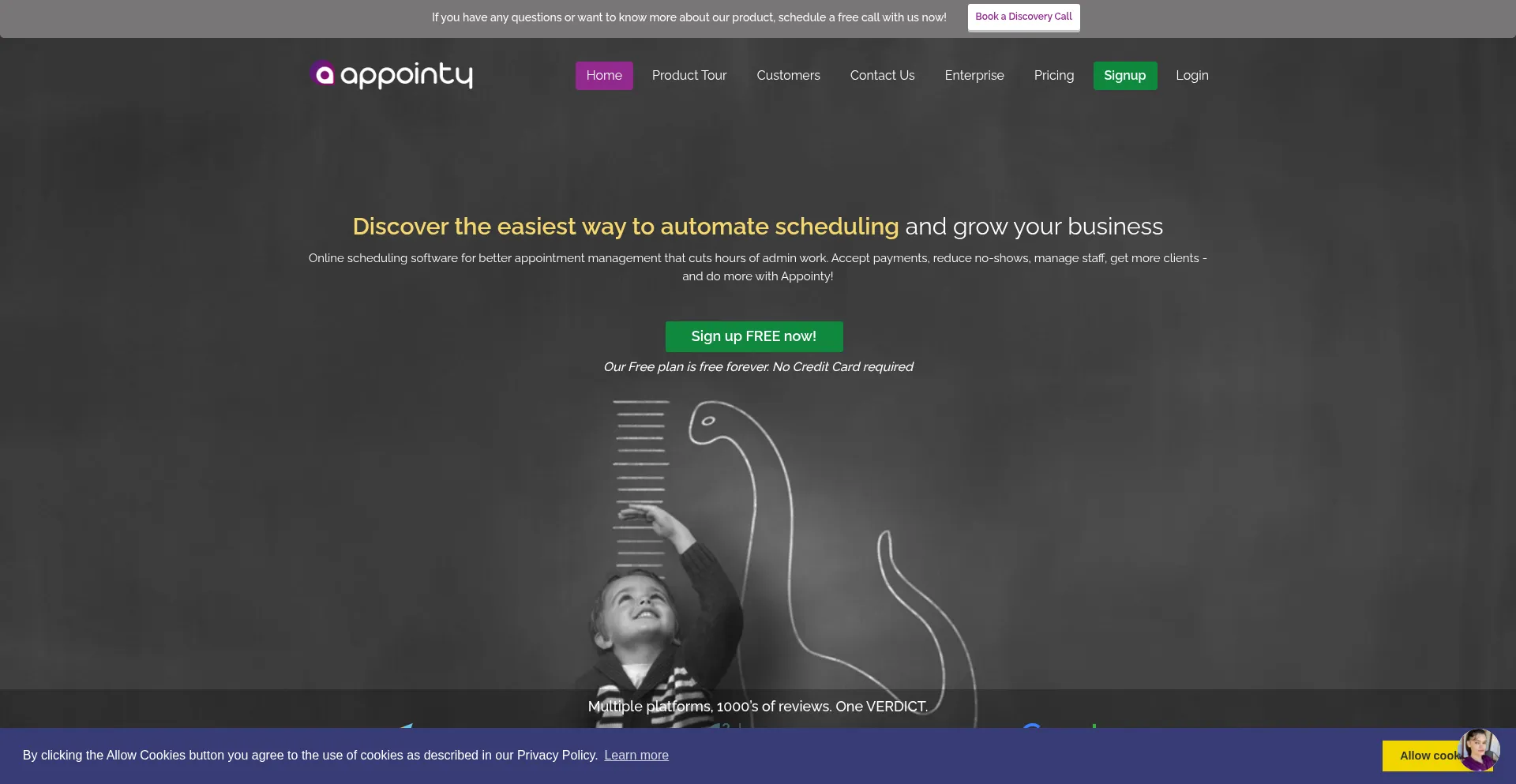
Appointy is a robust, cloud-based scheduling platform tailored for small to mid-sized businesses. It excels in managing complex schedules across multiple locations while offering seamless payment integrations. With a strong reputation...
Appointy is a robust, cloud-based scheduling platform tailored for small to mid-sized businesses. It excels in managing complex schedules across multiple locations while offering seamless payment integrations. With a strong reputation for customer support, it remains a top choice for service-based professionals seeking to automate bookings and reduce no-shows.
Contents
As we move through 2026, the demand for streamlined, automated scheduling has never been higher. Businesses across the wellness, education, and professional services sectors require more than just a digital calendar; they need an integrated ecosystem that handles client acquisition, retention, and financial transactions. Appointy has positioned itself as a legacy player that continues to evolve, maintaining a balance between deep functional complexity and user-accessible design. This review analyzes the current state of Appointy, aggregating user feedback and technical specifications to determine its suitability for modern enterprises.
The Core Value Proposition: Why Businesses Choose Appointy
The primary appeal of Appointy lies in its versatility. Unlike niche scheduling tools that target only one industry, Appointy’s architecture is flexible enough to accommodate a solo yoga instructor or a multi-branch medical diagnostic center. The software functions as a 24/7 virtual receptionist, allowing clients to book appointments through a dedicated booking page, a website widget, or directly via social media platforms like Facebook and Instagram.
Beyond simple booking, Appointy serves as a lightweight Customer Relationship Management (CRM) tool. It captures client data during the booking process, allowing businesses to track appointment history, preferences, and payment status. This data-driven approach enables more personalized service delivery, which is a critical factor in client retention in 2026's competitive service economy.
Key Functional Areas
- Multi-Channel Booking: Integration with Google Business Profile, social media, and existing websites ensures that the booking "funnel" is as wide as possible.
- Automated Communication: The system sends automated email and SMS reminders to reduce no-shows, a feature that users consistently rate as one of the platform's highest ROI components.
- Resource and Staff Management: Businesses can assign specific rooms, equipment, or staff members to services, preventing double bookings and ensuring operational efficiency.
Detailed Feature Analysis and User Feedback
To understand the true performance of Appointy, one must look at how its individual components hold up under daily operational pressure. Based on aggregate data from major software review platforms and technical documentation, the following areas represent the core of the user experience.
Booking Interface and User Experience (UX)
User reviews frequently highlight the "frictionless" nature of the client-side booking interface. In 2026, clients expect a mobile-first experience that requires minimal clicks. Appointy’s booking wizard guides users through service selection, staff preference, and time slot availability with high clarity.
However, from an administrative standpoint, some long-term users have noted that the back-end interface, while functional, feels slightly less "modern" than some of its newer, minimalist competitors. The density of features means that new administrators may face a learning curve when first configuring complex availability rules or multi-tier pricing structures.
Payment Integration and Financial Security
Appointy supports a wide range of payment gateways, including Square, Stripe, and PayPal. This allows businesses to require full or partial deposits at the time of booking, which significantly mitigates financial loss from last-minute cancellations.
The platform’s handling of POS (Point of Sale) functionality is often praised by retail-adjacent service providers, such as salons or boutique gyms. The ability to manage both an online booking and a walk-in transaction within the same interface reduces the need for fragmented software stacks.
Staff and Resource Allocation
For organizations with multiple employees, Appointy provides granular control. Managers can set individual working hours, break times, and specialized service capabilities for each staff member. This prevents the common scheduling error where a junior staff member is accidentally booked for a high-level service they aren't qualified to perform.
Appointy Pricing Tiers and Comparative Value
Appointy maintains a tiered pricing model designed to scale with a business's growth. In 2026, the value proposition of each tier is defined by the number of staff members supported and the depth of integration features available.
| Feature | Free Tier | Growth Tier | Professional Tier | Enterprise Tier |
|---|---|---|---|---|
| Monthly Cost (Est. 2026) | $0 | ~$20 - $30 | ~$50 - $60 | ~$100+ |
| Staff Members | 1 | 1 | Up to 5 | Multiple/Unlimited |
| Services | 5 | Unlimited | Unlimited | Unlimited |
| Automated Reminders | Email Only | Email & SMS | Email & SMS | Advanced Logic |
| Integrations | Basic | Standard | Premium (Zapier) | Full API Access |
| Best For | Side hustles | Solo practitioners | Small clinics/studios | Multi-location firms |
Note: Pricing is subject to regional adjustments and specific promotional periods.
Evaluating the Free Tier
The "Free" tier remains one of Appointy’s most significant competitive advantages. While many competitors offer only limited-time trials, Appointy’s perpetual free version allows new entrepreneurs to establish a digital presence without upfront capital. The limitation to five services and one staff member is reasonable for a starting point, though most growing businesses will find the lack of SMS reminders a catalyst for upgrading to the Growth tier.
Technical Specifications and Integrations
For businesses looking to integrate scheduling into a larger tech stack, Appointy’s technical infrastructure is a vital consideration. The platform offers native synchronization with major calendar providers, ensuring that an appointment booked in Appointy automatically appears on the staff member's Google, Outlook, or iCal calendar.
Security and Compliance
In the current regulatory environment, data privacy is non-negotiable. Appointy employs industry-standard encryption and is generally recognized as being compliant with standard data protection regulations. For healthcare providers in the United States, users should verify specific HIPAA-compliant configurations, as this often requires the Enterprise level of service or specific add-on agreements.
API and Customization
The Enterprise tier provides access to the Appointy API, allowing for custom developments. This is particularly useful for franchises that want to build a proprietary mobile app but use Appointy as the underlying scheduling engine. The platform also integrates with Zapier, which opens the door to thousands of third-party automations, such as adding a new client to a Mailchimp newsletter or a HubSpot CRM deal.
Common Criticisms and Operational Limitations
No software is without its drawbacks. Analyzing "Appointy reviews" across the web reveals a few recurring themes regarding areas for improvement:
- Mobile App Performance: While the web version is highly stable, some users have reported that the administrative mobile app can be slower than the desktop version, particularly when handling large databases of clients or complex multi-staff views.
- Customization Constraints: While the booking page is functional, businesses with high-end brand requirements may find the visual customization options somewhat limited compared to building a custom booking flow from scratch.
- Customer Support Latency: While generally rated highly, some users in specific time zones have noted delays in response times for the lower-tier plans. Enterprise users, conversely, report highly responsive account management.
Who Should Use Appointy in 2026?
Appointy is best suited for "high-volume, high-complexity" service providers. If you are a business that manages multiple staff members, various room/equipment requirements, and multiple locations, Appointy’s engine is more capable than simple "link-based" schedulers like Calendly.
Recommended for:
- Wellness Centers: Salons, spas, and massage therapists who need to manage both staff and room availability.
- Educational Institutions: Tutors and schools managing class schedules and private sessions.
- Professional Services: Accountants, lawyers, and consultants who require pre-appointment information gathering and payment.
Less ideal for:
- Simple Meeting Scheduling: If your only need is to find a time for a 1:1 Zoom call, a simpler (and potentially cheaper) tool might suffice.
- High-End Web Design Projects: If your brand requires a 100% white-labeled, uniquely styled booking journey, you may find the standard Appointy templates restrictive.
FAQ
Does Appointy integrate with Zoom or Google Meet?
Yes, Appointy provides native integrations with major video conferencing tools. When a client books a virtual service, the system can automatically generate a unique meeting link and include it in the confirmation email, streamlining the workflow for remote consultants and educators.
Can I manage multiple locations with one Appointy account?
Multi-location management is a core feature of the Enterprise tier. It allows business owners to maintain a centralized view of all branches while giving local managers control over their specific site’s availability and staff.
How does Appointy handle "No-Shows"?
Appointy addresses no-shows through two primary mechanisms: automated reminders (SMS and email) and mandatory deposits. By requiring a payment or a credit card on file at the time of booking, businesses create a financial commitment from the client, which significantly reduces the likelihood of missed appointments.
Is my data safe with Appointy?
Appointy uses SSL encryption for all data transfers and hosts its infrastructure on secure servers. They follow standard industry practices for data backups and privacy. However, businesses in highly regulated sectors should always review the specific Terms of Service regarding data residency and compliance.
Can clients book recurring appointments?
Yes, the platform allows for recurring booking configurations. This is particularly useful for fitness studios or tutors where clients may want to book the same time slot every week for a set duration.
Final Verdict and Next Actions
Appointy remains a powerful and reliable scheduling solution in 2026. Its greatest strength is its ability to handle the "messy" reality of service-based businesses—where staff call out, equipment breaks, and clients forget their appointments. While the interface may not be the flashiest on the market, its functional depth and strong payment integrations make it a high-value tool for operational efficiency.
Next Steps:
- Audit Your Needs: Determine how many staff members and locations you need to support.
- Trial the Free Version: Start with the Free tier to test the booking flow and see if the user interface aligns with your team's workflow.
- Evaluate Integrations: List the tools you already use (Google Calendar, Stripe, Mailchimp) and ensure they are supported in your chosen Appointy tier.
Image Gallery