Why Amber Heard Kept Looking at the Jury: Legal Strategy and Body Language Analysis
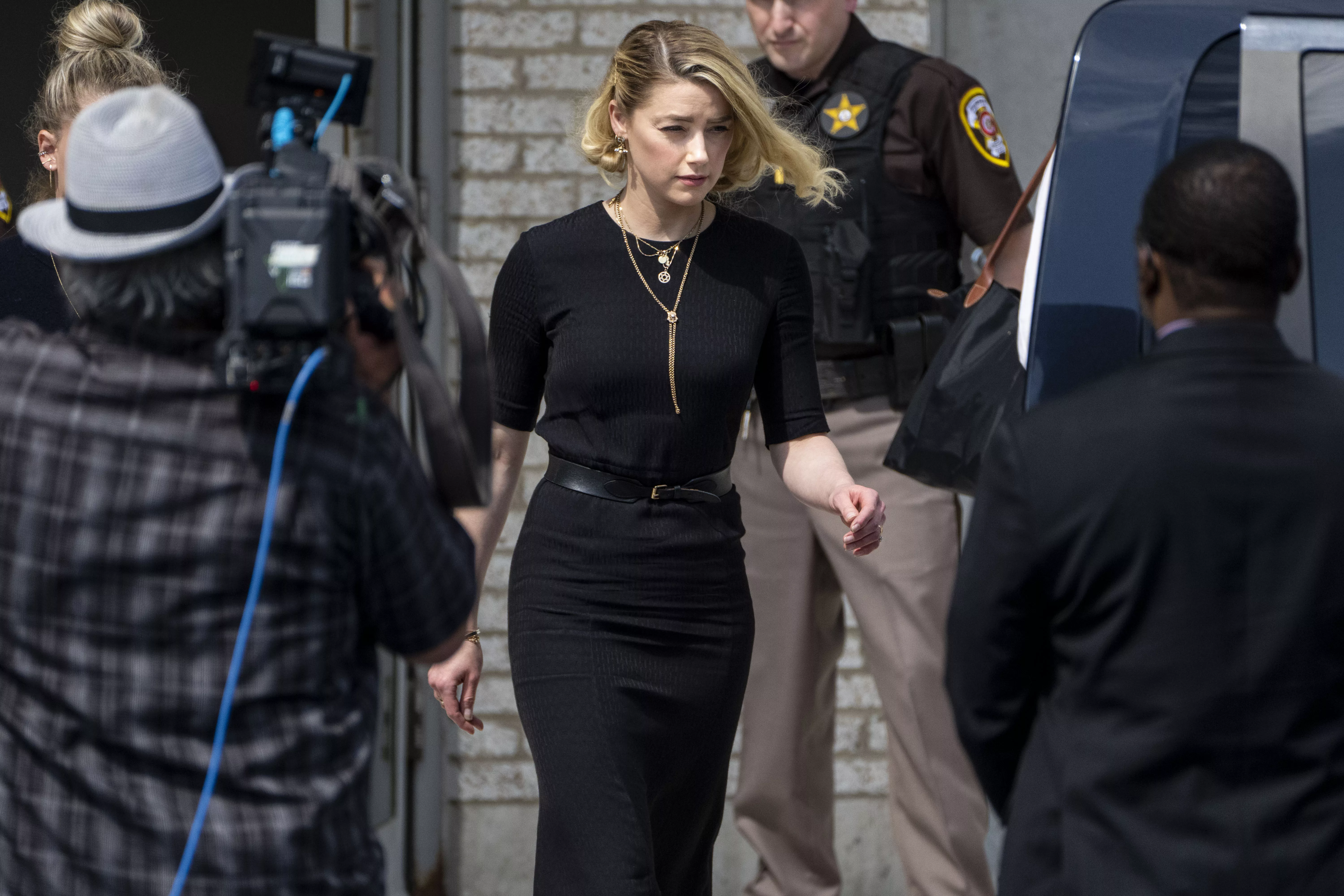
During the 2022 defamation trial between Johnny Depp and Amber Heard, Heard frequently turned her head to look directly at the jury while answering questions. This behavior was a calculated legal strategy intended to build a personal c...
During the 2022 defamation trial between Johnny Depp and Amber Heard, Heard frequently turned her head to look directly at the jury while answering questions. This behavior was a calculated legal strategy intended to build a personal connection, establish credibility, and humanize herself to the seven individuals responsible for the final verdict.
Contents
The televised nature of the trial allowed millions of viewers to analyze every movement, making Heard’s eye contact one of the most scrutinized aspects of her testimony. In the years since the trial, legal analysts and psychological experts have dissected this behavior to understand whether it helped or hindered her case. As we look back from 2026, the trial remains a landmark study in how witness demeanor affects judicial outcomes in the age of viral social media commentary.
The Legal Strategy Behind Witness Eye Contact
In any jury trial, the "finders of fact" are the jurors. While lawyers ask the questions and judges preside over the courtroom, the jury ultimately decides the truth of the claims. Consequently, trial consultants almost universally advise witnesses to direct their answers toward the jury box.
Looking at the jury is intended to achieve several tactical goals:
- Building Rapport: Human beings are more likely to empathize with someone who looks them in the eye. By addressing the jurors directly, a witness attempts to move from being a "subject" of the trial to a person sharing their story with peers.
- Establishing Sincerity: In Western culture, eye contact is frequently equated with honesty. Avoiding eye contact is often—though sometimes incorrectly—perceived as a sign of deception or shame.
- Ensuring Retention: When a witness looks at a juror, the juror is more likely to pay close attention to the testimony. It transforms a monologue into a directed communication.
In the Fairfax County, Virginia, courtroom where Depp v. Heard took place, the physical layout required Heard to turn her head significantly to face the jury. This made the action very deliberate and noticeable on the high-definition cameras used for the broadcast.
The Psychological Perspective: Connection vs. Performance
Psychologists and body language experts often distinguish between "natural" eye contact and "performative" eye contact. Natural eye contact typically occurs at the beginning and end of sentences, or during moments of high emotional intensity.
In Amber Heard's case, the frequency and timing of her eye contact became a point of contention. Critics argued that her movement—answering a question from an attorney and then immediately pivoting her head 45 degrees to the jury—felt "robotic" or "over-rehearsed." This perception highlights the risks of following legal advice too rigidly. If a witness appears to be "acting" for the jury rather than speaking to them, the strategy can backfire, leading the jury to feel manipulated rather than connected.
Furthermore, the "social gaze" is usually nuanced. When Heard looked at the jury during descriptions of traumatic events, some experts noted that it conflicted with typical trauma responses, where victims often look down or away when recounting painful memories. However, supporters of Heard argued that she was simply following the instructions of her legal team to ensure she was heard and understood by the decision-makers.
Comparative Analysis: Heard vs. Depp
The difference in demeanor between the two parties was stark and likely contributed to the public's divided reaction. Johnny Depp’s approach was significantly different, providing a clear contrast in witness styles.
| Feature | Amber Heard’s Approach | Johnny Depp’s Approach |
|---|---|---|
| Eye Contact Target | Primarily the Jury | Primarily the Attorney or the floor/desk |
| Delivery Style | Emphatic, direct, and emotive | Low-key, pausing frequently, and using humor |
| Movement | Frequent head-turning toward the jury box | Minimal movement; often kept his gaze localized |
| Perceived Goal | To persuade and connect through direct appeal | To appear authentic through internal reflection |
| Public Reaction | Often viewed as "performative" or "aggressive" | Often viewed as "humbled" or "authentic" |
While Heard’s strategy was "textbook" from a legal consulting perspective, Depp’s more relaxed (and sometimes erratic) behavior was perceived by many as more "real," precisely because it didn't seem to follow a specific courtroom playbook. By 2026, legal experts have increasingly used these two contrasting styles to teach new attorneys about the "Goldilocks effect" of witness testimony: too little eye contact looks suspicious, but too much can look like a performance.
The Role of Trial Consultants
It is highly likely that Amber Heard’s legal team employed trial consultants. These professionals specialize in "witness preparation," which includes coaching on everything from clothing choices to the speed of speech and, crucially, eye contact.
In high-stakes litigation, consultants often conduct mock trials with "shadow juries" to see what resonates with people of similar demographics to the actual jury. If a shadow jury reports that a witness seems "distant," the consultant will tell the witness to look at the jury more often. Heard’s behavior suggests she was coached to be an "active communicator." The challenge she faced was the "uncanny valley" of courtroom testimony—where a behavior is so close to being "correct" that the slight deviations make it feel unnatural to the observer.
The Impact of the "Zoom-In" Culture
The 2022 trial was unique because of the level of digital scrutiny it received. Social media platforms like TikTok and YouTube allowed users to zoom in on Heard’s face, slow down her movements, and analyze every blink.
When a witness looks at a jury in a standard, non-televised trial, the only people who see it are those in the room. In the Depp v. Heard case, the camera was positioned in a way that captured Heard’s profile and her direct gaze when she turned to the jury. For the home viewer, this created an intense, almost confrontational experience. The jury, however, was sitting several feet away. What looked like an intense "stare" on a 60-inch television screen might have felt like a standard professional engagement to a juror sitting in the box.
Why the Strategy May Have Failed
Despite following standard legal advice, the verdict largely favored Johnny Depp. This suggests that the "jury-facing" strategy did not achieve its intended result. There are several reasons why this might have happened:
- Consistency: Jurors look for consistency between words and body language. If the jury felt Heard’s emotions were mismatched with her direct gaze, it could have created "cognitive dissonance," leading them to doubt her testimony.
- Over-saturation: By looking at the jury for nearly every answer, the impact of the eye contact may have been diluted. It ceased to be a tool for emphasis and became a distraction.
- The "Staring" Perception: Some jurors later noted in interviews (under anonymity or in limited post-trial appearances) that the constant eye contact felt uncomfortable or pressured.
- Cultural Bias: There is a fine line between a woman appearing "strong and confident" and being perceived as "defiant." In high-profile cases, gender biases often influence how eye contact is interpreted by a jury.
Forensic Body Language in 2026
By 2026, the study of courtroom behavior has evolved to include more AI-driven sentiment analysis. Looking back at the Heard testimony, modern researchers use eye-tracking software to map exactly where witnesses look during cross-examination. These studies confirm that Heard’s gaze patterns were outliers compared to standard witness behavior, showing a much higher percentage of "jury-fixation" than is typical in civil litigation.
This has led to a shift in how trial lawyers prepare witnesses today. The "Fairfax Lesson," as some legal scholars call it, suggests that witnesses should be encouraged to look at the person asking the question for 70% of the time and the jury for only 30%—specifically during the most critical points of their story—to avoid the appearance of over-coaching.
Frequently Asked Questions
Did the jury find Amber Heard’s eye contact distracting?
While individual jurors have different takes, some feedback suggested that the directness of her gaze was perceived as "intense." In a trial that lasted six weeks, any behavior that feels repetitive can eventually become a point of irritation for a jury that is sequestered or under high pressure.
Is looking at the jury a standard legal requirement?
No, there is no legal requirement to look at the jury. It is purely a matter of communication strategy. A witness can look at the judge, the lawyer, or even their own hands. However, avoiding the jury entirely is generally discouraged by legal teams as it makes the witness seem detached from the people deciding their fate.
Why didn't Johnny Depp look at the jury as much?
Johnny Depp’s legal team likely leaned into his persona as an eccentric and somewhat shy individual. By not looking at the jury constantly, he avoided the "performative" trap that Heard fell into. His lack of eye contact was framed as a sign of his vulnerability or his discomfort with the public setting, which many jurors found relatable.
Did the cameras make Heard’s eye contact look worse?
Yes. The camera angles in the Fairfax courtroom were particularly tight. When Heard turned to the jury, she was often looking almost directly into one of the broadcast cameras. This gave the audience the feeling that she was staring at them, which heightened the scrutiny of her expressions.
Can a judge tell a witness where to look?
Generally, a judge will not instruct a witness on where to look unless their behavior is obstructing the proceedings or if they are unable to be heard by the court reporter. Where a witness directs their gaze is considered part of their "demeanor," which the jury is allowed to use when weighing the witness's credibility.
Final Recommendation for Legal Testimony
For those involved in legal proceedings or public testimony, the takeaway from the Amber Heard trial is the importance of balance. While it is essential to acknowledge the jury and speak to them as the decision-makers, eye contact must remain fluid and natural. Over-reliance on any single "power move"—such as the constant turn to the jury—can alienate the very people you are trying to persuade. Authenticity, even if it includes moments of looking away or reflecting, often resonates more deeply than a perfectly executed but rigid communication strategy.
Image Gallery