How the Current Ratio Formula Intersect with the Net Worth of a Business
The current ratio formula does not directly calculate the net worth of a business; instead, it measures short-term liquidity. Net worth, or equity, is determined by subtracting total liabilities from total assets. However, the componen...
The current ratio formula does not directly calculate the net worth of a business; instead, it measures short-term liquidity. Net worth, or equity, is determined by subtracting total liabilities from total assets. However, the components used in the current ratio—current assets and current liabilities—are essential variables that directly influence the final net worth figure on a balance sheet.
Contents
In the financial landscape of 2026, understanding the distinction between liquidity (the current ratio) and solvency (net worth) is vital for any stakeholder. While these two metrics serve different analytical purposes, they are mathematically tethered through the accounting equation. To understand how they interact, one must look at the structure of the balance sheet and how short-term financial health dictates long-term value.
Defining the Current Ratio: The Liquidity Benchmark
The current ratio is a liquidity ratio that measures a company's ability to pay short-term obligations or those due within one year. It tells investors and analysts how a company can maximize the current assets on its balance sheet to satisfy its current debt and other payables.
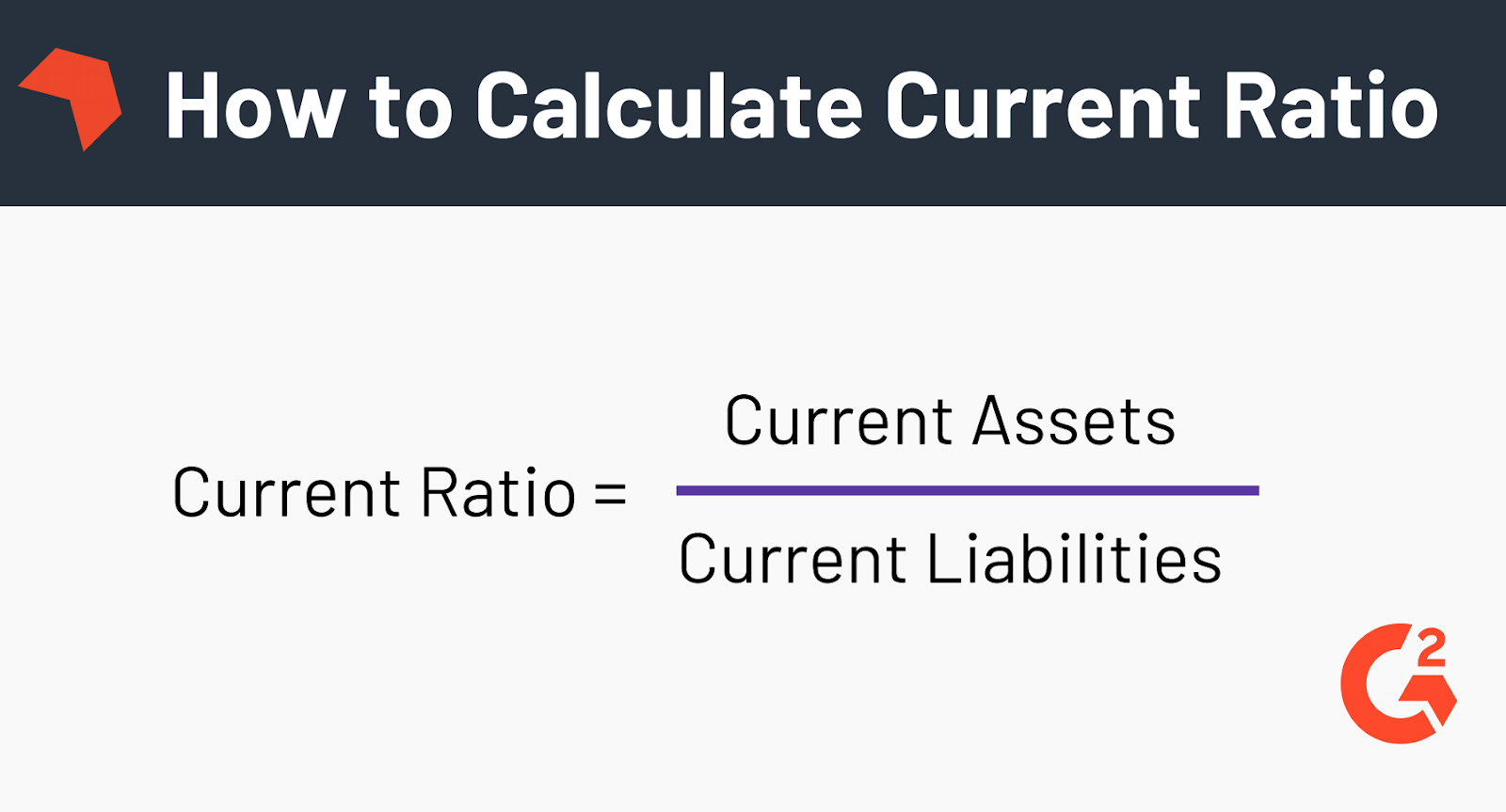
The formula for the current ratio is:
Current Ratio = Current Assets / Current Liabilities
Breaking Down Current Assets
Current assets are assets that a company expects to convert into cash or consume within one year or one operating cycle. In 2026, the valuation of these assets often involves sophisticated real-time tracking, but the fundamental categories remain:
- Cash and Cash Equivalents: The most liquid assets, including currency, checking accounts, and highly liquid short-term investments.
- Accounts Receivable: Money owed to the business by customers for goods or services delivered but not yet paid for.
- Inventory: Raw materials, work-in-progress goods, and finished products ready for sale.
- Prepaid Expenses: Payments made in advance for services or goods to be received in the future, such as insurance premiums.
Understanding Current Liabilities
Current liabilities are a company's short-term financial obligations that are due within one year or within a normal operating cycle. These include:
- Accounts Payable: Money owed by a business to its suppliers or vendors.
- Short-term Debt: Loans and financial obligations that must be repaid within a year.
- Accrued Liabilities: Expenses incurred but not yet paid, such as wages or taxes.
- Current Portion of Long-term Debt: The specific amount of a long-term loan that is due within the current twelve-month period.
Defining Net Worth: The Solvency Benchmark
Net worth, often referred to as Shareholders' Equity or Book Value, represents the "bottom line" of a company’s financial position. It is the amount that would be left over if a company sold all its assets and paid off all its debts.
The formula for Net Worth is:
Net Worth = Total Assets - Total Liabilities
Unlike the current ratio, which is a proportion (e.g., 2:1), net worth is expressed as a specific currency value. It encompasses not just the "current" items but also long-term assets (like property, machinery, and intellectual property) and long-term liabilities (like 30-year mortgages or corporate bonds).
The Mathematical Connection: How Liquidity Components Affect Equity
To understand how the current ratio formula relates to net worth, we must look at how the balance sheet is organized. The components of the current ratio are "sub-sets" of the components of net worth.
We can rewrite the Net Worth formula to highlight the role of the current ratio components:
Net Worth = (Current Assets + Non-Current Assets) - (Current Liabilities + Long-term Liabilities)
By rearranging this, we see:
Net Worth = (Current Assets - Current Liabilities) + (Non-Current Assets - Long-term Liabilities)
The term (Current Assets - Current Liabilities) is known as Working Capital. Therefore, net worth is the sum of a company’s working capital and its long-term net position.
The Role of Working Capital
Working capital is the dollar-value representation of the same relationship expressed by the current ratio. While the current ratio tells you the proportion of coverage, working capital tells you the amount of coverage. Since working capital is a direct component of net worth, any change in the variables of the current ratio (current assets or current liabilities) will result in a dollar-for-dollar change in the business's net worth, assuming long-term variables remain constant.
For example, if a business takes on $10,000 in short-term debt (increasing current liabilities) to buy $10,000 worth of inventory (increasing current assets), the current ratio changes because the denominator and numerator both grew. However, the net worth remains the same because the net impact on the balance sheet is zero. Conversely, if the business generates $10,000 in profit (increasing cash/current assets) without increasing liabilities, both the current ratio and the net worth will improve.
Why Business Owners Confuse the Two
The confusion often stems from the fact that both metrics are used to judge "health." A business with a high net worth might still fail if its current ratio is too low. This is known as a liquidity crisis.
Consider a real estate holding company in 2026. It may own $50 million in property (Total Assets) with only $10 million in mortgages (Total Liabilities), resulting in a massive net worth of $40 million. However, if that company has only $5,000 in the bank (Current Assets) and owes $50,000 in immediate property taxes (Current Liabilities), its current ratio is a dangerous 0.1. Despite being "wealthy" on paper, the company cannot meet its immediate obligations.
In this scenario, the net worth is high, but the current ratio signals imminent technical insolvency. This illustrates why the current ratio is a measure of operational viability, while net worth is a measure of accumulated wealth.
Comparative Analysis: Current Ratio vs. Net Worth
The following table outlines the fundamental differences and the specific ways these two metrics provide different lenses on the same financial data.
| Feature | Current Ratio | Net Worth (Equity) |
|---|---|---|
| Mathematical Formula | Current Assets / Current Liabilities | Total Assets - Total Liabilities |
| Unit of Measurement | Ratio (X:1) | Currency ($/£/€) |
| Financial Focus | Short-term Liquidity | Long-term Solvency |
| Time Horizon | Next 12 months | Entire life of the business |
| Primary Question | Can we pay our bills today? | What is the business worth? |
| Target Audience | Suppliers, Lenders, Ops Managers | Investors, Owners, Buyers |
| Ideal Range | Generally 1.5 to 2.5 (Industry dependent) | Positive and growing over time |
Strategic Implications for 2026 Financial Planning
In the current fiscal year of 2026, financial management has shifted toward "lean liquidity." With high-interest rates and the prevalence of digital-first business models, many companies strive to keep their current ratio closer to 1.0 to avoid having "idle" cash that isn't earning a return. However, this strategy requires a very stable net worth to act as a buffer.
The Quality of Assets
When analyzing how the current ratio affects net worth, one must consider asset quality. A current ratio inflated by "dead" inventory (products that aren't selling) technically keeps the net worth higher on paper. However, if that inventory must eventually be written off, both the current ratio and the net worth will plummet simultaneously.
Accountants in 2026 emphasize the Acid-Test Ratio (or Quick Ratio) alongside the current ratio to get a clearer picture. The Acid-Test Ratio excludes inventory from current assets. If a company's current ratio is high but its quick ratio is low, its net worth is heavily dependent on the saleability of physical goods, which is a riskier financial position.
Impact of Inflation and Valuation
Net worth is often based on "historical cost" or "book value," whereas current assets like cash are "fair value." In an inflationary environment, the current ratio might seem to improve as prices for goods (inventory) rise, but if the cost of debt (liabilities) also rises, the net worth may not grow at the same pace. For an accurate 2026 valuation, businesses must look at how the liquid components of the current ratio are being eroded by purchasing power.
Frequently Asked Questions
Can a company have a high net worth but a low current ratio?
Yes. This typically occurs in capital-intensive industries like manufacturing or real estate. A company may own significant long-term assets (factories, land) which gives them a high net worth, but if they lack sufficient cash or liquid assets to cover their immediate accounts payable and short-term loans, their current ratio will be low. This is often referred to as being "asset rich but cash poor."
How does taking out a long-term loan affect both?
If a business takes out a $100,000 loan due in ten years, it receives $100,000 in cash. This increases current assets, which significantly improves the current ratio because the debt is long-term (not a current liability). However, the net worth remains unchanged initially because the increase in assets ($100,000 cash) is exactly offset by the increase in total liabilities ($100,000 loan).
Is a current ratio of 2.0 always a sign of a high net worth?
No. A company could have a current ratio of 2.0 (e.g., $2,000 in assets and $1,000 in liabilities) while having a very low or even negative net worth if they have massive long-term debts that far exceed their long-term assets. The current ratio only looks at a small "slice" of the balance sheet timeframe.
How does depreciation affect these metrics?
Depreciation is a non-cash expense that reduces the book value of long-term assets. This directly reduces net worth over time. However, depreciation does not affect the current ratio because it applies to non-current assets (like machinery) and is not a current liability.
Why do lenders look at both metrics instead of just one?
Lenders look at the current ratio to ensure they will be repaid on time in the short term. They look at net worth to understand the "cushion" or collateral available if the business faces a major downturn. A high current ratio suggests operational efficiency, while a high net worth suggests overall financial stability and lower risk of total default.
Practical Next Actions
To accurately assess your business's health using these metrics, follow these steps:
- Standardize Your Balance Sheet: Ensure that your current assets and liabilities are strictly categorized by their 12-month liquidity. Misclassifying a long-term note as a current liability will artificially deflate your current ratio.
- Calculate the Working Capital Bridge: Subtract your current liabilities from your current assets. This dollar figure is your contribution to net worth from operations.
- Perform a "Stress Test": Imagine your inventory loses 50% of its value overnight. Recalculate your current ratio and see how much your total net worth drops. This reveals how sensitive your solvency is to your liquidity.
- Monitor Trends, Not Just Totals: In 2026, a single snapshot is less valuable than a trend line. If your net worth is increasing but your current ratio is steadily decreasing, you are likely "over-leveraging"—using short-term debt to fund long-term growth, which is a high-risk strategy.
For further guidance on financial reporting standards and ratio analysis, refer to the Financial Accounting Standards Board (FASB) or the International Financial Reporting Standards (IFRS) Foundation.
Image Gallery