Comprehensive Guide to Filing Complaints via www.tdi.texas.gov in 2026
To file an insurance complaint in Texas, visit the official Texas Department of Insurance (TDI) website at www.tdi.texas.gov. Use the "Consumer Help" section to submit an online complaint regarding auto, home, health, or life insurance...
To file an insurance complaint in Texas, visit the official Texas Department of Insurance (TDI) website at www.tdi.texas.gov. Use the "Consumer Help" section to submit an online complaint regarding auto, home, health, or life insurance. The TDI investigates potential state law violations and helps mediate disputes between consumers and licensed insurance entities.
Contents
Understanding the Role of the Texas Department of Insurance (TDI)
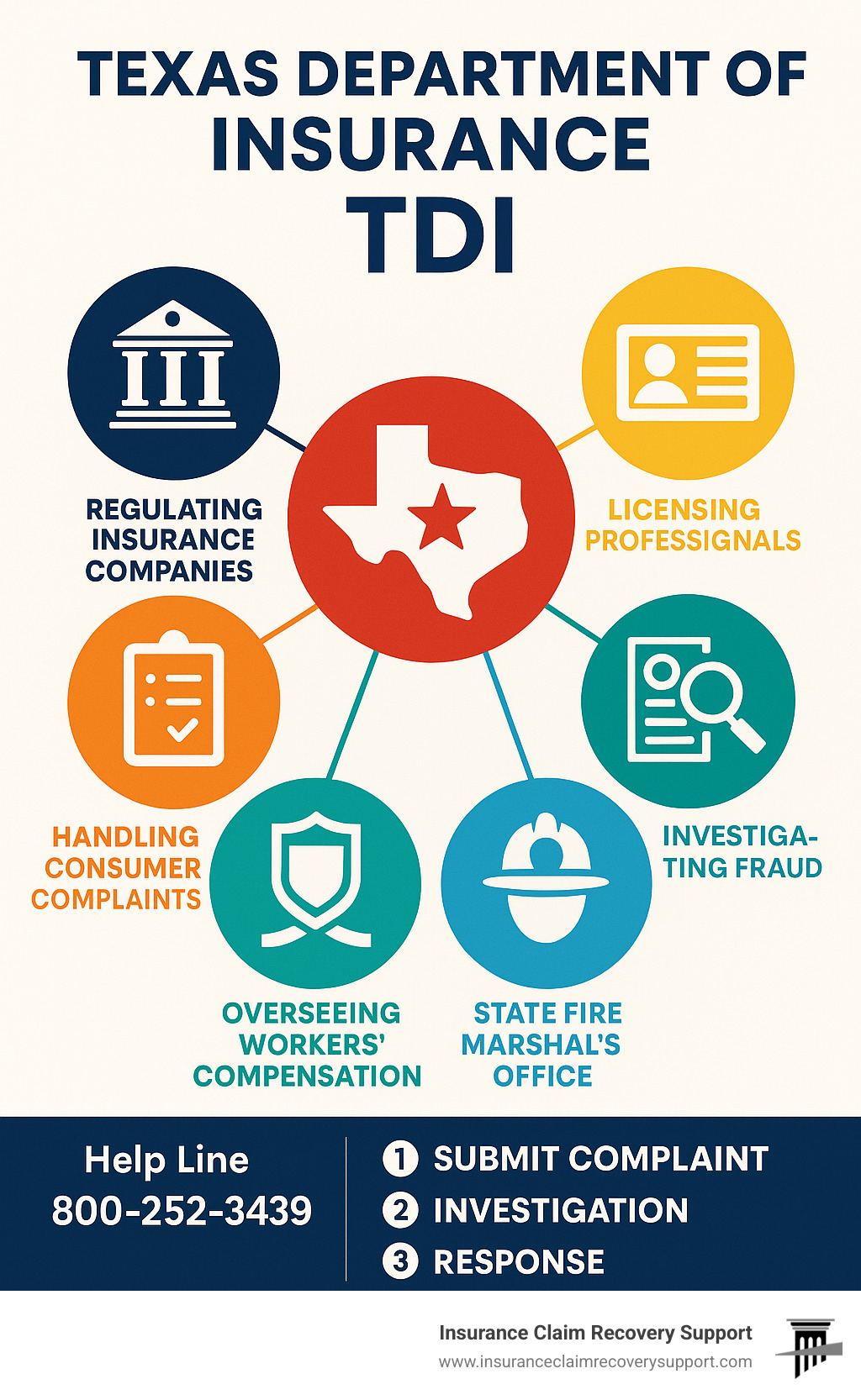
The Texas Department of Insurance serves as the primary regulatory body for the insurance industry within the state. As of 2026, its mission remains focused on protecting insurance consumers and ensuring a stable, competitive market. When a policyholder encounters an issue—ranging from a denied claim to an unresponsive agent—the TDI provides a structured mechanism for formal complaints.
The agency’s jurisdiction covers insurance companies, agents, adjusters, and health maintenance organizations (HMOs) licensed to operate in Texas. However, it is vital to understand that the TDI is a regulatory agency, not a court of law. While they can enforce compliance with the Texas Insurance Code, they cannot usually order a company to pay a claim unless the law clearly requires it or the company is found to be in violation of specific administrative rules.
Navigating the portal at www.tdi.texas.gov is the first step for any Texan who feels their insurance rights have been infringed. The process is designed to be accessible, but success often depends on the quality of the information provided and a clear understanding of what the agency can realistically achieve.
When Should You File a Complaint via www.tdi.texas.gov?
Before initiating a formal complaint, it is generally recommended to exhaust the internal appeals process of the insurance company. Most carriers have dedicated "Consumer Relations" or "Internal Appeal" departments. If these avenues fail to produce a resolution, the TDI portal becomes the necessary next step.
Common reasons for filing a complaint include:
- Unfair Claim Settlements: This includes delays in payment, offer amounts that seem arbitrarily low, or denials that contradict the written policy terms.
- Customer Service Issues: Lack of communication from adjusters or agents, or failure to return phone calls and emails within a reasonable timeframe.
- Policy Cancellations or Non-renewals: If a company cancels a policy without proper notice or for reasons not permitted under Texas law.
- Misrepresentation: When an agent or company provides false information regarding coverage or premium costs.
- Agent Misconduct: Issues involving premium theft, fraud, or unethical sales tactics.
Prerequisites for Using the TDI Complaint Portal
To ensure your complaint is processed efficiently, you must gather all relevant documentation before logging onto the website. The TDI complaint specialists need a clear "paper trail" to investigate the matter.
Required Information Checklist
Before visiting the portal, ensure you have the following data points ready:
- Policy Information: Your full name (as it appears on the policy), your policy number, and the full legal name of the insurance company.
- Claim Details: The claim number assigned by the company and the date the loss occurred.
- Communication Logs: A chronological list of everyone you have spoken to at the insurance company, including names, dates, and a summary of what was discussed.
- Supporting Documents: Digital copies (PDF or JPG) of your policy’s "Declarations Page," denial letters, repair estimates, and relevant photos of damages.
- A Concise Summary: A clear, factual explanation of the problem. Avoid emotional language; focus on the facts of the dispute and the specific outcome you are seeking.
Step-by-Step Guide to the Online Complaint Process
The digital portal is the fastest way to get your complaint into the hands of an investigator. Follow these steps to navigate the www.tdi.texas.gov system in 2026.
1. Accessing the Consumer Help Center
Go to the homepage and look for the "Consumer Help" tab or the "File a Complaint" button. This will direct you to a page outlining your rights and the different types of complaints handled by the agency.
2. Choosing the Right Form
Texas separates complaints by insurance type. You will need to select the category that fits your situation:
- Auto Insurance: For accidents, liability, and collision disputes.
- Homeowners and Property: For fire, wind, hail, or theft claims.
- Health and Life: For medical billing, coverage denials, or life insurance payouts.
- Title Insurance: For issues involving real estate transactions.
3. Filling Out the Online Application
The form will ask for your contact information and the company’s information. You will then be prompted to upload your supporting documents. It is highly recommended to use the file upload feature rather than mailing documents later, as this significantly speeds up the intake process.
4. Review and Submission
Once submitted, you will receive a tracking number. Save this number, as it is your primary reference for all future inquiries regarding your case.
| Component | Information Required | Why It Matters |
|---|---|---|
| NAIC Number | The company's unique ID | Ensures the complaint is filed against the correct legal entity. |
| Claim Timeline | Specific dates of denial | TDI checks if the company met legal deadlines for responding. |
| Evidence | PDF copies of denials | Provides the investigator with the company's stated reason for denial. |
| Desired Resolution | What you want (e.g., "Pay claim") | Helps the TDI determine if the request is within their power. |
What Happens After You File?
Once the TDI receives your complaint, the case is assigned to a Consumer Protection specialist. The process typically follows a standardized workflow:
- Intake and Acknowledgement: You will receive a formal acknowledgment that your complaint has been received. This usually happens within a few business days.
- Notification to the Company: The TDI will send a copy of your complaint to the insurance company and ask for their side of the story. Under the Texas Insurance Code, companies are generally required to respond to the TDI within 15 days.
- The Investigation: The specialist reviews the company's response against the terms of your policy and Texas law. They may contact you for additional information or clarification.
- Final Determination: The TDI will notify you of the results. This might result in the company changing its decision, or the TDI may conclude that the company acted within its legal rights.
Jurisdiction Limitations: What TDI Cannot Do
It is a common mistake for consumers to assume the TDI has unlimited power. In reality, there are significant limits to their authority. For example, if your health insurance is provided by an employer who "self-insures" (common in large corporations), your plan may be governed by federal ERISA laws rather than Texas state laws. In such cases, the TDI has limited jurisdiction and may refer you to the U.S. Department of Labor.
Furthermore, the TDI cannot:
- Act as Your Lawyer: They cannot provide legal advice or represent you in a private lawsuit.
- Decide "Who is at Fault": In an auto accident where fault is disputed, the TDI cannot make a final ruling on negligence; that is a matter for the court system or arbitration.
- Set Repair Prices: If you and the insurance company disagree on the labor rate for a car repair, the TDI cannot force them to pay more than the "prevailing market rate," though they can ensure the company isn't being predatory.
Special Considerations for Health Insurance Complaints
In 2026, health insurance remains one of the most complex areas of consumer protection. Texas has strong protections against surprise billing (balance billing). If you receive a bill from an out-of-network provider for emergency services or for services provided at an in-network facility, the TDI’s portal features a specialized mediation and arbitration request process.
For more information on these specific protections, you can review the Texas Balance Billing laws. If your complaint involves a medical necessity denial, the TDI can also facilitate an Independent Review Organization (IRO) process, where a third-party doctor reviews your case to determine if the treatment should be covered.
Common Mistakes to Avoid
- Filing Too Early: If you haven't spoken to the company yet, the TDI will likely tell you to contact the company first.
- Lack of Specificity: Vague complaints like "they are being mean" or "it's not fair" are difficult to investigate. Use specific policy language whenever possible.
- Missing Deadlines: Many insurance policies have strict "statutes of limitation" or "contractual suit limitations." Filing a TDI complaint does not always stop the clock on these legal deadlines.
- Ignoring the Paperwork: Always respond promptly to requests for more information from your TDI investigator.
Troubleshooting the Website
If you encounter technical issues with www.tdi.texas.gov, ensure your browser is updated to the latest version. The portal is optimized for mobile use in 2026, but uploading large PDF files is often easier on a desktop computer. If the online form is unavailable, you can download a paper complaint form and send it via mail to:
Texas Department of InsuranceConsumer Protection, MC: CO-CPP.O. Box 12030Austin, TX 78711-2030
Frequently Asked Questions
How long does the complaint process usually take?
Most TDI investigations are completed within 45 to 60 days. However, complex cases involving medical necessity or large-scale property disputes may take longer if several rounds of communication are required between the investigator and the insurance company’s legal team.
Can I file a complaint on behalf of someone else?
Yes, but you will generally need to provide written authorization or a Power of Attorney (POA) if you are filing for an adult who is not yourself. This ensures that the TDI is compliant with privacy laws when discussing sensitive financial or medical information.
Will filing a complaint cause my insurance company to cancel my policy?
Texas law prohibits insurance companies from retaliating against policyholders for filing a complaint with the TDI. If you believe you are facing retaliation, such as an unjustified non-renewal following a complaint, you should immediately notify your TDI investigator.
What if I am not satisfied with the TDI’s final decision?
If the TDI concludes its investigation and you are unhappy with the outcome, you still have options. You can seek private legal counsel, pursue a case in small claims court (for smaller amounts), or look into alternative dispute resolution methods like mediation or the "appraisal clause" found in many property insurance policies.
Is there a fee to file a complaint at www.tdi.texas.gov?
No, the TDI provides its consumer protection and complaint investigation services free of charge to Texas residents. It is a state-funded service intended to uphold insurance standards and protect the public interest.
Practical Recommendation for 2026
If you are facing a dispute with an insurance provider, start by writing a formal "Letter of Intent" to the company's compliance officer. Clearly state that if the issue is not resolved within 10 business days, you will be escalating the matter to www.tdi.texas.gov. In many cases, this demonstrates that you are an informed consumer and may prompt a faster resolution from the company's internal team. If they do not respond, proceed immediately to the TDI portal with your organized documentation to ensure your rights are protected under the Texas Insurance Code.
Image Gallery