Understanding the Saudi Arabia Court System: A Comprehensive Guide to Legal Proceedings in 2026
Navigating the Saudi Arabia court system involves interacting with a modern, tiered judicial hierarchy that has undergone significant codification and digitalization under Vision 2030. To resolve a legal matter, parties must utilize th...
Navigating the Saudi Arabia court system involves interacting with a modern, tiered judicial hierarchy that has undergone significant codification and digitalization under Vision 2030. To resolve a legal matter, parties must utilize the Ministry of Justice's Najiz portal for filing claims, attending virtual hearings, and managing enforcement, while adhering to newly codified statutes like the Civil Transactions Law.
Contents
The judicial landscape in the Kingdom of Saudi Arabia (KSA) has transformed from a system primarily based on uncodified Sharia interpretations to a sophisticated, predictable framework. As of 2026, the integration of technology and the introduction of specialized courts have streamlined legal processes for citizens, residents, and international investors alike. This guide explores the structure, procedures, and essential requirements for navigating the Saudi court system effectively.
The Structure of the Saudi Arabian Judiciary
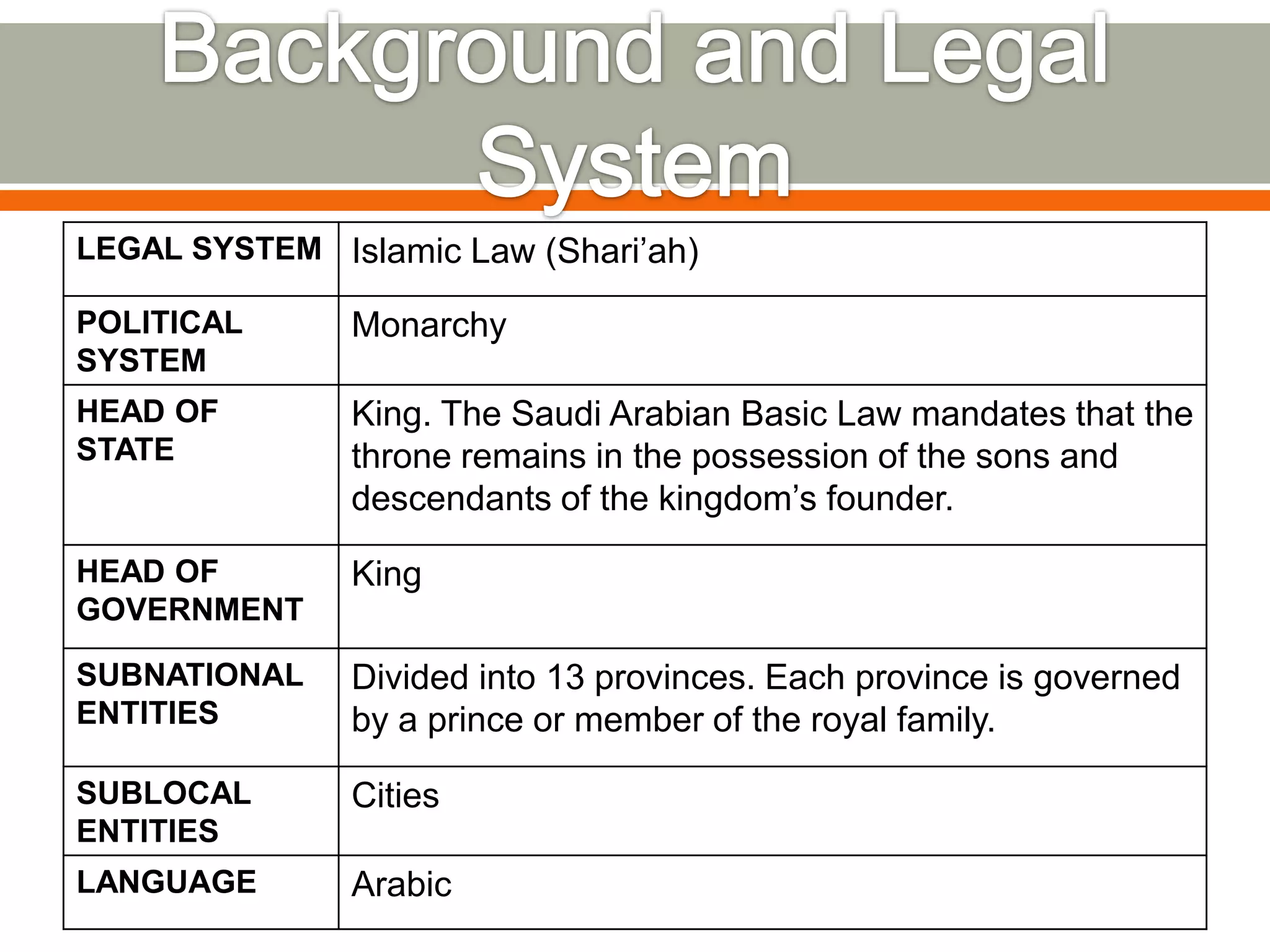
The Saudi court system is organized into a specialized hierarchy designed to ensure expertise in various legal domains. Unlike some jurisdictions where a single court might handle diverse cases, the KSA system directs disputes to specific benches based on the nature of the matter.
1. The Supreme Court
Located in Riyadh, the Supreme Court sits at the apex of the judicial pyramid. Its primary role is to oversee the implementation of Islamic law and state regulations, particularly in cases involving major crimes (such as those carrying capital punishment) or significant points of law. It does not re-examine facts but ensures that the lower courts applied the law correctly.
2. Courts of Appeal
Courts of Appeal review judgments issued by the Courts of First Instance. In 2026, most appellate reviews are conducted based on the case file and written submissions, though oral arguments can be requested if the bench deems it necessary. There is at least one Court of Appeal in every province of the Kingdom.
3. Courts of First Instance
These are the entry-level courts where most litigation begins. They are divided into five specialized categories:
- General Courts: Handle real estate disputes, torts, and cases not falling under other specialized jurisdictions.
- Criminal Courts: Preside over all criminal prosecutions, from minor offenses to felonies.
- Commercial Courts: Manage disputes between traders, company liquidations, and maritime issues.
- Labor Courts: Focus on disputes arising from the Saudi Labor Law, including unpaid wages and wrongful termination.
- Personal Status Courts: Deal with marriage, divorce, inheritance, and child custody.
4. The Board of Grievances (Administrative Courts)
Independent of the Ministry of Justice, the Board of Grievances reports directly to the King. It handles disputes where the government or a state agency is a party, such as administrative appeals or challenges to municipal decisions.
The Digital Transformation: The Najiz Portal
By 2026, physical presence in a courthouse is rarely the default. The Najiz platform, operated by the Ministry of Justice, has become the mandatory gateway for almost all judicial services.
Filing a Claim
To initiate a lawsuit, the plaintiff must log into Najiz using their Unified National Access (Absher) credentials. The system requires the digital submission of the statement of claim, evidence, and the identification of the defendant. For commercial cases, the plaintiff must often prove that a mandatory mediation attempt was made before the court will accept the filing.
Virtual Hearings and Electronic Litigation
Most preliminary and substantive hearings are now conducted via video conferencing. The system issues automated SMS and email notifications containing the meeting links. Digital transcripts are recorded in real-time, and parties can upload supplementary memos directly to the case file during the session.
Remote Notarization and Power of Attorney
Legal representation requires a valid Power of Attorney (PoA). In 2026, PoAs can be issued digitally via Najiz within minutes, allowing individuals to authorize lawyers or representatives without visiting a notary public.
Essential Legislative Reforms and Codification
One of the most significant shifts in the Saudi legal environment is the "Big Four" legislative project, which has brought unprecedented clarity to the court system.
- The Civil Transactions Law: This landmark code regulates contracts, property rights, and obligations. It provides a statutory basis for business dealings, reducing the judicial discretion that previously led to inconsistent rulings.
- The Law of Evidence: This law outlines exactly what is admissible in court, including digital signatures, electronic communications, and expert testimony.
- The Personal Status Law: Codifies rules regarding family life, providing specific protections for women and ensuring predictable outcomes in custody and inheritance matters.
- The Penal Code for Discretionary Sanctions: While Sharia remains the source for fixed (Hudud) crimes, this code provides a written framework for other criminal offenses, ensuring that defendants know the specific penalties associated with their actions.
Comparison of Specialized Court Jurisdictions
The following table summarizes the primary functions and characteristics of the most frequently utilized courts in Saudi Arabia.
| Court Type | Primary Subject Matter | Pre-requisite for Filing | Typical Resolution Time (2026) |
|---|---|---|---|
| Commercial Court | Business contracts, agency disputes, bankruptcy | Mandatory mediation for most cases | 3 to 6 months |
| Labor Court | Employment disputes, wage claims, EOSB | Mandatory amicable settlement via Qiwa/MHRSD | 1 to 3 months |
| Personal Status | Divorce, custody, inheritance | Reconciliation attempts via the "Taradhi" platform | 2 to 4 months |
| Enforcement Court | Execution of checks, judgments, or notarized contracts | A final judgment or an "Executive Document" | 15 to 45 days |
The Role of the Enforcement Courts
A unique strength of the Saudi Arabia court system is the Enforcement Court. Once a judgment is finalized, or if a party holds a "liquid debt" instrument (like a promissory note or a notarized contract), they do not need to file a new lawsuit. Instead, they file an enforcement request.
The Enforcement Judge has the power to:
- Freeze the debtor’s bank accounts instantly through the "Sama" system.
- Ban the debtor from government services or international travel.
- Liquidate assets to satisfy the debt.
- Issue arrest warrants in specific cases of non-compliance.
Practical Steps for Litigants in 2026
If you find yourself involved in a legal dispute in Saudi Arabia, following these steps can significantly impact the outcome of your case.
1. Verification of Legal Capacity
Ensure your Absher account is active and that your contact information is up to date. The court system relies heavily on automated notifications; missing an SMS regarding a hearing date can result in a default judgment.
2. Document Translation
All evidence submitted to a Saudi court must be in Arabic. Documents originally in English or other languages must be translated by a certified translation office licensed by the Saudi Ministry of Commerce.
3. Hiring Legal Counsel
While individuals can represent themselves in most courts, hiring a Saudi-licensed lawyer is highly recommended for commercial and criminal matters. In 2026, foreign law firms are also operating more broadly in the Kingdom through joint ventures, providing specialized expertise for international investors.
4. Engaging in Mediation (Taradhi)
The Ministry of Justice encourages "Consensual Solutions." Before many cases reach a judge, they are referred to the Taradhi platform. If a settlement is reached here, the resulting document is treated as an "Executive Document," meaning it can be enforced immediately if breached, without further litigation.
Common Mistakes to Avoid
- Ignoring the "Statement of Claim" Details: Saudi courts are formalistic. If your statement of claim lacks the specific legal grounds required by the new codes, the judge may dismiss the case on procedural grounds before even hearing the facts.
- Late Submissions: The Najiz portal has strict windows for uploading memos. Failing to upload a response within the court-mandated 3 or 5-day window can lead to the court proceeding without your input.
- Inadequate Power of Attorney: Ensure your lawyer’s PoA specifically grants them the right to "claim, plead, and accept settlements" if those actions are necessary.
FAQs about Saudi Arabia Courts
Can non-Saudis use the court system?
Yes. Foreign residents (expats) and international business entities have full access to the Saudi court system. Access is granted through the Iqama or through specialized commercial registrations for businesses.
Is the Saudi court system conducted entirely in Arabic?
Yes, Arabic is the official language of the courts. While some specialized commercial panels may allow for the use of English in specific contexts or through translators, all official filings and judgments are rendered in Arabic.
How long do I have to appeal a judgment?
In most civil and commercial cases, the window for appeal is 30 days from the date the judgment is issued or made available on the Najiz portal. For "summary" or urgent cases, this window may be as short as 10 days.
Are court hearings open to the public?
While the principle of public hearings exists, the shift to virtual litigation means that "attending" a hearing usually requires a specific link. However, interested parties with a legitimate connection to the case can often request access.
What are the costs associated with filing a lawsuit?
Saudi Arabia introduced judicial fees for most commercial and civil cases. The fee is generally a percentage of the claim value, capped at a specific amount (often 1,000,000 SAR). Labor and personal status cases are typically exempt from these fees to ensure access to justice.
How are international judgments enforced in Saudi Arabia?
Foreign judgments can be enforced through the Enforcement Court, provided there is a treaty of reciprocity between Saudi Arabia and the country where the judgment was issued, and the judgment does not contradict Saudi public policy or Sharia.
Final Recommendations
When dealing with the Saudi Arabia court system in 2026, the key to success lies in digital readiness and proactive mediation. Start by ensuring all your contractual documents are notarized or registered via official platforms like Ejar (for rentals) or Qiwa (for labor), as these serve as "Executive Documents" that bypass lengthy trials. If a dispute arises, prioritize the Taradhi mediation platform to save time and costs. For complex matters, always consult with a licensed local attorney to ensure compliance with the rapidly evolving codified laws.
Professional-Advice Limitation: This article is for informational purposes only and does not constitute legal advice. Laws and judicial procedures in Saudi Arabia are subject to change. Consult with a qualified Saudi-licensed legal professional for specific guidance on your case.
Image Gallery