Why Wildlife Leaving Yellowstone Park is a Myth: Science vs. Sensation
The idea that wildlife are fleeing Yellowstone National Park in anticipation of a volcanic eruption is a persistent myth driven by misunderstood viral videos and seasonal migration patterns. Scientific data from the Yellowstone Volcano...
The idea that wildlife are fleeing Yellowstone National Park in anticipation of a volcanic eruption is a persistent myth driven by misunderstood viral videos and seasonal migration patterns. Scientific data from the Yellowstone Volcano Observatory and wildlife biologists confirm that animal movements are dictated by forage availability and weather, not geological unrest.
Contents
The Origins of the Yellowstone "Mass Exodus" Myth
The myth of a mass wildlife exodus from Yellowstone National Park typically resurfaces every few years, often fueled by social media algorithms and sensationalist news headlines. The most famous instance occurred in early 2014, when a video surfaced showing bison running along a park road. To the untrained eye, the animals appeared to be "fleeing" for their lives. Internet theorists quickly linked this behavior to the Yellowstone Caldera—the "supervolcano" that sits beneath the park—suggesting the animals sensed an imminent eruption.
In reality, the bison in that specific video were running into the park, not away from it. Furthermore, bison frequently run for play, social interaction, or simply because it is easier to move along paved roads than through deep snow. Despite immediate debunking by the National Park Service (NPS) and the United States Geological Survey (USGS), the narrative took hold. By 2026, this myth continues to circulate in various forms, often reappearing whenever a minor earthquake swarm is recorded in the region.
Understanding why this myth persists requires looking at the intersection of human psychology and biological cycles. Humans have a long history of attributing "sixth sense" capabilities to animals regarding natural disasters. While some animals may exhibit distress immediately before an earthquake due to P-waves, there is no scientific evidence that herds of megafauna perform long-distance evacuations weeks or months before a volcanic event.
Understanding Natural Wildlife Migration Patterns
To distinguish between myth and reality, one must understand the standard movements of Yellowstone’s primary species: bison, elk, and pronghorn. These animals are migratory by nature, and their movements are highly predictable based on the seasons.
The Search for Forage
Yellowstone is a high-altitude plateau characterized by long, harsh winters. When heavy snow blankets the interior of the park, the grasses that bison and elk rely on become buried under several feet of "crusty" snow. To survive, these animals must move to lower elevations where the snow is thinner and the grass is more accessible. This movement typically leads them toward the park’s northern and western boundaries.
The "Green Wave" Phenomenon
In the spring, the process reverses. As the snow melts, fresh, nutrient-rich grass begins to grow at lower elevations first, gradually moving up the mountainsides as the season progresses. Wildlife biologists refer to this as "surfing the green wave." Animals follow this flush of new growth back into the heart of the park. To a casual observer visiting in late autumn or early winter, seeing hundreds of elk or bison moving toward the park exits can look like a flight from danger, when it is actually a journey toward a meal.
Road Usage as a Path of Least Resistance
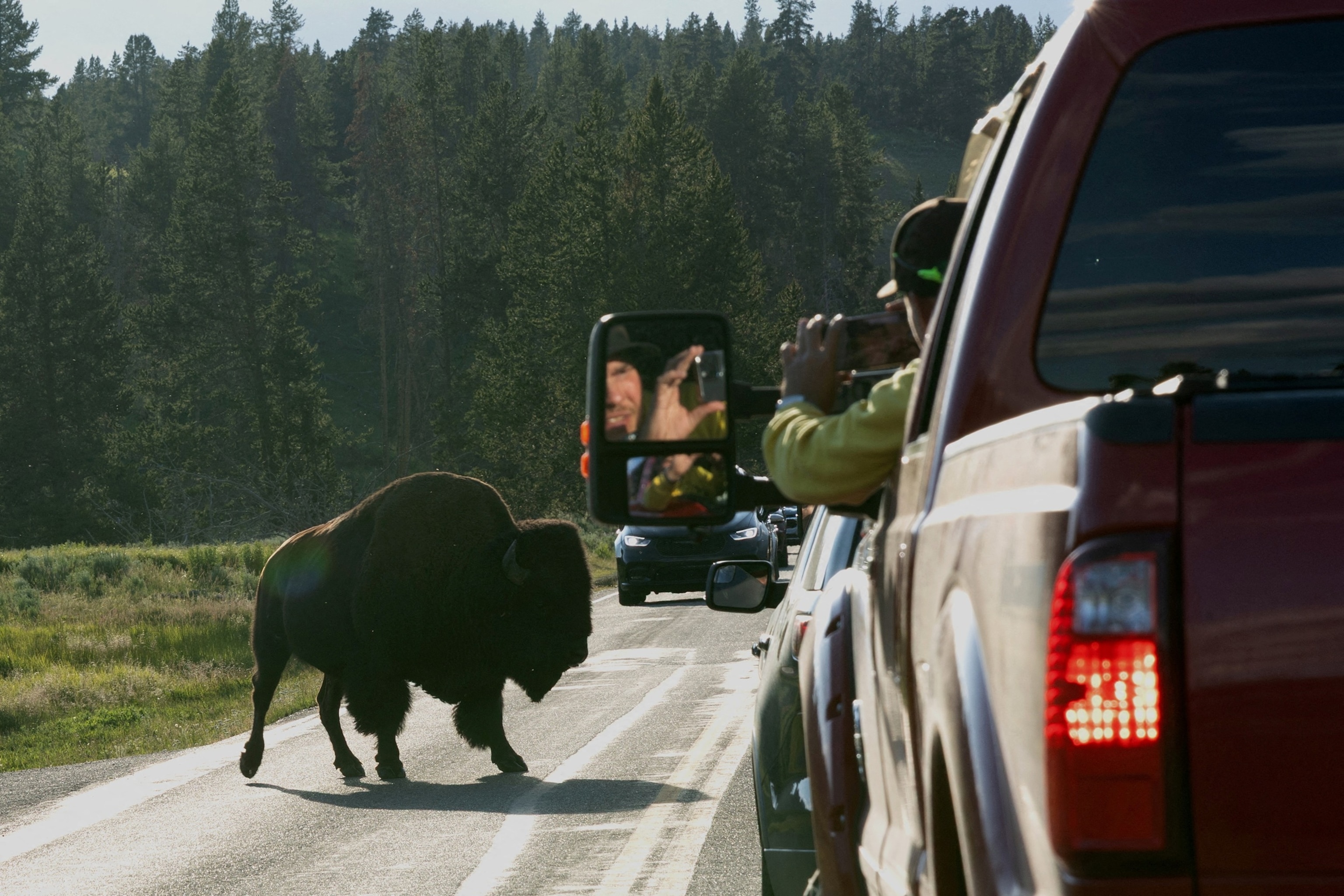
During winter months, the park roads—often plowed for administrative use or snowcoach tours—become the easiest path for large mammals to travel. Deep snow requires an immense amount of caloric energy to navigate. By using the roads, bison can move between foraging areas with minimal effort. This places them in direct view of tourists and cameras, creating the optical illusion of a frantic escape.
The Role of the Yellowstone Volcano Observatory (YVO)
The most robust evidence against the "fleeing wildlife" myth comes from the Yellowstone Volcano Observatory (YVO). As of 2026, Yellowstone remains one of the most intensely monitored geological sites on Earth. A dense network of seismometers, GPS stations, and satellite-based InSAR (Interferometric Synthetic Aperture Radar) tracks every millimeter of ground movement and every minor tremor.
Scientists at the USGS Yellowstone Volcano Observatory emphasize that if the caldera were moving toward an eruption, the geological indicators would be massive and impossible to ignore. These would include:
- Intense Earthquake Swarms: Not just small tremors, but sustained, high-magnitude quakes caused by magma breaking through the crust.
- Rapid Ground Uplift: The ground would rise significantly (meters, not centimeters) over a wide area.
- Changes in Hydrothermal Activity: Significant and widespread changes in geyser eruptions and gas emissions (such as sulfur dioxide).
The YVO confirms that there has been no correlation between animal sightings and geological data. In fact, during periods of increased seismic "swarms," wildlife behavior has remained entirely normal. Animals continue to graze, mate, and migrate according to the calendar, indifferent to the thousands of tiny earthquakes that occur beneath their hooves every year.
Decoding Viral Footage: What the Videos Actually Show
When a video titled "Animals Leaving Yellowstone" goes viral, it almost always lacks context. Editorial scrutiny of these videos usually reveals one of four things:
- Seasonal Migration: As discussed, the footage often captures the natural move to lower elevations during the first heavy snowfall.
- Running for Play or Social Interaction: Young bison frequently engage in "galloping" bursts as part of social development.
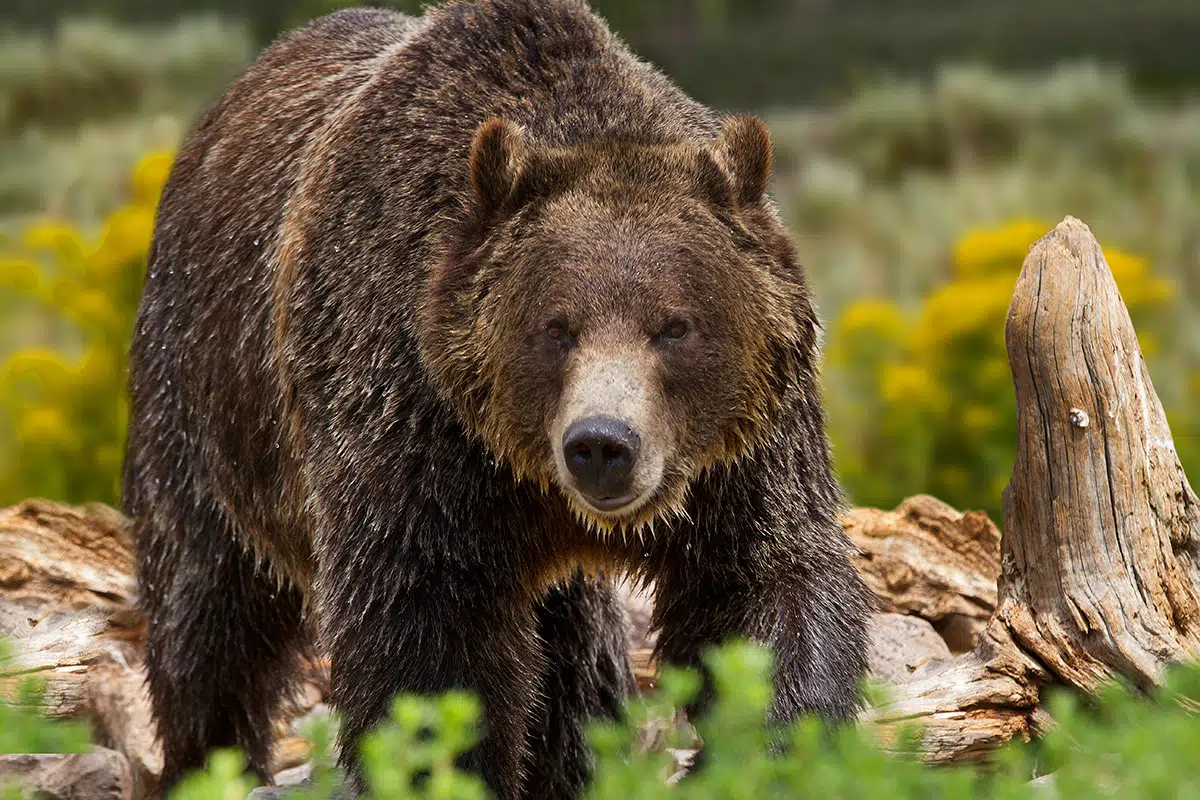
- Harassment by Predators: A herd of elk running at high speed is often reacting to a nearby wolf pack or a grizzly bear, not a subterranean magma chamber.
- Directional Misinterpretation: Many videos claiming animals are "leaving" actually show them moving toward the center of the park or simply moving from one grazing meadow to another.
The National Park Service maintains a dedicated resource page to clarify these misconceptions, noting that wildlife "exits" are a healthy sign of a functioning ecosystem where animals have the freedom to move across various habitats.
Comparing Migration vs. Emergency Flight
To help distinguish between normal animal behavior and the mythical "emergency flight," consider the following comparison based on ethological (animal behavior) studies:
| Feature | Natural Migration | Hypothetical "Emergency Flight" |
|---|---|---|
| Trigger | Snow depth, temperature, grass growth. | Immediate physical distress or environmental toxins. |
| Direction | Predictable routes (e.g., toward Gardiner or West Yellowstone). | Chaotic, multi-directional, or directly away from a localized vent. |
| Condition of Animals | Calm, grazing frequently during the move. | Visible signs of panic, exhaustion, and high-stress vocalization. |
| Duration | Occurs over weeks or months. | Sudden, rapid movement over hours. |
| Consistency | Entire herds move together based on age and sex cohorts. | Scattered, individual flight across all species simultaneously. |
Why the Myth Endures in 2026
Despite the abundance of scientific data, the myth persists due to "conformation bias." When people hear rumors of a supervolcano, they look for any "sign" that confirms their fear. A bison running on a road becomes that sign.
Furthermore, the digital landscape of 2026 allows for the rapid spread of misinformation. Short-form video platforms prioritize high-engagement, "scary" content over nuanced scientific explanations. A video with the caption "Yellowstone Bison Fleeing! Is the End Near?" will naturally receive more shares than a video titled "Bison Move to Lower Elevation to Find Forage."
How to Verify Information about Yellowstone Activity
If you encounter reports of wildlife "leaving" the park, use these steps to verify the information:
- Check the Date: Often, "new" viral videos are actually re-uploads of footage from 2014 or earlier.
- Consult the YVO Monthly Update: The USGS releases a monthly video and text summary of all seismic and volcanic activity in Yellowstone. If the volcano were at a heightened alert level, it would be front-page news globally.
- Look for Biological Context: Is it late October or November? If so, animals should be moving toward the park boundaries. This is a sign of a healthy ecosystem, not a disaster.
- Official NPS Social Media: The Yellowstone National Park official accounts frequently post updates about road closures and wildlife movements to provide context to visitors.
Frequently Asked Questions
Can animals sense volcanic eruptions before scientists?
There is no evidence that animals can predict volcanic eruptions better than modern seismic equipment. While some animals may react to the very first shockwaves of an earthquake (which humans might not feel), scientists have instruments that detect these waves instantly. There is no biological mechanism known that would allow a bison to "sense" magma movement miles underground weeks in advance.
Do animals ever leave the park in large numbers?
Yes, but this is a legal and ecological occurrence. In heavy winters, thousands of bison and elk move outside the park boundaries into "basin" areas in Montana. This often leads to management challenges regarding bison being outside the park, but it is a biological necessity for their survival, not a flight from a volcano.
Has a volcanic eruption ever been preceded by animal flight in history?
In some historical accounts of smaller volcanic eruptions or earthquakes, people have reported strange animal behavior (such as dogs barking or birds flying away) minutes before the event. However, these are localized reactions to immediate physical changes (gas, vibration) and do not involve the long-distance "mass exodus" often described in Yellowstone myths.
Why do some videos show bison running on the roads?
Bison use roads because they are the path of least resistance. In the winter, the snow on either side of the road can be five feet deep. Running or walking on the cleared asphalt saves the animal massive amounts of energy.
What is the current status of the Yellowstone volcano in 2026?
As of 2026, the Yellowstone Volcano Observatory lists the alert level as "Green" (Normal). Seismic activity remains within historical norms, and there is no indication of an eruption in the near or distant future.
Summary and Practical Recommendation
The "mass exodus" of wildlife from Yellowstone is a biological reality transformed into a geological myth. The movement of bison and elk across park boundaries is a necessary survival strategy to escape deep snow and find food. For those interested in the health of the park, the best action is to follow official sources like the National Park Service wildlife reports and the Yellowstone Volcano Observatory.
Rather than fearing the movement of animals, visitors should appreciate it as one of the last great migrations in North America. If you see wildlife moving toward the park exits during the autumn or winter, rest assured that they are simply following the same paths their ancestors have trodden for thousands of years.
Image Gallery