Complete Guide to Surrendering an Indexed Life Policy: Process, Tax Impacts, and Alternatives
Surrendering an indexed life policy—commonly known as an Indexed Universal Life (IUL) policy—means permanently cancelling the coverage in exchange for its net cash surrender value. This decision terminates your death benefit protection...
Surrendering an indexed life policy—commonly known as an Indexed Universal Life (IUL) policy—means permanently cancelling the coverage in exchange for its net cash surrender value. This decision terminates your death benefit protection and triggers potential ordinary income tax liabilities on earnings that exceed your cumulative premium basis, alongside applicable insurance surrender charges.
Contents
Disclaimer: This guide is intended strictly for educational purposes and does not constitute formal tax, legal, or financial advice. Life insurance regulations and individual tax liabilities vary based on jurisdiction and personal circumstances. Consult a qualified certified public accountant (CPA) or licensed financial advisor before surrendering a policy.
Understanding Indexed Universal Life (IUL) Policy Surrenders
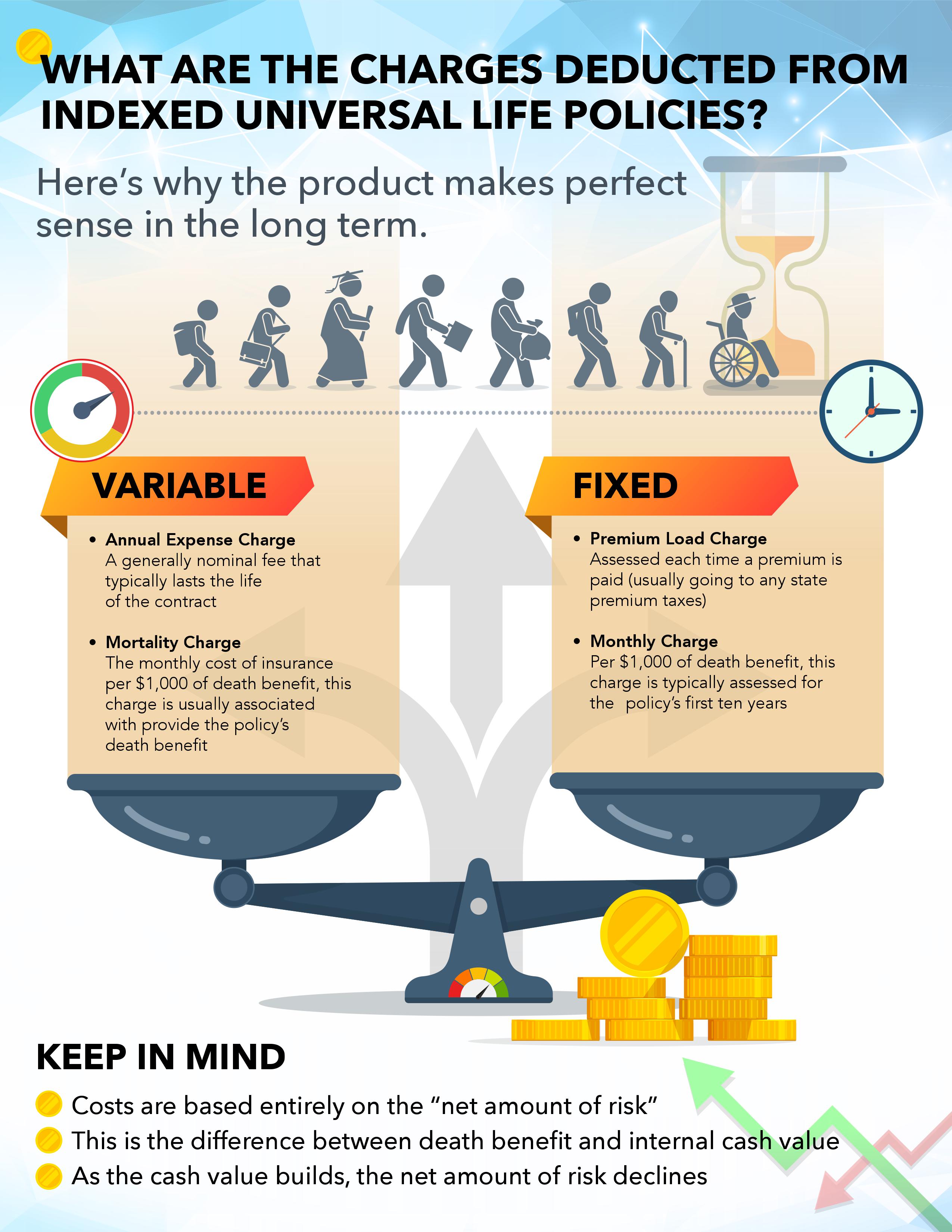
An Indexed Universal Life (IUL) policy is a permanent life insurance product that combines a death benefit with a cash value accumulation component linked to an underlying equity index, such as the S&P 500. While gains are typically capped and protected by a floor (often 0%), the policy mechanism relies on internal policy charges, cost of insurance (COI) deductions, and cash value performance.
When you surrender an indexed life policy, you formally instruct the issuing life insurance company to cancel the contractual agreement. The insurer calculates the policy's gross cash value, subtracts any outstanding policy loans, unpaid interest, and contractually defined surrender charges, and pays out the net remainder—known as the net cash surrender value.
Net Cash Surrender Value = Gross Cash Value - Outstanding Loans & Interest - Surrender Charges
Surrendering a policy is an irreversible administrative act. Once executed:
- The cash surrender check is issued to the policy owner.
- The life insurance death benefit is permanently forfeited.
- Any underlying riders (such as accelerated death benefits, chronic illness riders, or waiver of premium benefits) are cancelled immediately.
Financial and Tax Consequences of Policy Surrender
Surrendering an IUL policy carries multi-layered financial implications that impact your tax liability and long-term financial security. Failing to model these effects beforehand can result in unexpected tax liabilities.
1. Ordinary Income Tax on Earnings
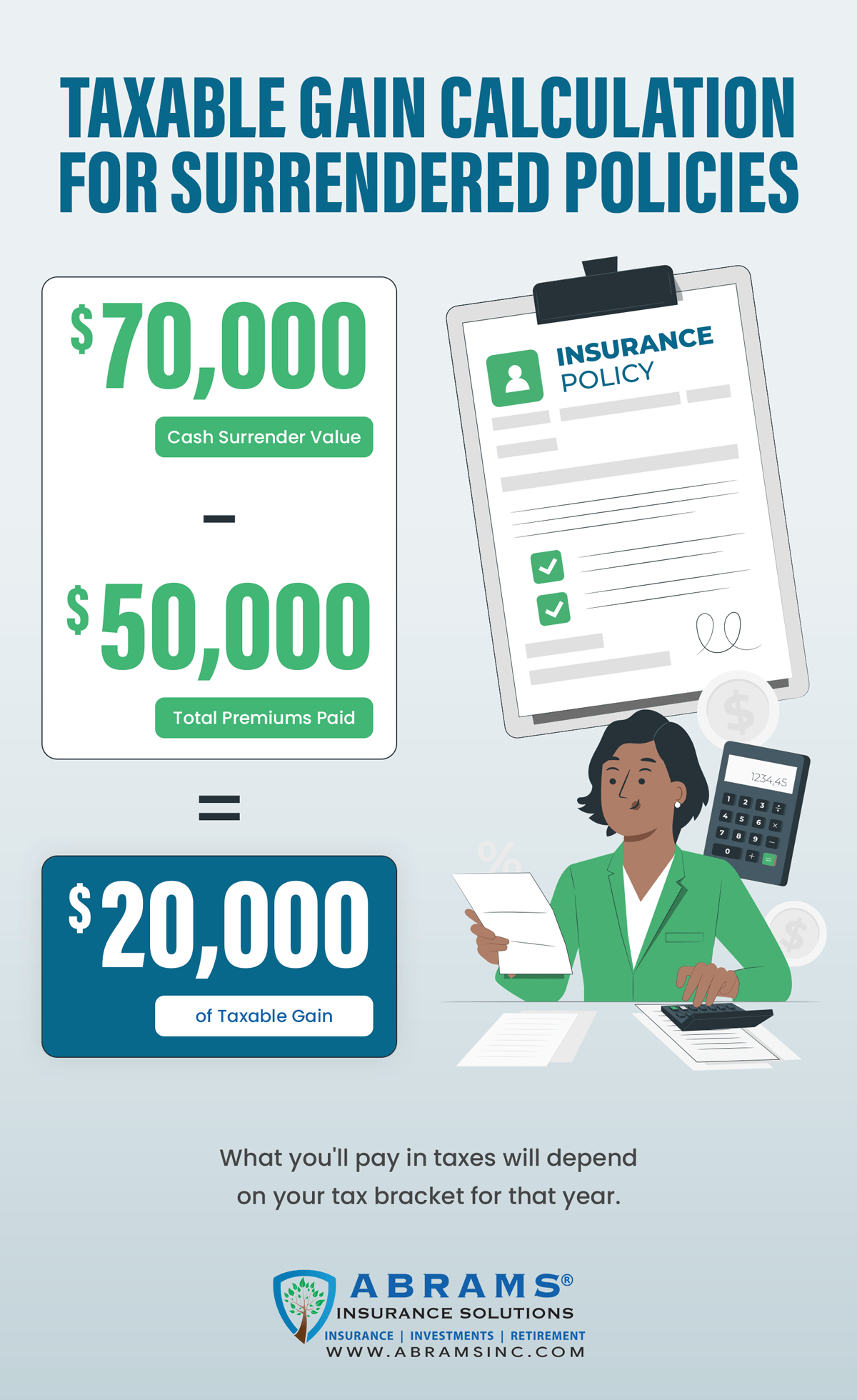
The Internal Revenue Service (IRS) treats cash value growth within a life insurance contract as tax-deferred. However, upon surrender, any distributions received in excess of your cost basis are fully taxable as ordinary income, not as long-term capital gains.
Your cost basis generally equals the total premiums paid into the policy minus any prior tax-free withdrawals or non-taxable distributions.
$$\text{Taxable Gain} = (\text{Net Cash Received} + \text{Loan Forgiveness}) - \text{Total Premiums Paid}$$
For official tax guidelines regarding policy distributions and life insurance contracts, refer to the Internal Revenue Service (IRS) guidelines on life insurance proceeds and policy surrenders.
2. The Policy Loan Tax Trap (Phantom Income)
One of the most catastrophic risks when surrendering an IUL policy involves outstanding policy loans. If you have borrowed against your cash value over time and choose to surrender the policy (or allow it to lapse), the insurance company satisfies the loan balance by deducting it from the internal accumulation value.
The IRS treats this forgiven loan balance as realized proceeds. If the sum of the cash received plus the debt forgiven exceeds your cumulative premium basis, the difference creates taxable ordinary income—even if the actual net check paid to you is minimal or zero. This phenomenon is often referred to as "phantom income."
3. Early Surrender Charges
Most IUL contracts feature a surrender charge period ranging from 10 to 15 years from the date of issue. During this window, insurers apply a sliding-scale administrative fee to offset upfront underwriting and distribution costs. Surrendering early in the policy life cycle frequently results in high surrender charges that significantly diminish your net payout, sometimes reducing cash value to zero.
4. Forfeiture of Coverage and Re-Underwriting Costs
Surrendering eliminates your financial protection. If your need for life insurance changes later, securing a replacement policy will require new medical underwriting at your current age and health status. Age progression or newly developed health conditions can result in significantly higher premiums or uninsurability.
Step-by-Step Process for Surrendering an Indexed Life Policy
If you determine that surrendering your indexed universal life policy is your best financial path, following a structured process ensures smooth execution and prevents administrative oversights.
Step 1: Request a Current Policy In-Force Illustration and Surrender Value Statement
Before submitting any formal surrender paperwork, contact your life insurer’s customer service department to request an updated in-force policy illustration and a formal surrender cash value statement. Verify:
- The exact net cash surrender value available today.
- The detailed surrender charge schedule and how long charges apply.
- The precise cost basis calculation registered with the insurer.
- The exact amount of outstanding policy loans and accrued interest.
Step 2: Evaluate Potential Tax Obligations
Work with a tax professional to calculate your projected income tax liability. Ensure you explicitly model whether the surrender will push you into a higher federal or state income tax bracket for the tax year.
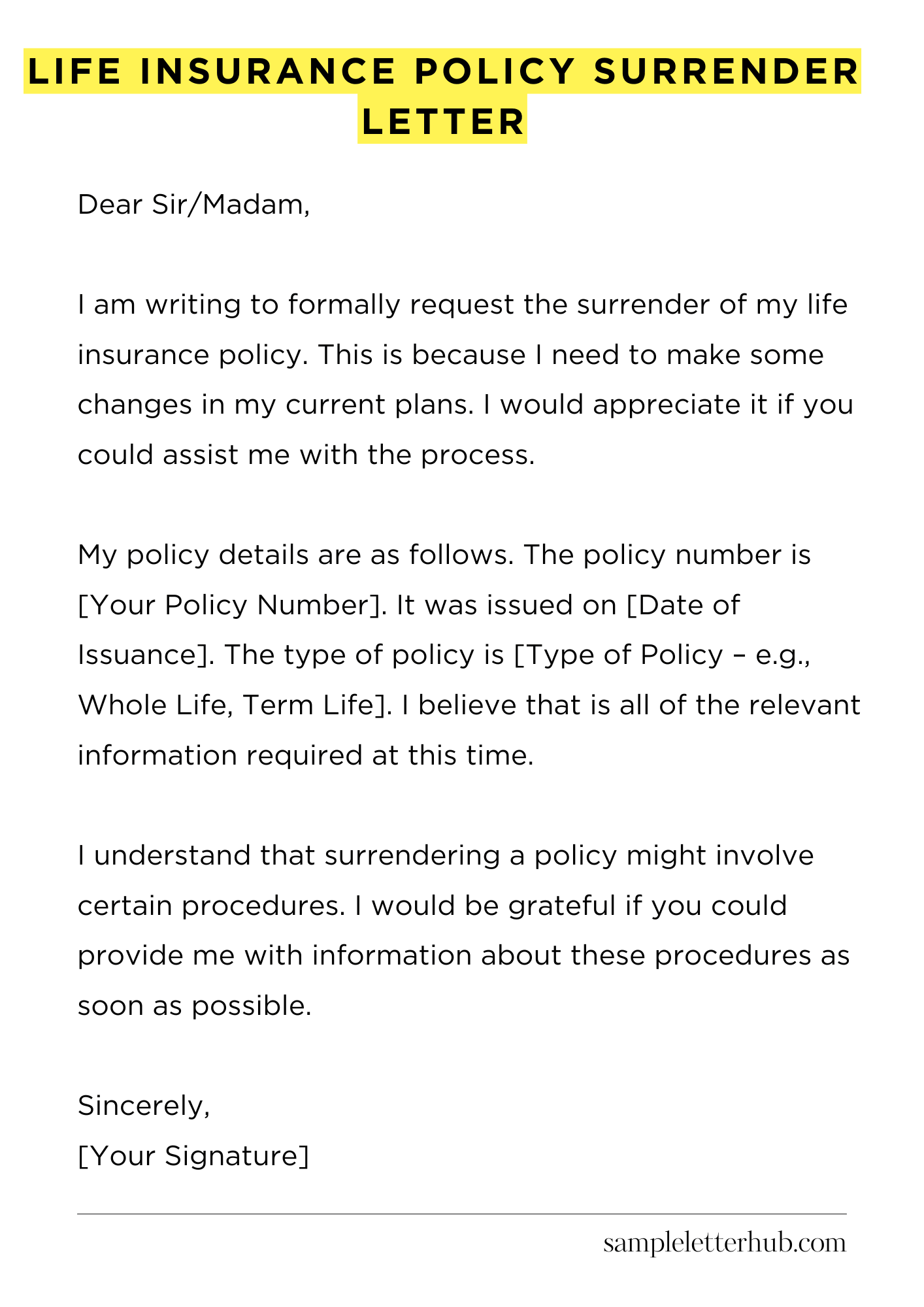
Step 3: Complete the Policy Surrender Form
Obtain the official Life Insurance Full Surrender Form directly from your insurance carrier. Modern carriers often provide secure digital signature processing through their customer portals. Key information required includes:
- Policy number and full legal name of the policy owner.
- Election for federal and state tax withholding (you may opt out of withholding, but tax liabilities remain due at tax filing).
- Direct deposit (ACH) details or preferred mailing address for physical checks.
Step 4: Submit Required Verification Documents
Insurers generally require verification to prevent unauthorized policy cancellations. You may need to supply:
- A government-issued photo ID.
- A notarized signature if the cash surrender value exceeds designated carrier thresholds (typically $50,000 or $100,000).
- Corporate resolution documentation if the policy is owned by a business entity or trust.
Step 5: Receive Funds and Retain Tax Documentation
Once processed—typically within 5 to 10 business days—the insurer dispatches the net funds. In January of the year following the surrender, the insurance company will issue Form 1099-R, detailing the gross distribution and the taxable amount to be reported on your tax return.
Strategic Comparison: Full Surrender vs. Policy Alternatives
Before taking irreversible steps to surrender an IUL policy, compare how full surrender measures up against alternative exit and restructuring mechanisms:
| Strategy | Primary Objective | Tax Treatment | Death Benefit Retained? | Best Suited For |
|---|---|---|---|---|
| Full Policy Surrender | Terminate contract entirely for cash value | Gains over basis taxed as ordinary income | No | Individuals needing immediate cash with no ongoing coverage needs |
| Section 1035 Exchange | Transfer cash value to a new policy or annuity | Tax-free rollover under IRC § 1035 | Optional (Yes if transferring to life policy) | Policyholders wanting better terms, lower fees, or annuity income |
| Partial Surrender / Withdrawal | Access a portion of equity while maintaining contract | Tax-free up to basis (FIFO rules apply to non-MECs) | Yes (Reduced face amount) | Policyholders needing temporary liquidity without cancelling policy |
| Policy Loan | Borrow cash value using policy as collateral | Tax-free structured loan (if policy remains active) | Yes (Loan balance reduces death benefit) | Flexible liquidity needs without triggering immediate income taxes |
| Reduced Paid-Up Insurance | Eliminate future premium obligations | Tax-free adjustment | Yes (Lower, paid-up death benefit) | Owners unable to pay premiums who still want permanent death benefit |
| Life Settlement | Sell policy to an institutional buyer | Complex tax rules (Basis tax-free, gains taxed as ordinary/capital) | No | Seniors (65+) with policy face amounts typically over $100,000 |
Viable Alternatives to Full Policy Surrender
Surrendering an IUL is rarely the only solution when facing high premiums or poor performance. Exploring alternative options allows policy owners to protect their accumulated capital and minimize tax exposure.
1. Section 1035 Tax-Free Exchange
Under Section 1035 of the Internal Revenue Code, policyholders can transfer the accumulated cash value of an underperforming IUL policy into a modern non-qualified annuity, a variable universal life policy, or a hybrid long-term care policy without triggering immediate income tax liabilities.
To execute a valid 1035 exchange:
- The transaction must occur directly between insurance companies (direct transfer).
- You must not take constructive receipt of the cash value.
- The owner and insured on the old and new policies must remain identical.
This method allows you to preserve your tax-deferred gains while transitioning into a financial product with lower cost structures or guaranteed income streams.
2. Utilizing Policy Loans or Partial Withdrawals
If your goal is accessing capital, full surrender may be unnecessary:
- First-In, First-Out (FIFO) Withdrawals: For non-Modified Endowment Contracts (non-MECs), withdrawals of cash value are treated as a tax-free return of premium up to your total cost basis.
- Policy Loans: You can borrow against your cash value. Policy loans are not taxable transactions provided the contract remains in force. However, you must carefully monitor interest accrual to prevent an accidental policy lapse.
3. Reducing the Policy Face Amount
If high Cost of Insurance (COI) charges are draining your cash value, you can request a formal reduction in the policy’s death benefit face amount. Lowering the face amount reduces the internal monthly charges, allowing your remaining cash value to sustain the policy without requiring substantial out-of-pocket premiums.
4. Executing a Life Settlement
If the policyholder is age 65 or older, or has experienced a significant change in health status, the policy may qualify for a life settlement. In a life settlement, you sell the ownership of the insurance policy to a licensed institutional investor for a lump-sum cash payment that is higher than the cash surrender value, though less than the total death benefit.
For comprehensive consumer protections regarding policy liquidations and secondary market sales, review guidance from the National Association of Insurance Commissioners (NAIC).
Common Mistakes to Avoid When Surrendering an IUL
When liquidating an indexed life policy, avoiding financial and procedural pitfalls can protect your net proceeds:
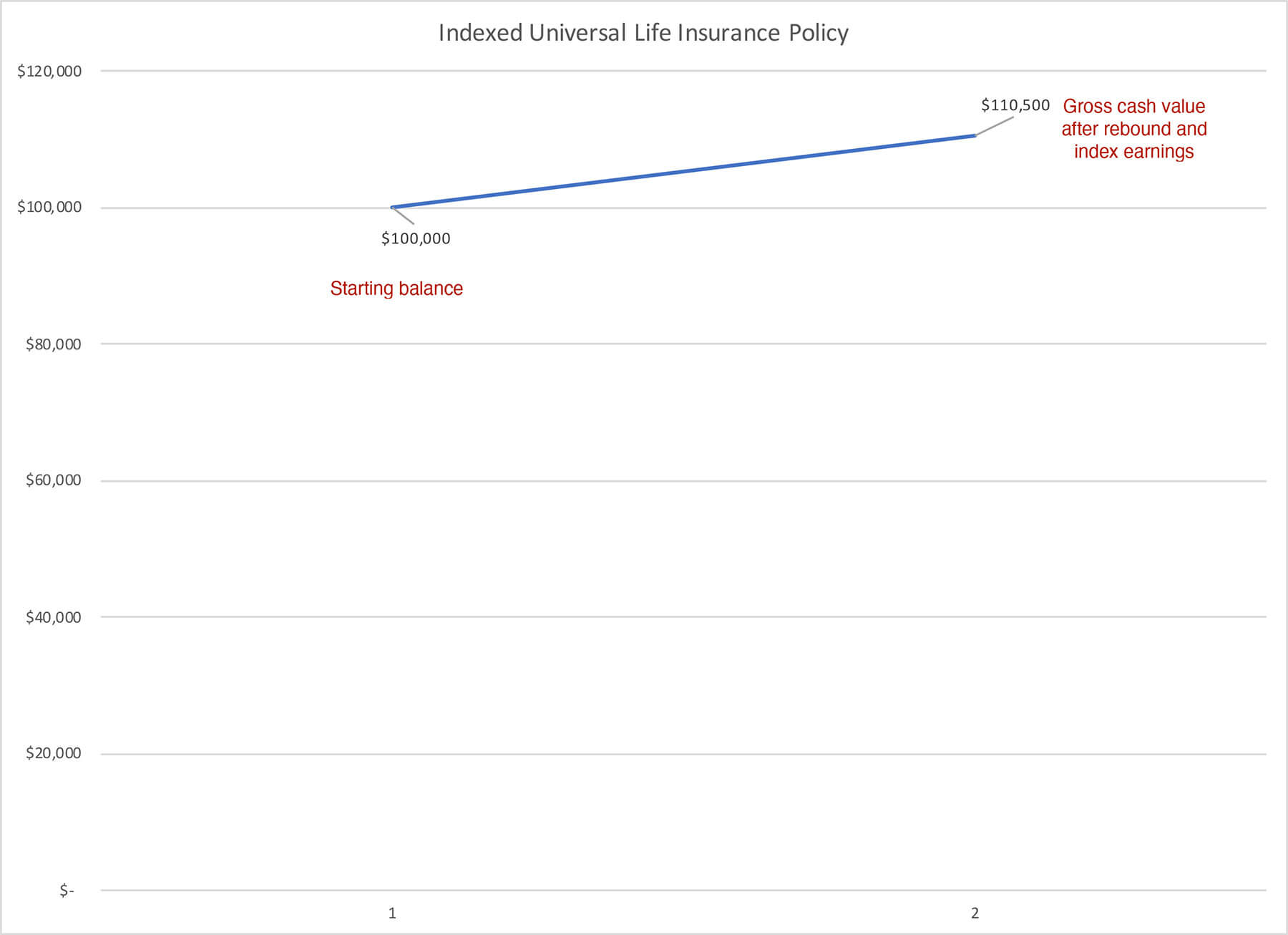
- Surrendering During a Down Market Adjustment: If your cash value allocations are tied to an equity index segment that has not reached its annual block anniversary date, surrendering early can forfeit accumulated index interest for that segment cycle.
- Ignoring the Modified Endowment Contract (MEC) Status: If your policy became a MEC due to overfunding in prior years, withdrawals and loans are taxed under Last-In, First-Out (LIFO) rules, making early distributions subject to ordinary income taxes and potentially a 10% IRS penalty if under age 59½.
- Surrendering Before Outstanding Loans are Calculated: Failing to account for outstanding policy loans can result in an unexpected income tax bill without the liquid cash to pay for it.
- Cancelling Prior Policy Before New Coverage Is In Force: If you surrender your existing contract before a replacement life or disability policy is fully underwritten and issued, you risk leaving yourself and your family uninsured.
Frequently Asked Questions
How long does it take to receive funds after surrendering an indexed life policy?
Once the completed and signed surrender forms (along with any required notarizations) are received and verified by the insurance carrier, processing typically takes between 5 and 10 business days. Direct deposit options yield faster access to funds compared to physical paper checks.
Can I reverse a policy surrender if I change my mind?
No. A policy surrender is a final contractual cancellation. Once the carrier processes the surrender request and issues the payout, the coverage cannot be reinstated. You would need to submit a new application and undergo full underwriting to obtain new life insurance coverage.
Will I owe capital gains tax when surrendering my policy?
No. Profits earned inside a life insurance policy are not classified as capital gains. Any net payout or debt relief that exceeds your cumulative cost basis is taxed as ordinary income based on your federal and state tax brackets.
What happens if my policy’s cash surrender value is negative or zero?
If high policy charges or loan balances have depleted your cash value, your net surrender payout will be $0. However, if an outstanding loan balance was cancelled alongside the surrender, you may still incur an ordinary income tax liability on the debt relief in excess of your premium basis.
Can an insurance carrier refuse to pay my cash surrender value?
Under standard state insurance laws, carriers are legally required to disburse surrender values upon valid policyholder requests. However, standard statutory provisions allow companies to defer surrender payouts for up to six months under extreme financial emergencies, though this provision is rarely exercised by solvent insurers.
Practical Recommendations and Next Actions
Before executing a full policy surrender of your indexed life insurance policy, take the following concrete steps to safeguard your financial plan:
- Obtain written documentation: Request a formal Surrender Value Calculation Statement and an In-Force Illustration from your insurer.
- Calculate your exact basis: Determine total premiums paid minus any previous non-taxable distributions to calculate your true tax exposure.
- Audit outstanding loans: Identify all unpaid policy debt and evaluate potential "phantom income" consequences.
- Evaluate 1035 Exchanges: Explore whether transferring your equity into a tax-deferred annuity or alternative life product aligns better with your long-term wealth strategy.
- Consult professionals: Review your strategy with a certified financial planner (CFP) and a CPA to confirm that terminating coverage aligns with your retirement and estate plan.
Image Gallery