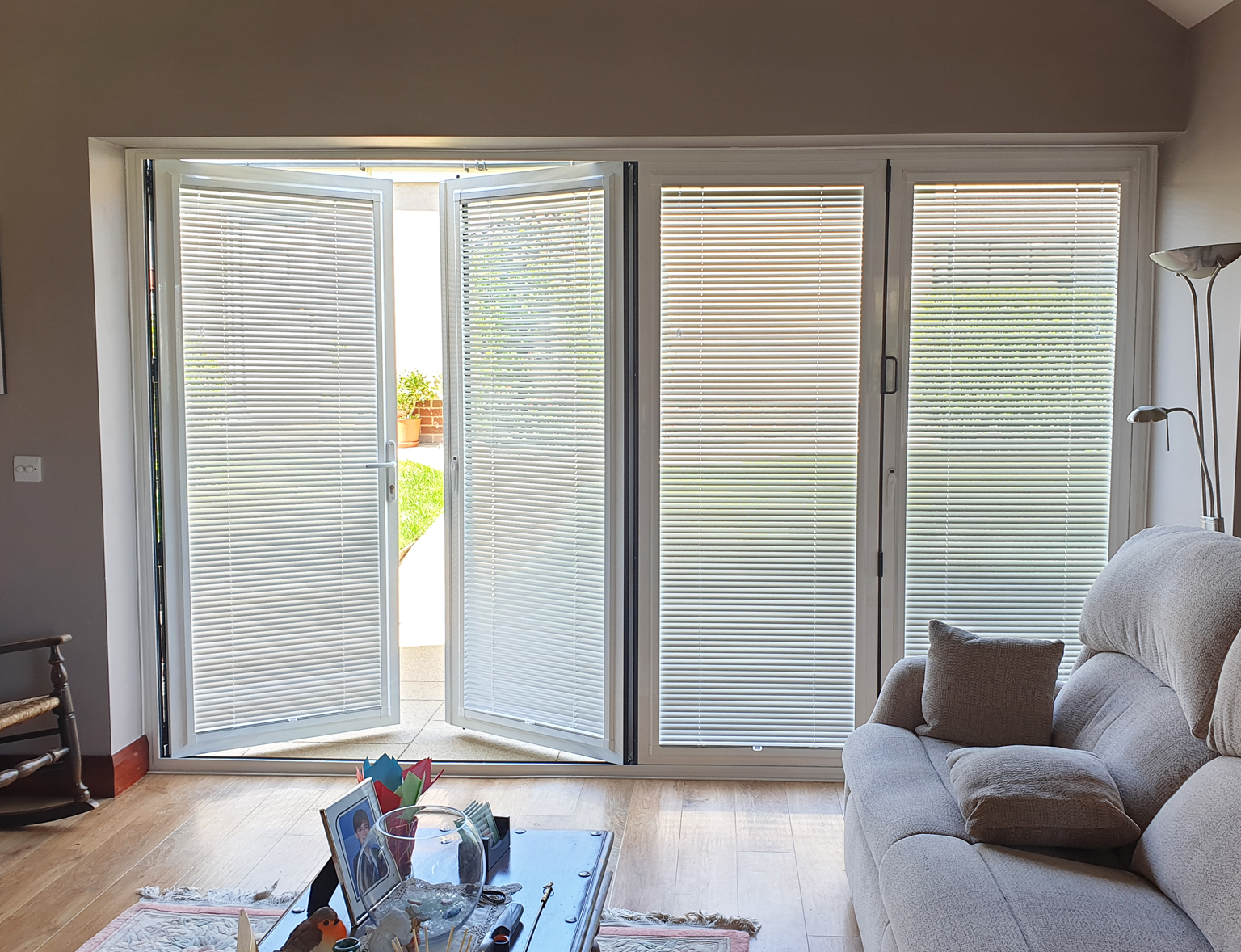
Complete Guide to Bi-Fold Door Blinds: Types, Fitting, and Selection
Bi-fold door blinds are specialized window coverings designed to fit closely against the glass panels of folding exterior doors without impeding their stacking and sliding movement. Common options include clip-in frame-fitted cellular...
Bi-fold door blinds are specialized window coverings designed to fit closely against the glass panels of folding exterior doors without impeding their stacking and sliding movement. Common options include clip-in frame-fitted cellular blinds, integral blinds sealed inside double glazing, compact micro roller shades, and ceiling-tracked panel or drapery systems that draw clear of the opening.
Contents
Understanding the Unique Technical Challenges of Bi-Fold Doors
Bi-fold doors create expansive, uninterrupted openings that connect indoor living areas with gardens or patios. However, their unique mechanical operation presents specific challenges when selecting window treatments. Unlike traditional sliding patio doors or standard hinged doors, bi-fold panels slide along a track and fold back against each other in a concertina fashion.
When bi-fold doors fold open, the space between adjacent panels reduces dramatically. Standard blinds with bulky headrails, external control chains, or protruding tilt wands prevent the panels from folding flat. Forcing doors open against ill-fitting blinds can twist the door hinges, scratch aluminum or uPVC frames, or rupture the window coverings.
Another obstacle is handle projection. Bi-fold door leaves utilize operating handles, intermediate latch handles, or drop-down keys to disengage multipoint locks. If a blind covers the glass panel, it must either sit behind the handle projection or operate within a slim profile that clears the handle swing path.
Finally, bi-fold doors typically feature expansive glass surface areas. While offering abundant natural light and exterior views, large double-glazed panes lose heat rapidly during cold months and cause solar heat gain in summer. The chosen blind solution must provide heat insulation and UV protection without altering the structural functionality of the door assembly.
Primary Blind Types for Bi-Fold Doors
Selecting the right blind requires evaluating how the doors open, how much space exists between folded leaves, and whether non-invasive fitting is required.
1. Frame-Fitted Pleated and Cellular Blinds (No-Drill Clip Systems)
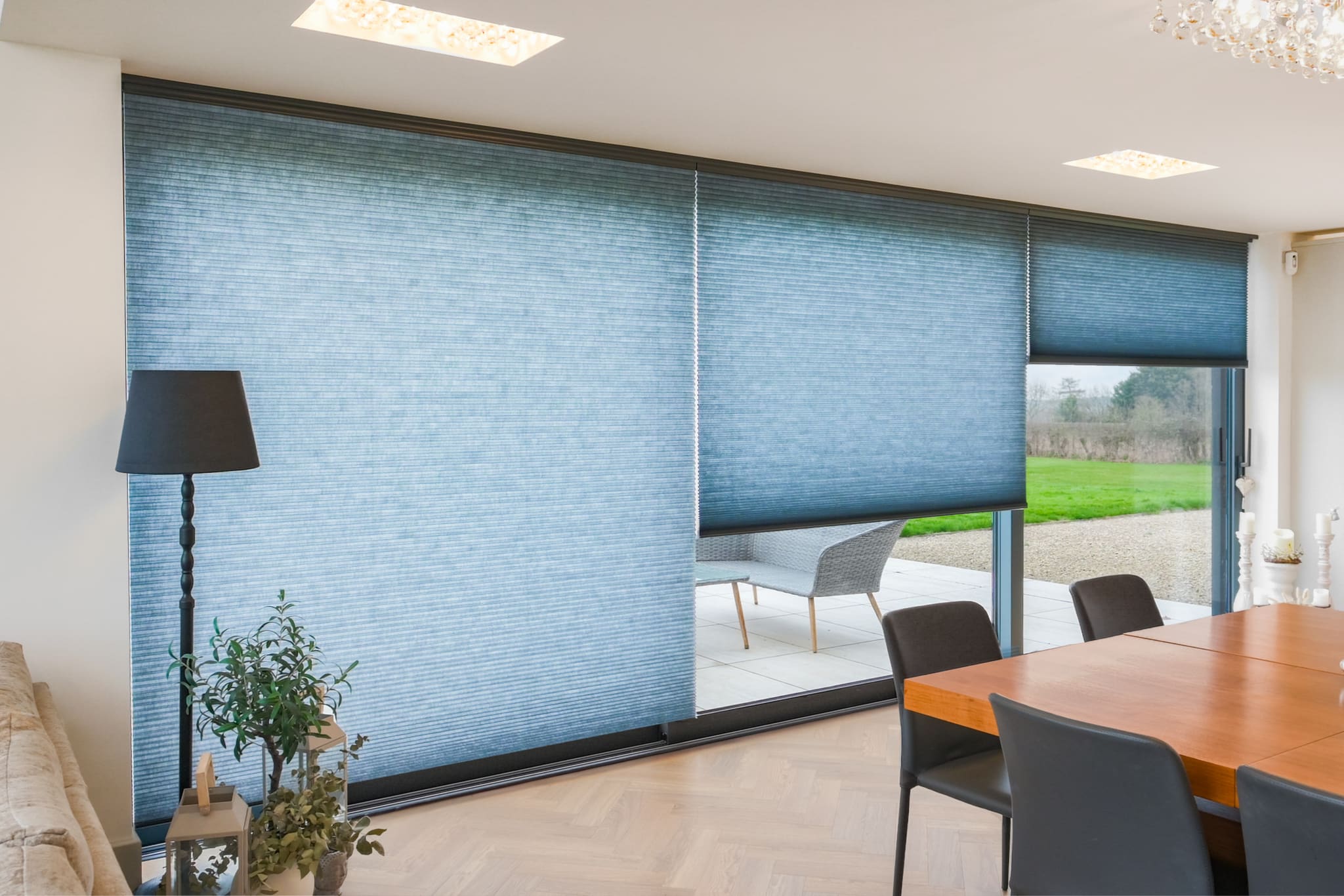
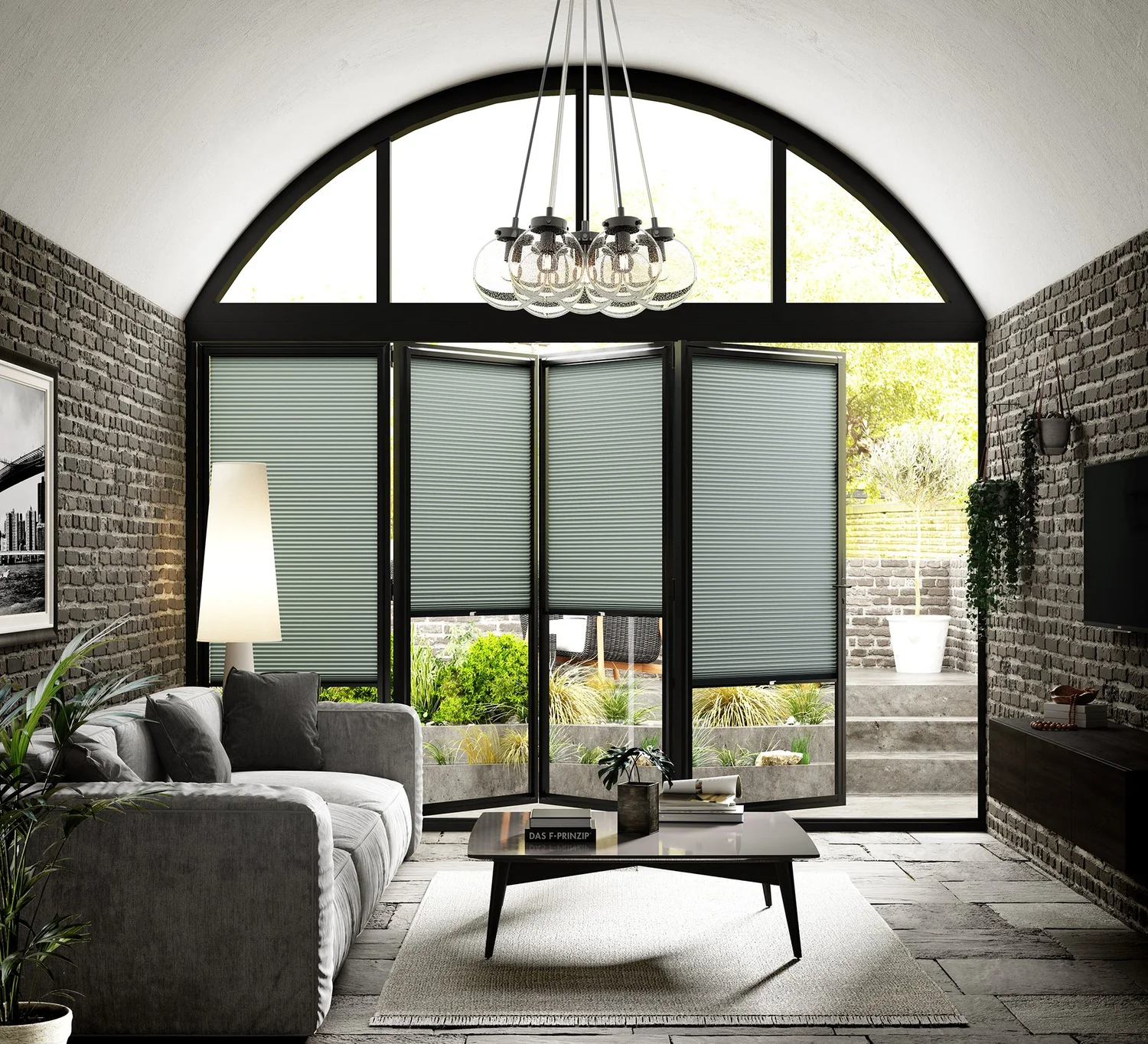
Frame-fitted blinds—commonly manufactured as Perfect Fit, Intu, or bead-mounted systems—are among the most popular solutions for bi-fold doors. These blinds feature an ultra-slim aluminum housing frame or tension cables that clip directly into the rubber glazing bead of each individual glass panel.
- Mechanism: Slim metal brackets slide under the rubber gasket that seals the glass to the frame. The blind cassette and side channels click into these brackets, securing the treatment millimeters from the pane.
- Operation: Most frame-fitted pleated blinds operate handle-free via a small tab on the bottom rail. You push up or pull down to set the blind position. Tension wires running along the sides keep the fabric taut, preventing swaying when doors are operated or exposed to breezes.
- Thermal Efficiency: When equipped with cellular (honeycomb) fabrics, these blinds create insulating air pockets between the glass and the room. This structure traps air, reducing heat transfer through thermal bridging.
- Suitability: Ideal for uPVC and aluminum bi-fold doors with standard rubber glazing beads. They move as part of the door leaf, allowing doors to stack tightly together.
2. Integral Blinds (Sealed Glass Units)
Integral blinds—also known as encapsulated or in-glass blinds—are installed inside the hermetically sealed cavity between the two panes of a double-glazed or triple-glazed unit during manufacturing.
- Mechanism: The blinds sit within an argon gas-filled void. Operation occurs externally using magnetic sliders attached to the glass edge, corded magnetic pulleys, or internal electric motors powered by hardwired connections or solar rechargeable battery packs.
- Maintenance: Because the blinds are completely sealed within the glass cassette, they never gather dust, suffer fabric wear, or require cleaning.
- Clearance: Because the blind resides inside the glass unit, there are zero external obstructions. Bi-fold panels fold 100% flat against each other, eliminating concerns about handle clearances or bracket protrusion.
- Suitability: Excellent for new bi-fold door installations or complete glass replacement projects. Retrofitting integral blinds into existing doors requires replacing the insulated glass units (IGUs).
3. Micro Roller Blinds
Micro roller blinds are scaled-down versions of traditional window rollers, engineered with compact cassettes and extra-narrow brackets (often measuring between 16mm and 28mm in depth).
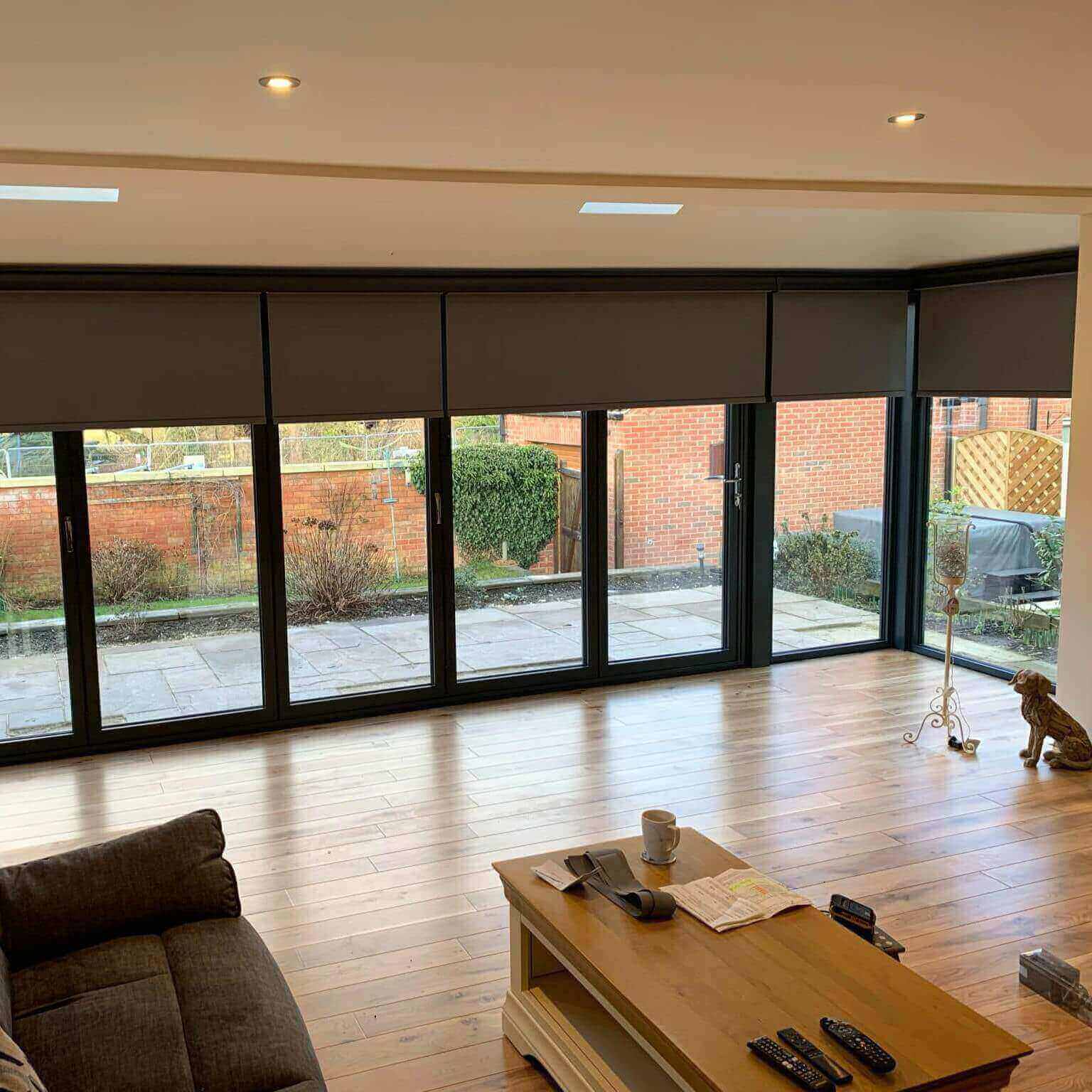
- Mechanism: The roller tube is housed inside a tiny, enclosed aluminum cassette mounted at the top of the glass frame using high-bond double-sided adhesive strips or low-profile bead clips. Side guide wires or plastic channels keep the fabric close to the glass pane during tilt and fold movements.
- Fabric Options: Micro rollers accept standard roller fabrics, including screen fabrics that block glare while retaining outdoor views, as well as total blackout materials for media rooms or bedrooms.
- Suitability: Suitable for homeowners who prefer the clean aesthetic of traditional flat fabric over pleated textures, provided top-frame clearance permits mounting the mini-cassette.
4. Overhead Track-Mounted Panel Blinds and Drapes
Instead of fitting individual blinds to every door panel, overhead track systems cover the entire structural span with a single ceiling-mounted or wall-mounted track.
- Mechanism: Large fabric panels or ripple-fold wave curtains hang from an architectural track mounted above the top door frame. When privacy or shade is needed, the blinds slide across the opening. When the bi-fold doors are opened, the entire curtain or panel stack slides completely past the frame onto an adjacent wall segment.
- Aesthetics: Provides a soft, architectural appearance that softens the rigid lines of heavy metal door framing.
- Suitability: Highly effective if your room has clear wall space on one or both sides of the bi-fold opening to stack the fabric clear of the open doors.
Comparison of Bi-Fold Door Blind Systems
| Blind System | Mounting Location | Max Handle Projection Clearance | Thermal Insulation Performance | Maintenance Requirement | Installation Complexity | Relative Cost Level |
|---|---|---|---|---|---|---|
| Frame-Fitted Cellular | Glazing bead clips | Requires 15–22mm space between folded panels | High (Honeycomb air pockets trap heat) | Low (Dusting/Light vacuuming) | Low (No drilling required) | Moderate |
| Frame-Fitted Single Pleat | Glazing bead clips | Requires 15–20mm space between folded panels | Moderate (Single layer reflective fabric) | Low (Dusting) | Low (No drilling required) | Moderate |
| Integral Blinds | Inside double-glazed unit | Zero clearance required (0mm internal extra) | High (Protects low-E coating space) | None (Dust-proof sealed environment) | High (Requires glass unit fitting) | High |
| Micro Roller Blinds | Frame top cassette | Requires 25–35mm top/panel gap clearance | Moderate to High (Depending on backing) | Low to Moderate (Wipe clean) | Moderate (Adhesive or small screws) | Moderate |
| Overhead Panel Glides | Wall or ceiling track | Unrestricted (Clears handles completely) | Moderate | Moderate (Fabric dry cleaning or vacuuming) | Moderate to High (Track anchoring) | Moderate to High |
Energy Efficiency, Thermal Control, and Fabric Choice
Bi-fold doors frequently span width ranges from 2.5 meters to over 6 meters. Because glass conducts heat much faster than insulated walls, controlling solar radiation and radiant heat loss is critical for maintaining room comfort.
- Cold Weather (Winter)
- Room Heat
- Trapped in Cells
- Glass
- Structure: Room | Cellular Air Gap | Glass
- Hot Weather (Summer)
- Solar Rays
- Reflected by Coating
- Outside
- Structure: Sun | Reflective Layer | Room
Thermal Cell Technology (Honeycomb Fabrics)
Cellular fabrics feature a cross-sectional hexagonal cell structure resembling a honeycomb. When pulled down, these cells expand and trap static air pockets. Because still air is an excellent natural insulator, honeycomb blinds create a thermal barrier:
- Winter Benefits: Reduces radiant heat transfer from the heated living space out through cold glass panes, reducing heating costs.
- Summer Benefits: Prevents exterior solar heat from penetrating indoors, keeping living spaces cooler without excessive air conditioning.
Solar Reflective Coatings (SRC)
Pleated and roller fabrics treated with aluminum or metallic backing coatings reflect solar radiation before it passes into the living space. Solar reflective backings reduce thermal glare on screens and televisions while preserving comfortable ambient light levels.
Light-Filtering vs. Blackout Materials
- Light-Filtering (Semi-Translucent): Diffuses intense sunlight into soft, natural illumination while preserving daytime privacy. Ideal for ground-floor kitchens, open-plan dining spaces, and family living rooms.
- Blackout: Features an opaque internal barrier layer that blocks light penetration through the fabric. Essential for ground-floor bedrooms or home theaters. Note: Bead-fitted blackout blinds reduce light through the glass area, but small light gaps may still appear around frame edges or cord holes unless fitted with full side channel seals.
Technical Prerequisites: Measuring Bead Depths and Clearances
Installing clip-in frame blinds successfully requires measuring key dimensions of your door hardware.
Measuring Bead Depth
The bead depth is the distance from the outer surface of the door frame down to the surface of the glass pane.
- Frame Surface
- Rubber Gasket / Bead Edge
- Bead Depth (e.g., 20mm)
- Glass Pane Surface
- Hold a rigid straight edge or steel ruler flat against the aluminum or uPVC door frame profile spanning over the glass corner.
- Measure down from the underside of the straight edge to the surface of the glass pane.
- Standard residential door bead depths typically measure 18mm, 20mm, 24mm, 28mm, or 30mm.
- Order clip brackets matched precisely to your measured bead depth. Incorrect bracket depth causes frame-fitted blinds to fit loosely or compress rubber seals excessively.
Checking Inter-Panel Stacking Clearance
When bi-fold doors open fully, the panel frames press together flat.
- Fold all door leaves open completely into their fully stacked position.
- Measure the physical clearance gap between adjacent door frame faces near the hinges and near the center.
- Ensure the minimum clearance gap exceeds the total depth profile of your selected blind cassette and handle projection (typically 20mm to 25mm clearance is required for clip-in blinds).
- If your panels sit flush against each other with under 15mm clearance, standard clip-in frame blinds will prevent full door opening. In this scenario, integral blinds or overhead track-mounted blinds are required.
Handle Projections and Slimline Replacement Options
Standard operating handles project outward from the door frame by 30mm to 55mm. If a frame blind sits beneath a swing handle path, the handle will strike the blind frame when rotated.
- Flat / Pop-Out Handles: Many homeowners replace standard project handles with flush-fitting "pop-out" or flat bi-fold handles. These handles push flat against the frame when not in use, providing unrestricted clearance for blinds.
- Escutcheon Key Plates: Intermediate lock points can often be converted from full lever handles to low-profile key turn studs or flush escutcheon plates.
Common Mistakes to Avoid
- Ignoring Panel Folding Direction: Failing to check whether door panels fold inward into the room or outward toward the garden. If panels fold outward into the yard, internal frame-fitted blinds won't interfere with exterior folding, giving you greater clearance leeway inside. If doors fold inward, internal clearances must be measured carefully.
- Drilling into Slim Aluminum Frames: Standard blind mounting screws can pierce thermal breaks, disrupt internal locking rods, crack double-glazed glass edges, or void door manufacturer warranties. Always use non-invasive clip-in systems or frame-safe adhesives unless approved by your door manufacturer.
- Failing to Account for Rubber Bead Shape: Sloped, square, or deeply recessed rubber glazing gaskets require different bracket attachment angles. Always verify whether your bead is square or bevelled before ordering clip-in brackets.
- Neglecting Door Guarantee Conditions: Drilling holes into window frames often voids manufacturer weatherproofing and structural warranties. Use bracket system options that require no drilling to preserve full warranty coverage.
Maintenance and Care Recommendations
To ensure smooth operation and maintain appearance, follow these routine maintenance practices:
- Dusting Pleated/Cellular Fabrics: Clean cellular blinds using a vacuum cleaner fitted with a soft brush attachment on low suction. Work horizontally along the pleats to avoid crushing the internal cell structure.
- Spot Cleaning: Clean localized smudges or marks using a clean sponge dampened with warm water and mild liquid soap. Gently dab the fabric rather than rubbing vigorously. Never submerge pleated or cellular blinds in water, as this dissolves fabric stiffening agents and ruins pleat retention.
- Maintaining Clip-In Brackets: Check metal insertion clips annually to ensure they remain firmly seated beneath rubber bead seals. Re-tension side guide cords if blinds start to sag or slide unevenly.
- Integral Blind Magnet Care: Clean the outer glass surfaces around magnetic slide guides with standard glass cleaner. Avoid abrasive powders that scratch glass surfaces or dislodge external magnetic sliders.
Frequently Asked Questions
Can you put regular blinds on bi-fold doors?
Standard off-the-shelf roller, Venetian, or vertical blinds are generally unsuitable for bi-fold doors. Regular blinds feature deep top cassettes and dangling chains or wands that hit the frame, preventing bi-fold panels from opening and folding back correctly. Specialized frame-fitted, integral, or micro-profile blinds are required.
Do clip-in bi-fold blinds damage rubber door seals?
No. High-quality clip-in bracket systems (such as Perfect Fit or Intu) use smooth, ultra-thin stainless steel tabs engineered to slide between the glass pane and the flexible rubber glazing bead. They do not tear, cut, or permanently distort rubber gaskets when installed according to manufacturer instructions.
Are clip-in blinds compatible with timber bi-fold doors?
Clip-in blinds require a flexible rubber glazing gasket to slide the bracket into place. Many timber bi-fold doors use hard wooden beadings secured with pin nails or sealant instead of flexible rubber gaskets. For wooden doors, micro roller blinds mounted with low-profile surface screws or overhead track systems are generally better choices.
What are the best bi-fold door blinds for thermal insulation?
Cellular (honeycomb) pleated blinds provide the best thermal insulation among surface-mounted treatments. Their hollow hexagonal chambers trap air at the glass surface, reducing conductive and convective heat loss through large glass expanses during winter and limiting solar heat transfer during summer.
How much clearance space is needed between folded bi-fold panels?
Most clip-in frame blinds require a minimum clearance gap of 15mm to 22mm between adjacent folded door leaves. If your doors stack tighter than this when fully opened, low-profile micro rollers, overhead tracking curtains, or integral in-glass blinds are recommended.
Next Steps and Selection Checklist
To select the right blinds for your bi-fold doors, complete the following steps:
- Confirm Folding Direction: Identify whether your bi-fold leaves stack internally into your living space or externally onto your patio.
- Measure Stacking Clearance: Fully fold your doors back and measure the physical clearance gap between adjacent leaf frames.
- Verify Bead Type & Depth: Insert a steel ruler against your frame corner to verify the bead depth (standard sizes: 18mm, 20mm, 24mm, 28mm) and check if your glazing gasket is flexible rubber.
- Inspect Operating Handles: Check if door handles project into the glass aperture area and evaluate replacing standard lever handles with low-profile flat bi-fold handles if necessary.
- Select Fabric Functionality: Choose translucent fabrics for daytime sun filtering in living areas, cellular honeycomb fabrics for maximum thermal efficiency, or blackout fabrics for media rooms and bedrooms.
Image Gallery