Synonyms of Amendment for Legal Writing: Precision in Document Modification
In legal writing, the most common synonyms for amendment include modification, addendum, rider, revision, and variation. While "amendment" is a broad term for any change to a legal document, choosing a more specific term—such as supple...
In legal writing, the most common synonyms for amendment include modification, addendum, rider, revision, and variation. While "amendment" is a broad term for any change to a legal document, choosing a more specific term—such as supplement for additions or codicil for testamentary changes—ensures technical precision and clarity in professional practice.
Contents
The selection of a synonym for "amendment" is rarely a matter of mere stylistic preference. In the legal field, words carry specific procedural and substantive weight. Using the wrong term can lead to ambiguity, potentially triggering the doctrine of contra proferentem (interpreting ambiguity against the drafter) or failing to satisfy specific statutory requirements for document updates. As of 2026, the demand for precision in transactional and litigious drafting remains the cornerstone of effective legal advocacy and risk management.
The Importance of Contextual Precision in Legal Terminology
Before selecting a synonym, a drafter must identify the specific nature of the change being made. An "amendment" generally refers to a change that alters the existing text of a document, whereas other terms describe additions, deletions, or complete overhauls.
In 2026, the legal landscape continues to prioritize "plain language" initiatives while maintaining the rigorous distinctions found in Black's Law Dictionary and specialized practice guides. The primary goal of choosing a synonym is to describe the mechanism of the change accurately. For example, if you are adding new terms without removing old ones, "supplement" or "addendum" may be more descriptive than "amendment." Conversely, if you are replacing an entire section, "revision" or "restatement" might be appropriate.
Contractual Contexts: Modification, Addendum, and Variation
In contract law, the terms used to describe changes are often governed by the "Amendments" or "Modifications" clause of the original agreement. However, practitioners frequently use synonyms to distinguish how the change is physically or legally integrated.
Modification
Modification is perhaps the most direct synonym for amendment in a commercial context. It is often used as a broad, catch-all term in the "Integration Clause" of a contract (e.g., "No modification of this Agreement shall be valid unless in writing"). While an amendment usually refers to the specific document that changes the contract, "modification" often refers to the act of changing the terms or the resulting legal status.
Addendum
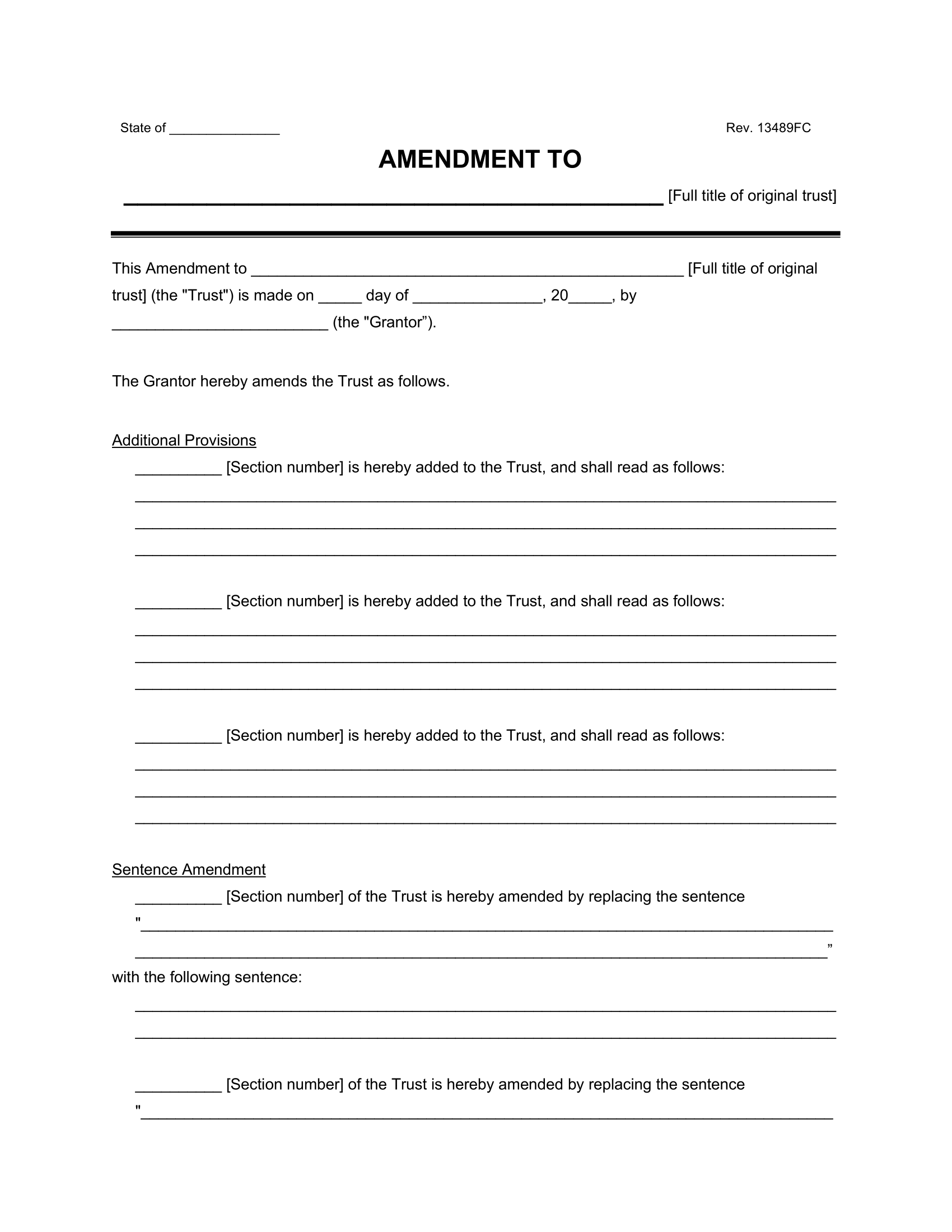
An addendum is an item of additional material added to the end of a document. Unlike a standard amendment, which might rewrite existing clauses, an addendum typically leaves the original text intact and simply adds new obligations or information. In 2026, real estate transactions and employment contracts frequently use addenda to handle specific, temporary, or property-specific disclosures without altering the master agreement’s boilerplate language.
Variation
In many Commonwealth jurisdictions and increasingly in international arbitration, variation is the preferred term for a change to a contract. In construction law, for example, a "Variation Order" is a standard mechanism for changing the scope of work. It implies a departure from the original specifications rather than a correction of the legal terms themselves.
Rider
A rider is a specific type of amendment used primarily in insurance policies and legislative bills. In insurance, a rider adds, limits, or excludes coverage. In the legislative process, a rider is an additional provision added to a bill that may have little connection to the bill's primary subject matter.
Litigation and Pleadings: Amended vs. Supplemental
In the context of litigation, the distinction between an amended pleading and a supplemental pleading is a matter of procedural law, notably governed by Rule 15 of the Federal Rules of Civil Procedure in the United States.
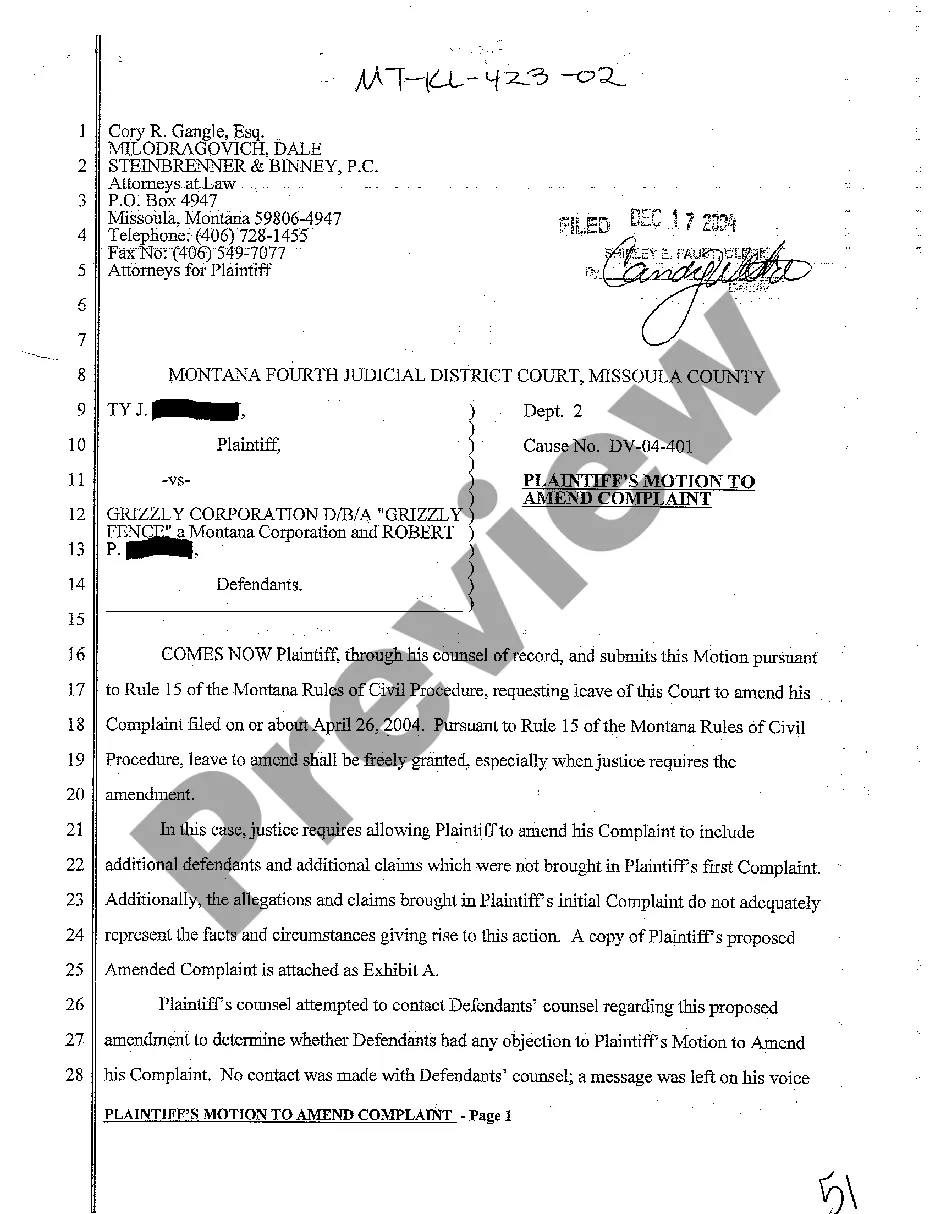
- Amended Pleading: This refers to a document that corrects or changes a pleading based on events that occurred before the original pleading was filed. For example, if a plaintiff learns the true identity of a "John Doe" defendant, they file an "Amended Complaint."
- Supplemental Pleading: This refers to a document that sets forth transactions, occurrences, or events that happened after the date of the original pleading.
Using "amendment" as a synonym for "supplement" in this context is a common technical error. Judges often require specific motions to "supplement" rather than "amend," and using the wrong term can result in the rejection of the filing or a delay in the proceedings.
Legislative and Statutory Contexts: Revision and Codification
When dealing with statutes or regulations, the choice of a synonym often reflects the scale of the change.
Revision
A revision is more than a simple amendment; it implies a systematic examination and reorganization of an entire body of law. While an amendment might change a single sentence in a statute, a "Revised Statute" suggests that the legislature has looked at the entire chapter, updated the language for modern use, and re-enacted it.
Repeal and Replace
While not a single-word synonym, the phrase repeal and replace is the functional equivalent of an amendment that completely deletes an old provision and installs a new one. This is common in 2026 regulatory updates where old environmental or digital privacy standards are completely superseded by new frameworks.
Codification
Codification is the process of collecting and restating the law of a jurisdiction in certain areas. While not an amendment in the sense of a single change, it functions as a mass-scale amendment of prior common law or scattered statutes into a single, cohesive "Code."
Special Use Cases: Codicils and Corrigenda
In specialized fields of law, unique synonyms are used to maintain historical and technical continuity.
- Codicil: This is a specific synonym for an amendment to a last will and testament. In 2026 estate planning, codicils are less common than in the past—often replaced by a full "Restatement of Will"—but the term remains the correct legal designation for a testamentary amendment.
- Corrigendum / Erratum: These terms are used when the "amendment" is merely the correction of a typographical or printing error. If a court order contains a misspelled name or a mathematical error, the court may issue a corrigendum (or "Order of Correction") to rectify the record without changing the legal substance of the ruling.
- Allonge: In the law of negotiable instruments (like promissory notes), an allonge is a slip of paper attached to a negotiable instrument for the purpose of adding endorsements. It functions as a physical amendment to the document's chain of title.
Comparison of Amendment Synonyms
The following table compares the most common synonyms based on their primary legal application and the nature of the change they represent.
| Term | Legal Context | Primary Use Case | Mechanism |
|---|---|---|---|
| Modification | Contracts | General changes to terms | Alters existing obligations |
| Addendum | General / Real Estate | Adding new information | Appended to the end |
| Rider | Insurance / Legislation | Adding specific provisions | Attached or inserted |
| Codicil | Estates / Wills | Modifying a Will | Legal update to testament |
| Variation | Construction / UK Law | Changing scope or terms | Deviation from original |
| Revision | Statutes | Large-scale overhaul | Re-writing/Re-organizing |
| Supplement | Litigation | Post-filing events | Adds to the record |
| Corrigendum | Judicial / Formal | Correcting typos | Clerical fix only |
Common Pitfalls When Using Synonyms
One of the most frequent mistakes in legal writing is the "elegant variation"—the practice of using different words for the same thing to avoid repetition. In legal drafting, this is a dangerous habit. If a contract defines a process for "Amendments," using the word "Modification" in a later paragraph might lead a reader to believe you are referring to a different process entirely.
Furthermore, drafters should be wary of using "Revision" when they mean "Amendment." A "Revision" can sometimes trigger a requirement for a full re-execution of a document, whereas an "Amendment" might only require a signature on a single page.
In the 2026 legal environment, where AI-assisted drafting tools are prevalent, practitioners must double-check that the software has not introduced "synonyms" that carry unintended procedural baggage. The rule of "Same Word, Same Meaning" should generally prevail unless there is a specific reason to switch to a more precise synonym.
FAQ
Is an "Addendum" the same as an "Amendment"?
Not exactly. An amendment typically changes the existing body of a document (e.g., changing "10 days" to "20 days"). An addendum adds something new that was not previously there, often as a separate attachment, without necessarily changing the original text.
Can I use "Modification" interchangeably with "Amendment"?
In general conversation, yes. However, in a contract, you should use the term defined in the "Amendments" or "Modifications" clause. If the contract says it can be "amended," use "amendment." If it says it can be "modified," use "modification."
What is the difference between an "Amended Complaint" and a "Supplemental Complaint"?
An "Amended Complaint" deals with facts that existed at the time the original complaint was filed but were unknown or omitted. A "Supplemental Complaint" deals with new events that happened after the original complaint was filed.
When should I use the term "Codicil"?
"Codicil" should only be used when referring to an amendment to a Will. Using it in a contract or a statute would be technically incorrect and confusing to other legal professionals.
What does "Restatement" mean in the context of amendments?
A "Restatement" (e.g., an "Amended and Restated Agreement") is a document that incorporates all previous amendments into the original document, creating a single, clean version that replaces everything that came before it.
Practical Recommendation
When choosing a synonym for "amendment," always prioritize legal clarity over literary variety. If you are drafting a formal change to a contract, check the original document's "Amendments" clause first. If the document is silent, "Amendment" is the safest and most widely understood term. Use "Addendum" if you are adding an exhibit or a new set of requirements, and reserve "Supplement" for litigation filings involving new facts. In all cases, ensure that the synonym you choose aligns with the procedural rules of your specific jurisdiction or the governing law of your agreement.
Image Gallery