The Complete Al Michaels Biography: A Legacy of Sports Broadcasting Excellence
Al Michaels is a legendary American sports broadcaster whose career spans over five decades, making him one of the most recognizable voices in television history. Best known for his tenure on Monday Night Football, Sunday Night Footbal...
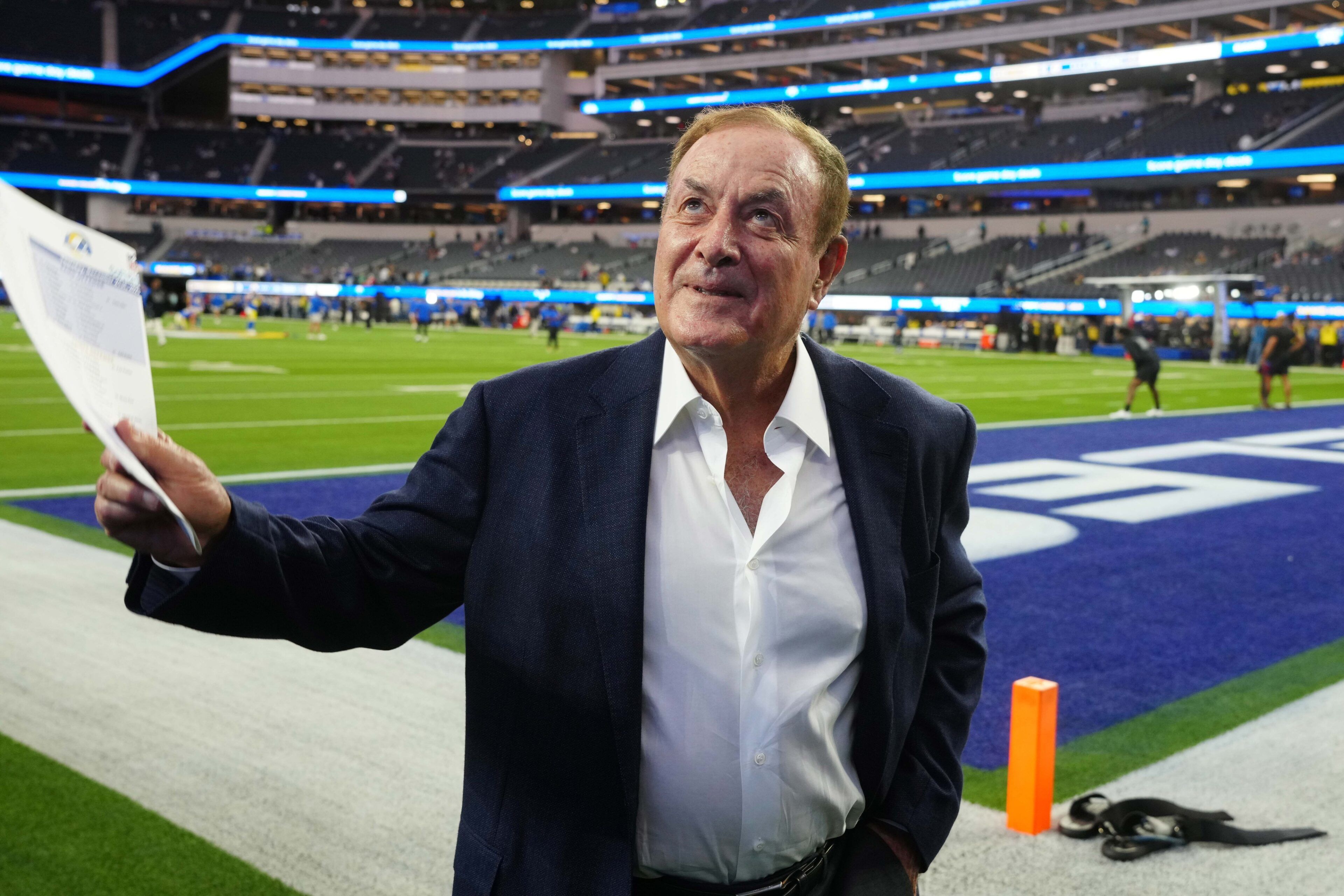
Al Michaels is a legendary American sports broadcaster whose career spans over five decades, making him one of the most recognizable voices in television history. Best known for his tenure on Monday Night Football, Sunday Night Football, and his iconic "Miracle on Ice" call, Michaels has covered nearly every major sporting event, including the Super Bowl, the World Series, and the Olympic Games. As of 2026, he remains a cornerstone of sports media, serving as a senior broadcaster and emeritus figure for Thursday Night Football on Amazon Prime Video.
Contents
Early Life and the Foundations of a Career
Born Alan Richard Michaels on November 12, 1944, in Brooklyn, New York, Michaels was raised in a Jewish family with a deep-seated passion for sports. His father, Jay Michaels, was a talent agent who worked for MCA and played a pivotal role in introducing Al to the world of entertainment and professional sports. The family moved to Los Angeles in 1958, the same year the Dodgers relocated from Brooklyn to the West Coast. This geographical shift was instrumental in shaping Al’s future, as he grew up listening to the legendary Vin Scully, whom he frequently cites as a primary influence on his broadcasting style.
Michaels attended Alexander Hamilton High School in Los Angeles before enrolling at Arizona State University (ASU). At ASU, he majored in radio and television and minored in journalism. Even during his collegiate years, Michaels was focused on the booth, working for the campus radio station and serving as a sports writer for the school newspaper, The State Press. His dedication to the craft was evident early on, as he sought every opportunity to call games, whether they were football, basketball, or baseball.
The Professional Ascent: From Hawaii to Cincinnati
After graduating from Arizona State, Michaels began his professional journey in 1967 with the Hawaii Islanders of the Pacific Coast League. Calling minor league baseball in Honolulu provided him with a unique laboratory to hone his play-by-play skills. During his time in Hawaii, he also branched out into other sports, calling games for the University of Hawaii's football and basketball teams.
In 1971, Michaels earned his first major breakthrough when he was hired as the lead play-by-play announcer for the Cincinnati Reds. This was the era of the "Big Red Machine," and Michaels found himself calling games for future Hall of Famers like Pete Rose, Johnny Bench, and Joe Morgan. His time in Cincinnati was transformative; it was here that he developed his signature "storyteller" approach, balancing technical accuracy with the narrative flow of the game. After three seasons with the Reds, he moved back to California to call games for the San Francisco Giants, a role he held until 1976.
The ABC Sports Era: 1976–2006
In 1976, Al Michaels joined ABC Sports, beginning a 30-year tenure that would cement his status as a broadcasting icon. While he initially covered a wide array of sports, including baseball and college football, he eventually became the face of the network’s premier properties.
The Miracle on Ice (1980)
Perhaps the most famous moment of Michaels’ career occurred during the 1980 Winter Olympics in Lake Placid, New York. Michaels was assigned to call the hockey medal-round game between the heavily favored Soviet Union and the young American team. As the final seconds ticked off the clock in the United States’ improbable 4–3 victory, Michaels delivered the line that would define his career: "Do you believe in miracles? YES!" This call is widely considered the greatest in the history of American sports broadcasting, capturing the raw emotion and geopolitical significance of the moment without over-scripting the drama.
Monday Night Football and the NFL
In 1986, Michaels took over the play-by-play duties for Monday Night Football (MNF), a position he would hold for two decades. During this time, he worked alongside various partners, most notably Dan Dierdorf and Frank Gifford. Michaels’ ability to manage a three-man booth while maintaining the pace of the game was a testament to his technical proficiency. His tenure on MNF coincided with the NFL’s explosion in cultural popularity, and Michaels became the voice that millions of Americans associated with "big-time" football.
The 1989 World Series Earthquake
Michaels’ versatility was put to its ultimate test during the 1989 World Series between the San Francisco Giants and the Oakland Athletics. Just before the start of Game 3 at Candlestick Park, the Loma Prieta earthquake struck. As the stadium shook and the power flickered, Michaels remained calm, shifting instantly from a sports announcer to a news reporter. His poise during the disaster earned him an Emmy nomination for news broadcasting, proving that his journalistic instincts were as sharp as his sports knowledge.
The Historic Trade to NBC: 2006–2022
The landscape of NFL broadcasting shifted dramatically in 2006 when the league moved its premier "game of the week" package from Monday nights on ABC/ESPN to Sunday nights on NBC. In a move that felt more like a professional athlete’s transaction than a corporate hire, Michaels was "traded" from Disney (ABC’s parent company) to NBC.
In exchange for letting Michaels out of his contract to join John Madden at NBC, Disney received the rights to Oswald the Lucky Rabbit (a cartoon character created by Walt Disney that had been owned by NBCUniversal), as well as expanded rights to Olympic highlights and various golf properties. This unique arrangement underscored Michaels' immense value to the network.
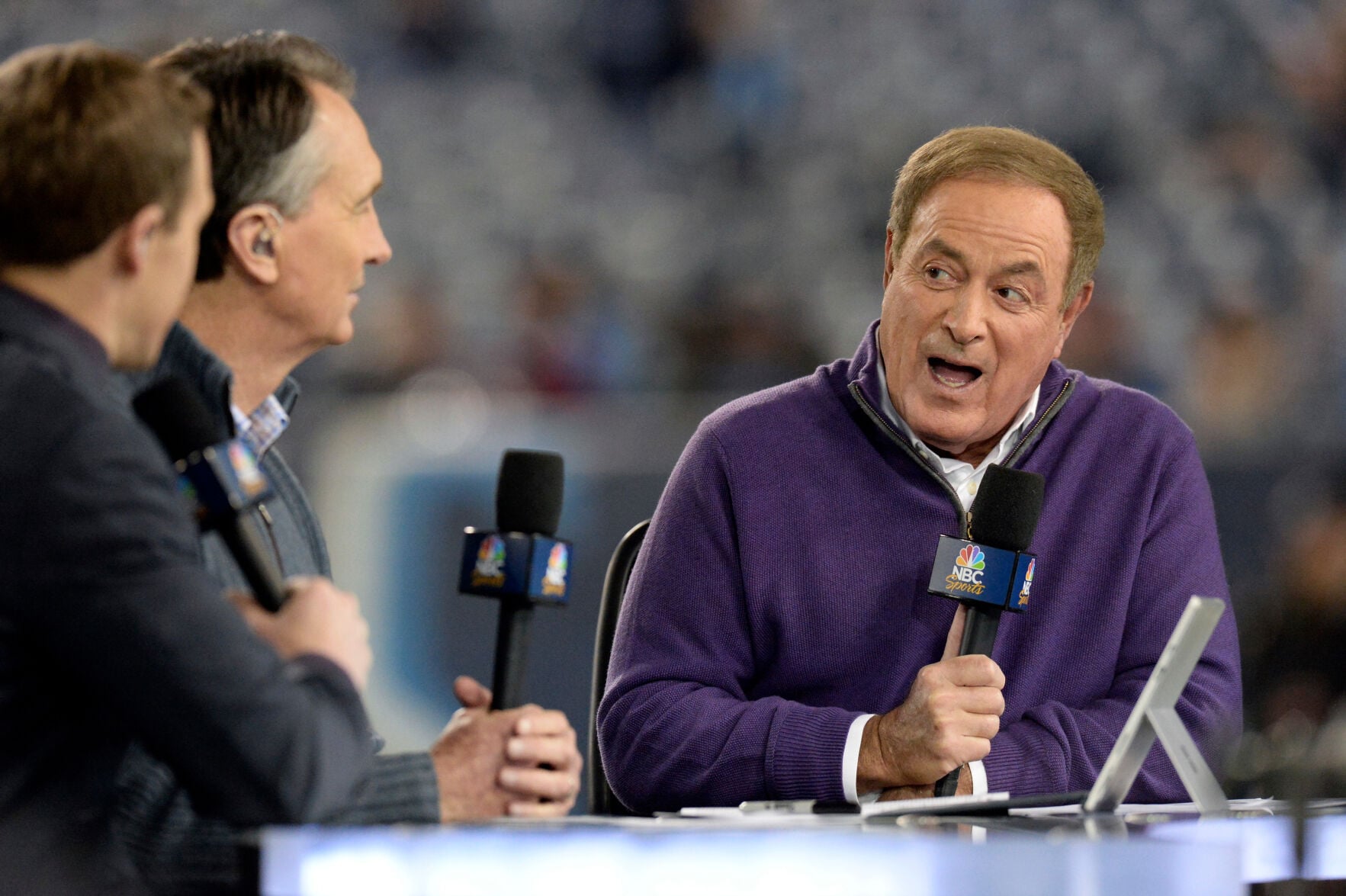
At NBC, Michaels anchored Sunday Night Football (SNF), which became the highest-rated show on American television for over a decade. His partnership with John Madden, and later Cris Collinsworth, set the standard for modern sports production. Michaels’ precision, combined with Collinsworth’s analytical depth, made SNF the "gold standard" of sports broadcasts.
| Network/Platform | Tenure | Key Roles | Major Events Called |
|---|---|---|---|
| ABC Sports | 1976–2006 | Monday Night Football, MLB, Olympics | "Miracle on Ice," 1989 Earthquake, Super Bowls |
| NBC Sports | 2006–2022 | Sunday Night Football | Multiple Super Bowls, Olympics |
| Amazon Prime | 2022–Present | Thursday Night Football | Inaugural NFL streaming package |
The Streaming Era: Amazon Prime Video (2022–2026)
In 2022, as the NFL expanded its reach into digital streaming, Al Michaels made the leap to Amazon Prime Video to lead the Thursday Night Football (TNF) broadcast team alongside analyst Kirk Herbstreit. This move was significant for several reasons:
- Legitimacy: By hiring Michaels, Amazon immediately signaled to fans and advertisers that its streaming product was a top-tier NFL broadcast.
- Technical Mastery: Michaels proved that he could adapt to the nuances of streaming, including shorter commercial breaks and integrated data overlays (Next Gen Stats).
- Longevity: By 2026, Michaels has successfully transitioned into an "Emeritus" role at Amazon, continuing to call marquee matchups while mentoring the next generation of broadcasters.
Throughout this period, Michaels has faced scrutiny regarding his "enthusiasm" in some of the lower-scoring Thursday night games. However, his defenders point to his commitment to journalistic integrity; Michaels has always refused to "hype" a bad game, choosing instead to call the action honestly—a trait that has earned him the respect of purists for over fifty years.
Style, Philosophy, and Technical Mastery
What separates Al Michaels from his peers is his meticulous preparation and his "feel" for the moment. He is known for his extensive "spotting boards," which are color-coded charts containing every possible statistic and biographical detail about the players on the field.
The Gambling "Wink"
A unique aspect of Michaels’ broadcasting style is his subtle acknowledgement of the "point spread" and the "over/under." For decades, before sports betting was legalized across much of the United States, Michaels would use coded language—referring to a late-game score as "meaningful to some"—to acknowledge the betting community. This "wink and a nod" approach became a fan-favorite element of his broadcasts, showcasing his awareness of the broader cultural context of the game.
Technical Precision
Michaels is a master of "laying out." This is the technical term for when a broadcaster stops talking to let the natural sounds of the stadium or the crowd tell the story. Whether it was the "U-S-A!" chants in 1980 or the roar of a Super Bowl-winning touchdown, Michaels understands that sometimes the best commentary is silence.
Personal Life and Accolades
Al Michaels married his high school sweetheart, Linda Anne Wikler, in 1966. The couple has two children, Steven and Alexandra. Unlike many celebrities of his stature, Michaels has maintained a relatively private personal life, though he is famously known for his eccentric eating habits—specifically his lifelong refusal to eat vegetables.
His professional accolades are among the most extensive in the industry:
- Emmy Awards: Recipient of multiple Sports Emmy Awards for Outstanding Sports Personality.
- Hall of Fame: Inducted into the National Sports Media Association Hall of Fame and the American Sportscasters Association Hall of Fame.
- Pete Rozelle Award: Received the Pete Rozelle Radio-Television Award from the Pro Football Hall of Fame in 2013.
- Walter Cronkite Award: Received the Walter Cronkite Award for Excellence in Journalism in 2021.
Frequently Asked Questions
What was Al Michaels' most famous call?
The most famous call in Al Michaels' career is the "Miracle on Ice" during the 1980 Winter Olympics. As the U.S. Olympic hockey team defeated the Soviet Union, he exclaimed, "Do you believe in miracles? YES!" This call has been voted the greatest sports call of all time by numerous publications.
How much does Al Michaels earn at Amazon?
While exact figures are proprietary, industry reports during his signing in 2022 estimated his contract to be in the range of $15 million to $18 million per year. As of 2026, his compensation reflects his status as a premium brand ambassador for Amazon’s sports division.
Why was Al Michaels traded for a cartoon rabbit?
In 2006, Michaels wanted to follow John Madden to NBC, but he was under contract with ABC/ESPN (owned by Disney). To release him, Disney negotiated a deal where NBCUniversal traded the rights to "Oswald the Lucky Rabbit," an early Walt Disney creation, back to the Disney company.
Is Al Michaels retired?
As of 2026, Al Michaels is not fully retired. He remains in a senior broadcasting role with Amazon Prime Video for Thursday Night Football, though he has moved to a more selective schedule of games compared to his previous full-season workloads at NBC and ABC.
Does Al Michaels really not eat vegetables?
Yes, this is a well-documented fact. Michaels has stated in numerous interviews and his autobiography, You Can't Make This Up, that he has never knowingly eaten a vegetable in his life, citing a distaste for the texture and flavor since childhood.
Practical Recommendation for Fans and Aspiring Broadcasters
For those looking to truly understand the depth of Al Michaels' impact on sports media, the best next action is to read his memoir, "You Can't Make This Up: Miracles, Memories, and the Future of the NFL." The book provides a detailed look at the behind-the-scenes negotiations of the television industry and offers a masterclass in the preparation required for professional broadcasting. Additionally, watching archival footage of the 1989 World Series earthquake coverage serves as a vital lesson in how a sports professional can pivot to hard-news reporting under extreme pressure. His career serves as the definitive blueprint for longevity and excellence in the ever-evolving world of sports entertainment.
Image Gallery