How to Translate Rashi Hindi to English
Translating "Rashi" (zodiac sign or astrological birth sign) terminology and horoscope text from Hindi to English requires a combination of linguistic accuracy, cultural contextualization, and familiarity with Vedic astrology terminolo...
Translating "Rashi" (zodiac sign or astrological birth sign) terminology and horoscope text from Hindi to English requires a combination of linguistic accuracy, cultural contextualization, and familiarity with Vedic astrology terminology. Whether you are translating birth charts, daily horoscopes, or specific planetary alignments, understanding the nuances of Sanskrit-derived astrological terms ensures that the translation remains meaningful and precise.
Contents
Understanding the Concept of Rashi in Vedic Astrology
In Indian astrology, known as Jyotish or Vedic astrology, a Rashi refers to the zodiac sign in which the Moon was placed at the exact time of an individual's birth. This is fundamentally different from Western astrology, which primarily emphasizes the Sun sign. Because the foundations are rooted in ancient Sanskrit and later expressed through regional languages like Hindi, literal word-for-word translation often fails to capture the technical depth required.
When translating a Rashi from Hindi to English, you are dealing with a dual-layered lexicon. First, there is everyday Hindi vocabulary describing emotional states, predictions, and advice. Second, there is a specialized astrological vocabulary involving celestial bodies (Grahas), houses (Bhavas), and constellations (Nakshatras). Recognizing this distinction is the first step toward producing an accurate English rendering.
Core Rashi Names: Hindi to English Mapping
The twelve Rashis in Hindi are derived directly from their Sanskrit astronomical roots. While some names sound nearly identical in English due to shared Latin and Sanskrit etymologies, their spelling and pronunciation conventions differ.
Below is a comprehensive reference table mapping the Hindi Rashi names to their English equivalents, along with their traditional ruling planets (Swami):
| Hindi Rashi Name | English Zodiac Sign | Ruling Planet (Swami) | Primary Element |
|---|---|---|---|
| Mesha (मेष) | Aries | Mars (Mangal) | Fire |
| Vrishabha (वृषभ) | Taurus | Venus (Shukra) | Earth |
| Mithuna (मिथुन) | Gemini | Mercury (Budh) | Air |
| Karka / Karkataka (कर्क) | Cancer | Moon (Chandra) | Water |
| Simha (सिंह) | Leo | Sun (Surya) | Fire |
| Kanya (कन्या) | Virgo | Mercury (Budh) | Earth |
| Tula (तुला) | Libra | Venus (Shukra) | Air |
| Vrishchika (वृश्चिक) | Scorpio | Mars (Mangal) | Water |
| Dhanu (धनु) | Sagittarius | Jupiter (Guru/Brihaspati) | Fire |
| Makara (मकर) | Capricorn | Saturn (Shani) | Earth |
| Kumbha (कुंभ) | Aquarius | Saturn (Shani) | Air |
| Meena (मीन) | Pisces | Jupiter (Guru/Brihaspati) | Water |
Step-by-Step Guide to Translating Horoscope Text
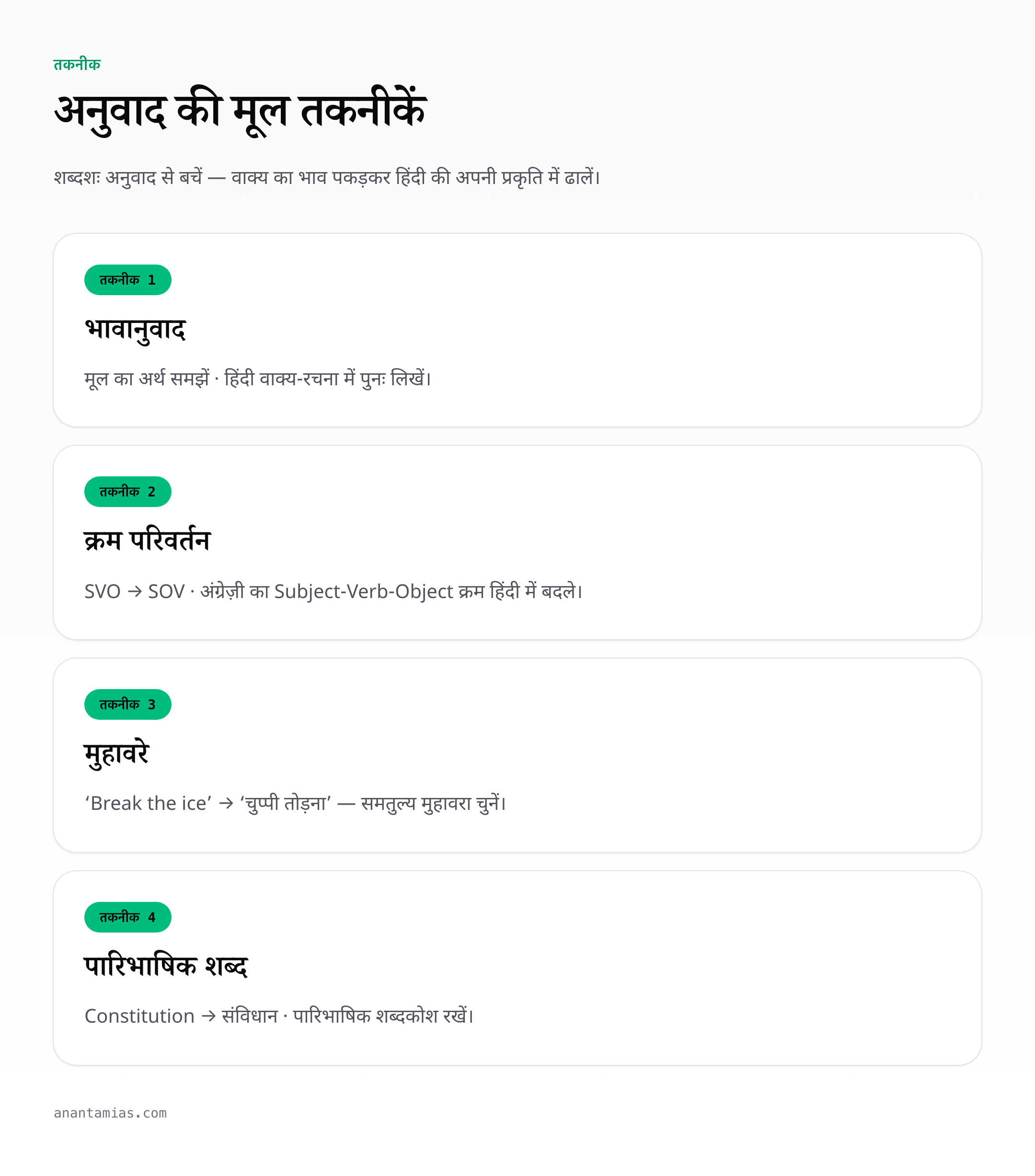
Translating a complete horoscope reading or astrological report from Hindi to English involves more than just swapping the Rashi names. Sentence structures in Hindi—typically Subject-Object-Verb (SOV)—differ from English Subject-Verb-Object (SVO) structures, requiring careful reorganization to maintain readability.
Step 1: Identify and Isolate Astrological Entities
Before translating narrative sentences, scan the text for technical entities. Words like Kundali (birth chart), Dasha (planetary period), Gochara (transit), and specific planet names must be translated using established Vedic astrology terminology rather than generic English dictionary equivalents. For instance, translating Shani as "Saturn" is correct, but translating Rahu requires keeping the name "Rahu" as there is no direct English equivalent for the lunar node.
Step 2: Handle Predictive and Conditional Tenses
Hindi horoscopes frequently use conditional phrasing regarding planetary movements (e.g., "यदि शनि चतुर्थ भाव में हो तो..."). When translating these into English, maintain the conditional integrity: "If Saturn is placed in the fourth house, then..." Avoid overly archaic English phrasing while keeping the tone objective, advisory, and respectful of the traditional source material.
Step 3: Localize Advice and Remedies
Horoscopes often conclude with remedial measures (Upaya), such as chanting specific mantras, wearing gemstones (Ratna), or performing charity (Dan). Direct translations can sound jarring to English readers unfamiliar with these practices. Provide clear English transliterations of the Sanskrit terms alongside brief descriptive translations where necessary. For example, translate Rudraksha as "Rudraksha bead" rather than trying to find a non-existent Western botanical equivalent.
Common Challenges and Pitfalls in Translation
Translators often encounter specific hurdles when bridging Hindi astrological texts into English. Being aware of these issues prevents misleading or inaccurate outputs.
- Polysemy in Astrological Terms: Words like Bhava can mean "house," "expression," or "emotion" depending on the context. In a horoscope, it strictly refers to an astrological house, not a feeling.
- Over-Reliance on Automated Tools: Generic machine translation engines often bungle proper nouns and technical Jyotish terminology, translating planet names literally or misinterpreting directional modifiers. Always cross-reference machine-translated drafts with authoritative Vedic astrology glossaries.
- Cultural Nuances: Idiomatic expressions in Hindi regarding luck, misfortune, or divine grace do not always have direct English equivalents. Translators must find the closest professional register that conveys the original intent without exaggerating or diminishing the tone.
Frequently Asked Questions
What is the English name for Mesha Rashi?
Mesha Rashi translates to Aries in English. It is the first sign of the zodiac, ruled by the planet Mars (Mangal), and is associated with the fire element.
How do I translate Nakshatra names along with Rashi?
Nakshatras (lunar mansions) should be translated using their standard Sanskrit transliterations (e.g., Ashwini, Rohini, Krittika) rather than attempting literal English translations, as they function as proper nouns in astrological navigation.
Can I use standard AI translation tools for Hindi horoscopes?
AI tools can handle basic sentence structure and Rashi name mapping, but they frequently struggle with specialized astrological jargon, compound Sanskrit terms, and contextual nuances. Manual review by someone familiar with Jyotish terminology is strongly recommended.
Why do Hindi horoscopes mention planets that differ from Western astrology?
Vedic astrology utilizes the sidereal zodiac (Nirayana), which accounts for the precession of the equinoxes, and includes the lunar nodes Rahu and Ketu, whereas Western astrology typically uses the tropical zodiac (Sayana).
How are houses (Bhavas) numbered in English translations?
Houses are numbered sequentially from 1 to 12, starting with the Ascendant (Lagna or first house) and proceeding counter-clockwise in North Indian charts or clockwise in South Indian charts, matching standard astrological charting conventions.
Next Actions for Accurate Translation
To achieve the highest fidelity when translating Hindi Rashi texts to English, build a personal glossary of core Vedic terms, consult standard Jyotish reference texts for tricky planet-house interactions, and always verify technical charts against established astronomical data. For professional publications, collaborating with a native bilingual speaker who specializes in traditional Indian astronomy yields the most reliable results.
Image Gallery