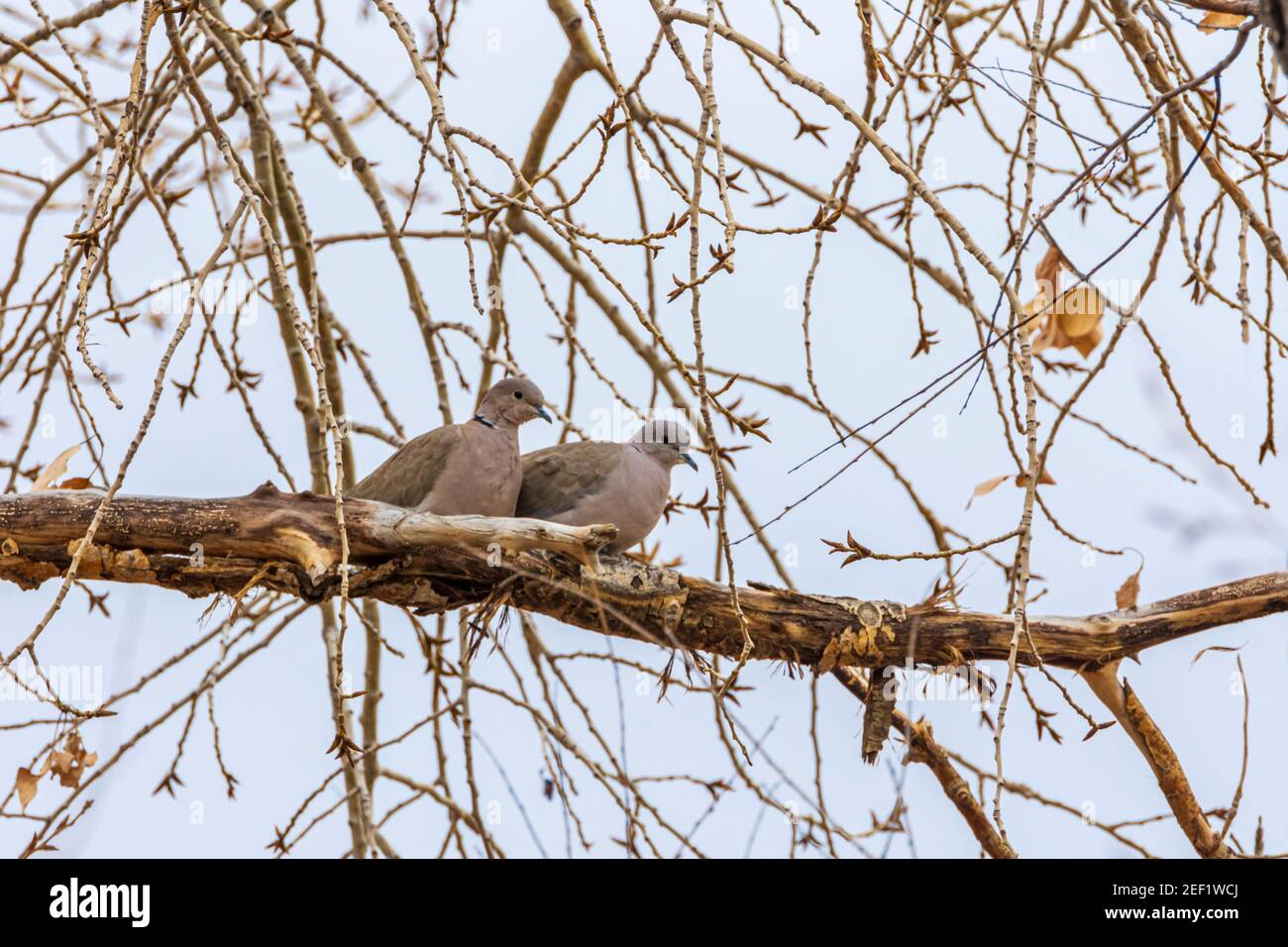
Exploring American Doves: Species, Identification, and Behaviors
American doves are small-to-medium-sized birds belonging to the family Columbidae that are native to or established within North America. The most prevalent species is the Mourning Dove, characterized by its slender body and soulful "c...
American doves are small-to-medium-sized birds belonging to the family Columbidae that are native to or established within North America. The most prevalent species is the Mourning Dove, characterized by its slender body and soulful "coo," though the term also encompasses the White-winged Dove, Ground-doves, and the invasive Eurasian Collared-Dove.
Contents
Taxonomy and Classification: Understanding the Columbidae Family
In the context of North American ornithology, the distinction between a "dove" and a "pigeon" is largely linguistic rather than scientific. Both belong to the same family, Columbidae, which contains over 300 species globally. Generally, the term "dove" is applied to smaller species with long, pointed tails, while "pigeon" refers to larger birds with thicker bodies and square or rounded tails.
As of 2026, the American Ornithological Society (AOS) recognizes several distinct species of doves that regularly breed or reside in the United States and Canada. These birds are renowned for their unique physiological traits, such as the ability to drink water by suction—a rarity in the avian world—and the production of "crop milk" to feed their young.
The Biological Signature of Doves
Doves are easily identified by their small heads, short necks, and specialized beaks that feature a fleshy protuberance called a cere at the base. Their plumage is typically muted, consisting of browns, grays, and iridescent pinks or greens, which provides excellent camouflage against predators. Their flight is characterized by rapid, powerful wingbeats, often producing a distinctive whistling sound caused by specialized feathers.
The Mourning Dove: America’s Most Iconic Resident
The Mourning Dove (Zenaida macroura) is the most widespread and abundant dove in North America. Its range extends from southern Canada through the contiguous United States and into Mexico. Known for its mournful, rhythmic call—often mistaken by novices for the hooting of an owl—it is a staple of both rural farmsteads and urban backyards.
Physical Characteristics and Identification
The Mourning Dove is a slender bird, roughly 12 inches in length, with a long, graduated tail showing white outer feathers in flight. Its plumage is a soft grayish-brown, accented by black spots on the wings and a single black "ear spot" behind the eye. In the sunlight, adult males exhibit a subtle iridescent pink and blue wash on the sides of their necks.
Breeding and Prolificacy
One of the most remarkable aspects of Mourning Dove biology is their reproductive rate. In warmer climates, a single pair can produce up to six broods in a single year. Their nests are notoriously flimsy, often consisting of a few twigs balanced on a tree limb, a porch ledge, or even the ground. Despite this seemingly haphazard approach, the species maintains a massive population, estimated to be in the hundreds of millions as of 2026.
The White-winged Dove: Expanding Frontiers
Originally a bird of the desert Southwest and the Rio Grande Valley, the White-winged Dove (Zenaida asiatica) has seen a significant northward expansion over the last two decades. Changes in climate and urban landscaping—specifically the planting of ornamental trees—have allowed this species to establish permanent populations as far north as Oklahoma and even Kansas.
Key Identification Markers
Unlike the Mourning Dove, the White-winged Dove is heavier-bodied with a shorter, squared tail. Its most defining feature is the bold white crescent on its wing, which is highly visible when the bird is at rest and creates a striking white flash during flight. Their call is also distinct: a coarse, four-syllable "who-cooks-for-you" that lacks the melodic quality of the Mourning Dove.
Ecological Importance
In their native southwestern habitats, White-winged Doves are critical pollinators and seed dispersers. They have a symbiotic relationship with the Saguaro cactus, feeding on the nectar of the flowers and the seeds of the fruit, often transporting these seeds miles away from the parent plant.
The Invasive Newcomer: Eurasian Collared-Dove
While not a native "American" dove, the Eurasian Collared-Dove (Streptopelia decaocto) has become a permanent fixture of the North American landscape. Following an accidental release in the Bahamas in the 1970s, the species reached Florida in the 1980s and has since colonized nearly every state in the U.S.
Impact on Native Species
As of 2026, researchers continue to monitor the impact of this invasive species on native Mourning Doves. The Eurasian Collared-Dove is larger, more aggressive at feeders, and highly adaptable to human environments. It is easily identified by its pale gray plumage, a thin black "collar" on the back of its neck, and its squared-off tail with white corners. Their call is a persistent, three-syllable "coo-COO-coo."
Small and Terrestrial Doves: Inca and Ground-Doves
In the southern tier of the United States, observers may encounter much smaller members of the dove family. These birds are often overlooked due to their diminutive size and terrestrial habits.
- Common Ground-Dove (Columbina passerina): Roughly the size of a sparrow, this is one of the smallest doves in the world. It is sandy-brown with dark spotting on the wings and a short tail. In flight, it reveals brilliant rufous (reddish-brown) primary feathers. They are most commonly found in Florida, the Gulf Coast, and the Southwest.
- Inca Dove (Columbina inca): Found primarily in the Southwest, the Inca Dove is recognizable by its "scaly" appearance, caused by dark edges on its feathers. It is a social bird, often seen in small groups, and has a unique habit of "pyramid huddling" to stay warm during cool desert nights.
Comparison of Common North American Doves
The following table provides a quick reference for identifying the four most common dove species encountered in North America as of 2026.
| Species | Scientific Name | Average Length | Primary Habitat | Distinguishing Mark |
|---|---|---|---|---|
| Mourning Dove | Zenaida macroura | 12 inches | Open woods, suburbs, farms | Pointed tail, black spots on wings |
| White-winged Dove | Zenaida asiatica | 11.5 inches | Deserts, urban parks, brush | White wing patches, square tail |
| Eurasian Collared-Dove | Streptopelia decaocto | 13 inches | Urban and suburban areas | Black neck ring, pale gray body |
| Common Ground-Dove | Columbina passerina | 6.5 inches | Sandy soil, scrubland, gardens | Very small size, reddish wing flash |
Behavior, Diet, and Life Cycle
Doves are primarily granivores, meaning their diet consists almost entirely of seeds. They are frequent visitors to backyard bird feeders, where they prefer to forage on the ground or on large platform feeders rather than clinging to tube feeders.
Foraging Habits
Doves have a specialized organ called a crop, an enlarged part of the esophagus where they can store large quantities of seeds quickly. This allows them to feed in open, vulnerable areas and then retreat to a safe, covered perch to digest their meal. They favor cracked corn, millet, sunflower seeds, and various wild grass seeds.
Vocalizations and Communication
The "coo" of a dove is not just background noise; it is a vital tool for territory defense and mate attraction. Typically, only the male performs the full advertising song. For the Mourning Dove, this is a five-note sequence: coo-OO-oo-oo-oo. Interestingly, when they take flight, the "whistling" sound heard is actually a form of non-vocal communication, warning other birds of a potential predator.
The Role of Crop Milk
One of the most fascinating aspects of dove biology is how they nourish their young (called squabs). Both male and female doves produce a protein- and fat-rich substance in their crops known as "crop milk." For the first few days after hatching, squabs feed exclusively on this substance, which is triggered by the hormone prolactin. This allows doves to breed in environments where high-protein insect food might be scarce.
Conservation Status and Human Interaction
In 2026, most American dove species are considered of "Least Concern" by the International Union for Conservation of Nature (IUCN). However, they face ongoing challenges from habitat loss, lead poisoning (from ingesting spent lead shot in hunting areas), and outdoor cat predation.
Hunting and Management
The Mourning Dove is a popular game bird in the United States, with regulated hunting seasons in many states. These seasons are strictly managed by the U.S. Fish and Wildlife Service to ensure that harvest levels do not impact the overall stability of the population. Revenues from hunting licenses often go toward habitat restoration that benefits both game and non-game species.
Creating a Dove-Friendly Habitat
Homeowners can support local dove populations by providing:
- Water Sources: Doves require daily access to water. A ground-level birdbath is ideal.
- Open Feeding Areas: Use platform feeders or clean ground-feeding areas stocked with white proso millet and black oil sunflower seeds.
- Nesting Sites: Doves prefer dense evergreens or shrubs for nesting, but they will also use "nesting cones" made of hardware cloth attached to tree crotches.
Frequently Asked Questions
What is the difference between a dove and a pigeon?
Scientifically, there is no difference; they both belong to the family Columbidae. In common usage, "pigeon" usually refers to the larger, stouter species like the Rock Pigeon (the common city pigeon), while "dove" refers to smaller, more slender species like the Mourning Dove.
Do American doves migrate?
Yes, but migration patterns vary. Mourning Doves in the northernmost parts of their range migrate south to the U.S. sunbelt or Mexico during winter. However, populations in the central and southern U.S. are often year-round residents. White-winged Doves are also migratory, though many urban populations are becoming sedentary.
Are mourning doves protected by law?
Yes. Like most native birds in North America, Mourning Doves are protected under the Migratory Bird Treaty Act. It is illegal to harm them, their nests, or their eggs without specific federal and state permits (such as those issued for regulated hunting seasons).
Why do doves sit on power lines?
Doves sit on power lines because they provide a high, unobstructed vantage point. This allows them to scan for predators while also looking for foraging opportunities on the ground below. Their feet are "perching feet" (anisodactyl), with three toes pointing forward and one pointing back, allowing them to grip wires easily.
How can I tell a male mourning dove from a female?
Male Mourning Doves generally have more vibrant coloration, including a bluish-gray cap on the head and a distinct pinkish-rose iridescence on the neck. Females are more uniformly brown or tan and lack the bright iridescent patches. Males also perform the characteristic "cooing" song and courtship flights.
Practical Recommendation for Observers
If you are looking to identify American doves in your area, start by listening. Learning the distinct vocalizations of the Mourning Dove versus the Eurasian Collared-Dove is the most effective way to census your local population. For those interested in bird photography or backyard birding, providing a ground-level water feature is the single most effective way to attract these birds, as they must drink frequently due to their dry seed diet. As of the 2026 season, citizen science platforms like eBird continue to be the best resource for tracking the expanding ranges of the White-winged and Eurasian Collared-Doves in real-time.
Image Gallery