Dominion Roofing Company in Maryland: Comprehensive Services, Roofing Materials, and Contractor Standards
Dominion Roofing Company provides residential and commercial roofing solutions across Maryland, specializing in complete roof replacements, storm damage repairs, slate restoration, and low-slope membrane installations. Operating primar...
Dominion Roofing Company provides residential and commercial roofing solutions across Maryland, specializing in complete roof replacements, storm damage repairs, slate restoration, and low-slope membrane installations. Operating primarily throughout Montgomery County and the broader Washington Metropolitan area, the contractor maintains compliance with Maryland Home Improvement Commission (MHIC) regulations, offering climate-resilient roofing systems designed for Mid-Atlantic weather patterns.
Contents
Overview of Dominion Roofing Company and Maryland Operations
Established as a prominent regional roofing provider based in Kensington, Maryland, Dominion Roofing Company serves property owners throughout Montgomery County, Howard County, Anne Arundel County, Prince George’s County, and adjacent Mid-Atlantic areas. The region presents distinct structural challenges due to seasonal weather extremes—ranging from icy winter freezes to high-humidity summer heat waves and heavy precipitation from coastal storms.
Roofing contractors operating in Maryland must comply with strict state licensing and consumer protection laws administered by the Maryland Department of Labor. Any contractor performing residential roof replacement, repair, or exterior alteration is required to hold an active Maryland Home Improvement Commission (MHIC) license. This licensure ensures the business carries statutory liability insurance, maintains a clean regulatory background, and contributes to the Guaranty Fund, which offers financial protection to homeowners in the event of contractual non-performance or uncorrected property damage.
For commercial and multi-family structures, roofing operations involve adhering to localized building codes aligned with the International Building Code (IBC) and International Existing Building Code (IEBC), as adopted by individual Maryland jurisdictions. These regulatory standards govern wind uplift resistance, fire rating classifications, energy efficiency mandates for cool roofs, and structural weight load limits.
Core Roofing Services for Residential and Commercial Properties
Dominion Roofing Company executes projects ranging from minor residential leak repairs to full-scale commercial installations. Selecting the right service scope depends on the age of the structure, existing structural decking integrity, and long-term performance objectives.
Residential Roof Replacement and Installation
Complete roof replacement becomes necessary when a system reaches the end of its functional service life or suffers widespread structural degradation. The installation process typically involves stripping existing roofing materials down to the structural plywood or oriented strand board (OSB) deck, inspecting for rotted timber, installing protective underlayment, and securing new surface materials.
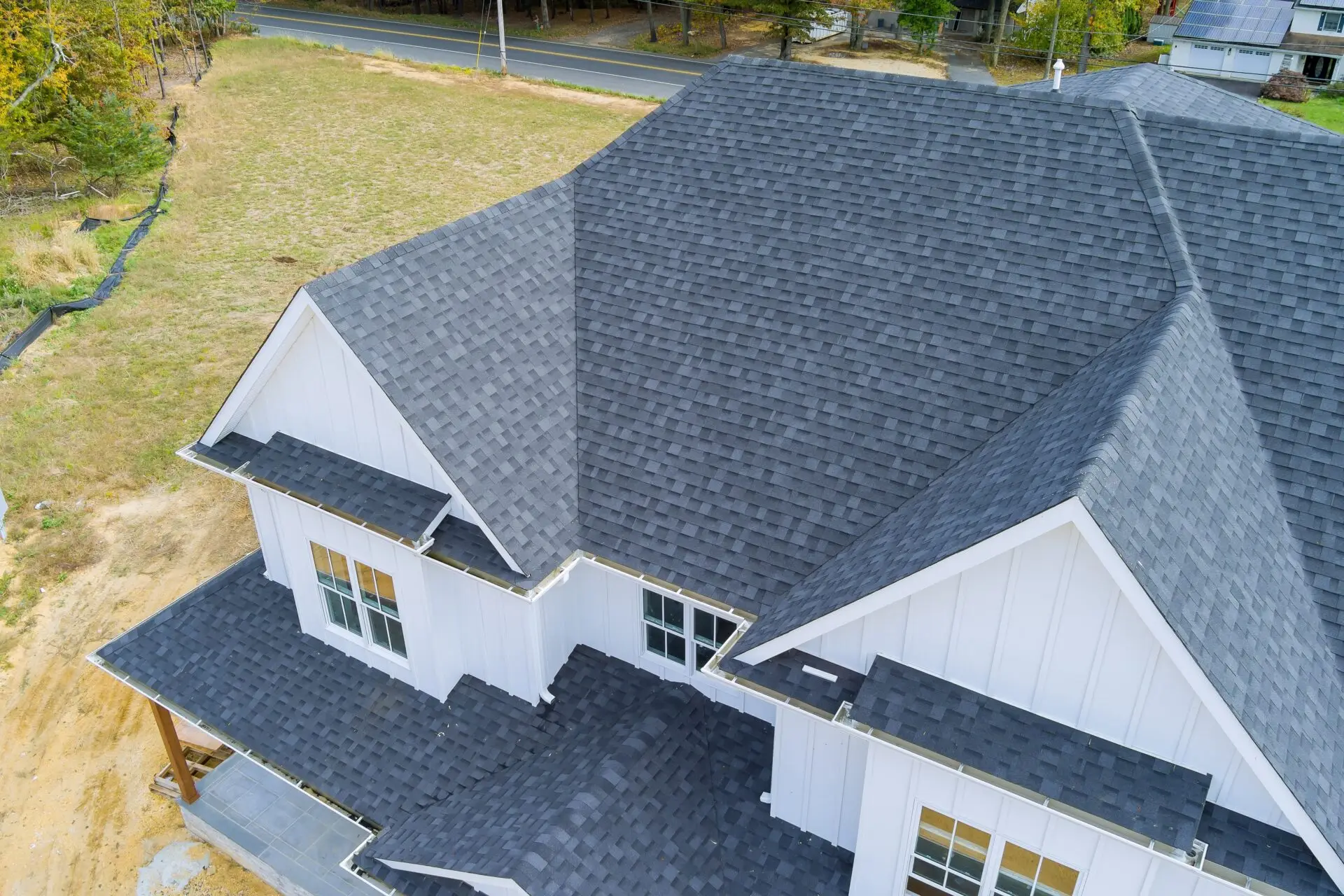
- Architectural Asphalt Shingles: Dimensional or architectural asphalt shingles represent the most common residential application in Maryland. These systems utilize multi-layered fiberglass matting coated with asphalt and ceramic mineral granules, offering strong wind resistance (typically rated up to 130 mph) and impact protection.
- Slate Roofing and Restoration: Common in historic Maryland communities such as Bethesda, Chevy Chase, and Annapolis, natural slate provides an elegant, long-lasting aesthetic. Slate installation requires specialized structural framing due to its heavy weight (800 to 1,500 lbs per square), as well as precision hand-nailing techniques using copper or stainless steel fasteners.
- Metal Roofing Systems: Standing seam metal roofs—fabricated from aluminum, coated steel, or copper—offer exceptional longevity and high thermal reflectivity. Metal panels feature concealed fasteners and interlocking seams that prevent water intrusion during severe wind-driven rain events.
- Synthetic Shake and Slate: Composed of engineered polymer formulations, synthetic roofing tiles replicate the look of natural slate or cedar shake without requiring structural retrofitting or intensive ongoing maintenance.
Roof Repair, Maintenance, and Emergency Diagnostics
Targeted roof repairs address localized failures before moisture penetrates the building envelope, causing rot, mold growth, or drywall damage. Common residential and commercial repair scenarios include:
- Flashing Repair and Replacement: Wall step flashings, chimney flashings, and valley linings are vulnerable points for water intrusion. Repairing these areas requires weaving new corrosion-resistant metal flashing beneath adjacent shingles.
- Pipe Boot and Penetration Sealing: Neoprene or rubber pipe boots around plumbing vents degrade under solar ultraviolet (UV) radiation over time. Replacing worn boots prevents hidden ceiling leaks.
- Missing or Wind-Damaged Shingles: Severe storms can lift or unseal aging asphalt shingles. Prompt replacement prevents wind-driven rain from penetrating the bare underlayment beneath.
- Ice Dam Remediation: In winter, poor attic insulation causes heat to escape, melting snow on the upper roof, which then refreezes at the cold eaves. This creates an ice dam that backs up standing water under the shingles. Installing self-adhered ice and water shield membranes along eaves during reroofing helps mitigate this issue.
Commercial Low-Slope and Flat Roofing Solutions
Commercial buildings, apartment complexes, and modern residential additions frequently feature flat or low-slope roof profiles. These structures require continuous waterproofing membranes rather than sloped shedding materials:
- TPO (Thermoplastic Polyolefin): A single-ply reflective white membrane heat-welded at the seams. TPO offers strong UV resistance, energy efficiency, and chemical exposure defense.
- EPDM (Ethylene Propylene Diene Monomer): A durable synthetic rubber membrane recognized for flexibility and cold-weather resistance. EPDM seams are sealed using specialized adhesive tapes.
- Modified Bitumen: Asphalt-based multi-ply systems reinforced with fiberglass or polyester mats, installed via torch-down or cold-adhesive methods for high foot-traffic endurance.
Navigating Maryland Climate Challenges and Material Performance
Maryland's Mid-Atlantic location exposes roof assemblies to freeze-thaw cycles, high humidity, microburst winds, coastal moisture, and winter ice accumulation. Selecting appropriate roofing materials requires balancing aesthetic preferences with structural performance ratings.
| Roofing Material | Average Lifespan | Wind Resistance Rating | Maryland Climate Suitability | Key Maintenance Requirement |
|---|---|---|---|---|
| Architectural Shingles | 25 – 30 Years | Up to 110–130 mph | High (Resistant to heat and moderate rain) | Periodic moss removal; annual gutter clearing |
| Natural Slate | 75 – 100+ Years | Exceptional (130+ mph) | High (Requires reinforced roof deck) | Regular inspection for cracked or slipped slates |
| Standing Seam Metal | 40 – 70 Years | Up to 140 mph | Excellent (Ideal for snow shedding and heat reflection) | Inspect seam seals and perimeter closure strips |
| TPO Single-Ply Membrane | 20 – 30 Years | High (Engineered system dependent) | High (Reduces summer cooling loads) | Biannual drain cleaning and thermal seam inspection |
| EPDM Rubber Membrane | 20 – 25 Years | Moderate to High | High (Handles low temperatures well) | Check field seams and flashing adhesives annually |
Evaluating Maryland Roofing Contractors: MHIC Licensing and Inspection Protocols
Hiring a certified, reputable contractor in Maryland requires verifying legal credentials, examining project warranties, and understanding the physical diagnostic process.
Step-by-Step License and Insurance Verification
Homeowners and commercial property managers should follow a standardized verification protocol prior to signing a roofing agreement:
- Verify MHIC License Status: Check the active status of the contractor's MHIC license through the Maryland Department of Labor official portal. Verify that the license number listed matches the contractor's business name and has no active suspensions or unpaid claims.
- Request Certificates of Insurance (COI): Obtain proof of general liability insurance (typically a minimum of $1,000,000 per occurrence) and full Workers' Compensation coverage. Insurance certificates should list the property owner as a certificate holder during major projects.
- Confirm Manufacturer Certification: Quality roofing contractors often maintain factory certifications (such as GAF Master Elite, CertainTeed SELECT ShingleMaster, or Owens Corning Platinum Contractor status). These credentials allow the contractor to issue extended manufacturer warranty coverage that includes non-prorated material and labor coverage.
Comprehensive Roof Diagnostic Procedure
A thorough physical inspection performed by a trained professional includes both exterior elevation checks and internal attic evaluations:
- Attic Inspection: Checking the underside of the roof deck for daylight penetration, dark moisture staining, rotted rafters, and inadequate soffit or ridge ventilation. Proper ventilation prevents moisture buildup that causes premature shingle deterioration.
- Perimeter and Eaves Check: Inspecting fascia boards, soffit vents, drip edges, and gutters to ensure proper water discharge away from the foundation.
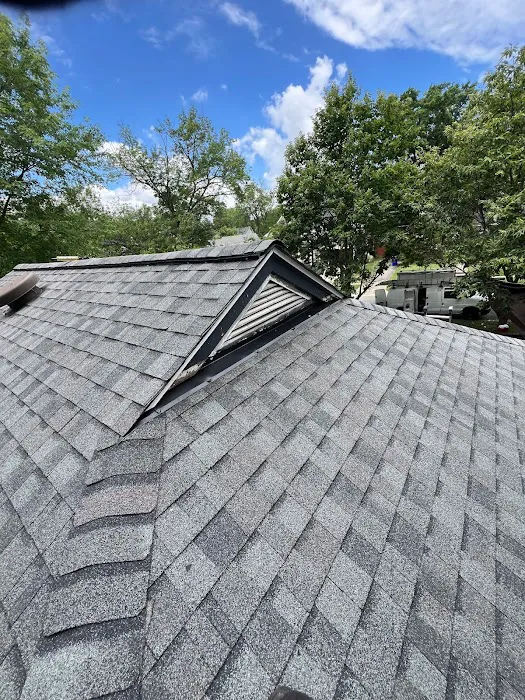
- Roof Surface Diagnostics: Examining granule loss on asphalt shingles, blistering, curling, unsealed shingle tabs, metal corrosion, and cracked mortar caps on chimneys.
Estimated Costs and Budgeting Factors for Maryland Roofing Projects
Roofing costs across Maryland vary significantly based on geographic location, structural complexity, height, slope, and selected materials.
Key Factors Influencing Total Project Costs
- Square Footage and Pitch: Roofing estimates rely on "squares" (one square equals 100 square feet of surface area). Steeply pitched roofs (over 6/12 pitch) require specialized safety rigging and labor, increasing installation expense.
- Tear-Off Layers: Local building codes limit the number of shingle layers allowed on a roof (typically a maximum of two layers). If a home already has two layers of shingles installed, both must be torn off down to the wood deck, increasing labor and waste disposal fees.
- Decking Repair: Replacing damaged plywood or tongue-and-groove decking adds per-sheet material costs to the baseline quote.
- County Permitting Fees: Municipalities in Maryland—including Montgomery, Prince George's, and Howard counties—require building permits for structural roof replacement. Permit fees are calculated based on job valuation or square footage.
Frequently Asked Questions
What credentials should I verify before hiring a roofing contractor in Maryland?
Always verify that the contractor holds an active license with the Maryland Home Improvement Commission (MHIC), carries comprehensive General Liability insurance, and maintains full Workers' Compensation coverage for all workers on site. You can confirm MHIC license validity directly through the Maryland Department of Labor online registry.
How often should a roof undergo professional inspection in the Mid-Atlantic region?
Roofs in Maryland should undergo a professional inspection twice per year—typically in spring and autumn—and after major windstorms, hail events, or heavy snowfalls. Routine inspections help identify minor flashing failures or displaced shingles before interior water damage occurs.
Does homeowners insurance cover roof replacement after storm damage?
Homeowners insurance policy coverage depends on the specific cause of the damage. Sudden peril events such as hail impacts, wind-torn shingles, or trees falling during severe weather are generally covered under standard policies, subject to your deductible. General wear and tear, age-related degradation, or neglect are excluded from insurance coverage.
What is the expected lifespan of an architectural shingle roof in Maryland?
An architectural asphalt shingle roof installed with proper attic ventilation and quality underlayment typically lasts between 25 and 30 years in Maryland's climate. Factors such as extreme solar exposure, unaddressed tree overhangs, and severe freeze-thaw cycles can alter this timeframe.
Why is attic ventilation essential for roof longevity in Maryland?
Balanced attic ventilation—utilizing a combination of intake soffit vents and exhaust ridge vents—allows continuous airflow beneath the roof deck. In summer, it prevents heat buildup that can bake asphalt shingles from underneath. In winter, proper airflow reduces moisture accumulation that leads to mold, wood deck rot, and ice dam formation.
Next Steps for Property Owners
When planning a roof replacement or major repair in Maryland, start by taking practical diagnostic steps to protect your property investment:
- Conduct a Ground-Level Inspection: Walk around your home with binoculars to inspect for missing shingles, loose flashing, damaged gutters, or sagging eaves.
- Check Internal Ceilings and Attic space: Inspect top-floor ceilings and attic knee-walls for water spots, peeling paint, or musty odors, particularly after heavy rains.
- Schedule a Professional Inspection: Contact a licensed contractor such as Dominion Roofing Company to perform a ladder-assisted roof diagnosis, assess attic ventilation, and provide a clear written estimate.
- Review Contracts Thoroughly: Ensure any proposal details material specifications, warranty terms, permit responsibilities, waste removal, and payment milestones before signing.
Image Gallery