What Are the Top Ten Most Expensive Gemstones in the World?
The top ten most expensive gemstones in the world, measured by peak price per carat at international auctions and private sales, are Blue Diamonds, Imperial Jadeite, Pink Diamonds, Red Diamonds, Burmese Rubies, Fine Emeralds, Alexandri...
The top ten most expensive gemstones in the world, measured by peak price per carat at international auctions and private sales, are Blue Diamonds, Imperial Jadeite, Pink Diamonds, Red Diamonds, Burmese Rubies, Fine Emeralds, Alexandrite, Musgraveite, Grandidierite, and Paraíba Tourmaline. Their extreme valuations stem from elemental rarity, geological formation requirements, and global collector demand.
Contents
Evaluating the world’s most precious gemstones requires looking beyond retail jewelry standards. While conventional diamonds dominate commercial markets, the rare minerals commanding millions of dollars per carat owe their value to extraordinary geological anomalies. A gemstone's price is determined by an intersection of structural chemistry, color saturation, optical clarity, historical origin, and market availability.
Key Factors That Determine Gemstone Value
Determining the monetary value of a top-tier gemstone involves strict gemological metrics. Unlike standardized commodities, no two natural gemstones share identical crystal lattices, inclusions, or trace element distributions. Understanding how these physical traits convert into financial value is essential before examining individual rankings.
1. Chemical Composition and Trace Elements
The intrinsic color of most high-value colored gemstones is caused by chemical impurities trapped within the mineral matrix during subterranean formation. For instance, tiny trace amounts of boron transform pure carbon into a vivid blue diamond, while chromium creates the intense red of rubies and the vivid green of emeralds. The scarcity of these precise chemical interactions directly dictates a mineral’s global yield.
2. The Exponential Carat Weight Scaling Factor
Gemstone pricing per carat does not follow a linear scale; it grows exponentially with weight. A top-quality 5-carat gemstone can sell for ten to twenty times the per-carat price of an identical 1-carat stone of equal clarity and color. Large, gem-quality crystal formations are exponentially rarer in nature, making high-carat specimens prized targets for sovereign wealth funds and private collectors.
3. Geographic Origin and Historical Provenance
Mine origin significantly influences valuation. Rubies from the Mogok Valley in Myanmar (Burma), emeralds from Colombia’s Muzo mine, or copper-bearing tourmalines from Paraíba, Brazil, command immense market premiums. Independent laboratories such as the Gemological Institute of America (GIA), the Swiss Gemmological Institute (SSEF), and the Gübelin Gem Lab issue origin certificates that can double or triple a gem's open-market appraisal.
The 10 Most Expensive Gemstones (Ranked by Price Per Carat)
| Top 10 Most Expensive Gemstones | Price Per Carat |
|---|---|
| 1. Blue Diamond | Up to $4,000,000+ / carat |
| 2. Imperial Jadeite | Up to $3,000,000+ / carat |
| 3. Pink Diamond | Up to $2,000,000+ / carat |
| 4. Red Diamond | Up to $1,000,000 - $2,000,000+ / carat |
| 5. Burmese Ruby | Up to $1,000,000+ / carat |
| 6. Fine Emerald | Up to $300,000+ / carat |
| 7. Alexandrite | Up to $70,000 - $100,000 / carat |
| 8. Musgraveite | Up to $35,000 - $50,000 / carat |
| 9. Grandidierite | Up to $20,000 - $30,000 / carat |
| 10. Paraíba Tourmaline | Up to $20,000 - $50,000 / carat |
1. Blue Diamond
- Estimated Value: Up to $4,000,000+ per carat
- Primary Mineral: Type IIb Diamond (Pure Carbon with Boron impurities)
- Notable Origins: Cullinan Mine (South Africa), Argyle Mine (Australia)
Blue diamonds represent the absolute pinnacle of gemstone valuation. Formed deep within the Earth’s lower mantle—at depths ranging from 400 to 670 kilometers—these stones derive their striking hue from boron atoms substituting for carbon in the crystal lattice. Because boron is rare in mantle depths, Type IIb diamonds constitute less than 0.02% of all mined diamonds globally. Notable sales include the Oppenheimer Blue (14.62 carats, sold for over $57 million) and the De Beers Blue (15.10 carats, fetching $57.5 million), cementing their position at the top of high-end auctions.
2. Imperial Jadeite
- Estimated Value: Up to $3,000,000+ per carat
- Primary Mineral: Pyroxene Mineral Group ($NaAlSi_2O_6$)
- Notable Origins: Kachin State (Myanmar)
Distinct from common nephrite jade, Imperial Jadeite is an ultra-rare, translucent to semi-transparent sodium-aluminum silicate. Its vivid emerald-green color is caused by chromium traces within the pyroxene structure. Imperial Jadeite has held deep cultural and financial significance in East Asia for centuries. High-grade specimens display an almost gelatinous luster and rich color saturation. A prime example of its market power is the Hutton-Mdivani Necklace, a 27-bead Cartier piece crafted from top-grade Imperial Jadeite, which fetched over $27.4 million at auction.
3. Pink Diamond
- Estimated Value: Up to $2,000,000+ per carat
- Primary Mineral: Type Ia / Type IIa Diamond
- Notable Origins: Argyle Mine (Australia - now closed), Golconda (India), Brazil
Unlike blue or yellow diamonds, pink diamonds do not owe their color to chemical trace elements. Instead, gemologists attribute their color to intense plastic deformation within the crystal lattice during subterranean migration. This structural distortion alters how light reflects through the gem. Following the closure of the famed Argyle Mine in Western Australia, global supply plummeted, sending prices soaring. The CTF Pink Star, a 59.60-carat Fancy Vivid Pink diamond, sold for a historic $71.2 million at Sotheby’s.
4. Red Diamond
- Estimated Value: Up to $1,000,000 – $2,000,000+ per carat
- Primary Mineral: Type IIa Diamond
- Notable Origins: Argyle Mine (Australia), Brazil, Russia
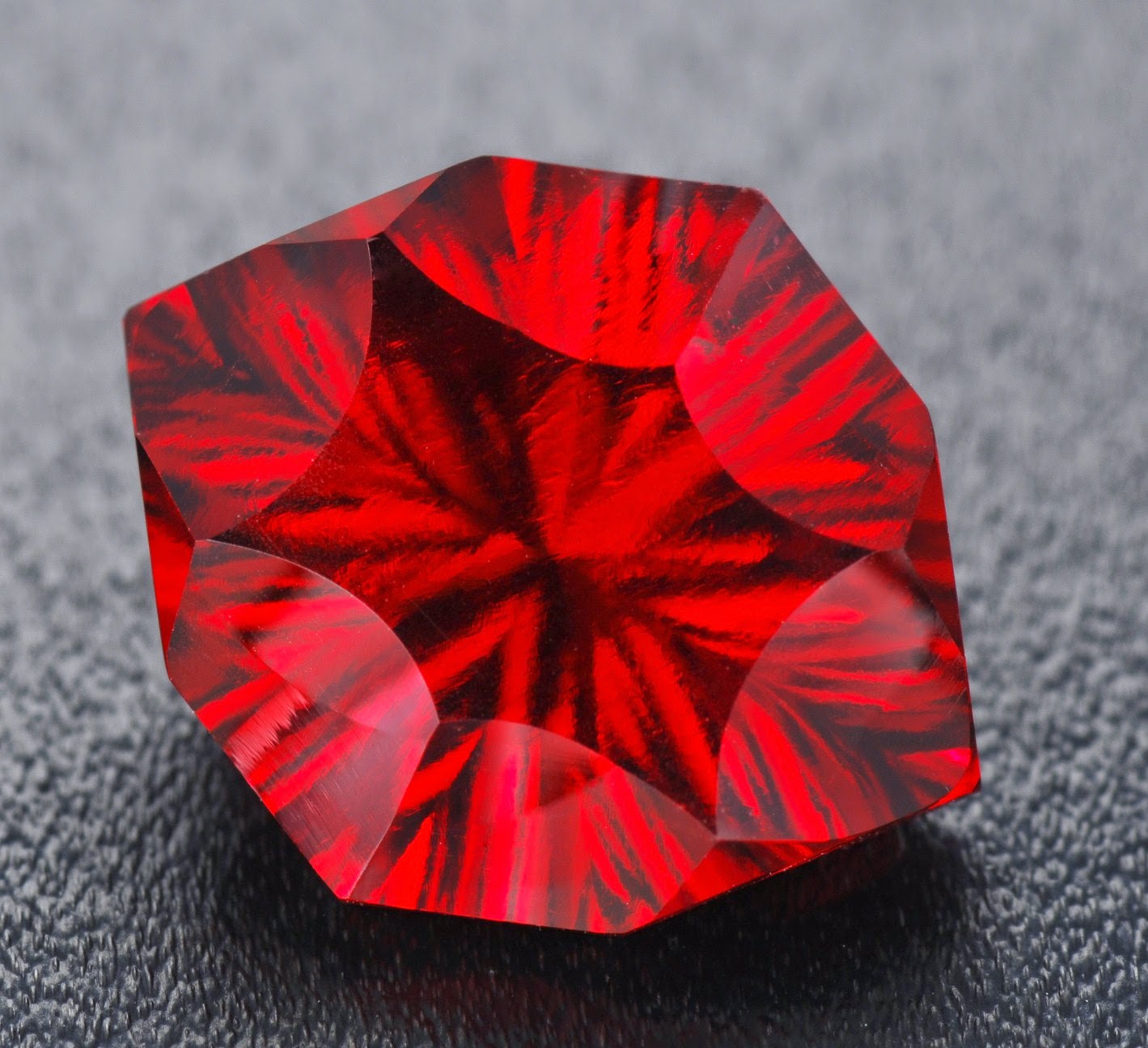
Red diamonds are among the rarest mineral specimens on Earth. Fewer than 30 true gem-quality red diamonds are documented to exist worldwide, with the vast majority weighing under 1 carat. Like pink diamonds, their color stems from extreme atomic structural dislocation rather than chemical impurities. Because of their scarcity, red diamonds rarely appear at public auctions; when they do, bidding is fierce. The Moussaieff Red, a 5.11-carat trilliant-cut gem, remains one of the most famous and valuable red diamonds in history.
5. Burmese Ruby ("Pigeon's Blood")
- Estimated Value: Up to $1,000,000+ per carat
- Primary Mineral: Corundum ($Al_2O_3$) with Chromium
- Notable Origins: Mogok and Mong Hsu (Myanmar)
While rubies are found globally, untempered Burmese rubies exhibiting the coveted "Pigeon's Blood" color profile—a vivid red hue with strong fluorescence and subtle blue secondary undertones—command world-record valuations. Chromium gives the gem its red color while causing internal fluorescence that makes the stone seem to glow under natural light. The Sunrise Ruby, a 25.59-carat untreated Burmese ruby, sold for more than $30 million, setting a historic benchmark for colored gemstones per carat.
6. Fine Emerald
- Estimated Value: Up to $300,000+ per carat
- Primary Mineral: Beryl ($Be_3Al_2Si_6O_18$) with Chromium/Vanadium
- Notable Origins: Muzo, Chivor, and Coscuez (Colombia), Zambia
As a member of the beryl family, emeralds naturally contain inclusions known as jardin (garden), which make flawless natural stones practically non-existent. However, top-tier Colombian emeralds with deep saturation, high transparency, and minimal clarity-enhancing treatments achieve phenomenal prices. The historic Rockefeller Emerald, an 18.04-carat untreated Colombian stone, set an auction record when it sold for $5.5 million (over $304,000 per carat), showing that fine beryl can rival traditional diamond valuations.
7. Alexandrite
- Estimated Value: Up to $70,000 – $100,000 per carat
- Primary Mineral: Chrysoberyl ($BeAl_2O_4$) with Chromium
- Notable Origins: Ural Mountains (Russia), Brazil, Sri Lanka
Discovered in Russia’s Ural Mountains in the 1830s, Alexandrite is famous for its color-changing optical properties. Due to complex light absorption traits governed by chromium ions, fine Alexandrite displays a vivid green-to-teal hue in natural daylight, shifting to a deep raspberry red under incandescent light. Large, gem-quality Alexandrites exceeding 3 carats with a clean, 100% color change are rare, driving intense demand among private collectors.
8. Musgraveite
- Estimated Value: Up to $35,000 – $50,000 per carat
- Primary Mineral: Oxide Mineral ($Mg,Fe,Zn)_2Al_6BeO_12$
- Notable Origins: Musgrave Ranges (Australia), Madagascar, Sri Lanka
Musgraveite belongs to the taaffeite mineral family and is composed of magnesium, beryllium, iron, and aluminum oxides. For decades after its discovery in 1967, only a handful of faceted gem-quality specimens existed worldwide. Distinguishing Musgraveite from Taaffeite requires advanced testing methods like Raman spectroscopy and X-ray diffraction. Its extreme scarcity keeps raw supply virtually non-existent, making clean, cut specimens valuable additions to elite collections.
9. Grandidierite
- Estimated Value: Up to $20,000 – $30,000 per carat
- Primary Mineral: Magnesium-Aluminum Borosilicate
- Notable Origins: Southern Madagascar
First discovered in 1902 by French explorer Alfred Grandidier, Grandidierite is an ultra-rare trichroic mineral that displays blue, green, and white hues depending on the viewing angle. Gem-quality, transparent material is exceptionally hard to come by, as most raw deposits yield only opaque, heavily included stones. High-clarity, faceted Grandidierite specimens over one carat rank among the rarest collectors' gems on the market.
10. Paraíba Tourmaline
- Estimated Value: Up to $20,000 – $50,000 per carat
- Primary Mineral: Elbaite Tourmaline ($Na(Li,Al)_3Al_6(BO_3)_3Si_6O_18(OH)_4$) with Copper
- Notable Origins: Paraíba State (Brazil), Mozambique, Nigeria
Discovered in the late 1980s by Heitor Dimas Barbosa in the Brazilian state of Paraíba, this elbaite tourmaline owes its electric blue-green color to high concentrations of copper and manganese. The gem’s neon glow appears to illuminate the stone from within. While copper-bearing tourmalines have since been found in Mozambique and Nigeria, authentic, high-saturation gems from the original Brazilian mine retain a significant price premium due to their distinct color intensity and historical origin.
Technical Comparison of Top Gemstones
The table below breaks down the primary mineral species, chemical elements, geographic sources, and top historical per-carat valuations for these rare gemstones:
| Gemstone | Mineral Class / Species | Primary Color Mechanisms | Primary Origins | Est. Top Price / Carat |
|---|---|---|---|---|
| Blue Diamond | Native Element (Diamond) | Boron impurities in carbon matrix | South Africa, Australia | $3,000,000 – $4,000,000+ |
| Imperial Jadeite | Pyroxene Silicate | Chromium ($Cr^{3+}$) within sodium matrix | Myanmar (Burma) | $1,000,000 – $3,000,000+ |
| Pink Diamond | Native Element (Diamond) | Lattice deformation / Plastic distortion | Australia, Brazil, India | $1,000,000 – $2,000,000+ |
| Red Diamond | Native Element (Diamond) | Severe structural lattice distortion | Australia, Brazil | $1,000,000 – $2,000,000+ |
| Burmese Ruby | Corundum | Chromium trace substitution | Myanmar (Mogok Valley) | $50,000 – $1,200,000+ |
| Fine Emerald | Beryl | Chromium and Vanadium trace ions | Colombia, Zambia | $20,000 – $300,000+ |
| Alexandrite | Chrysoberyl | Chromium (causing light polarization shift) | Russia, Brazil, Sri Lanka | $15,000 – $100,000 |
| Musgraveite | Oxide | Beryllium-Magnesium substitution | Australia, Madagascar | $35,000 – $50,000 |
| Grandidierite | Borosilicate | Iron ($Fe^{2+}$) interaction with magnesium | Madagascar | $20,000 – $30,000 |
| Paraíba Tourmaline | Elbaite Tourmaline | Copper ($Cu^{2+}$) and Manganese ($Mn^{3+}$) | Brazil (Paraíba), Mozambique | $10,000 – $50,000 |
Investment Considerations for High-Value Gemstones
Acquiring ultra-high-value gemstones requires careful gemological verification and financial planning. Unlike publicly traded stocks or commodities, the gemstone market is highly illiquid, fragmented, and prone to misrepresentation if approached without expert guidance.
Laboratory Authentication and Grading
High-value transactions should always be backed by independent certificates from respected gemological labs. Reports from organizations like the Gemological Institute of America (GIA) or the Swiss Gemmological Institute (SSEF) offer objective, standardized analyses of color grading, chemical composition, clarity, and evidence of artificial treatments.
Key certification factors include verifying whether a stone is natural or laboratory-grown, as well as checking for common enhancements:
- Heat Treatment: Standard for sapphires and rubies to enhance color; untreated stones carry a significant valuation premium.
- Clarity Enhancement: Emeralds are frequently treated with oils or resins to fill surface-reaching fractures. Un-oiled specimens command top market prices.
- Irradiation: Used to artificially deepen color in diamonds and tourmalines; must be explicitly disclosed on lab reports.
Acquisition Checklist
- Lab Report
- GIA / SSEF
- Treatment Check
- Origin Provenance
- Mine Location
- Historical Sales
- Liquidity & Asset
- Auction Records
- Storage / Insurance
Liquidity, Storage, and Asset Protection
Physical gemstones serve as compact, portable stores of wealth, but converting them into cash quickly can be challenging. Realizing top market values typically requires working with international auction houses like Christie's or Sotheby's, which involves consignment fees, seller premiums, and sales cycles that can take months.
Furthermore, holding multi-million-dollar physical assets requires specialized insurance coverage and secure, climate-controlled vaulting to prevent physical degradation or theft.
Frequently Asked Questions
What is the single most expensive gemstone ever sold at auction?
The CTF Pink Star, a 59.60-carat Fancy Vivid Pink diamond, holds the record for the highest price achieved for any gemstone at public auction, selling for $71.2 million at Sotheby’s Hong Kong in 2017.
Why are red diamonds more expensive per carat than regular white diamonds?
White diamonds are relatively abundant in nature, whereas gem-quality red diamonds are extraordinarily rare geological anomalies. With fewer than 30 true gem-quality red diamonds known to exist globally, their extreme scarcity drives per-carat prices well past $1 million, compared to a few thousand dollars for a high-quality white diamond.
Are laboratory-grown gemstones altering the prices of natural top-tier gems?
Lab-grown alternatives have made commercial-grade synthetic gems affordable for mainstream buyers, but they have had minimal impact on investment-grade natural gemstones. The value of high-end natural stones relies on their natural origin, history, and geological scarcity—qualities lab-created minerals cannot replicate.
How does color saturation affect a gemstone’s market value?
Color saturation measures the intensity and purity of a stone's primary hue. Higher saturation without dark overtones elevates value, whereas weak, muted, or washed-out tones significantly lower a gem's market appraisal, even if the stone is large and eye-clean.
What is the rarest gemstone in terms of global supply?
Painite was long considered the rarest mineral on Earth, with only a few known crystal specimens for decades. However, when evaluating facetable, gem-quality stones capable of being cut and mounted, gemstones like Red Diamonds, Musgraveite, and Grandidierite rank among the rarest minerals currently available on global markets.
Recommended Next Steps for Buyers and Collectors
Navigating the top tier of the gemstone market requires specialized expertise, clear verification, and careful risk management. If you are looking to purchase high-value gemstones for personal collections or asset diversification:
- Engage Accredited Advisory Services: Work exclusively with independent gemological consultants or accredited appraisers who hold no financial stake in the seller's inventory.
- Require Primary Lab Documentation: Demand original certificates from recognized labs (such as GIA, SSEF, or Gübelin) issued within the last 12 to 24 months before committing to a purchase.
- Inspect the Physical Asset Directly: Utilize specialized microscopic optical equipment to examine inclusions, color distribution, and potential structural fractures before finalizing sales terms.
- Establish Secure Storage Protocols: Coordinate with dedicated luxury asset insurers and specialized private storage vault operators to safeguard physical investments prior to taking delivery.
EDITORIAL CATEGORY METADATA:
TOPIC METADATA:
Image Gallery