How TDI Workers' Comp Rates are Calculated: The 2026 Employer’s Guide
In Texas, workers' compensation rates are calculated by multiplying an insurance carrier’s specific rate for a classification code by the employer’s total payroll (per $100 unit) and then adjusting that figure by an Experience Modifier...
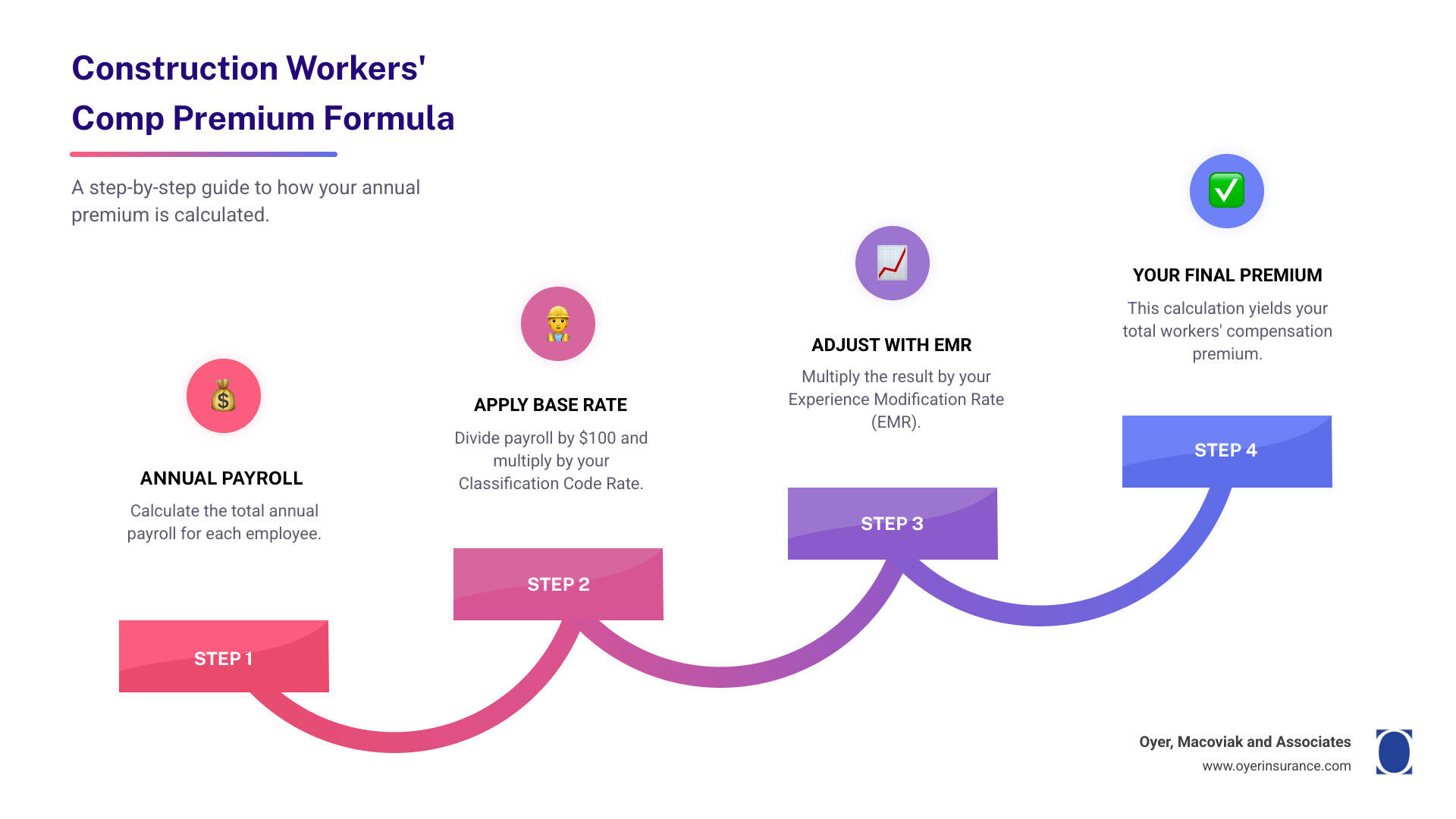
In Texas, workers' compensation rates are calculated by multiplying an insurance carrier’s specific rate for a classification code by the employer’s total payroll (per $100 unit) and then adjusting that figure by an Experience Modifier (MOD). The foundational formula is: (Classification Rate × [Payroll / 100]) × Experience Modifier = Manual Premium. Additional taxes, surcharges, and credits are then applied to reach the final annual cost.
Contents
While Texas is unique for being the only state where workers' compensation is optional for private employers (known as "non-subscription"), those who choose to provide coverage fall under the regulatory oversight of the Texas Department of Insurance (TDI) and the Division of Workers' Compensation (DWC). Understanding the nuances of these calculations is critical for any Texas business looking to manage its overhead effectively in 2026.
The Foundation: NCCI Classification Codes
The first step in the calculation process involves the National Council on Compensation Insurance (NCCI). Texas uses the NCCI classification system to group employees into categories based on the risk associated with their specific job duties. There are over 700 different class codes, each representing a different level of hazard.
Why Class Codes Matter
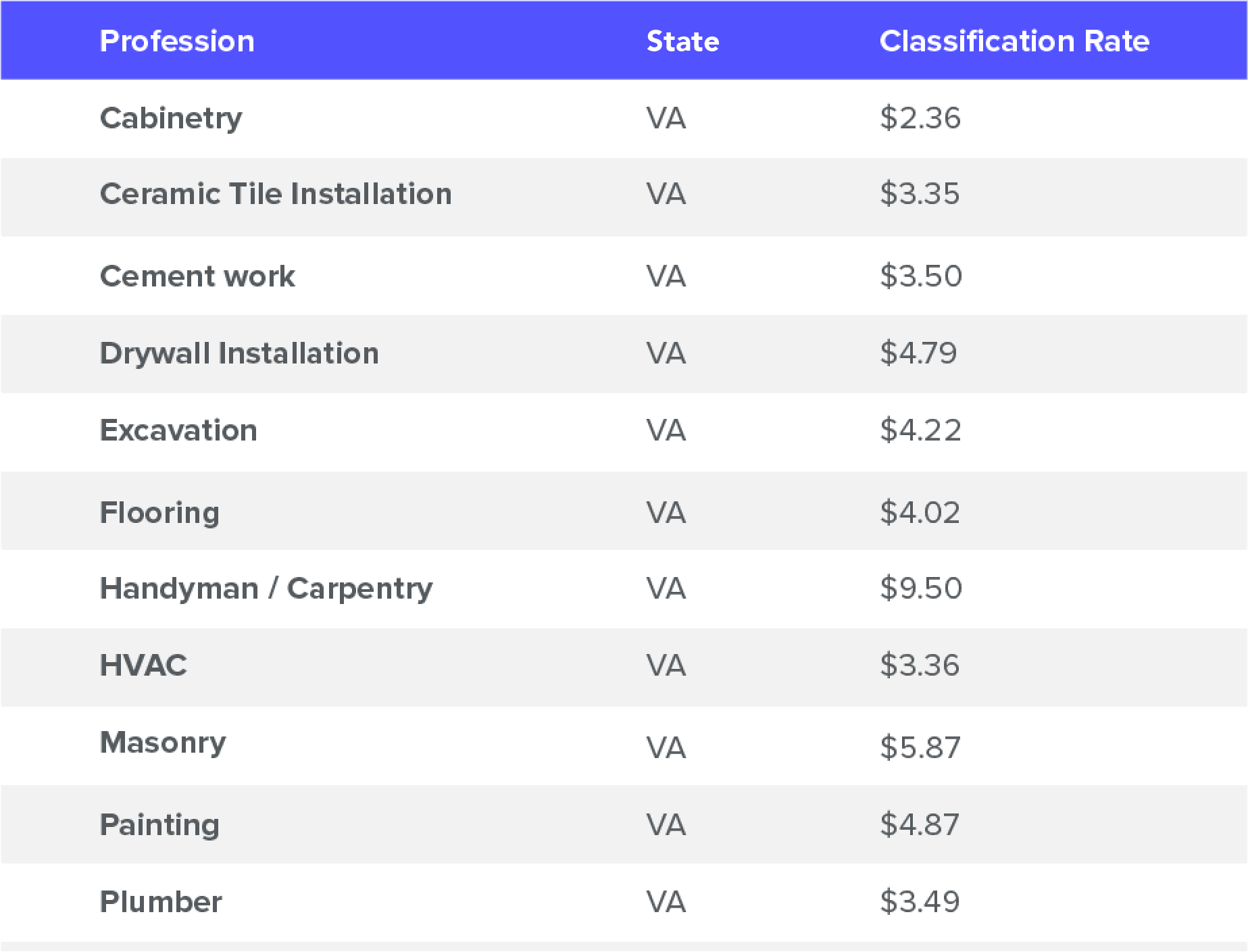
The rate for a "Clerical Office Employee" (Code 8810) will be significantly lower than the rate for a "Roofing" employee (Code 5551) because the statistical likelihood and severity of an injury are much lower in an office environment. If a business misclassifies its employees, it may either overpay for coverage or face significant back-payments and penalties during a year-end audit.
In 2026, the TDI continues to monitor these classifications to ensure they reflect modern workplace environments. For instance, the rise of remote and hybrid work has led to more precise applications of the 8810 code, whereas specialized tech hardware manufacturing might require more niche classifications.
Understanding "Loss Costs" and Carrier Multipliers
The TDI does not set a single, flat price for workers' compensation. Instead, it oversees a competitive market where rates are "file and use."
- Base Loss Costs: The NCCI analyzes years of claims data in Texas to determine the "Loss Cost"—the amount of money needed to cover medical and indemnity benefits for a specific class code.
- Loss Cost Multiplier (LCM): Every insurance company operating in Texas must file its own Loss Cost Multiplier with the TDI. This multiplier covers the carrier’s operating expenses, commissions, taxes, and profit margins.
- The Formulaic Rate: The carrier takes the NCCI Loss Cost and multiplies it by its own LCM. For example, if the NCCI Loss Cost for a code is $1.00 and the carrier’s LCM is 1.40, the employer’s rate for that code is $1.40 per $100 of payroll.
Because each carrier has a different LCM, two different insurance companies can offer vastly different quotes for the exact same business. This competitive structure is designed to keep the Texas market healthy and provide options for employers.
The Impact of Payroll on the Calculation
Payroll is the "exposure base" for workers' compensation. In the eyes of the TDI, the more people you employ and the more they are paid, the higher the potential financial exposure if a workplace accident occurs.
What is Included in Payroll?
For the purpose of workers' comp calculations, payroll generally includes:
- Gross wages and salaries.
- Total commissions and bonuses.
- Pay for holidays, vacations, and sick leave.
- Overtime (usually calculated at the straight-time rate; the "overtime premium" portion is often excluded to avoid punishing employers for working extra hours).
The $100 Unit Rule
The rate is always applied per $100 of payroll. If a business has an annual payroll of $500,000 for a specific class code with a rate of $2.50, the math would be:
- $500,000 / 100 = 5,000 units.
- 5,000 units × $2.50 = $12,500 base premium.
The Experience Modifier (E-Mod): Your Safety Score
The Experience Rating Modifier, commonly referred to as the E-Mod or MOD, is the most powerful variable in the calculation because it is the only part of the formula the employer can directly control through safety management.
The E-Mod compares a specific company's claims history to the average claims history of other companies in the same industry and of a similar size.
- A MOD of 1.0 is considered "neutral" (average).
- A MOD below 1.0 (e.g., 0.85) means the company has a better-than-average safety record, resulting in a 15% discount.
- A MOD above 1.0 (e.g., 1.25) means the company has a worse-than-average safety record, resulting in a 25% surcharge.
In Texas, the NCCI calculates these modifiers using data from the three most recently completed years (excluding the immediate past year). For 2026 calculations, the E-Mod would typically look at claims data from 2022, 2023, and 2024.
| Calculation Component | Responsibility | Purpose |
|---|---|---|
| Class Code | NCCI / TDI | Groups employees by job risk/hazard levels. |
| Loss Cost | NCCI | The raw data on expected claim costs per code. |
| Loss Cost Multiplier | Insurance Carrier | Adds company overhead, profit, and expenses. |
| Payroll | Employer | The total dollar exposure (units of $100). |
| Experience Modifier | NCCI | Adjusts premium based on the specific company's safety history. |
| Assessments/Fees | TDI / DWC | State-mandated funds for administrative oversight. |
Mandatory Texas Assessments and Surcharges
Once the "Standard Premium" is calculated using the rate, payroll, and MOD, there are several Texas-specific additions that the TDI requires carriers to include.
The Maintenance Tax and DWC Fees
The TDI and the Division of Workers' Compensation are funded primarily by assessments on insurance carriers. These costs are passed through to policyholders. These include the Workers' Compensation Maintenance Tax and the Texas Related Fund assessments. These fees are typically small percentages (often less than 1-2% total) but are required by law to fund the state’s regulatory and dispute-resolution systems.
Texas Mutual and the "Last Resort" Market
Texas Mutual Insurance Company, while now a private entity, was originally created by the state legislature to ensure that all employers could find coverage. They often handle a large portion of the Texas market. In 2026, their rating tiers and "Safety Dividends" remain a major factor in how net costs are calculated for many Texas businesses. While dividends are not guaranteed and are not part of the initial calculation, they can effectively lower the "net" rate for safe companies.
Example Calculation Walkthrough
To see how this works in a real-world 2026 scenario, imagine a mid-sized construction firm in Austin with the following data:
- Total Payroll: $1,000,000
- NCCI Class Code: 5403 (Carpentry)
- Carrier Rate: $6.00 (after applying the carrier's Multiplier to the Loss Cost)
- Experience Modifier: 0.90 (due to a solid safety program)
Step 1: Calculate the Manual Premium ($1,000,000 / 100) × $6.00 = $60,000
Step 2: Apply the Experience Modifier $60,000 × 0.90 = $54,000 (Standard Premium)
Step 3: Add Texas Assessments and Taxes Assuming a 2% total for TDI maintenance taxes and other fees: $54,000 × 0.02 = $1,080 Total Estimated Premium = $55,080
The Importance of the Annual Audit
It is vital to remember that the initial rate calculation at the start of the policy year is merely an estimate. Because payroll fluctuates based on hiring, firing, bonuses, and overtime, the TDI requires carriers to perform an annual audit.
During the audit, the insurance company reviews the actual payroll records for the year. If the actual payroll was higher than estimated, the employer must pay the difference. If it was lower, the employer receives a credit. Furthermore, the auditor will verify that employees were assigned the correct NCCI codes. If an office worker was accidentally listed as a field laborer, the audit is the time when these rate discrepancies are corrected.
Frequently Asked Questions
1. How does TDI handle rates for "Non-Subscribers"?
TDI does not regulate rates for non-subscribers because those companies have opted out of the workers' compensation system. However, non-subscribers do not have the legal protections provided by the Workers' Compensation Act, meaning they can be sued for negligence and have no limit on damages. They often purchase "Occupational Accident Insurance," which is calculated differently and is not subject to TDI workers' comp rating rules.
2. Can I negotiate my workers' comp rate in Texas?
While you cannot negotiate the NCCI Loss Costs, you can shop among different carriers for lower Loss Cost Multipliers. Additionally, for larger accounts, carriers may offer "Scheduled Rating" credits or debits based on specific risk factors like superior training programs or on-site medical facilities, which can further adjust the final rate by up to 25% in some cases.
3. What happens to my rate if an employee gets injured?
An injury does not immediately change your rate. Instead, it affects your Experience Modifier (MOD) in future years. Because the MOD uses a three-year "rolling window," a single large claim in 2026 will likely impact your premiums for the 2028, 2029, and 2030 policy years. Small "medical-only" claims often have a reduced impact compared to "lost-time" indemnity claims.
4. Are there "minimum premiums" for small Texas businesses?
Yes. Every insurance carrier in Texas has a "Minimum Premium" filed with the TDI. This is the smallest amount they are willing to accept to issue a policy, regardless of how low the payroll is. This covers the administrative costs of issuing the policy and conducting the audit.
5. Why did my rate go up even though I had no accidents?
Rates can increase for two main reasons unrelated to your safety record:
- State-wide Loss Cost Increases: If NCCI data shows that the cost of medical care or indemnity benefits is rising across the industry in Texas, the base Loss Costs for everyone in that class code may increase.
- Carrier Multiplier Changes: Your insurance company may have filed a higher Loss Cost Multiplier with the TDI to account for their own rising internal costs or a shift in their risk appetite.
Practical Recommendations for 2026
To ensure your TDI-regulated workers' comp rates remain as low as possible, businesses should focus on payroll accuracy and claims management. Ensure your payroll is reported correctly by segregating "overtime premium" pay, as failing to do so results in paying premiums on money that the TDI allows you to exclude.
Furthermore, implementing a robust Return-to-Work (RTW) program is essential. By bringing injured employees back to light-duty tasks quickly, you reduce "indemnity" (lost wage) payments. Since the Experience Modifier formula penalizes indemnity costs more heavily than medical costs, an effective RTW program is one of the most effective ways to lower your calculated rate over time. For specific rate filings and to verify a carrier's current standing, you can visit the official Texas Department of Insurance website.
Image Gallery