What Happens When Term Life Insurance Ends After Age 80?
When a term life insurance policy expires after age 80, the coverage ceases immediately, and the insurance carrier is no longer obligated to pay a death benefit to your beneficiaries. Because term insurance is a "pure protection" produ...
When a term life insurance policy expires after age 80, the coverage ceases immediately, and the insurance carrier is no longer obligated to pay a death benefit to your beneficiaries. Because term insurance is a "pure protection" product without a savings component, you typically receive no refund of premiums and no residual cash value upon expiration.
Contents
For many seniors reaching this milestone in 2026, the end of a term policy marks a significant shift in financial planning. Most people purchase 10, 15, or 20-year terms in their 60s, assuming their financial obligations—such as mortgages or supporting dependents—will be resolved by age 80. However, if those needs persist, the expiration of a policy can leave a gap in estate planning or final expense coverage. Understanding the mechanics of this expiration and the remaining options is critical for maintaining financial security in later years.
The Mechanical Reality of Term Expiration
Term life insurance is designed to provide high levels of coverage for a specific window of time. Once you cross the expiration date specified in your policy document, the legal contract between you and the insurer terminates. In the eyes of the insurance company, the "risk period" has concluded. If the policyholder passes away even one day after the term ends, the beneficiaries are generally not entitled to any payout.
Unlike whole life or universal life insurance, term policies do not build cash value. This is why term insurance is significantly more affordable during the younger years; you are paying only for the death benefit, not for an investment vehicle. Consequently, when the term ends at age 80 or 85, there is no "nest egg" to withdraw. The premiums you paid were the cost of the peace of mind provided during those decades.
In 2026, many insurance carriers have strictly defined age limits for their term products. While some specialty carriers offer coverage up to age 85 or 90, the vast majority of standard term policies issued in the previous two decades were designed to terminate between age 75 and 80.
The Pitfall of Annual Renewable Term (ART) Rates
Some term policies include a "renewal" clause that allows you to continue coverage without a medical exam after the initial term ends. While this sounds like a safety net, it is often a financial trap for those over 80.
These renewals operate on an Annual Renewable Term (ART) basis. The premium is recalculated every year based on your current age. Because the statistical probability of death increases exponentially after age 80, the cost of these premiums can jump by 800% to 1,500% in a single year. For a healthy individual who was paying $150 a month, the ART premium at age 81 could easily exceed $2,000 a month. Most seniors find these costs prohibitive, leading to a "forced" lapse of the policy.
Evaluating the Conversion Rider: Your "Golden Ticket"
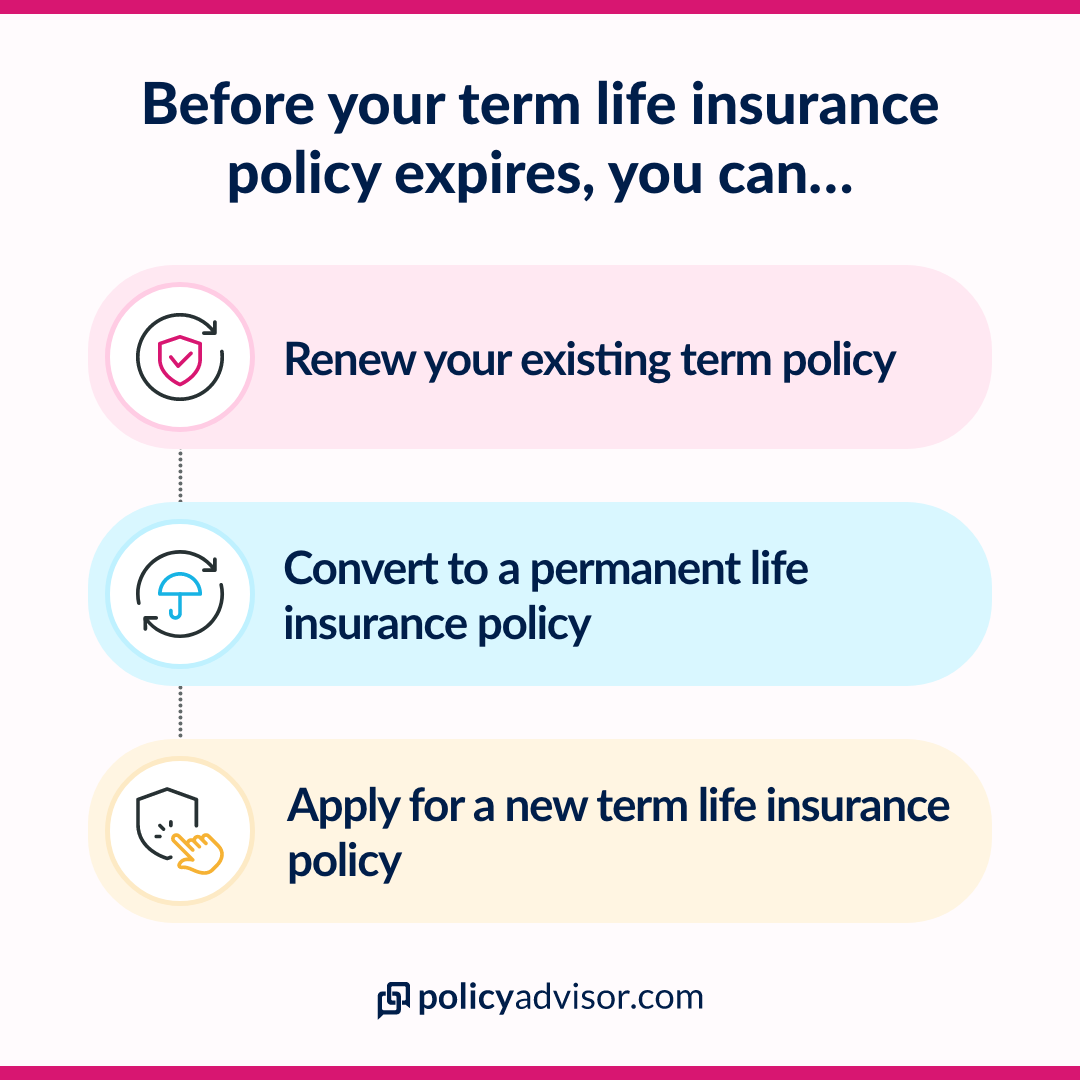
The most effective way to handle a term policy ending after age 80 is to act before the expiration date. Most high-quality term policies include a conversion rider. This provision allows the policyholder to convert some or all of their term coverage into a permanent life insurance policy (like whole life or universal life) without undergoing a new medical exam.
Why Conversion Timing Matters
In 2026, conversion windows are becoming more restrictive. While your policy might last until age 80, the "conversion period" often expires earlier, typically at age 70 or 75. It is imperative to review your policy contract to identify the last date of conversion. If you are still within that window, you can secure permanent coverage regardless of any health conditions you may have developed, such as heart disease or diabetes.
The Cost of Conversion
While you skip the medical exam, the new permanent policy will be priced based on your current age (e.g., 75 or 79). Permanent insurance is inherently more expensive than term insurance because it is guaranteed to pay out eventually. However, for those with significant estate tax concerns or those who want to guarantee a legacy for their grandchildren, this is often the only viable path to maintaining large-scale coverage.
Options for Coverage After Age 80
If your term policy has already expired or the conversion window has closed, you are not necessarily without options. However, the focus typically shifts from "income replacement" to "final expense management."
1. Final Expense or "Burial" Insurance
These are small whole life policies designed specifically for seniors. They usually offer death benefits ranging from $5,000 to $25,000.
- Pros: The premiums remain level for life, and the policy will never expire as long as you pay the bill.
- Cons: The "cost per thousand" of coverage is higher than term insurance.
- Suitability: Ideal for those who simply want to ensure their funeral and burial costs are not a burden on their children.
2. Guaranteed Issue Life Insurance
If you have significant health issues that prevent you from qualifying for standard life insurance, guaranteed issue policies are available to those up to age 80 or 85. These policies require no medical exam and ask no health questions.
- The "Graded" Payout: Most of these policies have a two-year waiting period. If you die of natural causes within the first two years, your beneficiaries only receive the premiums you paid plus a small amount of interest. Full coverage kicks in after the second anniversary of the policy.
3. Self-Insuring and Asset Reallocation
By age 80, many individuals have accumulated enough assets that life insurance is no longer a mathematical necessity. If your mortgage is paid off and your retirement accounts are stable, you may choose to "self-insure." In this scenario, you set aside a specific account (such as a High-Yield Savings Account or a liquid brokerage account) specifically for end-of-life expenses.
Comparison of Options for Seniors Over 80
| Feature | Expired Term Policy | Final Expense Insurance | Guaranteed Issue | Self-Insuring |
|---|---|---|---|---|
| Death Benefit | $0 | $5,000 – $50,000 | $2,000 – $25,000 | Variable (Your Assets) |
| Medical Exam | N/A | Health Questions Only | None | None |
| Premium Cost | $0 (Coverage ended) | Moderate | High | $0 (No premium) |
| Duration | Expired | For Life | For Life | N/A |
| Cash Value | No | Yes | Yes (Minimal) | Yes (Full control) |
Common Mistakes to Avoid
As you navigate the end of your term insurance in 2026, avoid these frequent errors:
- Assuming Grace Periods are Long: Once a term policy expires, there is usually no grace period. If the contract ends on June 1st, coverage is gone by June 2nd.
- Waiting Until the Last Minute: If you plan to convert or buy a new policy, start at least six months before your 80th birthday. Underwriting for seniors can be slow, and your options diminish every year.
- Canceling Before the Replacement is Active: Never cancel an existing policy—even an expensive one—until you have the "policy in hand" and the first premium paid on your new coverage.
- Ignoring the "Reduced Paid-Up" Option: If you convert to a permanent policy, ask about "reduced paid-up" options. This allows you to stop paying premiums in exchange for a smaller, guaranteed death benefit.
Frequently Asked Questions
Can I get a new term life insurance policy at age 81?
It is extremely difficult, but not impossible. In 2026, a few specialized carriers offer 10-year term products to individuals up to age 80 or 85, provided they are in exceptional health. However, the premiums are often comparable to permanent insurance, making the "term" aspect less financially attractive than it was in your 50s.
What happens if I have a "Return of Premium" (ROP) rider?
If you were fortunate enough to purchase an ROP rider with your original term policy, the end of the term is a positive event. The insurance company will cut you a check for the total amount of premiums you paid over the life of the policy. This money is generally tax-free. You can then use this lump sum to fund a final expense policy or add it to your estate.
Is it worth keeping a policy after 80 if the premiums triple?
This depends entirely on your health. If a policyholder has a terminal diagnosis or is in very poor health, paying a massive ART (Annual Renewable Term) premium for a few months may be a rational "investment" to secure a large death benefit for the family. However, for a healthy senior, this is usually a poor use of capital.
Do I need life insurance if my kids are independent?
If your primary goal was income replacement for your children, and they are now financially stable adults, you may no longer need the policy. Life insurance at age 80 is primarily used for liquidity—paying estate taxes, settling outstanding debts, or funding a legacy—rather than basic survival for dependents.
Recommended Next Actions
- Locate Your Policy Declaration Page: Confirm the exact expiration date and whether a conversion rider is still active.
- Request a "Permanent Life Illustration": Ask your current agent for a quote on what it would cost to convert your term into a whole life policy.
- Evaluate Your Liquid Assets: Determine if your current savings are sufficient to cover a $15,000–$25,000 funeral. If they are, you may not need to buy new insurance.
- Consult an Estate Attorney: Life insurance is just one tool. An attorney can help you determine if a trust or a different asset transfer strategy is more efficient than high-premium senior life insurance in 2026.
Disclaimer: This information is for educational purposes and does not constitute financial, legal, or tax advice. Life insurance regulations and product availability may vary by state and jurisdiction. Consult with a licensed insurance professional or financial advisor regarding your specific situation.
Image Gallery