The Ocean News Fatal Accident Explained: A Technical and Safety Analysis of the Titan Tragedy
The fatal accident involving the OceanGate Titan submersible, which dominated global ocean news, was caused by a catastrophic structural failure of its experimental carbon-fiber pressure hull. On June 18, 2023, the vessel imploded duri...
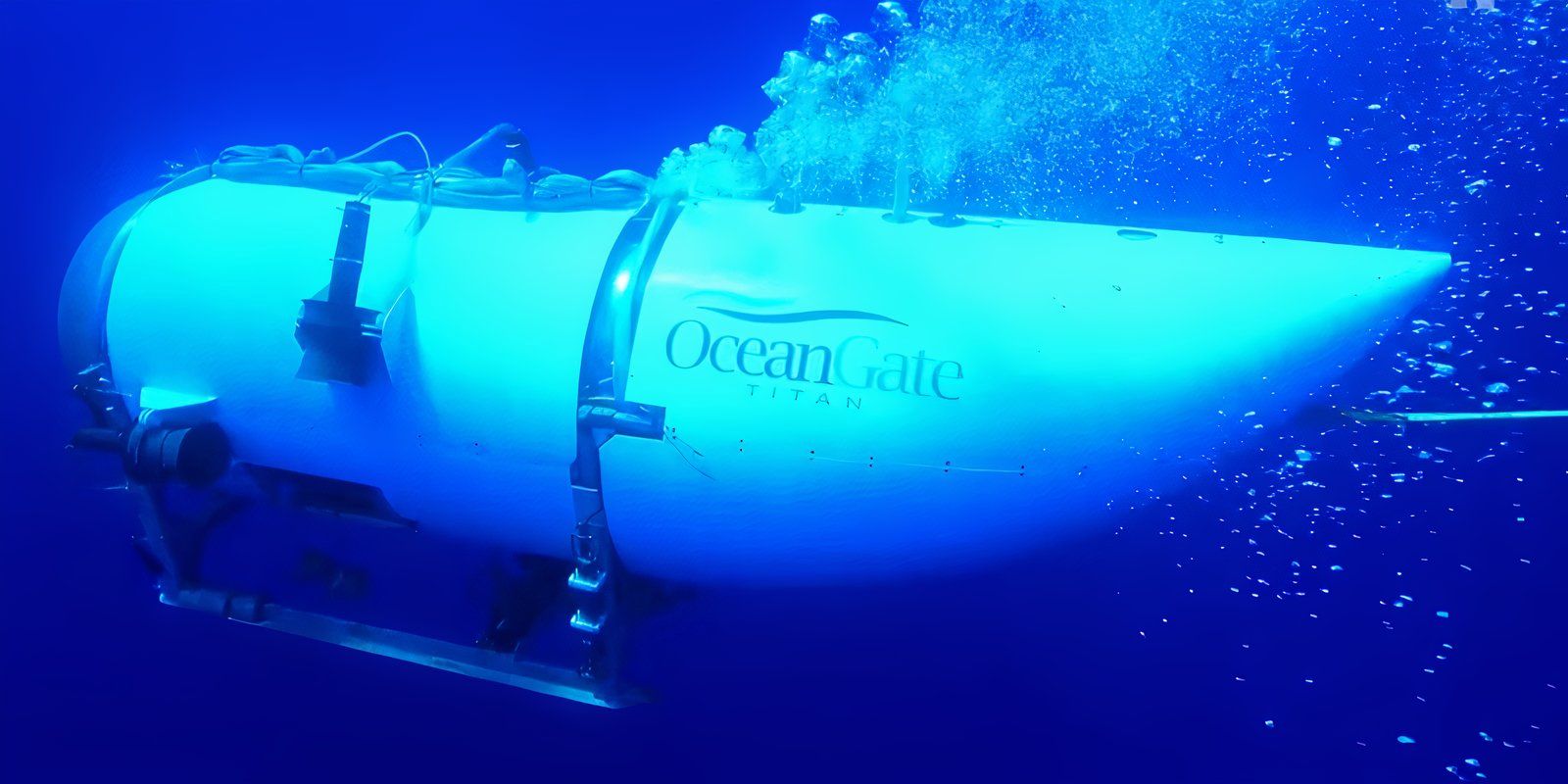
The fatal accident involving the OceanGate Titan submersible, which dominated global ocean news, was caused by a catastrophic structural failure of its experimental carbon-fiber pressure hull. On June 18, 2023, the vessel imploded during its descent to the Titanic wreck, resulting in the instantaneous death of all five occupants due to extreme hydrostatic pressure at approximately 3,500 meters depth.
Contents
Chronology of the Mission and Loss of Contact
The expedition began in mid-June 2023, departing from St. John's, Newfoundland, aboard the support ship MV Polar Prince. The Titan was a bespoke submersible designed to carry five people to depths of 4,000 meters. On the morning of June 18, the vessel was deployed for what was intended to be a routine dive to the Titanic debris field.
At approximately 1 hour and 45 minutes into the descent, the Polar Prince lost all communication with the Titan. Under standard operating procedures, a loss of communication does not immediately signal a disaster, as acoustic modems can be unreliable at great depths. However, when the vessel failed to resurface at its scheduled time, an international search and rescue operation was triggered. This operation involved the United States Coast Guard, the Canadian Coast Guard, and private deep-sea exploration firms.
By June 22, 2023, a Remote Operated Vehicle (ROV) deployed from the vessel Horizon Arctic discovered a debris field on the ocean floor, approximately 1,600 feet from the bow of the Titanic. The debris was consistent with a catastrophic implosion of the pressure chamber. In the years following the accident, leading up to 2026, the Marine Board of Investigation (MBI) and various international forensic engineering teams have meticulously reconstructed the sequence of events, confirming that the implosion occurred almost exactly at the moment communication was severed.
Technical Analysis of the Structural Failure
The primary subject of technical scrutiny remains the Titan’s unique hull construction. Unlike traditional deep-sea submersibles, which utilize spherical hulls made of high-strength steel or titanium, the Titan featured a cylindrical hull composed of five-inch-thick carbon fiber wound in a filament pattern, capped with two titanium hemispheres.
Carbon Fiber vs. Titanium
Carbon fiber is a composite material that excels in tension (resisting being pulled apart) but is less understood in high-pressure compression environments. In deep-ocean exploration, the hull must withstand nearly 400 atmospheres of pressure. While titanium is isotropic (having the same properties in all directions), carbon fiber is anisotropic. This means its strength is dependent on the direction of the fibers.
Engineers have concluded that "cyclic fatigue" played a critical role. Each time the Titan dove, the carbon fiber hull was compressed and then expanded upon ascent. Over dozens of missions, this process likely created microscopic delaminations—small separations between the layers of carbon fiber. Because these layers are bonded with epoxy, the differing rates of compression between the rigid titanium end-caps and the more flexible carbon fiber cylinder created significant stress concentrations at the interface zones.
The Real-Time Monitoring (RTM) System
OceanGate utilized a proprietary Real-Time Monitoring system designed to detect acoustic emissions as the hull fibers strained. The company marketed this as a safety breakthrough that could provide an "early warning" of failure. However, the 2024 and 2025 investigative reports revealed that by the time the RTM system would detect acoustic signatures of failing fibers, the structural integrity would have already passed the point of no return. At 3,500 meters, an implosion happens in milliseconds—faster than the human nervous system can process pain or fear.
Regulatory Gaps and the Lack of Certification
A significant factor in the OceanGate fatal accident was the vessel’s "unclassed" status. In the maritime industry, reputable submersibles undergo "classification"—a rigorous third-party validation process by organizations such as the American Bureau of Shipping (ABS) or DNV (Det Norske Veritas). These bodies review engineering drawings, inspect manufacturing processes, and witness pressure tests.
OceanGate famously opted out of this process, arguing that the classification cycle was too slow and stifled innovation. Because the Titan operated in international waters, it was not subject to the jurisdiction of any single nation's safety laws for small passenger vessels. This regulatory vacuum allowed the company to bypass the safety margins typically required for manned deep-sea craft, which often include a safety factor of 1.5 to 2.25 times the intended operating depth.
Comparison of Deep-Sea Submersible Specifications
To understand why the Titan was considered an outlier in the industry, it is helpful to compare its design specifications with those of traditionally certified submersibles that have safely operated for decades.
| Feature | Titan Submersible (OceanGate) | DSV Alvin (WHOI) | Limiting Factor (Triton) |
|---|---|---|---|
| Hull Material | Carbon Fiber & Titanium | Titanium Alloy | Titanium Alloy |
| Hull Shape | Cylindrical | Spherical | Spherical |
| Max Depth | 4,000 Meters | 6,500 Meters | 11,000 Meters |
| Certification | None (Self-certified) | ABS Classed | DNV Classed |
| Occupant Capacity | 5 Persons | 3 Persons | 2 Persons |
| Safety Factor | Unknown/Experimental | Standardized (>1.5x) | Standardized (>1.5x) |
| Observation | 21-inch Acrylic Port | 3 Small Reinforced Ports | 3 Large Reinforced Ports |
The Legal and Liability Landscape in 2026
By 2026, the legal fallout from the accident has reshaped how liability is viewed in extreme tourism. The families of the victims filed multiple lawsuits against OceanGate and the estate of its CEO, Stockton Rush. The central legal debate revolved around the "Liability Waiver" signed by the passengers.
Under the Death on the High Seas Act (DOHSA), recovery for damages is often limited to pecuniary losses (financial support for dependents) rather than non-pecuniary losses like pain and suffering. However, plaintiffs argued that "gross negligence" and the withholding of known safety risks invalidated the waivers. Evidence surfaced during the 2025 hearings showing that former employees had raised alarms about hull thickness and testing methods years before the final mission, only to be dismissed or met with legal threats.
Furthermore, the 2026 maritime legal environment now sees stricter requirements for support vessels. Ships like the Polar Prince, when acting as launch platforms for submersibles, are increasingly being held to higher standards of "seaworthiness" regarding the equipment they deploy, even if the submersible itself is in international waters.
Recovery Efforts and Forensic Findings
The recovery of the Titan's remains was an unprecedented deep-sea salvage operation. Using the Pelagic Research Services’ ROV, crews recovered the titanium end-caps, the aft fairing, and several large sections of the carbon fiber hull. Most importantly, the recovery included "presumed human remains" found within the debris, which were later confirmed through DNA analysis.
Forensic examination of the recovered titanium rings—the parts that bonded the carbon fiber to the metal caps—showed evidence of shearing that suggests the hull buckled inward from the center of the cylinder. This confirmed the theory that the composite material was the point of origin for the failure. By 2026, these fragments have become the most studied examples of composite material failure in the history of deep-ocean engineering, leading to a de facto ban on carbon fiber for manned pressure vessels in most professional exploration circles.
The Industry Legacy and Current Safety Standards
As of 2026, the "Ocean News" landscape regarding deep-sea exploration has shifted from an era of "disruptive innovation" back to a culture of rigorous engineering and transparency. The tragedy led to the following industry-wide changes:
- Mandatory Classification: While still difficult to enforce in international waters, the leading insurance providers now refuse to cover any expedition or support vessel that involves unclassed submersibles. This has effectively ended the use of experimental, uncertified manned craft for commercial tourism.
- Standardized Testing for Composites: The data gathered from the Titan’s failure has been integrated into the ASME (American Society of Mechanical Engineers) standards for Pressure Vessels for Human Occupancy (PVHO), providing definitive data on why carbon fiber remains unsuitable for deep-sea compression.
- Expanded Oversight: The International Maritime Organization (IMO) has introduced new voluntary guidelines for "High-Risk Subaquatic Activities," encouraging flag states to require certification for any vessel carrying submersibles, regardless of where they are deployed.
Frequently Asked Questions
Was the Titan submersible ever tested for 4,000 meters?
The Titan had performed several successful dives to the Titanic depth in 2021 and 2022. However, the core issue was not whether it could reach that depth once, but whether it could do so repeatedly. The cumulative stress on the carbon fiber layers led to a gradual weakening that was not visible to the naked eye.
Why didn't the passengers use an escape hatch?
At a depth of 3,500 meters, an escape hatch is useless. The external pressure is so immense that the hull cannot be opened from the inside, and even if it could, the human body would be instantly crushed. Furthermore, the Titan was bolted shut from the outside with 17 heavy-duty bolts, meaning the crew was entirely dependent on the support ship for egress even on the surface.
What happened to the company OceanGate?
Following the accident in June 2023, OceanGate suspended all exploration and commercial operations. By 2024, the company was essentially defunct, facing insurmountable legal challenges and the loss of its leadership. Most of its assets were liquidated or seized as part of the ongoing investigations.
Are people still visiting the Titanic wreck in 2026?
Yes, but the nature of the visits has changed. Most expeditions are now conducted via Remote Operated Vehicles (ROVs) which provide high-definition 8K feeds to researchers on the surface. Manned trips continue but are exclusively performed by certified, titanium-hulled submersibles like those operated by specialized deep-sea research institutions.
Was there any warning before the implosion?
While the Real-Time Monitoring (RTM) system was designed to give a warning, the physics of implosion at that depth suggest it would have provided only a few seconds of alert at most. Most experts believe the failure was instantaneous, occurring at the speed of sound through the material, meaning the occupants were unaware of the failure before it was complete.
Practical Recommendations for Marine Safety
For those involved in maritime operations or high-risk ocean tourism in 2026, the following precautions are essential:
- Verify Class Certification: Always request documentation from DNV, ABS, or a similar IACS-member organization. If a vessel is "unclassed," it is operating outside the accepted safety envelope of modern engineering.
- Assess Material Science: Be wary of "revolutionary" materials in environments where high-cycle fatigue is a factor. In deep-sea applications, titanium and specialized steel remain the gold standard for a reason.
- Legal Scrutiny: Understand that liability waivers do not grant operators a license for negligence. In 2026, the legal precedent is clear: safety disclosure must be comprehensive and based on third-party verification, not internal marketing.
Image Gallery