What the Integrated Teaching and Learning Program Offers
The Integrated Teaching and Learning (ITL) Program offers a multidisciplinary environment that bridges the gap between engineering theory and practice through hands-on, design-centric education. It provides state-of-the-art laboratory...
The Integrated Teaching and Learning (ITL) Program offers a multidisciplinary environment that bridges the gap between engineering theory and practice through hands-on, design-centric education. It provides state-of-the-art laboratory facilities, a comprehensive K-12 STEM outreach initiative, technical support for student projects, and a collaborative curriculum designed to foster innovation across various engineering disciplines.
Contents
The Integrated Teaching and Learning Program, most prominently represented by the University of Colorado Boulder’s initiative, serves as a global model for engineering education. As of 2026, the program continues to redefine how students engage with complex technical concepts. Rather than confining students to traditional, siloed departmental labs, the ITL Program offers a centralized hub where mechanical, electrical, aerospace, and civil engineering students collaborate on real-world challenges. This integration is not merely physical but pedagogical, ensuring that theoretical knowledge gained in the classroom is immediately applied in a practical, experimental setting.
The Pedagogical Philosophy: Hands-On, Minds-On
At the core of what the Integrated Teaching and Learning Program offers is the "hands-on, minds-on" philosophy. This approach recognizes that engineering is an inherently creative and constructive process. The program shifts the focus from passive lecture-based learning to active engagement.
Integration of Design and Analysis
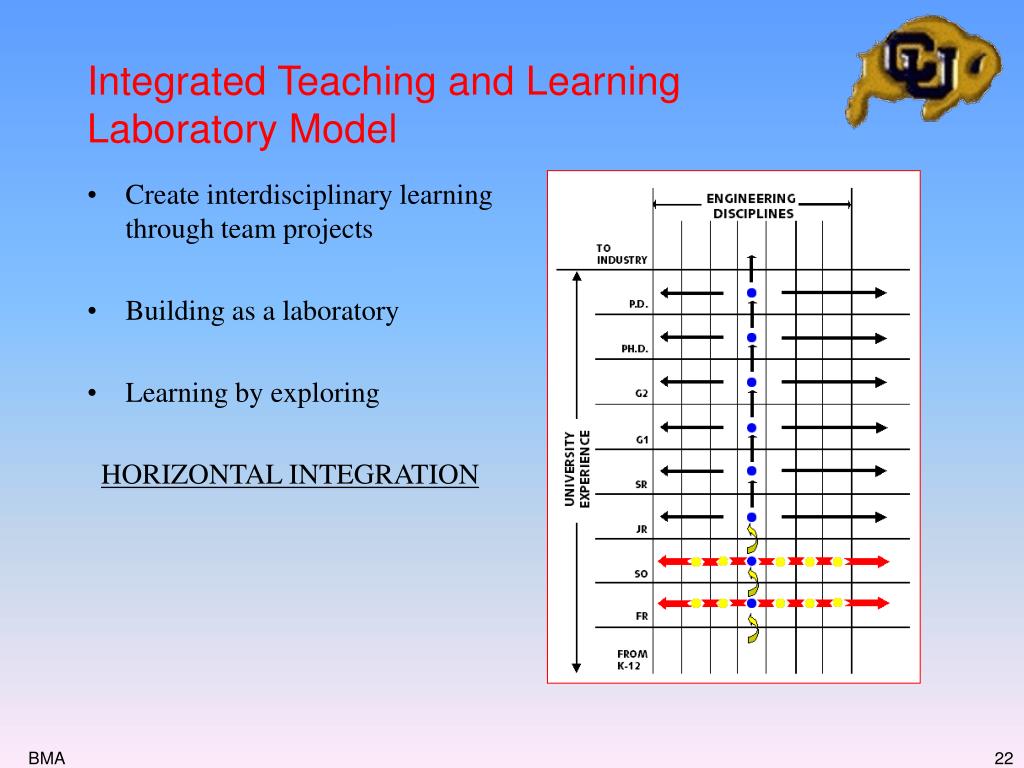
The ITL Program integrates design across the entire four-year undergraduate experience. From the first semester, students are introduced to design challenges that require them to move beyond simple calculations. They must define problems, brainstorm solutions, build prototypes, and iterate based on failure. This "design-first" mentality ensures that by the time students reach their senior capstone projects, they possess the practical skills needed to lead in the professional workforce.
Interdisciplinary Collaboration
One of the most significant offerings is the removal of barriers between engineering majors. In a standard university setting, a mechanical engineering student might rarely interact with a computer science or chemical engineering student. The ITL Program deliberately structures its laboratory spaces and project requirements to encourage interdisciplinary teams. This reflects the reality of the modern engineering industry, where complex systems like autonomous vehicles or renewable energy grids require expertise from multiple fields working in tandem.
World-Class Laboratory Facilities and Infrastructure
The physical infrastructure provided by the ITL Program is a cornerstone of its value proposition. These facilities are designed to be flexible, accessible, and equipped with industry-standard technology.
The ITL Laboratory (ITLL)
The ITL Laboratory is a 34,000-square-foot facility that serves as the primary hub for experimental learning. Unlike traditional locked labs, the ITLL is designed with an "open-concept" layout. This transparency allows students to see what their peers are working on, sparking curiosity and informal learning.
- Electronics Center: Offers high-end oscilloscopes, function generators, and soldering stations. Students use this space to develop custom PCBs (Printed Circuit Boards) and integrate sensors into their mechanical designs.
- Manufacturing and Fabrication Mall: Provides access to both traditional and advanced manufacturing tools. This includes CNC mills, lathes, laser cutters, and a massive array of 3D printing technologies, from FDM (Fused Deposition Modeling) to metal sintering.
- Discovery Learning Center: A space dedicated to undergraduate research, where students work alongside faculty on cutting-edge engineering problems, ranging from robotics to sustainable infrastructure.
Technology-Enhanced Classrooms
The classrooms within the program are not just seats and a projector. They are "active learning" environments equipped with integrated data acquisition systems. This allows instructors to transition instantly from a lecture to a live experiment, where students can collect and analyze real-time data at their desks.
Comprehensive K-12 STEM Outreach
The ITL Program extends its impact far beyond the university campus. It offers one of the most robust K-12 STEM (Science, Technology, Engineering, and Math) outreach programs in the United States.
The TeachEngineering Digital Library
A primary offering is the TeachEngineering digital library, a searchable, web-based resource that provides thousands of free, standards-aligned K-12 engineering lessons and activities. As of 2026, this library is used by millions of educators worldwide. It translates complex engineering concepts into age-appropriate curricula, helping to inspire the next generation of engineers long before they reach college.
In-Person Workshops and Camps
The program hosts year-round workshops, summer camps, and after-school programs specifically designed for underrepresented groups in engineering. By providing access to the ITL Laboratory’s resources, these programs demystify engineering and provide middle and high school students with the confidence to pursue technical degrees.
Technical Support and Professional Development
Beyond tools and space, the ITL Program offers human expertise. The staff includes professional engineers, technicians, and specialized educators who guide students through the complexities of their projects.
Skill-Building Workshops
To ensure students can safely and effectively use the equipment, the program offers a continuous cycle of workshops. These cover:
- Machine Shop Safety: Essential training for any student wishing to use heavy machinery.
- Software Proficiency: Tutorials on CAD (Computer-Aided Design), MATLAB, and LabVIEW.
- Advanced Fabrication: Specialized training in carbon fiber layup, TIG welding, and micro-electronics assembly.
The Design Expo
Twice a year, the ITL Program hosts a large-scale Design Expo. This event offers students a platform to showcase their semester-long projects to industry professionals, faculty, and the public. It serves as a critical networking event and a venue for students to practice communicating technical information to non-technical audiences.
Program Comparison: ITL vs. Traditional Engineering Models
The following table highlights the differences between the integrated approach and traditional departmental laboratory structures.
| Feature | Integrated Teaching and Learning Program | Traditional Departmental Model |
|---|---|---|
| Accessibility | Open-access, multidisciplinary hubs available to all engineering majors. | Restricted access, often limited to specific majors or senior-level students. |
| Equipment Variety | Broad spectrum from manual tools to advanced additive manufacturing. | Specialized equipment focused strictly on one discipline (e.g., only fluid dynamics). |
| Curriculum Focus | Design-centric from year one; emphasis on prototyping and iteration. | Theory-heavy in early years; labs often isolated from design projects. |
| Technical Support | Dedicated full-time professional staff for student project guidance. | Often reliant on Graduate Teaching Assistants (TAs) with limited shop experience. |
| Outreach | Integrated K-12 programs and global digital resources (TeachEngineering). | Minimal community outreach, usually limited to departmental recruitment. |
Faculty Resources and Curriculum Integration
The ITL Program is not just a service for students; it is a resource for faculty. It offers "curriculum support" that allows professors to enhance their courses with practical components without having to manage the logistics of a laboratory.
Course Enhancement Grants
The program often provides resources or small grants for faculty to develop new hands-on modules. For example, a professor teaching a thermodynamics course can work with ITL staff to create a custom lab setup where students measure heat transfer in real-time using the laboratory’s data acquisition sensors.
Assessment and Research
The ITL Program also conducts significant research into engineering education itself. It offers faculty data and assessment tools to measure the effectiveness of their teaching methods. This commitment to evidence-based education ensures that the program’s offerings are constantly evolving based on what actually helps students learn.
Frequently Asked Questions
Who has access to the Integrated Teaching and Learning Program facilities?
Access is generally provided to all students enrolled in the College of Engineering and Applied Science. While some specialized equipment requires safety certifications or specific workshop completions, the general laboratory plazas are designed for broad student use. In 2026, many programs have also extended limited access to interdisciplinary teams involving students from business and the arts to encourage holistic product development.
Does the program cost extra for students?
Most of what the ITL Program offers is covered by standard engineering student fees. These fees fund the maintenance of equipment, the purchase of consumable materials (like 3D printing filament or scrap metal), and the salaries of the technical support staff. Some high-cost specialized materials for individual senior projects may require additional departmental or personal funding.
How does the ITL Program support career readiness?
The program mirrors the professional engineering environment. By requiring students to work in diverse teams, use industry-standard software and hardware, and manage project budgets and deadlines, it produces graduates who require less "on-the-job" training. Employers frequently cite the hands-on experience gained through ITL projects as a primary reason for hiring graduates.
Can students work on personal projects in the ITL Lab?
While the priority is always given to course-related work and research, the ITL Program encourages a "maker culture." Students are often allowed to use the facilities for personal projects or entrepreneurial ventures, provided they have completed the necessary safety training and the work does not interfere with academic requirements.
What role does sustainability play in the program?
In 2026, sustainability is a core component of the ITL offering. The program provides specialized equipment for testing renewable energy systems, such as wind tunnel access for miniature turbines and solar cell characterization tools. Furthermore, the manufacturing mall emphasizes sustainable practices, such as recycling 3D printing waste and optimizing material usage through generative design software.
Final Recommendation
For students and educators looking to maximize their engineering potential, engaging fully with the Integrated Teaching and Learning Program is essential. Students should seek out the ITL Laboratory early in their academic career, moving beyond required coursework to utilize the workshops and fabrication tools for independent innovation. Educators should leverage the program’s existing modules and the TeachEngineering library to transform theoretical lectures into active, experimental learning experiences. By bridging the gap between "knowing" and "doing," the ITL Program provides the foundational skills necessary to solve the complex engineering challenges of the 21st century.
Image Gallery